
A masterpiece begins to lose its voice the moment its reproduction starts to fade. This isn’t just an aesthetic concern; it’s a direct depletion of the work’s physical and market value. For many artists and collectors, the term museum quality giclee prints often feels like a vague marketing promise rather than a strict technical benchmark. You’ve likely felt the frustration of seeing a digital proof that lacks the tactile depth of your original canvas, or perhaps you’ve worried that a limited edition will yellow in a collector’s home before the decade is out.
It’s reasonable to demand that a reproduction carries the same longevity and visual weight as the piece that inspired it. This guide clarifies the technical standards and shifting market trends that define genuine archival excellence. We will examine the essential trinity of pigment inks, acid-free substrates, and high-resolution capture. You’ll learn how to select a reproduction partner capable of meeting rigorous gallery standards, ensuring your fine art remains a lasting legacy rather than a temporary impression.
Key Takeaways
- Identify the specific technical benchmarks that distinguish archival reproductions from standard commercial inkjet outputs to protect your work’s long-term market value.
- Master the “Technical Trinity” of high-resolution digital capture, UV-resistant pigment inks, and acid-free substrates required for true museum quality giclee prints.
- Learn how professional reproductions allow artists to scale their business through limited edition models while maintaining the prestige of their original work.
- Understand why the initial capture phase, utilizing advanced BetterLight scanning, is more influential on the final 60-inch print than the printer settings themselves.
Defining the Standard: What Makes a Giclee Print “Museum Quality” in 2026?
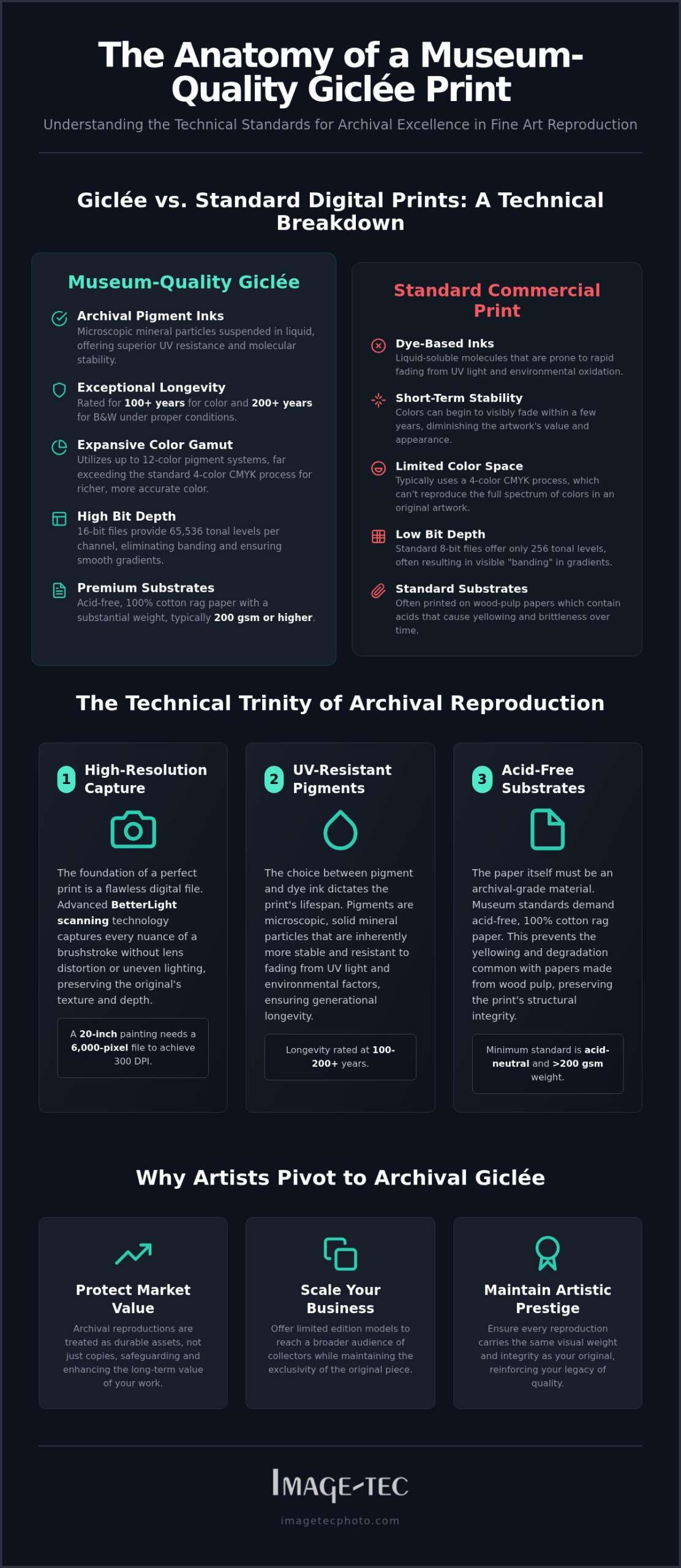
The term “Giclee” originates from the French verb gicler, meaning “to spray.” While the name describes the mechanical action of an inkjet printer, its application in the fine art world has evolved into a rigorous technical standard. In a professional studio environment, museum quality giclee prints represent the highest tier of reproduction, distinguishing themselves from standard commercial outputs through a disciplined adherence to archival chemistry and precision.
Standard commercial prints often rely on dye-based inks and wood-pulp papers, which are prone to rapid oxidation and UV degradation. In contrast, museum standards demand a specific ecosystem of materials designed to withstand the passage of time. Galleries and serious collectors view these prints not merely as copies, but as durable assets. This is why certification regarding the materials used is now a prerequisite for entry into many high-end exhibitions. Modern standards, such as ISO 12234-4:2026, help studios achieve the perfect color matching and archival-grade results that collectors expect.
The Archival Benchmark: Lightfastness and Longevity
Longevity in the art world is measured against the Wilhelm Imaging Research (WIR) standards, which provide the industry benchmark for permanence. While dye-based inks might offer vibrant initial colors, they lack the molecular stability of pigment-based alternatives. Research indicates that pigment-based inks can maintain their integrity for over 100 years for color and up to 200 years for black and white, provided they are stored under proper conditions. This permanence is a promise of value. It ensures a collector’s investment doesn’t literally fade away over the decades.
Giclee vs. Standard Digital Prints: A Technical Comparison
The technical gap between a standard digital print and a museum-quality reproduction is defined by resolution and color depth. While 300 DPI at the final output size remains the industry standard, professional studios often push toward 600 or 1200 DPI to capture the minute textures of a canvas or the subtle grain of a watercolor. Capturing extreme detail at the initial stage is critical. For instance, a 20-inch painting requires a digital file of at least 6,000 pixels on its longest side to achieve 300 DPI.
- Color Gamut: High-end wide-format printers utilize 12-color pigment systems, far exceeding the 4-color CMYK process used in standard commercial printing.
- Bit Depth: Utilizing 16-bit files offers 65,536 levels of tone per color channel, which eliminates the “banding” seen in 8-bit commercial prints.
- Substrate Weight: Professional standards require acid-neutral, all-cotton paper with a minimum weight of 200 gsm.
Archival Giclee is a precise combination of pigment-based inks and acid-free substrates. By adhering to these benchmarks, artists can ensure their museum quality giclee prints retain their vibrancy and structural integrity for generations. To see how these archival standards are applied in a professional setting, you can discover First4Frames Gallery and explore their expertise in fine art prints and framing.
The Technical Trinity: Resolution, Pigment, and Substrate
A museum-quality reproduction is only as strong as its weakest link. While the previous section defined the overarching standards for longevity, achieving that level of excellence requires a precise synergy between digital capture, chemical stability, and physical durability. This “Technical Trinity” ensures the final piece mirrors the original’s depth while surviving the environmental stressors of a gallery or home. When these three elements align, the result is a stable, high-value asset that collectors can trust.
Capture Resolution: The BetterLight Advantage
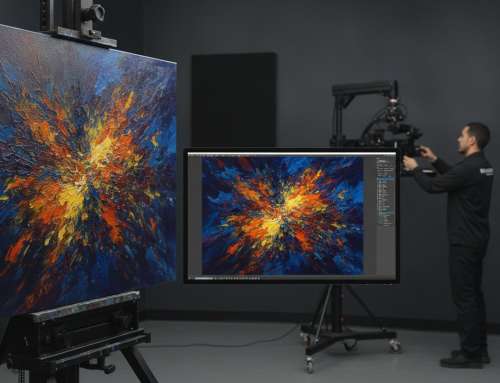
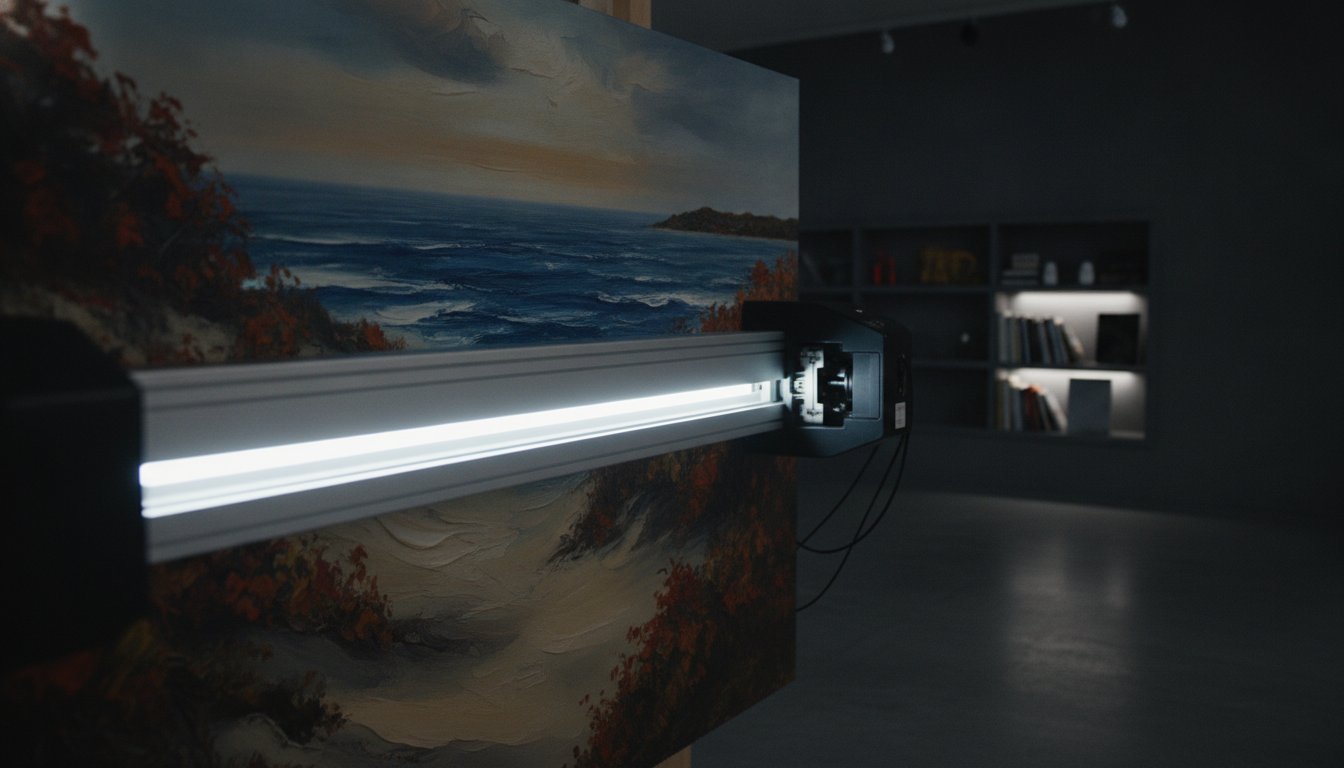
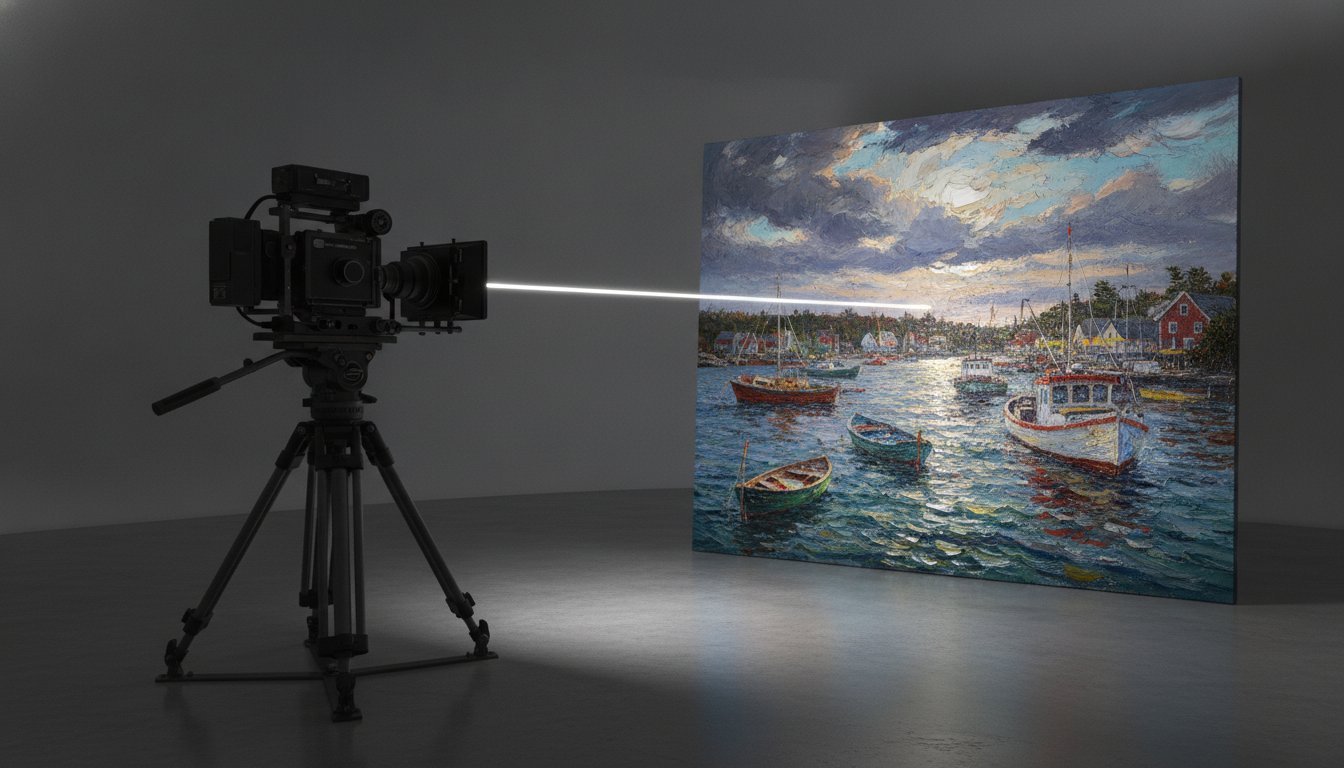
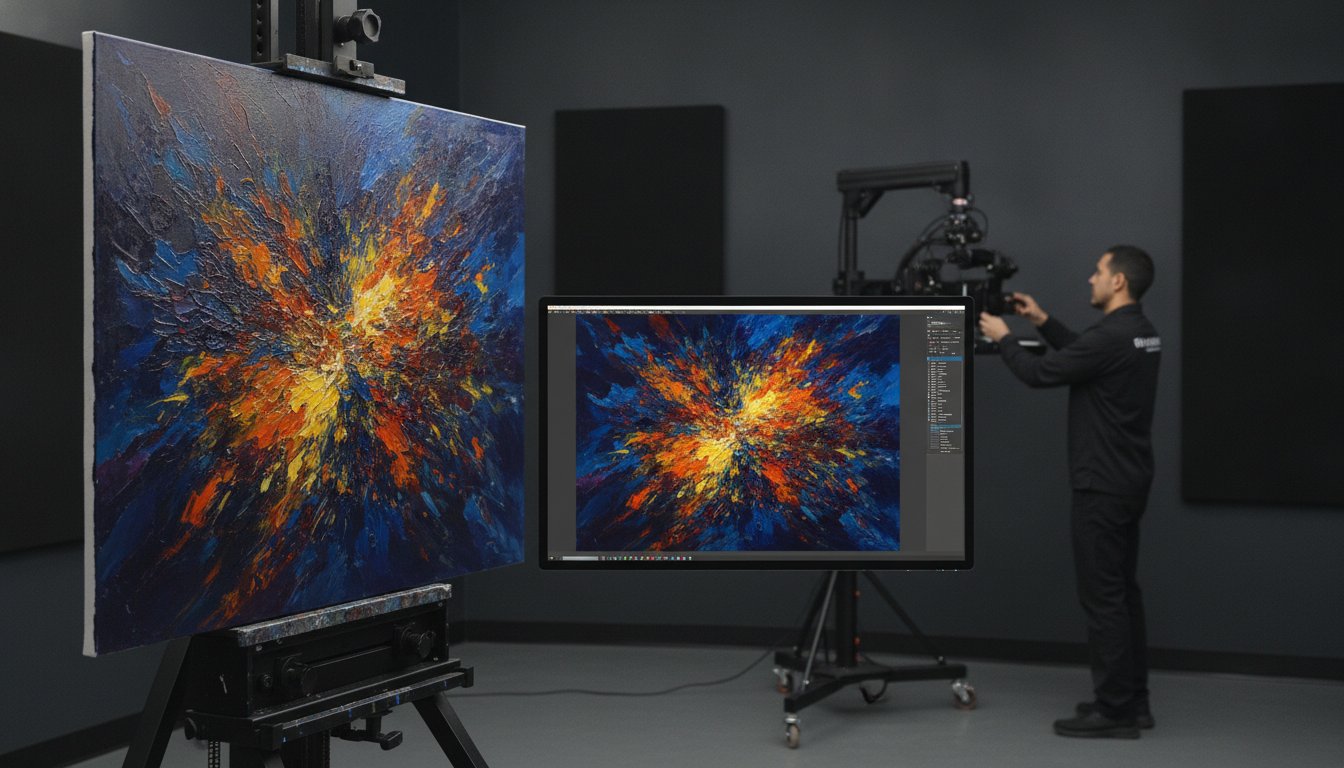
Standard photography often struggles to translate the tactile reality of a painting into a digital format. Traditional DSLR cameras frequently introduce lens distortion or uneven lighting, which flattens the texture of heavy impasto or delicate watercolor grain. Utilizing BetterLight art scanning eliminates these artifacts. This technology acts like a large-format film camera, moving a linear sensor across the focal plane to capture data directly. It provides a high-bit depth capture that preserves every nuance of a brushstroke, allowing for significant enlargement without losing clarity or introducing digital noise.
Ink Chemistry: Why Pigments Outlast Dyes
The longevity of a print is primarily dictated by its ink. Commercial printers often use dye-based inks, which are liquid-soluble molecules that succumb quickly to UV light and oxidation. Professional archival pigment print technology uses microscopic, solid mineral particles suspended in a liquid carrier. These pigments are inherently more stable and resist the “bronzing” effect, a common issue where dark areas of a print take on an unnatural metallic sheen. Achieving this level of color fidelity starts with professional artwork scanning in Massachusetts, where the digital file is color-calibrated to match the pigment’s specific gamut.
Selecting the Right Substrate
The paper or canvas serves as the foundation for the entire process. Museum-grade substrates are typically categorized into cotton rag or alpha-cellulose. Cotton rag, made from 100% cotton linters, is naturally acid-free and pH neutral. Alpha-cellulose papers are made from high-grade wood pulp with the lignin removed, offering similar stability at a different texture. Both materials are engineered to prevent the “yellowing” associated with standard wood-pulp papers.
Longevity also depends on the absence of Optical Brightening Agents (OBAs). While OBAs make paper appear brighter by reflecting UV light, they eventually break down, causing the paper to yellow over time. Choosing OBA-free, acid-free media is essential for museum quality giclee prints intended for long-term collection. If you’re preparing a large-scale exhibition piece, starting with a professional scan ensures your substrate choice isn’t undermined by poor digital data. You can explore our high-resolution capture services to begin your next project with technical precision.
Why Artists are Pivoting to Archival Giclee for Online Sales
The digital marketplace has fundamentally shifted the economics of fine art. While original paintings remain the pinnacle of an artist’s portfolio, the “Limited Edition” model has become a cornerstone for independent artists throughout New England. By offering museum quality giclee prints, creators can reach a broader demographic of collectors who desire high-end aesthetics at a more accessible price point. This transition isn’t just about volume; it’s about maintaining the prestige of the original work while expanding its market reach. For those looking for inspiration on how to present such works, Ilkaa’s Fine Art Gallery & Atelier showcases the impact that professional curation and high-quality prints can have on a collector’s experience.
A critical differentiator in this pivot is the move away from automated “big-box” print-on-demand services toward studio-quality fulfillment. Collectors in 2026 are increasingly discerning, often requesting a Certificate of Authenticity that verifies the archival nature of the piece. This document serves as a formal guarantee that the work adheres to established technical standards for archival printing, ensuring the investment retains its value over time. It transforms a simple reproduction into a serialized, collectible asset.
Developing a sustainable career in the arts often requires diversifying revenue streams. Utilizing professional art reproduction printing services allows artists to generate passive income from a single original scan. The psychological weight of the “Museum Quality” designation shouldn’t be underestimated. It signals to the buyer that the artist prioritizes craftsmanship and longevity, which builds long-term brand integrity. When every print delivered matches the color accuracy and detail of the original, it reinforces the artist’s reputation in a crowded digital marketplace; photographers who learn more about The Revival Atelier understand that this same dedication to archival quality is what transforms a portrait into a lasting work of art.
Modern interior design increasingly favors large-scale statement pieces that can anchor a room. This demand has led to a rise in oversized museum quality giclee prints, particularly on canvas. Producing work at this scale presents unique technical challenges; any flaw in the initial capture or ink application is magnified significantly. If the digital file lacks sufficient resolution, the final output will appear soft or pixelated.
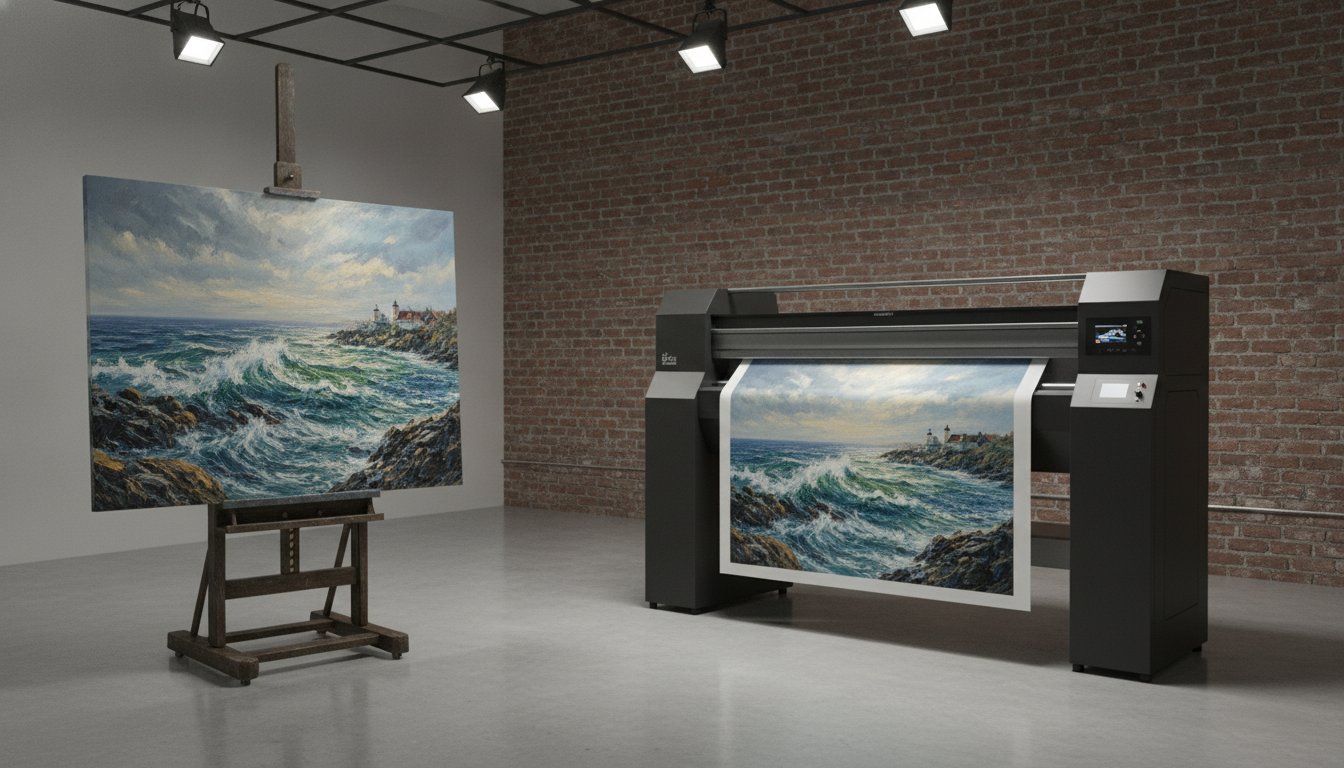
Maintaining sharpness and tonal depth at 60 inches wide requires a sophisticated workflow. Successful artists often rely on the specialized process of printing on canvas from original artwork to ensure that even at extreme dimensions, the reproduction retains its fine-art feel. These statement pieces allow artists to enter high-end commercial and residential decor markets, providing a scale of work that was once difficult to produce without compromising archival stability.
Evaluating a Fine Art Printing Partner: Beyond the Digital File
Selecting a printing partner is a decision that dictates the long-term reputation of an artist. Many creators initially gravitate toward “big-box” automated platforms due to their streamlined web interfaces and lower entry costs. However, these services often prioritize high-volume throughput over individual precision. In an automated environment, your file is processed by an algorithm rather than an expert eye. For those producing museum quality giclee prints, the absence of human oversight often leads to color shifts or lost shadow detail that can’t be corrected after the ink hits the substrate.
A boutique fine art studio offers a collaborative relationship that automation simply cannot replicate. When evaluating a partner, you should audit their equipment list for wide-format Epson or Canon pigment printers utilizing 10- or 12-color ink sets. These systems provide the tonal range necessary for professional work. Local expertise is particularly valuable for artists in the Boston and Manchester NH areas. Being able to visit a studio in person allows for a nuanced discussion about paper texture and color intent that digital tickets often fail to capture.
The Importance of Color Management and Proofing
Precision in art reproduction is not an accident. It’s the result of a calibrated ecosystem where monitor displays, digital files, and printer outputs are synchronized through custom ICC profiles. A professional technician doesn’t just hit “print”; they audit the scan for digital artifacts and ensure the color gamut matches the original painting. This is why physical proofing is a non-negotiable step in the Giclee process. A screen can only approximate how pigment will interact with a specific cotton rag or canvas. Reviewing a physical “strip” or small-scale proof allows you to make critical adjustments to contrast and saturation before committing to a full-sized edition.
Custom Framing: The Final Step in Preservation
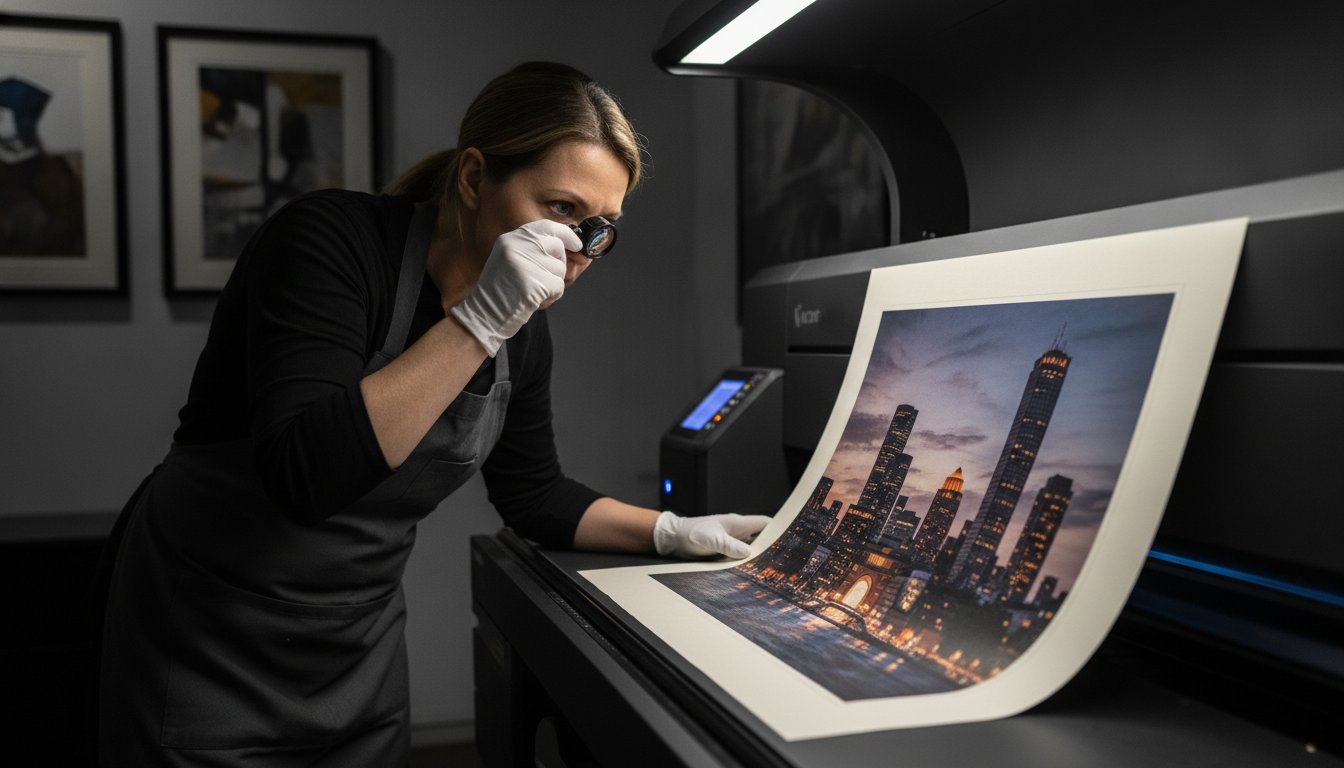
Even the most technically perfect museum quality giclee prints can be compromised by poor finishing. Archival stability doesn’t end with the print; it extends to the framing materials. Standard commercial frames often use wood-pulp mats and regular glass, which release acidic gases and allow UV light to degrade the pigments. Professional preservation requires acid-free mats and UV-protective glazing to seal the work from environmental hazards. Integrated services, such as those offered at our Methuen studio, ensure that the print is handled with white-glove care from the moment it leaves the printer until it is secured in a custom frame. To ensure your work receives this level of professional oversight, you can explore our integrated printing and custom framing services.
At our Methuen studio, we’ve developed a workflow that prioritizes the artist’s original vision while meeting the stringent requirements of professional galleries. Many labs treat art reproduction as a simple file upload; we view it as a precision-driven process that begins long before the ink hits the paper. By managing every stage from initial capture to final assembly, we ensure that museum quality giclee prints remain faithful to the source material in both color and texture. This end-to-end oversight is what allows us to produce consistent, archival results for collectors and artists alike.
The BetterLight scanning system is the cornerstone of our reproduction cycle. While standard photography relies on a single-point sensor that can introduce distortion, our scanning technology captures data across the entire surface of the artwork. This provides the massive resolution required for statement pieces up to 60 inches wide. This capability allows local artists to produce large-scale canvas prints that maintain their sharp detail even at significant magnification, filling a critical gap for those who need more than standard photo lab services.
Bridging the Gap Between Original Art and Digital Sales
We help artists translate their physical paintings into versatile digital assets that serve as the foundation for limited edition runs. This process isn’t just about making a copy; it’s about creating a master file that can support a lifetime of reproductions. Our studio also offers professional historical image restoration, allowing families and collectors to revive antique treasures before they’re preserved through archival printing. Having a local partner is particularly advantageous for large-scale commercial projects where coordination between the artist and the production space is essential for success.
Your Local Boston & New England Fine Art Resource
Our location in Methuen serves as a central hub for the Boston, Manchester NH, and Newburyport art communities. We understand that shipping original artwork carries inherent risks, which is why we offer a secure environment for personal drop-offs and portfolio reviews. Working with a studio that’s deeply integrated into the New England market means you receive personalized service from technicians who understand the specific needs of regional galleries and shows. We invite you to contact Image-Tec to schedule a consultation and discuss the best path for your next museum quality giclee prints project.
Securing Your Artistic Legacy Through Technical Excellence
The transition from a physical masterpiece to a digital edition requires more than high-end equipment. It demands a commitment to technical precision that preserves the integrity of your work for generations. We’ve examined how the synergy of high-resolution capture, pigment-based chemistry, and acid-free substrates defines true archival standards. By prioritizing these benchmarks, you don’t just create a copy; you produce a lasting asset that collectors can value with confidence. It’s about ensuring the work you create today remains vibrant and structurally sound well into the next century.
Since 1994, Image-Tec has served as a steady partner for New England artists navigating the complexities of fine art reproduction. Whether you’re scaling your business with limited editions or producing statement pieces up to 60 inches wide, our studio provides the professional infrastructure to execute your vision. It’s time to move beyond standard digital outputs and embrace the permanence of museum quality giclee prints. We invite you to elevate your art with museum-quality Giclee prints at Image-Tec. Your vision deserves a reproduction that stands the test of time.
Frequently Asked Questions
How long do museum quality Giclee prints actually last?
When produced to archival standards, these prints are rated to last over 100 years for color images and up to 200 years for black and white work. This longevity is verified by independent testing from organizations like Wilhelm Imaging Research. To achieve these results, the print must be kept in a controlled environment away from direct sunlight and high humidity. Using acid-free materials during the mounting and framing process is also essential to prevent chemical degradation over time.
Is a Giclee print the same as an inkjet print?
No, it’s a specific subset of inkjet technology defined by archival standards. While all Giclee prints are made using inkjet technology, not all inkjet prints meet the museum standard. A standard office or photo lab inkjet often uses dye-based inks and wood-pulp paper. In contrast, museum quality giclee prints utilize high-stability pigment inks and acid-free, 100% cotton rag substrates. This specific combination of materials and high-resolution capture ensures the final product remains color-fast and physically durable.
Do I need a special file to get a museum quality Giclee print?
A high-resolution, professionally prepared file is necessary for optimal results. The industry standard requires a resolution of 300 DPI at the final output size. For example, a 20-inch print needs a digital file of at least 6,000 pixels on its longest side. We also recommend 16-bit files to prevent tonal banding in gradients. If your current digital file doesn’t meet these technical benchmarks, a professional scan of the original artwork is the best starting point.
Can you make a Giclee print from a physical painting?
Yes, we specialize in converting physical paintings into high-resolution digital assets using BetterLight scanning technology. This process is superior to standard digital photography because it captures the minute details of brushstrokes and the specific texture of the canvas without lens distortion. Once we create this master digital file, it can be used to produce museum quality giclee prints at various sizes, ensuring the reproduction remains faithful to the color and depth of your original work.
Why is Giclee more expensive than standard photo printing?
The higher cost reflects the superior quality of the archival materials and the expertise involved in the production cycle. Pigment-based inks are more expensive to manufacture than standard dyes, and 100% cotton rag papers carry a premium over wood-pulp alternatives. Additionally, the process involves manual color matching, physical proofing, and technical oversight by seasoned professionals. This investment ensures the final piece carries a market value and longevity that standard commercial prints cannot match.
What is the largest size possible for a Giclee print at Image-Tec?
Our Methuen studio is equipped to produce large-format prints up to 60 inches wide. This capability is ideal for statement pieces and commercial installations that require significant visual impact. Whether you’re printing on fine art paper or archival canvas, we maintain the same rigorous technical standards at this scale. Maintaining 300 DPI at 60 inches requires a very high-resolution initial scan, which we manage through our integrated BetterLight capture system to ensure sharpness.
Do Giclee prints need to be framed behind glass?
Framing behind UV-protective glass is strongly recommended for prints on paper. Glass acts as a barrier against ultraviolet light, dust, and atmospheric pollutants that can cause premature fading or yellowing. For canvas prints, a protective UV-shielding varnish is often applied, which allows the work to be displayed without glass. However, for maximum long-term preservation and to meet gallery standards, archival-grade framing with acid-free mats remains the gold standard for protecting your investment.
Are Giclee prints on canvas as durable as those on paper?
Framing behind UV-protective glass is strongly recommended for prints on paper, as glass acts as a barrier against ultraviolet light, dust, and atmospheric pollutants that can cause premature fading. Similarly, for those looking to protect other high-value assets from solar damage, you can explore Window Tinting and Surface Protection Installation to safeguard your vehicle’s interior from similar UV exposure.
Both substrates offer exceptional durability when they meet archival specifications. Cotton rag paper is naturally stable and resists chemical breakdown, while archival canvas is engineered for flexibility and strength during the stretching process. Canvas prints are often more resilient to physical handling and environmental changes because they’re treated with a protective coating. The choice between them usually depends on the desired aesthetic and the texture of the original piece rather than a difference in longevity.




Leave A Comment
You must be logged in to post a comment.