
True art reproduction begins with technical data capture, not just a high-resolution photograph. Many artists discover that standard equipment often fails to translate the physical soul of a painting into a digital file. You’ve likely felt the frustration of seeing a standard wide-format scanner flatten your textures or shift your palette toward an unnatural hue. When you’re seeking professional artwork scanning in Massachusetts, you aren’t just looking for a file; you’re looking for a digital twin that respects every brushstroke and pigment choice.
We understand that your original work is irreplaceable. It’s why we prioritize museum-grade technology that captures detail with archival precision. In this guide, you’ll discover how specialized scanning preserves the depth and color of your masterpieces without the distortion common in consumer-grade setups. We’ll examine the specific advantages of the BetterLight system and how these high-fidelity files create the perfect foundation for Giclée printing. From handling fragile originals to delivering 1:1 digital masters, we provide the technical expertise required to bridge the gap between the physical studio and the digital archive.
Key Takeaways
- Understand why archival scanning is essential for color fidelity and how it surpasses consumer-grade photography in capturing the physical depth of your art.
- Learn how BetterLight technology utilizes linear array sensors to capture “pure data,” which eliminates the distortion and interpolation errors found in standard CCD scanners.
- Discover why professional artwork scanning Massachusetts is the most reliable way to preserve the fine texture of oils and acrylics while avoiding the risks of digital stitching.
- Follow a practical checklist to prepare your originals for the studio; this ensures delicate mediums like charcoal or watercolor are handled with master-craftsman care.
- See how a 1:1 digital master file serves as the vital foundation for museum-quality Giclée prints on canvas and paper up to 60 inches wide.
Understanding Professional Artwork Scanning in Massachusetts
Professional artwork scanning in Massachusetts represents the intersection of technical precision and artistic preservation. It’s a specialized process that goes far beyond simply taking a digital picture. For artists throughout New England, this service provides a digital master file that serves as a permanent, archival record of their physical work. This is especially vital for paintings and drawings, which accounted for over 75% of the art reproduction market in 2025. By capturing the work at its highest possible resolution, artists ensure their legacy is protected against the natural degradation of physical media.
The Difference Between a Photo and a Scan
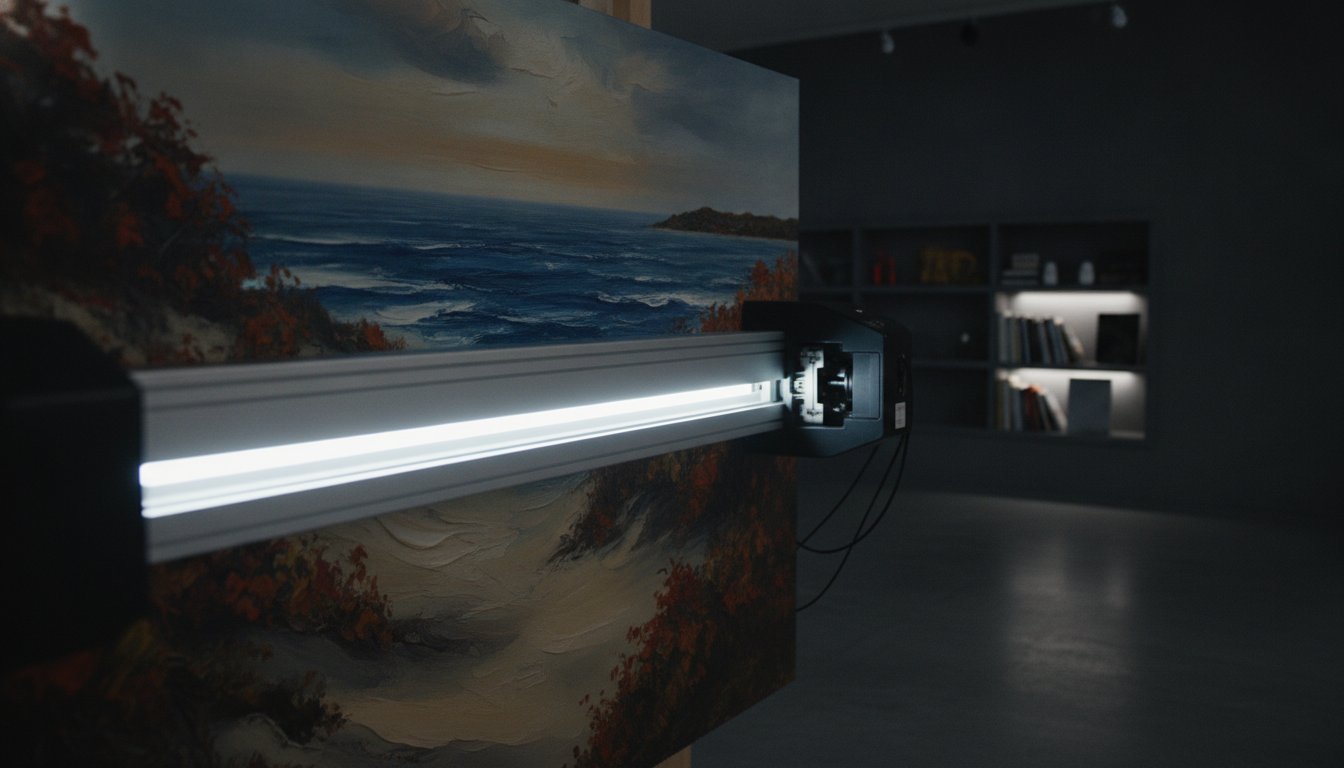
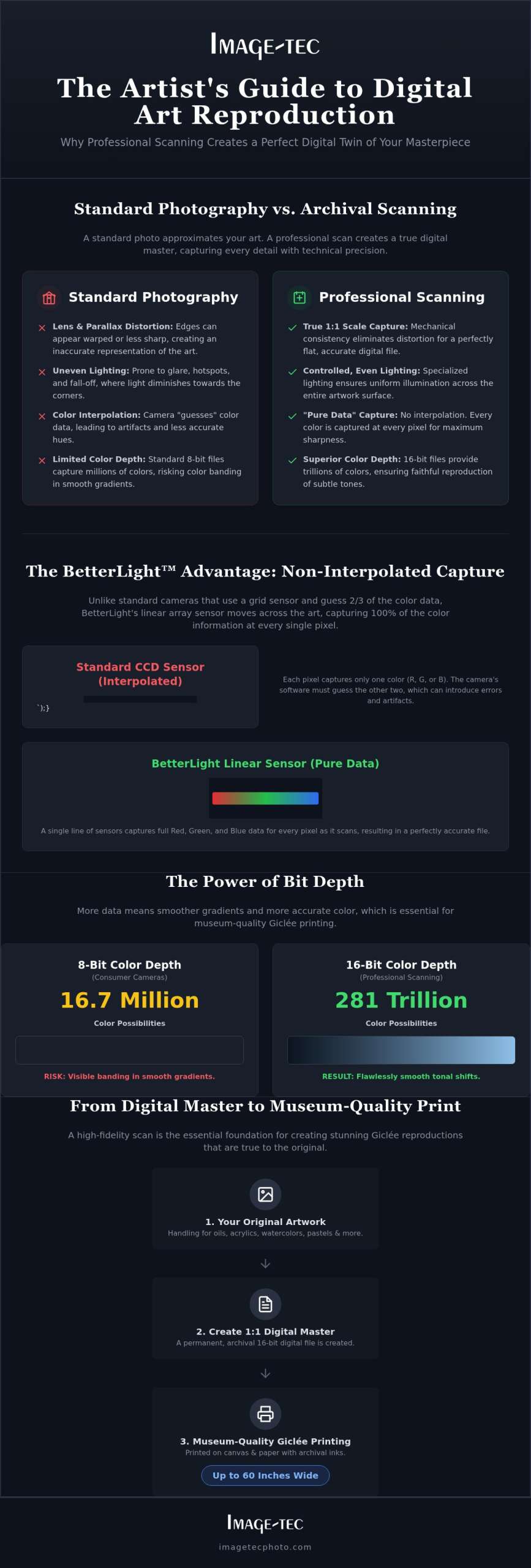
When you use a standard camera to photograph a painting, you’re often fighting against lens distortion and lighting fall-off. Even with high-end lenses, the edges of a frame can suffer from slight warping or a loss of sharpness. A professional image scanner, specifically one utilizing a linear array sensor, moves across the artwork with mechanical consistency. This method captures a 1:1 scale across the entire surface, which eliminates the parallax error common in traditional photography. Non-contact scanning is also a primary advantage; it allows the technician to digitize heavy impasto oils or fragile charcoals without any physical pressure touching the original surface.
Color fidelity and bit-depth also play a critical role in this distinction. While consumer cameras typically produce 8-bit files, professional scanning captures data in 16-bit depth. This provides trillions of color possibilities rather than millions, allowing for the smooth gradients and subtle tonal shifts that define a masterpiece. Without this technical depth, digital files often suffer from banding or color shifting that makes high-quality reproduction impossible.
Why Massachusetts Artists Choose Local Studios
Entrusting a valuable original to a shipping carrier involves significant risk. Many artists in the Boston, Manchester, and Newburyport areas prefer the security of a local studio. By choosing professional artwork scanning Massachusetts, you eliminate the dangers of lost packages or the environmental stress of a delivery truck. Since our studio was founded in 1994, we’ve focused on a master craftsman approach that prioritizes the safety of your work.
Working locally also allows for direct collaboration. You can speak directly with the technician about specific color concerns or the unique texture of your canvas. This hands-on process ensures that the final digital file is a true reflection of your vision. Supporting a local business in Methuen helps sustain the regional creative economy while providing you with the technical infrastructure needed for museum-quality results. We handle a wide variety of media, including:
- Textured oil and acrylic paintings
- Fragile watercolors and pastels
- Large-format works that require specialized capture
- Historical documents and mixed media
BetterLight Scanning: The Technical Standard for Art Reproduction
While many digital capture methods rely on standard high-resolution cameras, the BetterLight™ Scanning System remains the benchmark for fidelity in the fine art community. This technology utilizes a “pure data” approach that bypasses the limitations of traditional photography. For those seeking professional artwork scanning Massachusetts, this system provides a level of clarity that consumer-grade equipment simply cannot replicate. It’s the difference between an approximation of your work and a true digital twin.
The primary technical advantage lies in the use of linear array sensors. Standard digital cameras use a grid of pixels where each pixel only captures one color; the camera then “guesses” the surrounding colors through a process called interpolation. BetterLight technology captures every color at every pixel location. This eliminates the need for software to fill in the gaps, resulting in a file that’s remarkably sharp and free from the digital artifacts that often plague standard captures. BetterLight is a non-interpolated digital capture system.
How BetterLight Technology Works
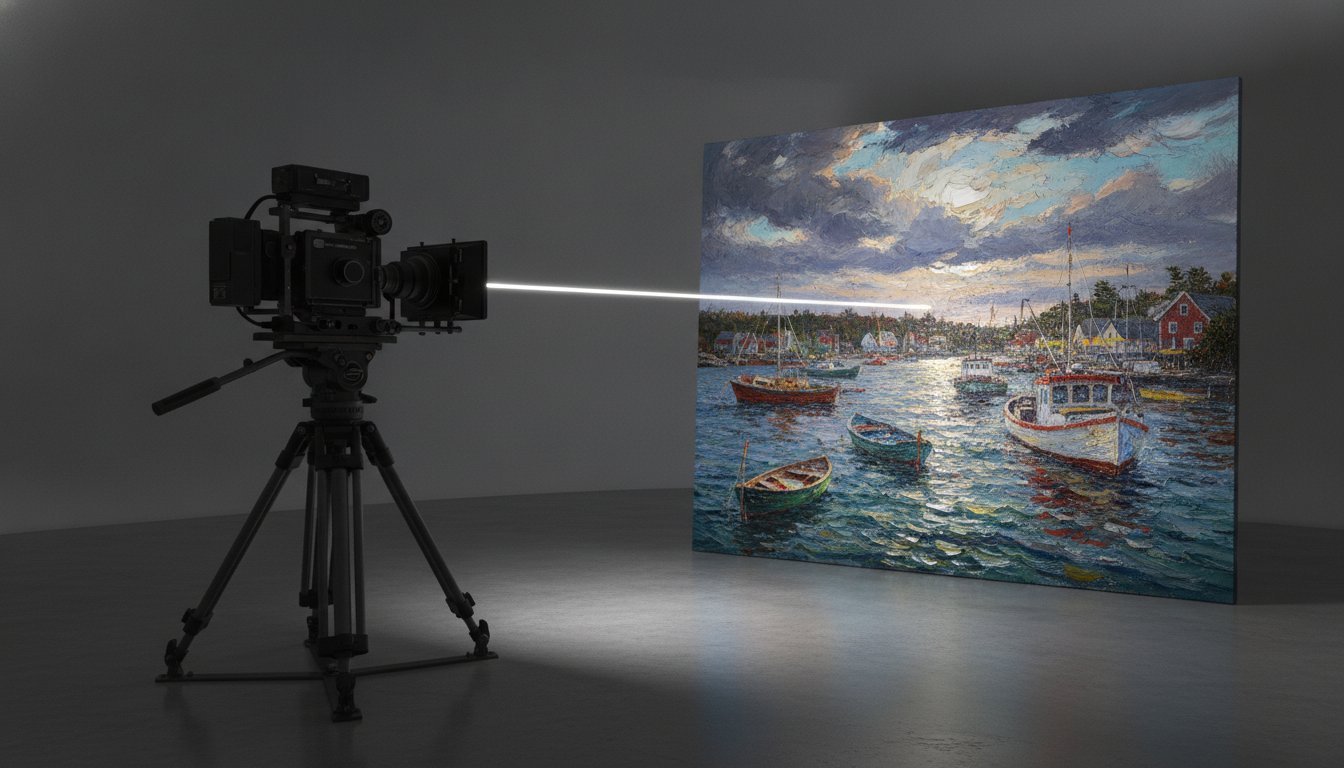
The system functions by moving a specialized scanning back across the focal plane of a large-format camera. This methodical movement captures the image in a single, continuous pass, which ensures uniform detail from the center of the canvas to the furthest corners. This process meets the rigorous standards established by the Federal Agencies Digital Guidelines Initiative (FADGI) for cultural heritage materials. By capturing data in 16-bit color depth, the system records trillions of distinct tones. This high bit-depth is essential for reproducing the subtle transitions in a watercolor wash or the deep shadows of an oil painting without the risk of digital noise.
Capturing Texture and Depth
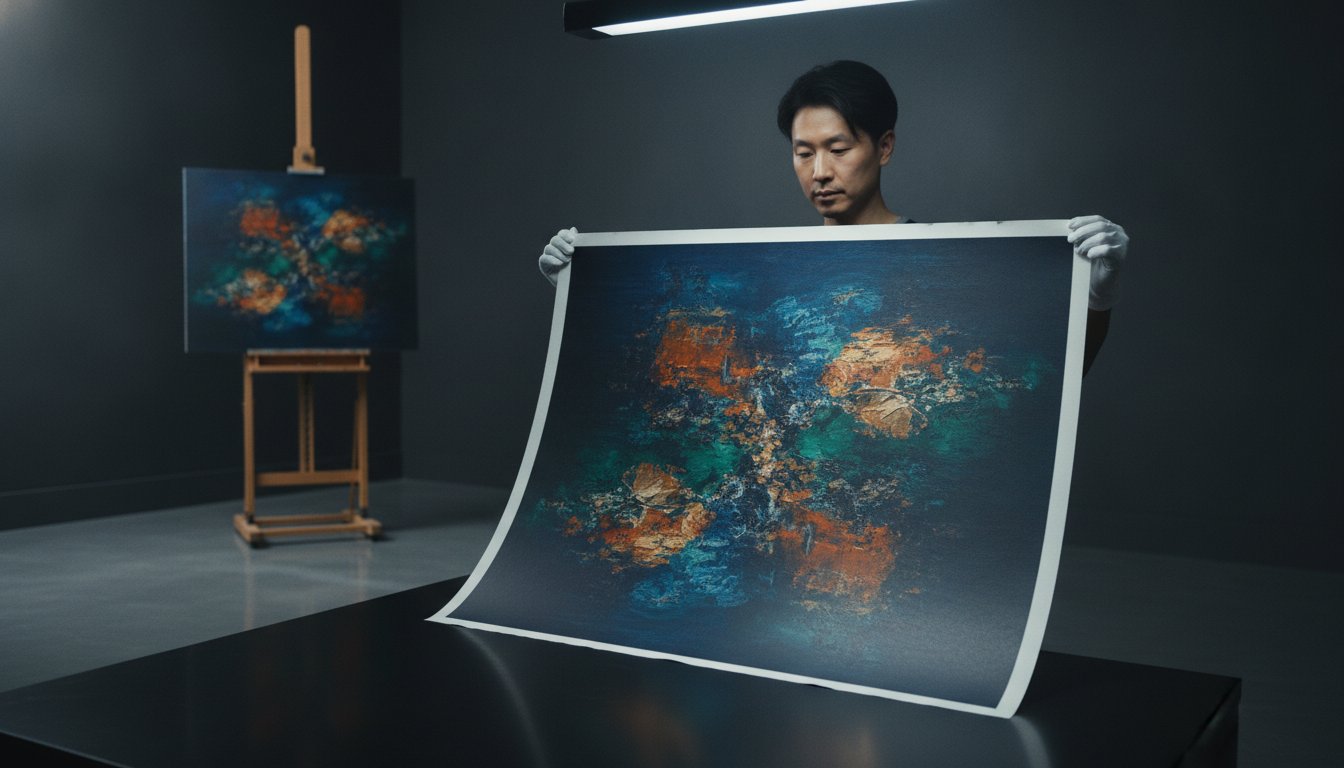
Texture is often the most difficult element to translate into a digital format. We use specialized, directional lighting in our Methuen studio to precisely control how shadows fall across the surface of your work. This allows us to highlight the physical presence of impasto brushstrokes or the delicate weave of a linen canvas. Because the sensor moves across the artwork, it maintains edge-to-edge sharpness that traditional lenses often lose at the periphery. This technical precision creates a master file capable of producing Giclée prints up to 60 inches wide with no loss of detail. The result is a reproduction that retains the tactile soul of the original masterpiece, ensuring your digital archive is as impressive as your physical portfolio.
Comparing Scanning Methods: BetterLight vs. Standard CCD Scanners
Standard flatbed scanners are designed for office documents, not fine art. They rely on physical contact, which requires your original to be pressed against a glass plate. For a textured oil painting or a delicate pastel, this pressure can be catastrophic. Beyond the risk of physical damage, these scanners are limited by their bed size. Attempting to digitize a large original often requires “stitching,” a process where multiple small scans are digitally merged. This frequently results in visible seams, geometric distortion, and inconsistent lighting across the final file.
Choosing professional artwork scanning Massachusetts ensures you avoid these common pitfalls. While standard CCD scanners use interpolation to fill in color gaps, the BetterLight system records the actual color value for every single pixel. This technical distinction is the foundation of archival longevity. If the initial capture lacks data, no amount of post-processing can restore the missing nuances of your work. The quality of this first digital master dictates the ceiling for every print produced in the future.
Historical Image Restoration Needs
High-resolution scanning is equally vital for preserving the past. Faded family photographs, antique maps, and historical documents often contain fine details that are invisible to the naked eye. These details can be recovered through 16-bit digital capture, which provides the necessary data depth for complex editing. Our expertise in historical image restoration service relies on these high-fidelity scans to rebuild lost contrast and correct chemical staining. We handle these fragile items with the same master craftsman approach we apply to modern masterpieces, ensuring that New England’s history is preserved for future generations.
The Limitations of Consumer Equipment
It’s tempting to believe that high-megapixel smartphones or consumer cameras can replace studio equipment. However, these devices use computational photography to sharpen images; this often invents detail that doesn’t actually exist in the original. They also operate within a limited sRGB color gamut, which fails to capture the rich, saturated pigments found in professional-grade paints. Additionally, cheaper high-intensity scanners can generate significant heat during operation. This heat can cause delicate papers to curl or older pigments to dry and crack, creating irreversible damage to your irreplaceable work. Our non-contact scanning method eliminates these risks entirely, providing a safe and superior alternative for serious artists.
How to Prepare Your Artwork for Professional Scanning
Preparing your masterpiece for the studio is a critical step in the reproduction lifecycle. While our BetterLight system handles the technical heavy lifting, the physical state of your work influences the final digital master. When you schedule professional artwork scanning Massachusetts, arriving prepared ensures the most efficient and accurate capture session. Proper preparation allows us to focus on the nuances of your palette and the depth of your textures without being hindered by avoidable physical issues.
Different media require specific considerations. For oil and acrylic paintings, the surface must be entirely dry to the touch. Tacky paint can attract dust or adhere to protective coverings during transport. For charcoal and pastels, a light application of fixative prevents smudging, though our non-contact scanning method minimizes risk once the piece is positioned. Watercolors and drawings should be kept as flat as possible; avoid rolling them in tubes, as this can create permanent waves that complicate the focal plane during capture.
Cleaning and Protecting the Original
Before your appointment in Methuen, inspect your work for surface debris. Use a clean, soft-bristled drafting brush or a gentle puff of air to remove dust. Do not use cleaning solvents or damp cloths, as these can permanently alter the chemistry of your pigments. We recommend that artists avoid applying a fresh coat of varnish immediately before a scan. High-gloss varnish can create specular highlights that obscure fine detail; it’s often better to scan the “raw” surface and apply varnish to the final Giclée prints instead.
When transporting your work across Massachusetts, protect the surface with acid-free glassine paper. Secure the piece between two sheets of rigid foam core or archival cardboard to prevent bending or corner damage. For large-format works, ensure your vehicle is climate-controlled to avoid humidity-induced warping of the canvas or paper during the drive to our studio.
Defining Your Reproduction Goals
Clear communication regarding your final output helps us determine the optimal scanning resolution. If you intend to scale a small 8×10 watercolor up to a 60-inch canvas print, we’ll adjust the capture parameters to ensure every minute detail remains sharp at that size. You should also consider your archival needs. We primarily deliver 16-bit TIFF files, which are the industry standard for archival masters because they preserve all captured data without compression. JPEGs are suitable for social media or websites but lack the depth required for high-end printing.
If you have a specific color target or a previous print you want to match, please bring it as a physical reference. This allows for precise color proofing during the digitization process. For a deeper look at the technical requirements of the printing phase, you can read our guide on how to print on canvas from original artwork. If you’re ready to preserve your portfolio with museum-grade precision, visit our Methuen studio to discuss your project with our master craftsmen.
The Image-Tec Advantage: Art Reproduction in Methuen
Image-Tec has operated as a specialized production environment since 1994. We’ve spent over three decades refining a master craftsman approach to digital capture, ensuring every project benefits from 30 years of technical stability. When you choose professional artwork scanning Massachusetts, you’re partnering with a studio that understands the weight of your artistic legacy. We don’t simply provide a digital file; we offer a comprehensive production path that maintains your original vision from the first scan to the final framed masterpiece.
Our studio functions as a local pillar for the New England creative community. We’ve built our reputation on quiet, earned confidence and a commitment to high standards that flashy trends can’t replace. By providing a dependable space for technical excellence, we help artists bridge the gap between their physical studio work and a professional digital presence. This seasoned professionalism is why established artists and commercial clients across the region trust us with their most valuable originals.
From Scan to Giclée Masterpiece
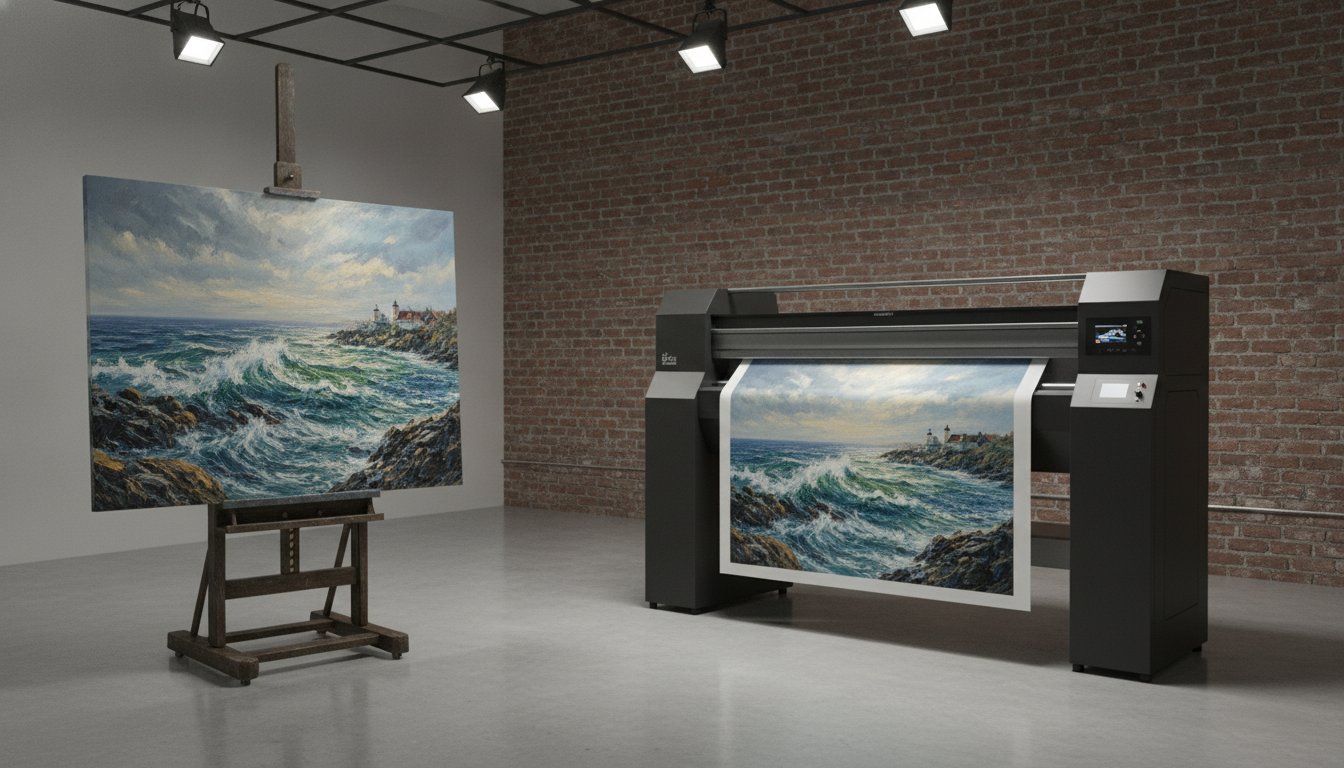
The true advantage of our Methuen studio is the seamless integration of scanning and printing. We specialize in large-format Giclée printing, producing archival canvas and paper prints up to 60 inches wide. By managing this entire workflow in-house, we eliminate the color-shifting risks that occur when files move between different vendors. This integrated process is the foundation of Mastering Art Reproduction for New England Artists, allowing us to proof colors against your original work in real-time. To complete your presentation, we also offer custom framing solutions that meet museum-quality standards.
Visit Our Methuen Studio
Beyond large-format prints, many artists also require professional labeling solutions for their archival packaging or branded merchandise. For those seeking specialized color label printers and finishing equipment, OptiMediaLabs Canada offers a range of professional tools designed to maintain color precision across various media formats.
Located in Methuen, our studio serves as a central hub for artists in Boston, Newburyport, and Manchester, New Hampshire. This location offers the logistical advantage of an accessible, professional production space without the congestion of a major city center. It’s an organized environment where you can safely deliver your originals and consult directly with our experts. We take pride in being a versatile problem-solver for projects of any scale, from a single family heirloom to an entire gallery exhibition. Just as we prioritize structural safety for your art, you can learn more about GTE Construction & Roofing for professional roofing and home construction services that protect your creative workspace.
High-fidelity digital capture is more than a technical requirement; it’s a commitment to the longevity of your work. By utilizing BetterLight technology, you ensure that every nuance of color and texture is recorded without the distortion or data loss common in consumer-grade equipment. This methodical approach provides the stable foundation needed for archival Giclée prints that truly reflect your original vision. You don’t have to settle for approximations when museum-grade precision is available locally.
For artists throughout New England, Image-Tec offers over 30 years of specialized experience in professional artwork scanning Massachusetts. Our studio in Methuen provides the technical infrastructure and master craftsman service required to handle your most delicate originals with care. Whether you’re digitizing a contemporary collection or restoring historical documents for the communities of Boston and Newburyport, we provide the steady hand your work deserves. Schedule Your BetterLight Scanning Session at Image-Tec Today to begin your reproduction project. We’re ready to help you preserve your masterpieces with the archival precision they require.
Frequently Asked Questions
How much does professional artwork scanning cost in Massachusetts?
The cost for professional artwork scanning in Massachusetts depends on several factors, including the dimensions of the original and the desired final resolution. Larger pieces or those requiring extensive color proofing for Giclée reproduction involve different investment levels than smaller, standard captures. We recommend contacting our Methuen studio directly for a specific quote tailored to your portfolio’s unique requirements and archival goals. Every project is handled with care. It’s a precise process.
Can you scan artwork that is already framed or behind glass?
We strongly recommend removing artwork from frames and glass before scanning to ensure the highest possible image quality. Glass creates unwanted reflections and specular highlights that can obscure fine details and alter color accuracy. By scanning the original surface directly, we capture the true texture and pigment depth without the interference of a secondary layer. Our technicians can assist in evaluating your framed originals safely. We prioritize the safety of every piece.
What is the maximum size of artwork you can scan with BetterLight?
BetterLight scanning is highly versatile and capable of digitizing very large originals by capturing data in a single, continuous pass. While we produce Giclée prints up to 60 inches wide, we can scan originals of varying scales with edge-to-edge sharpness. If you have an exceptionally large mural or canvas, we use specialized lighting and positioning to ensure consistent detail across the entire surface. We don’t use digital stitching. The result is seamless.
How long does the artwork scanning process take?
The scanning process typically involves several stages, from the initial setup and lighting calibration to the final digital proofing. While the actual scan may take several minutes, the total turnaround time depends on the current studio volume and the complexity of your specific project. Most artists can expect their files or prints within a few business days. We prioritize a methodical pace to ensure every capture meets our rigorous quality standards. We don’t rush the craft.
Do I get the digital files after my art is scanned?
Yes, you receive high-resolution digital master files as the primary output of the scanning session. We typically provide 16-bit TIFF files, which are the industry standard for archival preservation and high-end printing. These files belong to you and serve as a permanent record of your work. We can also provide compressed JPEGs for easier sharing on social media or websites upon request. Your digital archive remains ready for future use. It’s your legacy.
Can you scan highly textured oil paintings or mixed media?
Highly textured oil paintings and mixed media pieces are ideal candidates for our non-contact scanning process. Unlike flatbed scanners that press the artwork against glass, our system captures the surface from a distance. This allows us to use directional lighting to emphasize the physical depth of brushstrokes and impasto techniques. The result is a digital file that retains the tactile character and three-dimensional soul of your original masterpiece. It’s remarkably clear.
Is BetterLight scanning better than a high-resolution DSLR camera?
BetterLight scanning provides a significant technical advantage over standard DSLR cameras by using a linear array sensor. Traditional cameras use a grid that requires interpolation to guess colors, which can lead to soft edges or digital artifacts. BetterLight captures the full color value for every pixel, resulting in superior sharpness and color fidelity. This makes it the preferred choice for professional artwork scanning in Massachusetts when archival precision is the goal. It’s pure data.
Do you provide color matching for Giclée prints?
We provide expert color matching to ensure your Giclée prints are a 1:1 match with your original artwork. This process involves careful calibration between the digital capture and our archival pigment printers. By having the original physical piece in our Methuen studio during the proofing stage, we can make precise adjustments to the file. This ensures the final reproduction respects your intended palette and tonal range with museum-grade accuracy. We prioritize your vision.




Leave A Comment
You must be logged in to post a comment.