
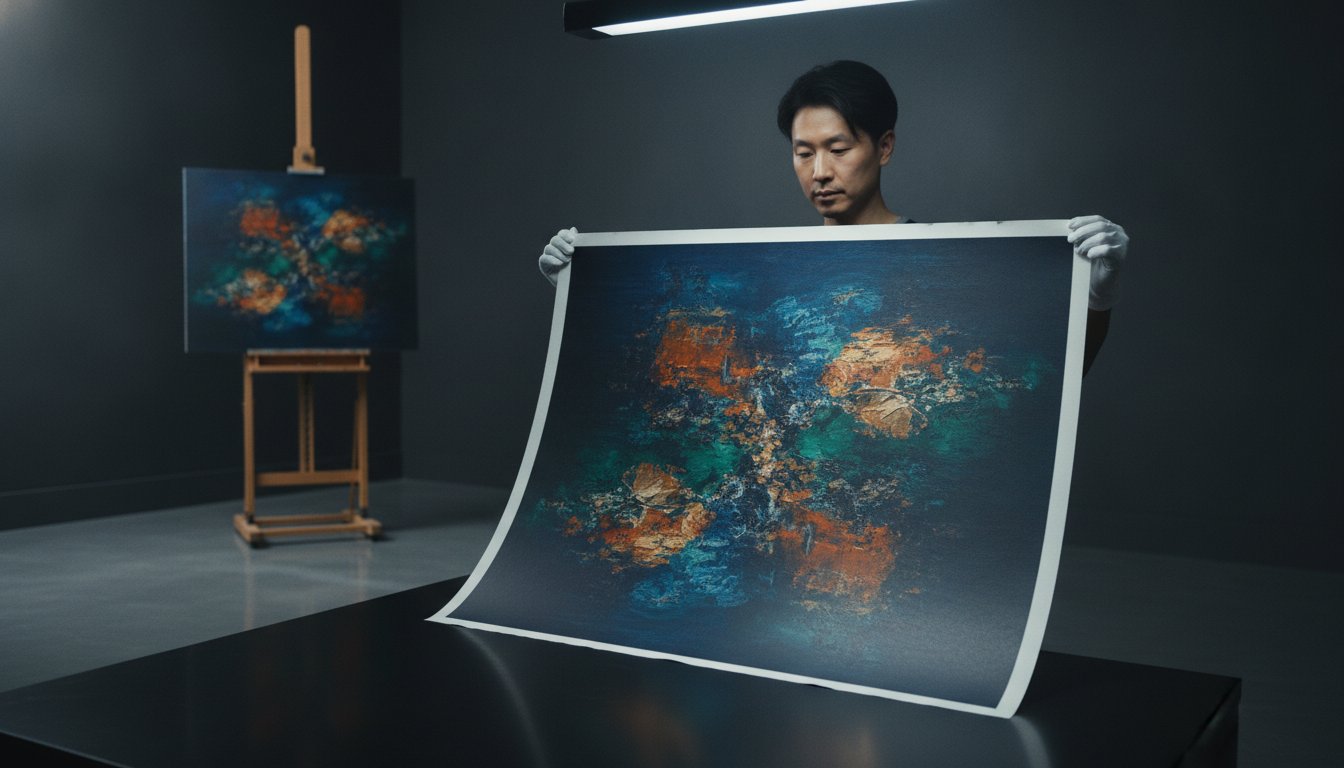
Did you know that 68% of online art shoppers incorrectly assume that using archival paper alone guarantees a 100-year lifespan for a print? While the substrate is a critical foundation, true longevity is the result of a precise technical ecosystem. For many creators, the transition from a physical masterpiece to a digital edition is often a source of concern. You’ve likely experienced the frustration of seeing a digital capture lose the fine texture of your brushwork or watching a print’s colors shift away from your original intent. Mastering archival printing for artists requires moving beyond generic marketing claims toward verifiable technical standards.
We believe that your work deserves a legacy that matches its initial impact. Quality shouldn’t be a guessing game. This guide outlines the essential materials and processes, including the 2026 ISO standards for LED light stability, that define museum-grade reproductions. You’ll learn how specialized BetterLight scanning captures detail that standard equipment misses and why finding a reliable local partner is vital for a seamless workflow. We will examine the technical specifications, from pigment-based inks to acid-free substrates, required to produce prints that are virtually indistinguishable from your originals.
Key Takeaways
- Understand the technical shift from standard inkjet to museum-quality Giclée reproductions based on the latest 2026 ISO standards for longevity.
- Discover why archival printing for artists begins with high-resolution BetterLight scanning to capture the full depth and texture of your original work.
- Identify the specific combinations of pigment-based inks and acid-free substrates that guarantee a lifespan of 100 years or more.
- Learn how custom framing with UV-protective glazing acts as the final, essential layer of defense against environmental fading and yellowing.
- See the benefits of a localized “capture-to-frame” workflow that provides the personal consultation and color proofing required for professional results.
What is Archival Printing? Defining Museum Standards for 2026
The term archival is often treated as a vague marketing claim, but for professional creators, it represents a rigorous set of technical benchmarks. In 2026, these standards are defined by criteria such as ISO 9706, which specifies the permanence requirements for paper. Archival printing for artists isn’t simply a choice of high-quality paper; it’s a commitment to a chemical ecosystem that ensures a print remains unchanged for 100 years or more. Organizations like the Fine Art Trade Guild establish these benchmarks to ensure that museum-quality reproductions meet strict lightfastness and durability requirements. Understanding these standards allows you to distinguish between products that merely look good today and those engineered to last for generations.
The Chemistry of Archival Integrity
True archival quality starts with the substrate’s molecular makeup. While many retail papers are labeled acid-free, this only means the pH is neutral at the time of manufacture. Over time, wood-pulp-based papers can develop acidity as they age, leading to brittle edges and discoloration. Professional archival-grade substrates utilize alpha-cellulose or 100% cotton rag fibers, which are naturally stable and durable. These materials often include a calcium carbonate buffer to neutralize atmospheric pollutants over time. We also prioritize papers that avoid Optical Brightener Agents (OBAs). While OBAs make paper look whiter than white initially, they eventually break down, leading to noticeable yellowing and color shifts in your work.
Giclée vs. Standard Digital Prints
The distinction between a standard digital print and a professional reproduction lies in the ink and the delivery system. Standard office or commercial printers often use dye-based inks, which offer vibrant initial colors but lack UV stability. For museum-quality results, pigment-based inks are non-negotiable. Modern 12-color archival systems provide a significantly wider color gamut than standard 4-color CMYK processes, allowing for the subtle gradations found in original paintings. Giclée printing is a high-resolution pigment-based process. By using these specialized systems, artists ensure their prints maintain their integrity under various lighting conditions, meeting the latest ISO 18937-3:2026 stability standards for indoor LED environments. This technical precision ensures that archival printing for artists delivers a product that remains indistinguishable from the original for decades.
The Foundation of Quality: BetterLight Scanning for Artists
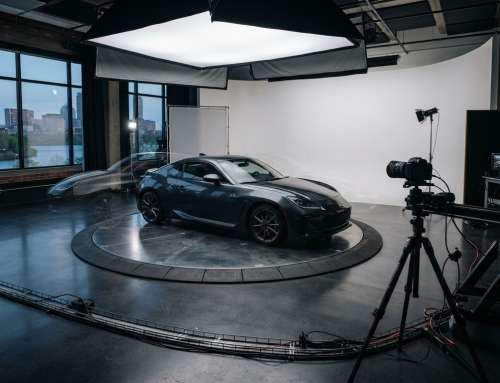
The journey toward a museum-quality reproduction begins long before the first drop of ink hits the paper. While much of the conversation around archival printing for artists focuses on substrates, the integrity of the final product is fundamentally limited by the quality of the initial digital capture. A standard photograph or a consumer-grade scan often introduces digital noise, lens distortion, or uneven focus that compromises the artist’s vision. To overcome these limitations, we utilize BetterLight scanning technology, a specialized large-format system designed specifically for high-fidelity art reproduction.
Unlike traditional single-shot digital cameras, a BetterLight scanning back captures data line-by-line across the entire surface of the artwork. This method ensures that 100% of the original detail is preserved without the interpolation or “guessing” that occurs with standard sensors. For artists working with heavy impasto or intricate textures, this process is essential. It captures the physical topography of brushstrokes and the subtle variations in pigment that define a unique piece. This methodical approach eliminates the graininess often found in digital photography, providing a clean, high-resolution file that serves as the perfect master for future editions.
Just as artists require high-resolution capture for their work, those in scientific fields needing to examine materials at a microscopic level can visit Electron Optics Instruments, LLC to explore benchtop and tabletop scanning electron microscopes.
Color Accuracy and Digital Capture
Achieving a print that is indistinguishable from the original requires a sophisticated color-profiling workflow. We create custom profiles for every capture to ensure the digital file accurately reflects the original painting’s palette. This precision is especially critical when producing prints up to 60 inches wide, where any minor discrepancy in color or resolution becomes magnified. Our scanning process also prioritizes the safety of your work. By using controlled, non-destructive lighting and a vertical mounting system, we can safely digitize fragile or oversized pieces without the risks associated with traditional flatbed contact or high-heat studio lights.
BetterLight vs. Standard Flatbed Scanners
Standard flatbed scanners are often limited by a shallow depth of field, which causes textured oil and acrylic paintings to appear soft or blurred in areas of high relief. BetterLight systems provide superior depth and clarity across the entire image plane, ensuring every peak and valley of the medium remains in sharp focus. Lighting uniformity is another critical advantage; our studio setup eliminates hot spots and glare, providing a perfectly even exposure that flatbeds cannot replicate. Local creators in the Boston and Merrimack Valley areas often choose our Methuen studio for this level of technical oversight. If you are preparing for a new edition, our BetterLight scanning services provide the high-resolution foundation your work requires.
Substrates and Pigments: Choosing Your Archival Medium
Selecting a medium involves balancing aesthetic intent with technical durability. Smooth papers are ideal for detailed drawings and high-definition photography, where every line must be crisp. In contrast, textured surfaces add a physical depth that complements painterly brushwork. For archival printing for artists, the professional standard for paper weight is generally 300gsm or higher. This thickness ensures the print feels substantial and resists the physical stresses of the mounting and framing process.
Longevity is driven by the chemistry of pigment-based inks. Unlike dye-based alternatives that penetrate the fiber and remain vulnerable to oxidation, pigments are microscopic solid particles that sit on the surface. These particles are naturally resistant to UV degradation, ensuring that colors remain stable under the latest 2026 light-stability standards. This stability is what allows a print to maintain its vibrancy for a century or more without the fading common in standard digital outputs.
Fine Art Paper Categories
Cotton Rag is the gold standard for watercolor and charcoal reproductions. It’s 100% cotton, acid-free, and lignin-free, offering a soft, matte finish that doesn’t distract from the artwork’s texture. For high-contrast digital art and photography, Baryta and Photo Rag are excellent choices. Baryta papers offer a semi-gloss finish that mimics traditional darkroom prints, providing deep blacks and a wide dynamic range. When reproducing oil paintings at a large scale, archival canvas is often the best option. We offer both glossy and matte canvas finishes to match the sheen of your original work, providing a durable surface that can be stretched over wooden bars.
Large Format Capabilities for New England Artists
Scaling your work to larger dimensions shouldn’t mean sacrificing clarity. Our studio produces prints up to 60 inches wide on both canvas and fine art papers. Achieving this scale requires a high-resolution foundation, which is why we emphasize the precision of the initial capture. We maintain high PPI output to ensure that even at five feet wide, the image remains sharp and free of digital artifacts. Each print is custom trimmed with specific border widths, providing the necessary space for artist signatures and limited edition numbering. This methodical approach ensures your large-scale reproductions carry the same weight and authority as your original masterpieces.
Just as artists rely on systematic labeling for their limited editions, professionals in other fields require precise documentation tools; for example, those performing field inspections can learn more about PHOTO iD to automate their photo organization and labeling.

The Final Layer: Longevity through Custom Framing and Protection
An archival print isn’t a finished product until it’s properly housed. While we’ve discussed the technical merits of BetterLight scanning and 300gsm substrates, the final environment determines whether your vision lasts for decades or centuries. Archival printing for artists requires a holistic approach that extends to the framing stage. Without professional-grade protection, environmental factors like humidity and UV exposure can undo the careful work of the capture and print phases. A museum-quality reproduction is a chemical system that must be shielded from the elements to maintain its integrity.
One of the most significant threats to longevity is light exposure. Research indicates that prints framed with standard clear glass can show significant fading in under 30 years. We utilize UV-protective glass and acrylic that filters out up to 99% of harmful ultraviolet rays, meeting the 2026 ISO standards for light stability. Beyond light, mounting techniques must be reversible. We avoid permanent adhesives or spray mounts that can cause chemical yellowing over time. Instead, we use non-adhesive hinges or corners that allow the paper to expand and contract naturally without stress, ensuring the artwork remains flat and secure.
Archival Framing Components
Every component inside the frame must be chemically inert. We use 100% acid-free matting to prevent “mat burn,” a common brown discoloration caused by the lignin in cheap wood-pulp boards. It’s also vital to use spacers or deep mats to keep the print from touching the glazing. If the print surface contacts the glass, condensation can cause the ink to stick or “cockle,” which permanently damages the image. Finally, we seal the back of every frame with a professional dust cover to prevent atmospheric pollutants and insects from entering the enclosure. This methodical sealing process is essential for work intended for long-term archival storage or gallery display.
Varnishing and Coating for Canvas
Canvas prints require a different protective strategy since they are typically displayed without glass. We apply archival-grade UV topcoats to all canvas reproductions to act as a barrier against moisture and physical abrasion. This is especially important for large-scale works in high-traffic environments. Beyond protection, these coatings enhance the aesthetic impact of the piece by increasing the maximum black density. This results in richer shadows and more vibrant color saturation that mimics the look of a fresh oil painting. For creators in the New England area, our custom framing and varnishing services ensure that your work is protected from the moment it leaves the studio.
Partnering with a Local Master Studio in Massachusetts
While national online labs offer convenience, they often lack the personal oversight required for high-stakes art reproduction. For professional archival printing for artists, the ability to stand in the same room as your technician is invaluable. Image-Tec has operated as a local pillar in Methuen since 1994, providing a level of stability and specialized expertise that remote services cannot replicate. Our 30-year legacy is built on a foundation of technical excellence and a deep understanding of the New England art community. We serve a dedicated group of creators across the Merrimack Valley, from the coastal galleries of Newburyport to the active professional scenes in Manchester, NH and Boston.
Our studio manages the entire archival lifecycle within a single facility. This “capture to frame” approach ensures that the technical data gathered during the BetterLight scanning phase translates perfectly to the final Giclée print and custom frame. By keeping every step in-house, we eliminate the risks associated with multi-vendor workflows, such as color drift or mishandling during transport. This integrated model provides a sense of order and efficiency, allowing you to focus on the creative aspects of your work while we handle the technical execution.
The Image-Tec Collaborative Process
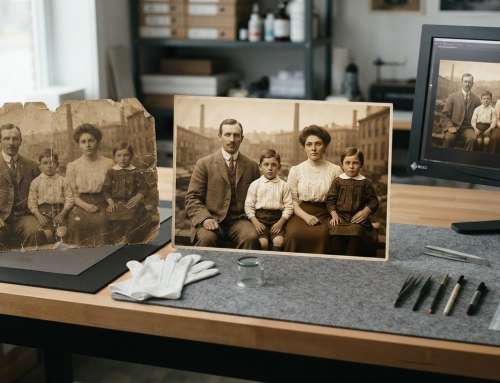
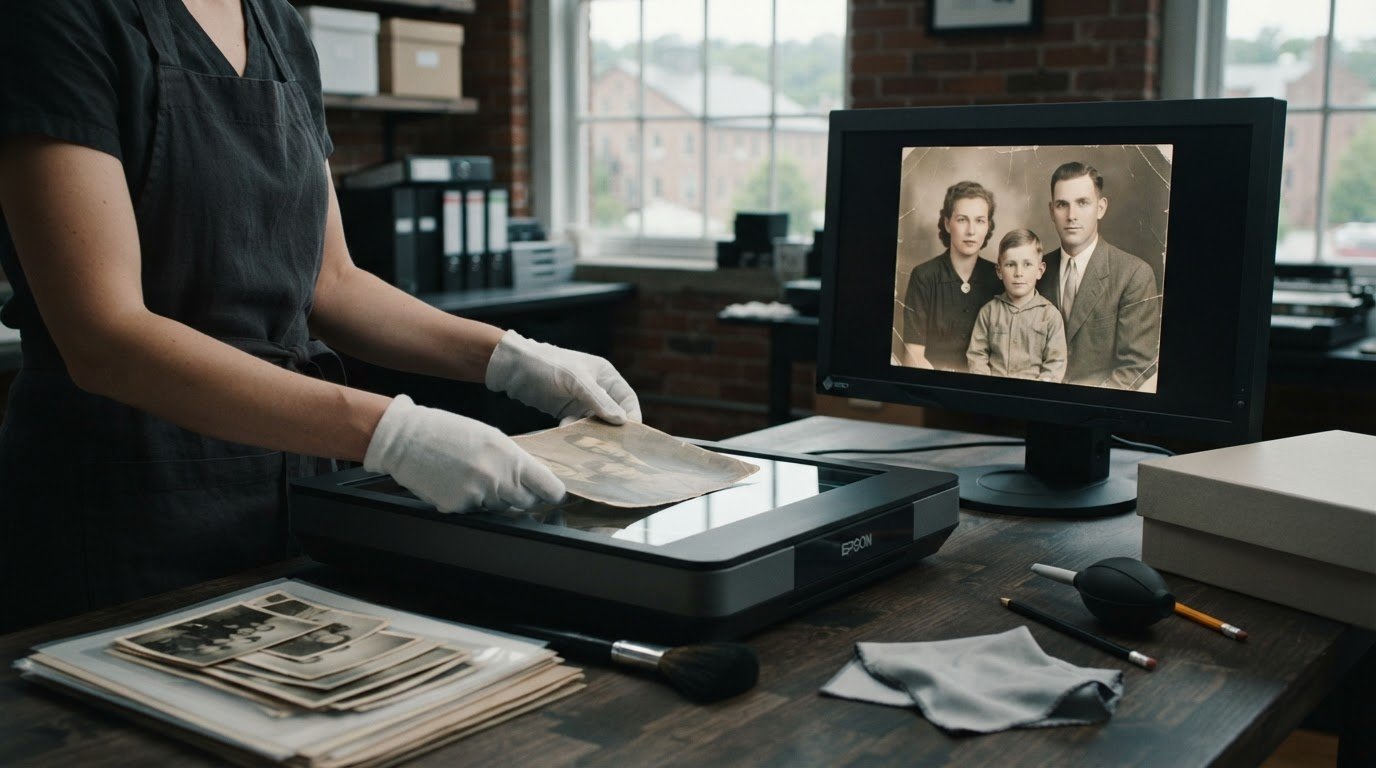
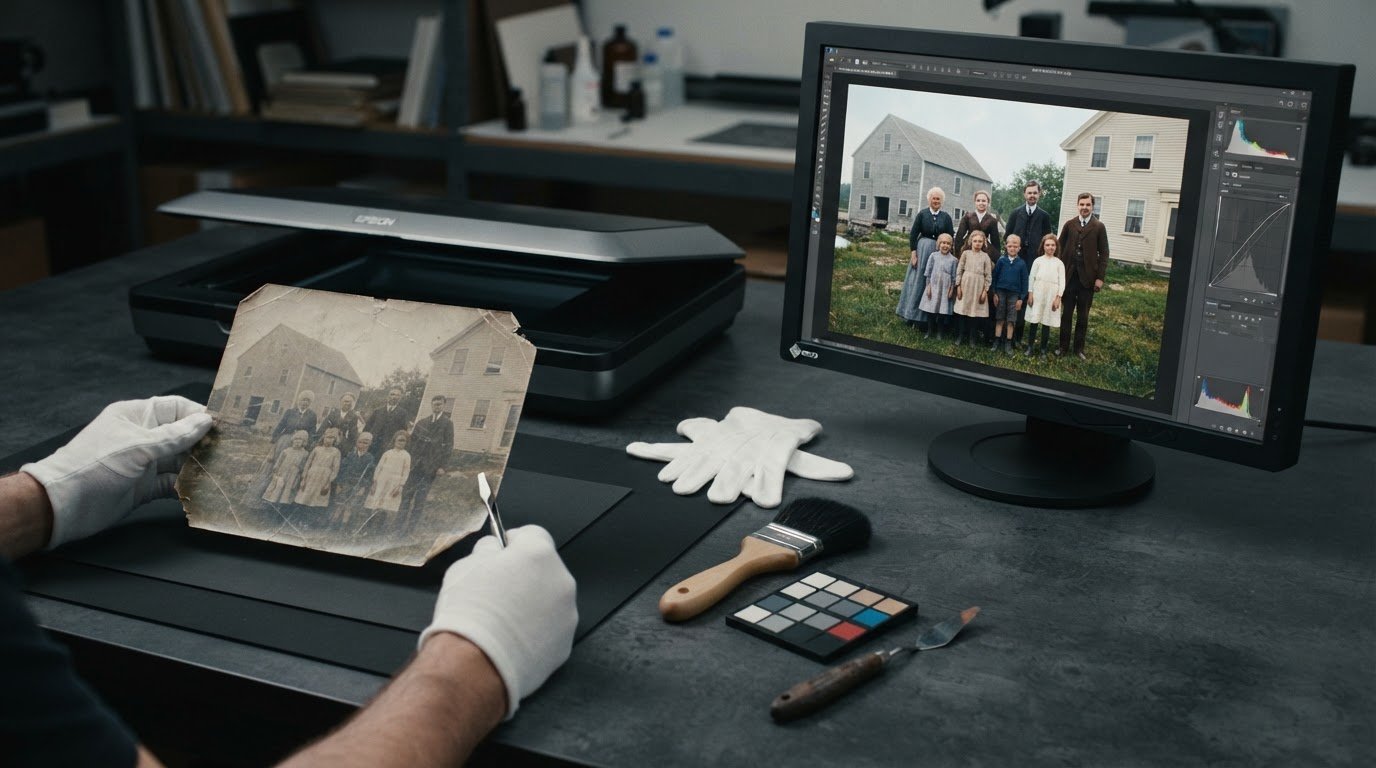
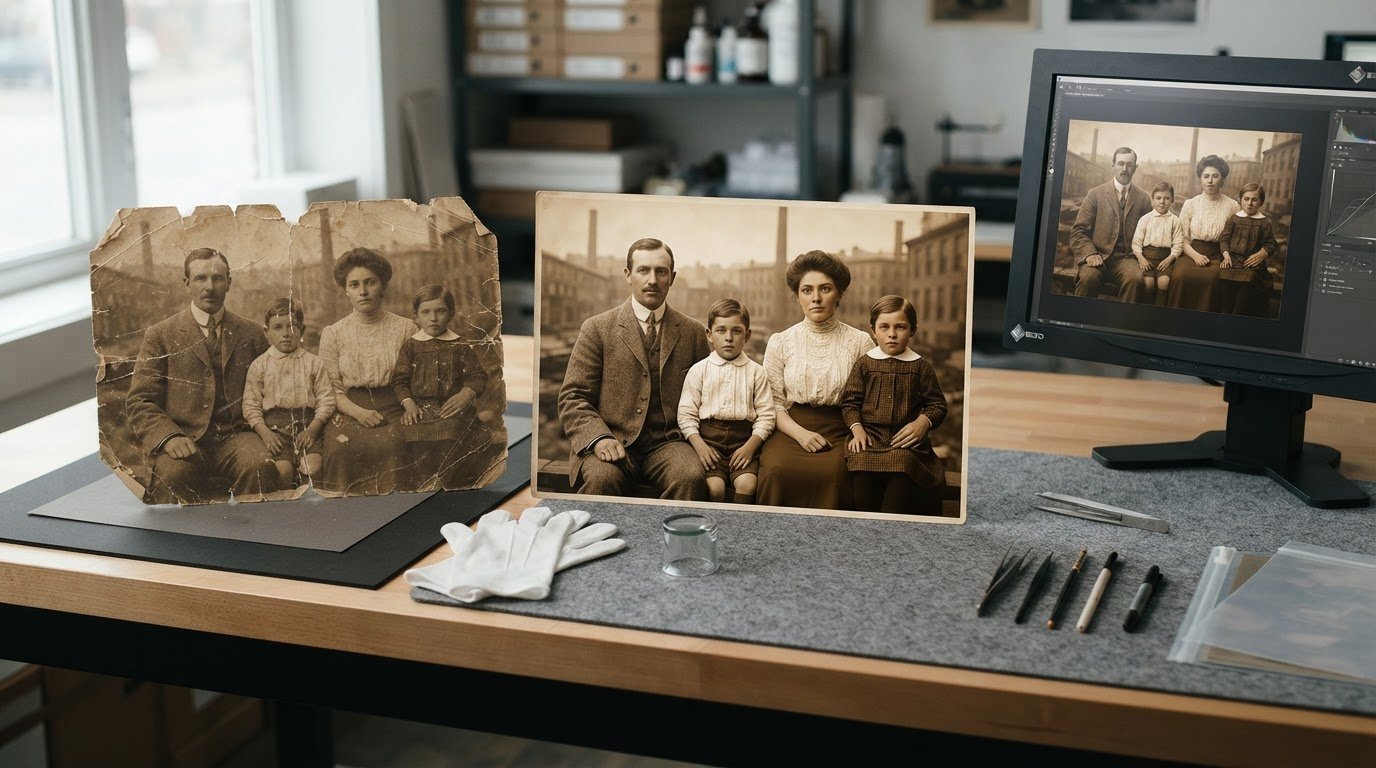
Collaboration is at the heart of our studio environment. You work directly with seasoned technicians to review physical color proofs under controlled lighting, ensuring the final output matches your original intent. This hands-on verification eliminates the guesswork inherent in screen-based ordering. Whether you need a single portfolio-quality print or a large-scale gallery run of up to 60 inches wide, we provide scalable solutions tailored to your production schedule. Beyond new editions, we also specialize in historical image restoration. This service allows artists and collectors to preserve aged legacies, utilizing our archival infrastructure to breathe new life into fragile or damaged originals while maintaining their historical integrity.
Getting Started with Your Reproduction Project
Preparing your artwork for reproduction requires careful logistics. We recommend wrapping originals in acid-free glassine and sturdy cardboard before transport to our Methuen studio to ensure they remain pristine. Once your work arrives, we conduct a thorough assessment to determine the best scanning and substrate options for your specific medium. Clear communication during this phase ensures that the final result meets museum standards for 2026. If you’re ready to elevate your reproductions and build a lasting legacy, you can book a consultation at our Methuen studio for your next archival project. We look forward to acting as your trusted partner in art preservation.
Building a Legacy Through Technical Excellence
Creating museum-quality reproductions is a multi-stage commitment that begins with the precision of a digital capture and ends with the protection of a custom frame. By adhering to the latest 2026 ISO standards and utilizing specialized BetterLight high-res scanning, you ensure that your work maintains its integrity for a century or more. Archival printing for artists is not just about selecting a heavy paper; it’s about a methodical approach to chemistry, light stability, and craftsmanship. This holistic process transforms a single original into a lasting edition that collectors can trust.
Since 1994, our studio has served as a reliable partner for the New England art community. We provide the technical infrastructure and personal consultation required to manage complex reproduction needs, from large-format prints up to 60 inches wide to intricate historical restorations. Our Methuen-based team is ready to help you navigate every technical challenge with quiet, earned confidence. If you’re prepared to secure your artistic legacy with professional results, Request a Quote for Professional Archival Printing today. We look forward to preserving your vision for the generations to come.
Frequently Asked Questions
What makes a print truly archival for an artist?
A print is considered archival when it utilizes pigment-based inks and acid-free, lignin-free substrates that meet ISO 9706 standards. Archival printing for artists relies on a chemically stable ecosystem where no component causes yellowing or degradation over time. This includes using 100% cotton rag or alpha-cellulose fibers rather than wood pulp. When these materials work together, they ensure the artwork remains unchanged for generations.
How long do archival Giclée prints actually last?
Archival Giclée prints are engineered to last 100 years or more under standard indoor display conditions. According to the ISO 18937-3:2026 standard, these prints maintain their color stability even when exposed to modern LED lighting systems. Longevity is significantly enhanced when you use UV-protective glazing and maintain a stable environment. Without these protections, even the highest quality pigments can show signs of fading in less than 30 years.
Is BetterLight scanning better than a high-end digital camera?
BetterLight scanning is superior for art reproduction because it captures 100% of the original detail without the interpolation or digital noise common in single-shot cameras. While high-end cameras use a fixed sensor, the BetterLight system moves a trilinear sensor across the image plane. This methodical capture preserves the physical topography of your brushwork and ensures edge-to-edge sharpness that standard photography can’t replicate.
Do I need to varnish my archival canvas prints?
You should always varnish archival canvas prints since they are typically displayed without the protection of glass. We apply archival-grade UV topcoats to act as a barrier against moisture, dust, and physical abrasion. Beyond protection, these coatings deepen the black levels and enhance color saturation. This ensures your reproduction carries the same visual weight as an original oil or acrylic painting.
What is the difference between acid-free and archival paper?
Acid-free paper is pH-neutral at the time of manufacture, but archival paper is designed to remain stable for centuries. Many acid-free papers still contain lignin, which can eventually break down and introduce acidity. True archival paper is lignin-free and usually made from 100% cotton rag. It often includes a calcium carbonate buffer to protect the substrate from atmospheric pollutants and ensure long-term structural integrity.
Can you produce archival prints larger than 40 inches?
We produce archival prints up to 60 inches wide on both canvas and fine art papers. Large-format archival printing for artists requires a high-resolution foundation to maintain clarity at scale. Our BetterLight scanning process provides the necessary pixel density to ensure that even at five feet wide, your work remains sharp and free of digital artifacts. We also offer custom trimming to accommodate specific border requirements.
Why is custom framing considered part of the archival process?
Custom framing acts as the final environmental shield that preserves the print’s chemical stability. It’s not just an aesthetic choice; it’s a technical requirement. By using UV-protective glazing, acid-free matting, and spacers, we prevent the print from touching the glass and shield it from harmful light. This setup prevents condensation damage and “mat burn,” which are the most common causes of print degradation over time.
How do I prepare my digital files for archival printing?
Digital files should be saved in a high-resolution format like TIF or DNG at a minimum of 300 DPI at the final output size. The ISO 12234-4:2026 standard establishes DNG as a reliable framework for long-term data compatibility. For the best results, we recommend professional scanning of your original work. This ensures that the digital master captures every nuance of color and texture before the printing process begins.




Leave A Comment
You must be logged in to post a comment.