
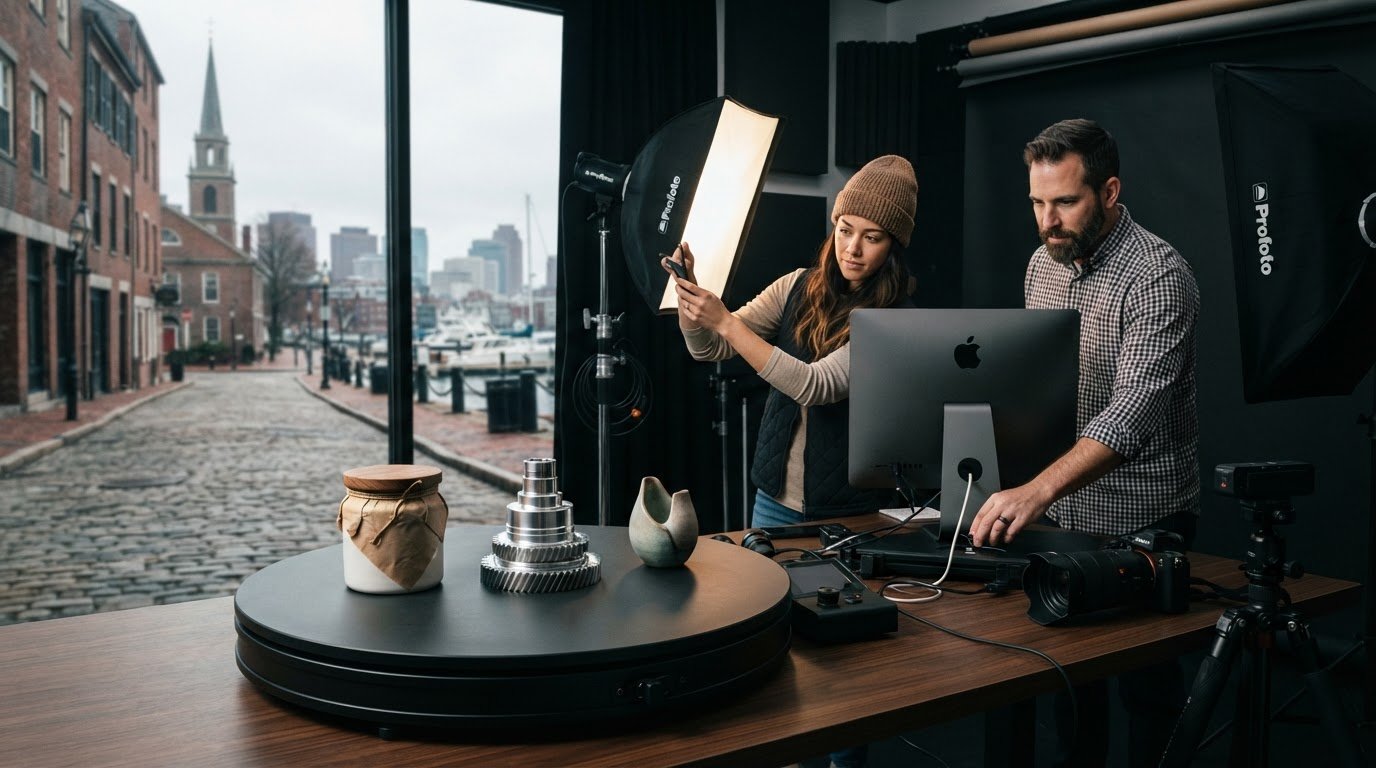
What if the right product image depends less on the camera and more on where you plan to use it? A commercial product photographer Boston businesses can work with should understand how images need to function across e-commerce, advertising, social media, and other marketing materials. You want confidence that the photographer can handle your product, create the right range of images, and make the process manageable even if your business isn’t in central Boston.
Image-Tec provides commercial product photography in-studio at its Methuen, Massachusetts studio and on location for Boston-area projects. The best approach depends on your products, brand, and intended use. A controlled studio setup can suit clear product views, while an on-location shoot can place products in a relevant setting. When customers benefit from seeing an item from multiple angles, 360-degree imaging is another option.
This article explains how product photography supports different marketing needs, how studio and on-location shoots compare, and what to prepare before discussing a project. It also covers how Image-Tec serves businesses in Boston, Methuen, Newburyport, and Manchester, New Hampshire, so you can consider the approach that fits your products and goals.
Key Takeaways
- Commercial product photography creates images for specific business and marketing purposes, distinct from broader lifestyle, corporate, or editorial photography.
- Start with your audience, marketing channel, product, and intended image use to define essential shots before adding creative variations.
- Studio and on-location photography serve different needs. The product, setting, and purpose of the images help determine the right approach.
- Prepare a concise project brief with your brand direction, priorities, image uses, and organized product details to make planning more focused.
- Image-Tec is a commercial product photographer Boston-area businesses can work with, offering studio and on-location photography from its Methuen base, as well as 360-degree imaging.
Boston Commercial Product Photography for Your Brand
Commercial product photography creates images that present a product clearly and purposefully for business use. It is photography planned around what customers need to see and where a business will use each image. That might mean showing a product’s shape and finish on an e-commerce page, creating a distinctive image for an advertising campaign, or producing a coordinated set for a printed catalog. The goal is not simply to make an attractive photograph. It is to create a useful visual asset that fits the brand and its communication needs.
Product photography differs from broader commercial assignments in its subject and priorities. Lifestyle imagery places a product in a setting or use context, while corporate photography may focus on a business, its people, or its workplace. Editorial work is shaped by a story or publication. These categories can overlap, but in product photography the product remains the central subject. The wider field of Commercial photography includes many kinds of image-making for business purposes, with the assignment guiding the approach.
The intended audience and placement help determine how to show the product. A product page may call for a direct view that makes important details easy to assess. Campaign materials may need a more expressive visual direction, while printed collateral may require images that fit a specific layout. There is no single lighting or styling formula for every item. Reflective surfaces, intricate details, packaging, and product scale all shape decisions for a shoot.
What makes product photography different from a general commercial shoot?
The product, its audience, and the image’s purpose guide decisions about framing, lighting, background, and styling. A product-page image may prioritize a clear view of the item, while campaign materials may emphasize mood or brand character. Images for printed collateral also need to suit the design and available space. Defining these uses keeps the visual approach focused instead of relying on one look for every deliverable.
When does a Boston business need professional product images?
A product launch is a natural time to plan new imagery, especially when images are needed across several marketing materials. A catalog update may also call for a consistent presentation across a range of items. Existing photographs may no longer fit if packaging, product details, brand direction, or marketing formats have changed. If your team keeps cropping, reusing, or working around images that do not fit their intended placements, it may be time to plan a new shoot.
For businesses looking for a commercial product photographer Boston companies can work with, Image-Tec offers commercial product photography from its Methuen, Massachusetts studio and on location for Boston-area clients. Its regional base also serves businesses in Methuen, Newburyport, and Manchester, New Hampshire, giving them an option beyond a studio in central Boston.
Matching Product Photography to Your Marketing Goals
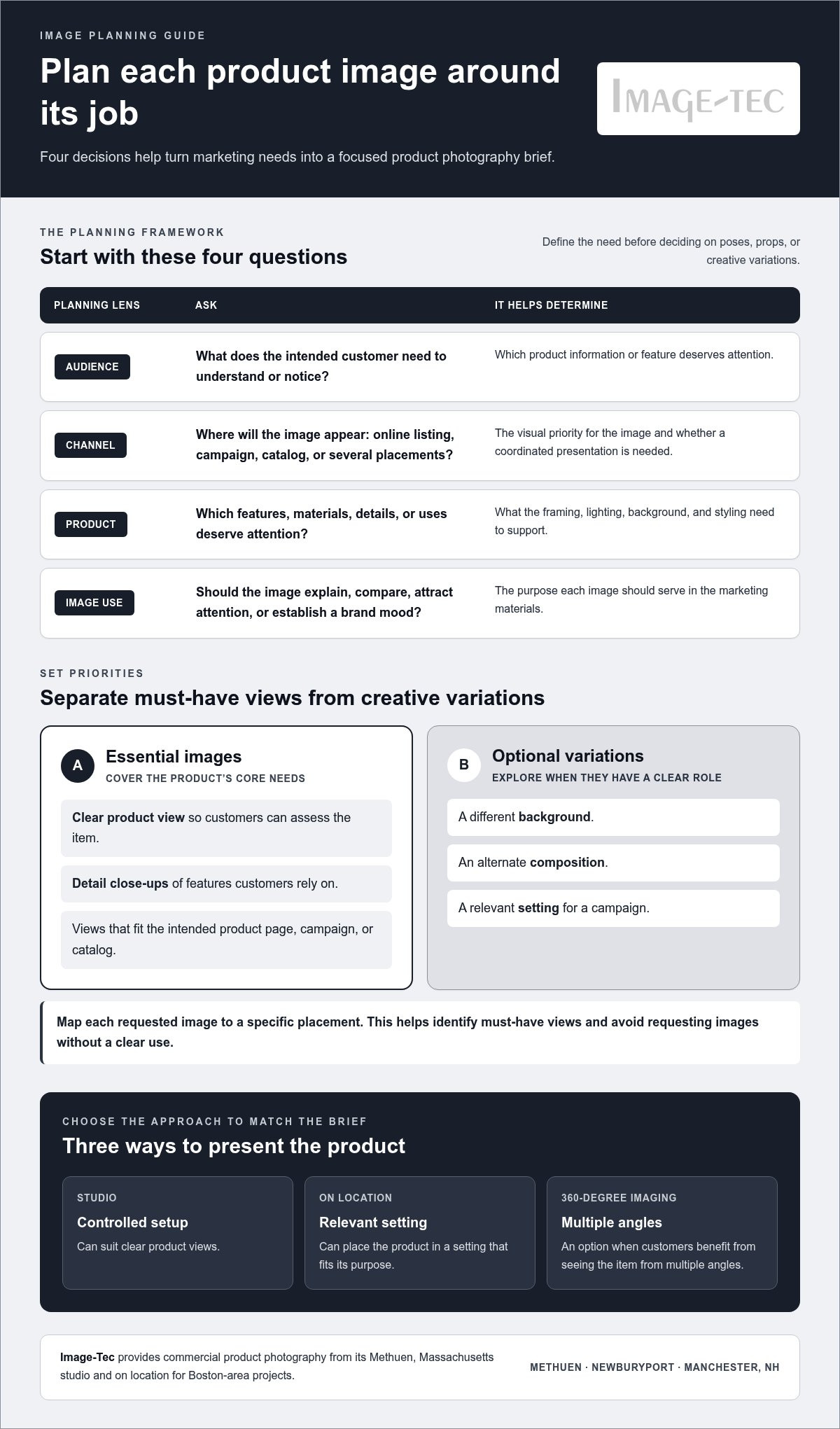
A productive shoot begins with a clear purpose, not a list of poses or props. Before planning images, define four things: who needs to see them, where they’ll appear, what product they must represent, and what each image needs to communicate. This framework helps a commercial product photographer Boston businesses work with shape the visual plan around real marketing uses, rather than producing variations without a clear role.
Use these questions to set priorities:
- Audience: What does the intended customer need to understand or notice about the product?
- Channel: Will the image appear on an online listing, in a campaign, in a catalog, or across several placements?
- Product: Which features, materials, details, or uses deserve attention?
- Image use: Should the image explain, compare, attract attention, or establish a particular brand mood?
Separate essential images from optional creative directions. Essential needs might include a clear view of the product and close-ups of details customers rely on. Optional variations could explore a different background, composition, or setting for a campaign. This distinction keeps the scope focused while leaving room for creative exploration when it serves a defined purpose.
Which product images do e-commerce and campaign teams need?
Different placements call for different visual priorities. An online listing may need direct product views that make the shape and details easy to assess. A promotional campaign may use a more expressive composition to support a particular message, while a catalog may prioritize a consistent visual rhythm across products. Map each requested image to a specific placement before planning the shoot. That makes it easier to identify must-have views and avoid requesting images without a clear use.
Styling and composition should reflect both the brand and the product’s role. A restrained presentation may help communicate precise product details, while a considered setting may support a brand story or campaign theme. The right choice depends on the item and its audience, not on a universal rule. For broader context on how commercial imagery serves business communication, Image-Tec’s commercial photography studio near Boston offers a starting point for considering photography in your project.
When is 360-degree product photography useful?
360-degree imaging can help viewers examine a product from multiple angles. It is useful when the product’s form or construction benefits from a more complete view, or when a small selection of still images would not show its shape, finish, or details clearly. It is not essential for every item or campaign. Consider whether viewing the product from different sides adds meaningful information for the audience. Image-Tec provides 360-degree photography as part of its commercial imaging services.
Once the priorities are clear, the shoot plan can distinguish core product views from campaign-specific ideas. That gives the photographer a practical brief and helps the resulting images serve the channels they were created for.
Studio or On-Location Product Photography: Which Approach Fits?
The location should serve the image, not dictate it. A studio can keep attention on the product, while an on-location setting can add context when that environment is part of the story. To choose, consider what the image needs to show, whether the setting adds useful information, and how the final images will be used. Let the product, setting, and intended use guide the decision.
- Studio: A useful fit when the product should remain the clear focus and the planned look calls for a controlled setting.
- On location: A useful fit when a particular environment helps explain the product’s purpose, use, or relationship to its audience.
- Either approach: The right choice depends on the product and creative direction. A setting should support the image, not compete with the subject.
Image-Tec offers in-studio and on-location commercial product photography for Boston-area projects. Its studio is in Methuen, Massachusetts, giving regional businesses an in-studio option outside the city as well as an on-location approach. For a commercial product photographer Boston businesses are considering, the key question is how each setting will serve the brief.
When can an in-studio product shoot be a good fit?
A studio shoot can work well when the product needs visual priority, such as when its form, surface, or construction is central to the image. A controlled setting can keep attention on those details without adding an unrelated environment. The setup should still be planned around the intended look and the product’s requirements. Image-Tec’s studio is in Methuen, Massachusetts, convenient to businesses planning projects from Boston, Newburyport, and Manchester, New Hampshire.
When does on-location product photography make sense?
On-location photography makes sense when the setting contributes meaningful context. Showing a product in an environment connected to its use can help communicate scale, purpose, or atmosphere. The location should reinforce the product story and brand direction. If it draws attention away from the item or introduces visual clutter, it may not be the strongest choice. Image-Tec offers on-location commercial photography for product projects.
Before choosing a location, describe what it adds to the image. Does it show the product in a recognizable context, establish a useful mood, or make its intended role easier to understand? If the setting does not serve one of those purposes, a studio approach may keep the image more focused. If it does, on-location work can give the photograph context that a plain background cannot provide.
Use the brief to make the decision practical: identify the product details that must remain visible, the role of the setting, and the image’s intended placement. That gives Image-Tec a clear basis for planning a studio or on-location approach for your Boston-area project.
How to Prepare for a Product Photography Project in the Boston Area
A clear brief gives the photographer a useful foundation and keeps the shoot focused on your business priorities. Before planning images, identify where they’ll appear and what they need to communicate. Then gather product information, references, and a prioritized shot list. Businesses working with a commercial product photographer Boston projects can benefit from having these details organized before creative decisions are finalized.
Use this sequence to prepare:
- Define the image use. Note the intended audience and placements, such as product pages, advertising, a catalog, or other brand communications.
- Set the visual direction. Describe the brand’s tone and how the images should represent the product.
- Prioritize the shots. Separate essential views from secondary ideas, and connect each requested image to a specific need.
- Organize product details. Identify the products, relevant variants, components, and features that need attention in the images.
A useful shoot brief identifies the audience, image placements, brand direction, priority views, and product details the photographer needs to understand.
What should a product photography brief include?
Keep the brief concise but specific. Identify each product and its intended audience, where the images will be used, and the visual tone you want to convey. Flag essential angles, components, finishes, or other details that should not be overlooked. Brand references can clarify the desired look and help maintain consistency. Explain what you like about each reference, such as its composition or mood, rather than assuming the image will be copied exactly.
A prioritized shot list turns that direction into a workable plan. Mark the views that are necessary for the project, then list optional creative variations separately. This helps focus planning on required images while preserving ideas that may support the brief.
How should a business prepare products for photography?
Choose representative products and organize related variants or components so it is clear what belongs together. Before the session, inspect each item for visible marks, dust, damaged packaging, or other presentation issues. Note product-specific handling considerations and identify details that must be shown accurately. For an on-location project, include relevant timing, handling, or delivery instructions in the project plan rather than relying on assumptions.
For projects involving several products, label or group items according to the shot list. This helps everyone track which product details and views are priorities. If a particular finish, feature, or component matters to the audience, state that clearly in the brief.
Preparing a shoot in the Boston area? Plan your product photography project with Image-Tec by bringing your brief, priorities, and organized product details together.
Work with Image-Tec for Commercial Product Photography Near Boston
Product photography works best when the images, setting, and project priorities are considered together. Image-Tec supports Boston-area businesses with commercial product photography in-studio and on location, along with 360-degree imaging when a multi-angle view suits the project. Based in Methuen, Massachusetts, Image-Tec serves clients in Boston, Methuen, Newburyport, and Manchester, New Hampshire.
What Image-Tec brings to Boston-area product photography
Different products call for different visual decisions. A studio setting may keep attention on product details, while an on-location approach can add context when the environment contributes to the story. 360-degree photography offers another option when viewers would benefit from examining a product from multiple angles. The intended audience and image use help shape the best approach for the assignment.
Image-Tec’s broader commercial photography work provides a foundation for considering how product images fit into a business’s visual communications. The goal is to plan around the subject and purpose rather than apply one approach to every project. For a wider view of the studio’s commercial work, explore the full-service commercial photography guide.
This regional setup can be useful for businesses coordinating a shoot from outside central Boston. The Methuen studio provides an in-studio option, while on-location photography lets projects use a setting relevant to the product. Both approaches can be shaped around the product, intended image use, and priorities established in the project brief.
How to take the next step on a product shoot
To begin a project discussion, outline what you’re photographing, who the images are for, and where you plan to use them. Include the product details that matter, the visual direction you have in mind, and whether you’re considering studio or on-location photography. If you are unsure which setting fits, describing the image’s purpose provides a practical starting point for shaping the scope.
Businesses searching for a commercial product photographer Boston can use these details to start a focused conversation with Image-Tec. The project scope can reflect your photography needs, from the main product views to relevant creative options. A concise brief helps clarify priorities without requiring every visual decision to be settled in advance.
If you’re planning product imagery for a launch, catalog, campaign, or another business use, share your product, intended image use, and preferred approach with Image-Tec to start planning your shoot.
Give Your Next Product Shoot a Clear Direction
Turn your marketing priorities into a focused creative brief. Start with the product’s role, the people you want to reach, and the images that would help them understand or connect with it. You do not need every detail finalized. A clear purpose and a few well-chosen references give the conversation a useful starting point.
Choosing a commercial product photographer Boston businesses can work with is about aligning the images with how your brand communicates. Thoughtful planning keeps the work grounded in your goals while leaving room for creative decisions that serve the product.
Bring your ideas, product details, and intended image uses together, then discuss your commercial product photography project with Image-Tec. A focused conversation can help move your concept toward a practical shoot plan.
Frequently Asked Questions
Does Image-Tec provide commercial product photography in Boston?
Yes. Image-Tec provides commercial product photography for businesses in Boston and nearby communities. The studio is based in Methuen, Massachusetts, and offers product shoots in-studio or on location. If you searched “commercial product photographer Boston,” the key distinction is that Image-Tec serves Boston-area clients from Methuen rather than operating from a Boston address. Its regional coverage also includes Newburyport and Manchester, New Hampshire.
Should I choose studio or on-location product photography?
Choose the setting that best supports what the image needs to communicate. A studio can suit products that need a focused presentation, while a location can add useful context, such as showing an item in an environment connected to its purpose. Consider whether the background helps explain the product or distracts from it. If the setting does not add meaning, a studio approach may be the clearer fit.
Can product photography include 360-degree images?
Yes. Image-Tec offers 360-degree photography as a commercial imaging service. It may be useful for an item whose shape, sides, or construction customers would benefit from examining, such as a product with notable details around its exterior. For a straightforward item where a few views answer likely questions, still photography may be sufficient. Choose based on what viewers need to understand, rather than adding 360-degree imagery by default.
What should I send a product photographer before a shoot?
Send a short project brief with the product or product identifiers, intended audience, image placements, and visual direction. Include a prioritized list of views, along with any features that must be represented accurately. If there are variants, identify which ones are part of the project and how they differ. Brand references can also help clarify the tone you’re aiming for and keep the photography aligned with existing materials.
Does Image-Tec photograph products at a client’s location?
Yes. Image-Tec offers on-location commercial photography for product projects where the setting supports the image’s purpose. In your project notes, describe the location and what it contributes to the product story, along with the products and views you have in mind. Explain whether the environment helps show the product’s use or establishes a particular context. Image-Tec serves businesses in Boston, Methuen, Newburyport, and Manchester, New Hampshire.
Is Image-Tec’s studio located in Boston?
No. Image-Tec’s studio is in Methuen, Massachusetts, rather than Boston. Boston-area businesses can plan an in-studio project at the Methuen location or choose on-location photography when a specific setting better fits the brief. Image-Tec also serves nearby communities including Newburyport and Manchester, New Hampshire. Knowing the studio’s location can help you decide where the products should be photographed and plan the project accordingly.





Leave A Comment
You must be logged in to post a comment.