

What does the word “archival” on a print label tell you about the process behind it? If you’re searching for archival art printing Manchester NH, you likely want more than a reassuring term. You want a reproduction that respects the original’s color, detail, and character, and a clear way to compare your options.
That takes thoughtful decisions at each stage, from capturing the artwork to preparing and printing the image. This guide explains what contributes to a considered art reproduction, how to weigh scanning and printing approaches, and what to prepare for a project. You’ll also learn how Image-Tec supports artists and collectors in the Manchester area.
Based in Methuen, Massachusetts, Image-Tec brings BetterLight scanning and Giclée printing together for art-reproduction projects, producing canvas and fine art prints up to 60 inches wide. Whether you’re reproducing a painting, a drawing, or another original work, understanding the steps can help you choose an approach suited to the piece. Custom framing is also available as a next step for presenting the finished print.
Key Takeaways
- “Archival” alone doesn’t guarantee a particular lifespan. Consider the reproduction process and material choices behind the print.
- Match the capture approach to the artwork and your reproduction goals, then assess how well the finished image meets your priorities.
- Compare print options by artwork type, capture needs, surface, and intended display rather than relying on the Giclée label alone.
- Prepare for archival art printing Manchester NH by noting the original’s condition and dimensions, how you’ll use the print, and whether you have a digital source file.
- Image-Tec serves Manchester-area artists and collectors from Methuen, Massachusetts, bringing BetterLight scanning and Giclée printing together for reproduction projects.
What Does Archival Art Printing in Manchester, NH Actually Mean?
For artists and collectors, “archival” can sound like a precise technical promise. In practice, it signals an intention to reproduce artwork carefully and make considered choices about image capture, print production, and materials. The term alone doesn’t guarantee a fixed lifespan or identical results across print services. The reproduction depends on the full process, as well as how the print is displayed and cared for.
Archival art printing is an artwork-reproduction approach that prioritizes faithful image presentation and considered production choices, not a universal guarantee of permanence. That distinction matters when researching archival art printing Manchester NH: the label is a starting point, not a substitute for understanding how the image was captured and produced.
Several elements shape the result. The source image needs to record the artwork’s important details, texture, and color. Color handling affects how closely the print reflects the original. The print surface influences its appearance, while display conditions and care can affect how it changes over time. A reproduction intended for a bright gallery wall may call for different decisions than one kept in a portfolio or displayed in a controlled interior.
How Is an Archival Art Print Different from an Ordinary Print?
A casual print may be enough for a quick copy or everyday reference. A fine art reproduction is planned for considered presentation, where color relationships, fine detail, and the character of the source image matter. Giclée is a term associated with fine art inkjet printing; What is Giclée Printing? offers background on the process. The term alone doesn’t establish the materials or expected lifespan of a particular print.
Quality also depends on the image being printed. A carefully produced print can’t restore details missing from a low-quality photograph or scan. Capture, image preparation, and print decisions all contribute to how faithfully the artwork is represented. Without specific information about materials and testing, a precise lifespan should not be assumed.
Who Typically Needs Archival Art Printing?
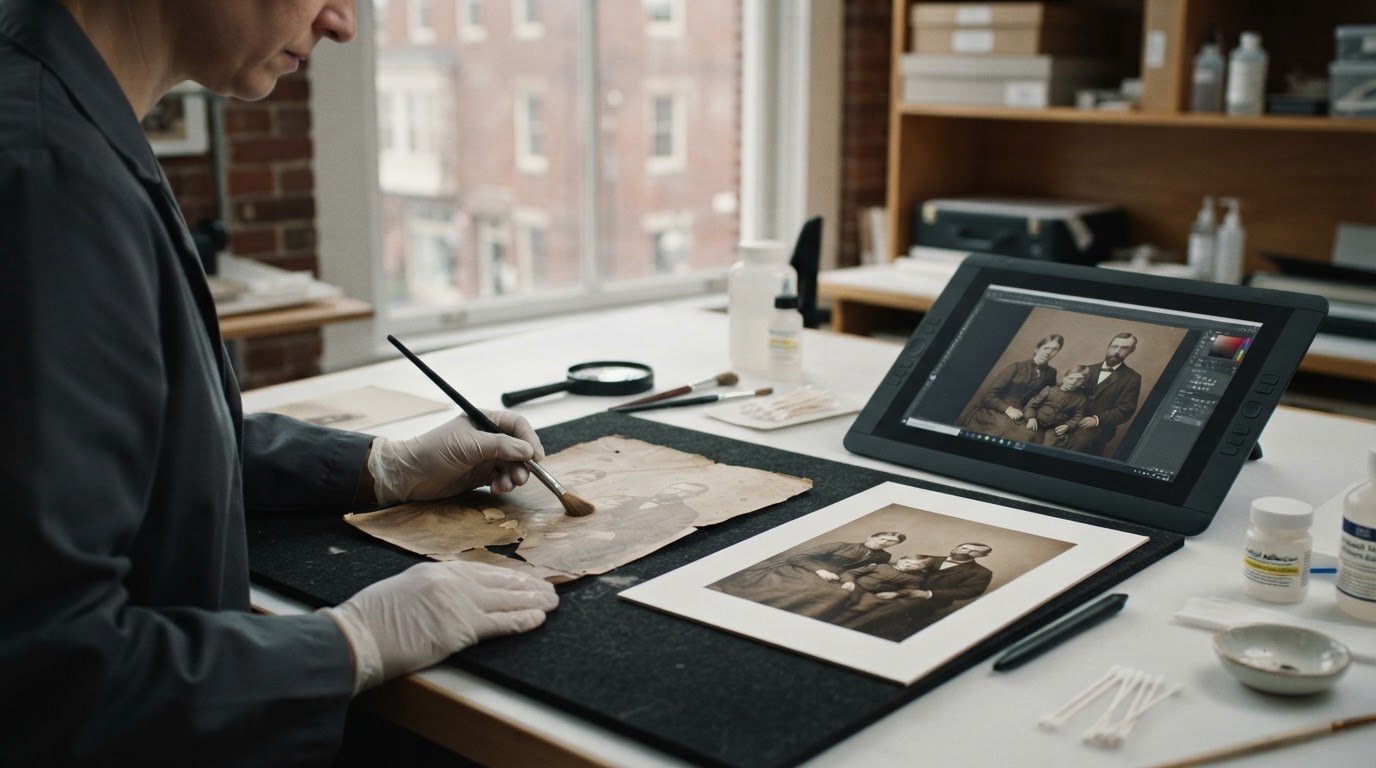
Artists may reproduce their work for display or sale, while collectors, galleries, and organizations may need a reproduction for presentation, documentation, or a particular space. The original remains the artwork itself. A print is a separate reproduction made from a digital capture, so its fidelity depends partly on how accurately that capture records the original.
This distinction is useful when planning a project. A flat painting, a textured surface, and a drawing with delicate tonal transitions can each present different capture considerations. BetterLight scanning supports the capture stage of reproduction, while Giclée printing turns a digital image into a physical print. Image-Tec serves Manchester-area artists and collectors from its studio in Methuen, Massachusetts. Consider the artwork, intended use, and display setting together to give the project a clear direction, without treating “archival” as a guarantee of permanence.
How Artwork Becomes a Carefully Reproduced Fine Art Print
A successful reproduction depends on a sequence of connected decisions, not just the final print. The workflow begins with the artwork and its intended use, then moves through image capture, preparation, printing, and review. Each step affects what the next can accomplish. Planning the whole process helps artists and collectors make choices suited to the original and the finished piece.
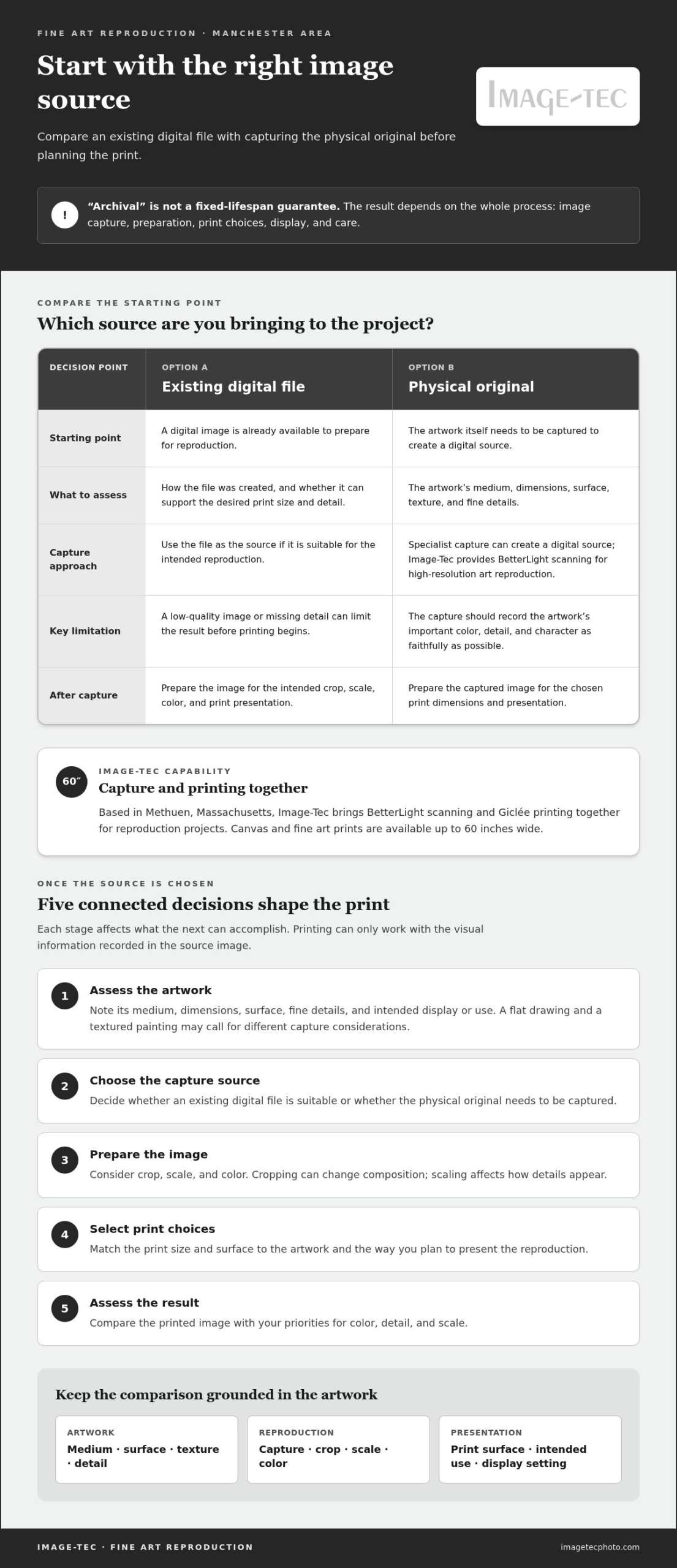
- Assess the artwork. Identify its medium, dimensions, surface, fine details, and intended display or use. A flat drawing and a textured painting may call for different capture considerations.
- Choose a capture source. Decide whether you already have a suitable digital file or whether the physical original needs to be captured.
- Prepare the image. Consider framing, crop, scale, and color so the digital image is ready for the intended print.
- Select print choices. Match the print size and surface to the artwork and the way you plan to present the reproduction.
- Assess the result. Compare the printed image with your priorities for color, detail, and scale.
Accurate capture is the foundation of a faithful reproduction because printing can only work with the visual information recorded in the source image. A suitable source file gives later steps a useful starting point. Missing detail or an unsuitable crop can limit the result before printing begins.
Artwork Capture: Scanning or Working from an Existing File
If you already have a digital file, its suitability depends on how it was created and whether it can support the desired print size and detail. For a physical original, specialist capture can create a digital source for reproduction. Image-Tec provides BetterLight scanning for high-resolution art reproduction, connecting artwork capture with the subsequent printing stage. The right approach depends on the piece and your goals, rather than one method being right for every artwork.
From Digital Capture to Print Review
Once captured, an image may need preparation for the chosen print dimensions and presentation. Cropping can change the composition; scaling affects how details appear; and color handling influences the relationship between the digital file and the physical artwork. The print surface also shapes the viewing experience. These choices guide the reproduction, but they don’t guarantee an exact match for color, texture, or scale.
Build review into project planning by defining what matters most: preserving the composition, showing fine marks clearly, or producing a particular finished size. That gives you a clear standard for assessing the reproduction. For Manchester-area artists, Image-Tec brings BetterLight scanning and Giclée printing together at its Methuen, Massachusetts studio. Explore Image-Tec’s art reproduction services as you plan the capture and print stages of your project.
How to Compare Archival Art Printing Options for Your Artwork
Compare the full reproduction plan, not just a print label. The artwork’s surface and detail, the quality of the capture, the chosen print surface, and the setting where the print will be displayed all affect which option makes sense. Giclée describes a printing approach, but it doesn’t mean every Giclée print uses identical materials or has the same archival properties. Start with what matters for your piece, then weigh the choices against its intended use.
This framework can help you organize the decision. Use it as a starting point, then match the choices to the specific artwork and display.
| Artwork type | Capture needs | Print surface | Intended display |
|---|---|---|---|
| Flat painting with fine detail | Consider specialist capture if the original needs digitizing | Fine art print or canvas, guided by the artwork’s look | Choose size and presentation for the specific space |
| Drawing with subtle tonal changes | Use a suitable existing file or plan capture of the original | Consider which surface best presents the marks and tones | Decide whether it will be framed or displayed another way |
| Artwork intended for a larger display | Make capture and file suitability part of size planning | Compare fine art and canvas formats | Consider viewing distance and available wall space |
Paper or Canvas: Which Surface Suits the Work?
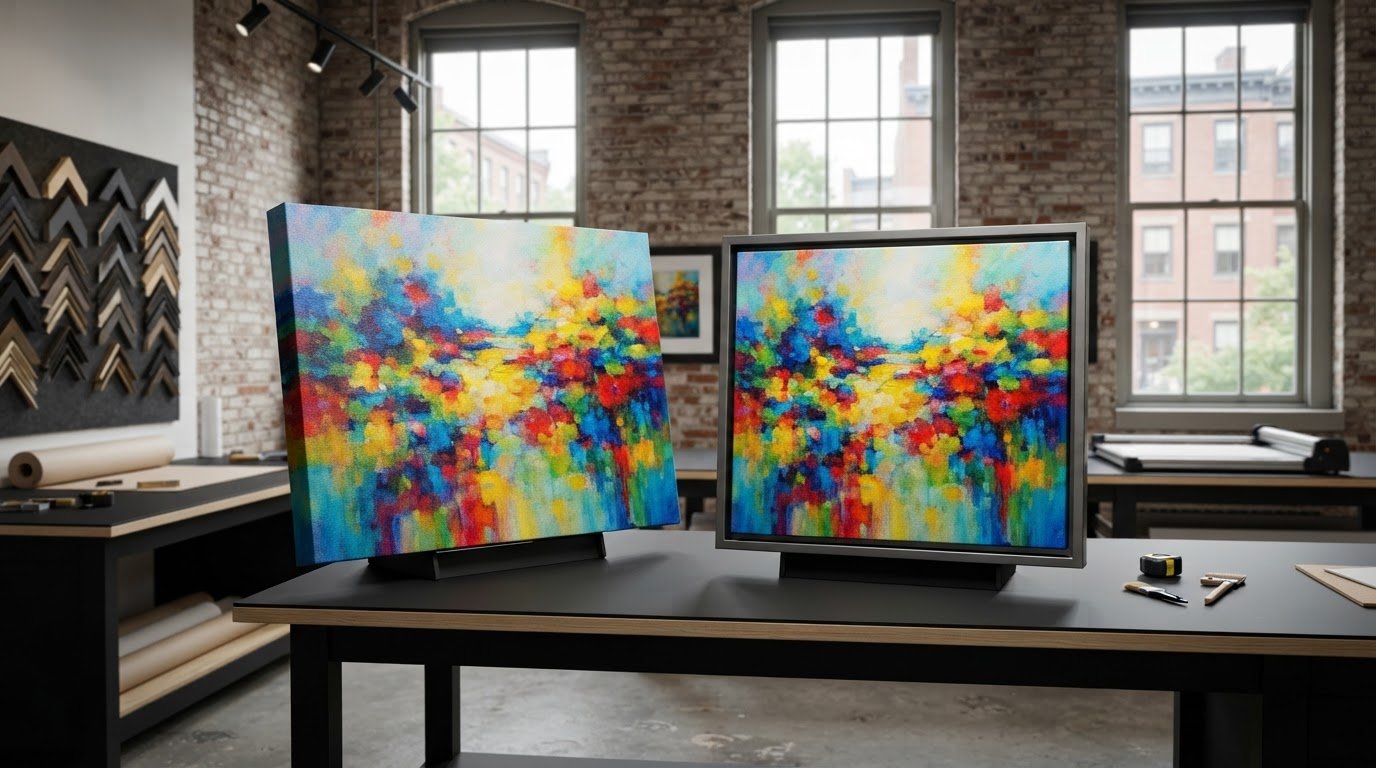
Surface choice is a presentation decision. A work with fine drawn marks may call for a surface that supports its precise appearance, while canvas can suit artwork whose character translates well to that format. Image-Tec produces fine art and canvas prints up to 60 inches wide. Compare the intended look with the original, and keep the display setting in view. For broader context on capture and reproduction choices, see this art reproduction guide.
There isn’t one universally correct surface. The original’s visual character, desired print size, and presentation should work together. An artwork reproduced for a gallery wall may call for different dimensions than one intended for a smaller interior. Aim for a considered match rather than a default choice based on the printing term alone.
When Does Custom Framing Belong in the Project?
Framing is a separate presentation decision that follows print selection. It can help define how a finished reproduction sits within a room or display, so consider the frame alongside the print’s dimensions and intended setting. Image-Tec offers custom framing as a related step; its custom framing and Giclée printing guide provides more context for planning them together.
For archival art printing Manchester NH, make the comparison concrete: note the artwork type, whether it needs capture, the print surface you’re considering, and where it will be displayed. Those details bring the options into focus without assuming every Giclée print or presentation choice will produce the same result.
How to Prepare Artwork for Archival Art Printing
A little preparation makes it easier to plan a reproduction around the artwork. Before production, record the original’s condition and dimensions, how you intend to use the print, and which visual qualities matter most. For example, you may want to preserve the full composition, emphasize fine linework, or reproduce a particular area at a larger scale. These notes give the project a clear starting point.
Use this checklist to organize the essentials:
- Condition: Note fragile, uneven, textured, or reflective areas.
- Dimensions: Record the artwork’s height and width, along with the intended print size.
- Purpose: Describe where and how the reproduction will be displayed or used.
- Visual priorities: Identify important details, colors, cropping preferences, or other features to preserve.
- Source material: Gather the physical original or the best existing digital file available.
Preparing a Physical Original for Capture
Measure the artwork and make brief notes about its surface, especially if it’s delicate, uneven, or reflective. Avoid cleaning, flattening, or otherwise modifying a valuable piece without appropriate expertise. These details can help shape the reproduction plan. For artwork that needs digital capture, Image-Tec’s BetterLight scanning supports the art-reproduction process and connects the physical original to the later print stage.
Preparing an Existing Digital File
Gather the highest-quality original file available and keep an unaltered copy before making edits. Note the intended print dimensions and any color, crop, or composition priorities. File suitability depends partly on output size, so there isn’t one minimum resolution that fits every project. A file that works for a modest print may not retain the same detail when enlarged.
Scale can shape capture and print decisions from the outset. If you’re considering a large reproduction, determine the finished dimensions and viewing context before production. A piece intended to fill a gallery wall has different scale considerations from one designed for a smaller display. Image-Tec produces canvas and fine art prints up to 60 inches wide. For more guidance on planning size, consult the large format fine art printing guide.
For archival art printing Manchester NH, bring the artwork or source file, dimensions, intended use, and a short list of visual priorities to your project planning. These details help keep the work focused. Plan your artwork reproduction with Image-Tec, where BetterLight scanning and fine art printing support connected stages of the project.
Archival Art Printing Near Manchester, NH: Working with Image-Tec
Artists and collectors searching for archival art printing Manchester NH can work with Image-Tec, an art-reproduction studio based in Methuen, Massachusetts, serving the Manchester area. The studio connects digital capture and print production for projects involving physical artwork or an existing image file. Fine art and canvas prints are available up to 60 inches wide, offering options for a range of presentation sizes.
The right combination depends on the project. A painting that needs to be digitized may call for scanning before printing; a suitable source file can move into print planning. Custom framing is a separate decision to consider when planning how to present the finished work.
Which Image-Tec Services Fit an Art Reproduction Project?
BetterLight scanning captures physical artwork for reproduction, while Giclée and fine art printing produce a print from a digital source. Image-Tec also offers canvas printing, with formats up to 60 inches wide. Custom framing can complete the presentation. These services support distinct stages of a project, depending on the artwork and what you want the finished piece to do.
- Physical original to digital image: BetterLight scanning for artwork reproduction.
- Digital image to print: Giclée and fine art printing, with canvas as an option.
- Finished print to presentation: Custom framing as a related next step.
The sequence varies by project. An artist reproducing a painting from its physical original may plan for capture, then decide on print size and surface. A collector with a suitable digital file may begin by considering the print’s intended dimensions and display. Image-Tec brings these capabilities together for projects in Manchester, Methuen, Boston, and Newburyport.
Planning a Manchester-Area Printing Project
Before planning a project, gather a few practical details. Note whether you have a physical original or a digital file, record the artwork’s dimensions, and decide how you intend to use and display the print. It also helps to identify visual priorities, such as preserving the full composition or emphasizing particular details.
- The artwork or source file you plan to reproduce
- The original dimensions and desired print size
- The intended use and display setting
- Any important color, crop, or detail preferences
These details keep the conversation focused on the artwork rather than a generic print request. Manchester-area artists and collectors can discuss an art-printing project with Image-Tec and consider how scanning, printing, and framing fit their plans.
Give Your Artwork a Clear Direction
The most useful next step is to decide what you want the reproduction to accomplish. Is it meant to bring a piece into a new setting, make it available for presentation, or preserve a particular visual quality in print? A clear purpose helps shape your choices and keeps the original’s character at the center of the project.
If you’re considering archival art printing Manchester NH, start with one practical note: write down the visual detail you most want the finished print to retain. That priority can guide the project and turn a broad idea into a focused plan.
When you’re ready to move from planning to a project discussion, explore your artwork printing options with Image-Tec. A clear starting point makes the next decisions more straightforward and helps bring the reproduction closer to the presentation you have in mind.
Frequently Asked Questions
What is archival art printing?
Archival art printing is a careful approach to reproducing artwork, with attention to how the image is captured, produced, and presented. Unlike an everyday print made for quick reference, a fine art reproduction is planned around the visual qualities of a particular work. “Archival” doesn’t promise a fixed lifespan. Longevity depends on the materials, where the print is displayed, and how it’s cared for over time.
Is Giclée printing archival?
Giclée describes a fine art inkjet printing process, but the name alone doesn’t determine how long a print will last. The result depends on the specific inks and substrate, as well as handling and the display environment. For example, a print kept in a bright room experiences different conditions from one stored away from light. Consider the complete reproduction project rather than treating the Giclée label as a guarantee.
Can I have an original painting scanned and printed near Manchester, NH?
Yes. Image-Tec is based in Methuen, Massachusetts, serves Manchester, NH, and provides BetterLight scanning for art reproduction alongside fine art printing. The capture and print plan depends on the painting’s surface, dimensions, and the result you have in mind. Before planning the project, note the artwork’s height and width and whether you want to preserve the full composition or emphasize a particular detail.
What should I send a printer for an archival art print?
Bring the original artwork or the best digital file you have, along with the artwork’s dimensions, desired print size, and intended use. Physical originals and digital files need different preparation: note a fragile or reflective surface, and identify any color or cropping priorities for a digital file. Keep an untouched copy of the source file. File suitability depends on the requested output size, so don’t rely on a universal resolution rule.
Is canvas or fine art paper better for reproducing artwork?
Neither is best for every artwork. Consider how the original looks, the texture you want the reproduction to convey, the intended display, and the planned print scale. A piece with a strong, tactile character may call for a different presentation from a work whose fine marks should remain prominent. Image-Tec offers canvas and fine art printing; choosing between them is a project-specific decision, not a universal ranking of quality or longevity.
How large can Image-Tec print artwork?
Image-Tec produces canvas and fine art prints up to 60 inches wide. That is the maximum stated width, not a promise that every source image will suit a print at that size. The appropriate dimensions depend on the original artwork or digital file and the result you’re seeking. Include your preferred finished width and height in your project plan so scale can be considered alongside the available source material.
How do I find archival art printing in Manchester, NH?
For archival art printing Manchester NH, Image-Tec is based in Methuen, Massachusetts, and serves Manchester, NH. Relevant services include BetterLight scanning, Giclée and fine art printing, and custom framing for presentation. The studio also serves Methuen, Boston, and Newburyport. To plan a project, note whether you have an original or a digital file, your target dimensions, and how you intend to use the finished print.





Leave A Comment
You must be logged in to post a comment.