
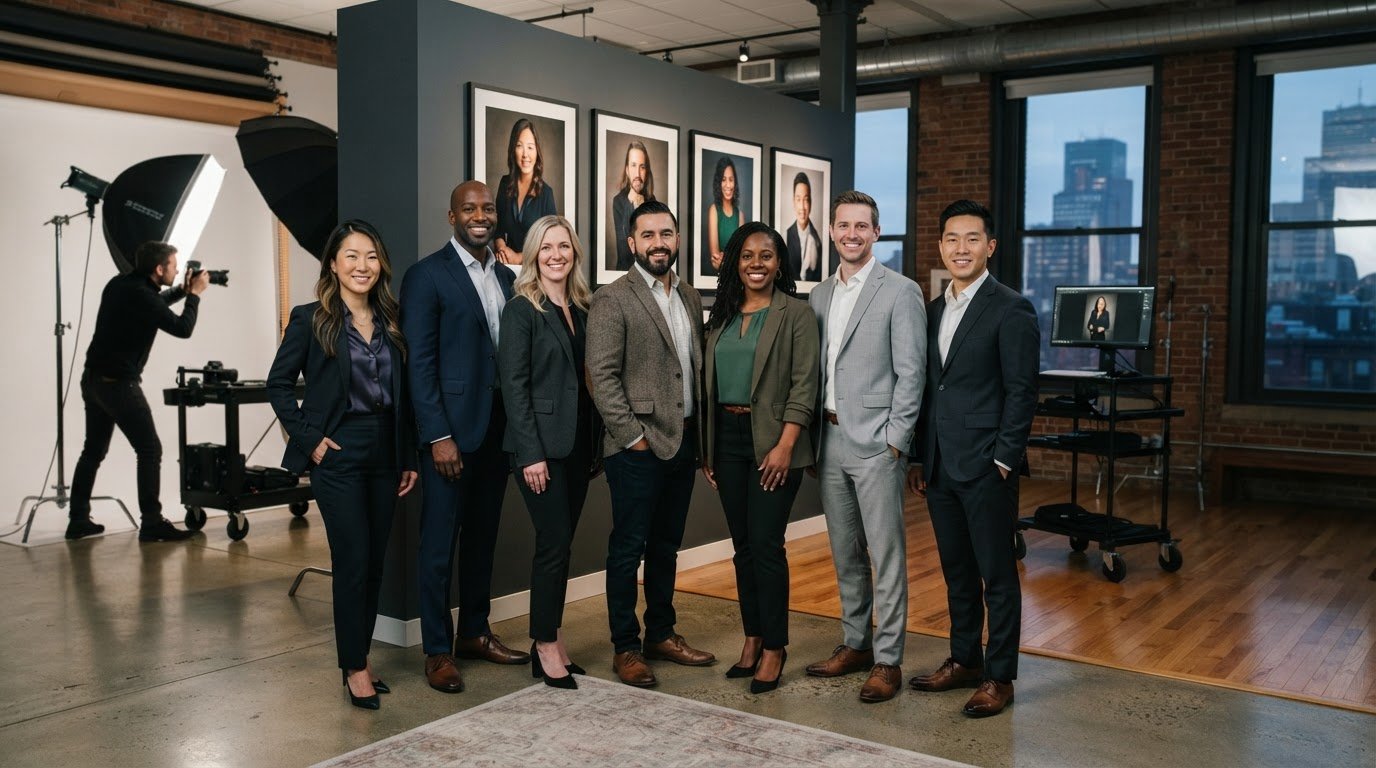
What if your team photos looked equally polished on a staff profile, a company website, and a framed office display? A corporate team photography studio can bring those needs together, creating a consistent visual standard instead of a patchwork of headshots with mismatched lighting, backgrounds, and image quality.
Coordinating a group shoot can pull people away from their work and leave administrators juggling schedules. A clear plan keeps the session organized while helping each person look natural and professional. The result is more than a set of portraits: it is a dependable visual expression of your company’s people and culture.
This article explains how to plan team photography for consistency across locations and platforms, choose between studio and on-location portraits, and use authentic photography in an era of AI-generated headshots. You’ll also see how high-resolution commercial photography can carry a unified brand from digital profiles to large-format Giclée prints and custom-framed office art. Image-Tec is based in Methuen and offers commercial photography and fine art reproduction.
Key Takeaways
- Plan team portraits as brand assets, using consistent lighting and color to present a unified visual identity.
- Choose between a corporate team photography studio and on-location sessions based on scheduling, setting, and image goals.
- Use a clear creative brief to connect your brand vision with practical photography and image-quality decisions.
- Plan for high-resolution portraits to work beyond digital profiles, including Giclée canvas prints and custom-framed office displays.
- Connect commercial photography with fine art reproduction to carry a project from image capture to finished display.
The Role of a Corporate Team Photography Studio in Modern Branding
Corporate team photography does more than populate a staff directory. It shapes how clients, prospective employees, and business partners perceive an organization before they meet its people. Portraits appear on company websites, in proposals, on professional profiles, and in office displays. A consistent visual approach can reinforce the company’s corporate identity at each of these touchpoints.
A corporate team photography studio makes consistency part of the plan. Lighting, background, framing, and color treatment can be kept consistent, even when employees are photographed in separate sessions. That matters when images appear together: a portrait with a cool color cast beside one with warm, uneven light can make a polished organization look visually fragmented.
Professional imagery can also support confidence in your business. Viewers may not consciously analyze exposure or color balance, but clear, composed portraits show care and attention. The goal is not to make everyone look identical. It is to create a coherent framework in which individuals remain recognizable and the organization feels dependable.
Why Visual Consistency Matters for Large Teams
Headshots from different sources can create a fragmented impression. One employee may have a bright office background, another a cropped event photo, and a third a phone portrait with different lighting. A unified approach to lighting and framing brings the set together while preserving each person’s character.
Growing organizations can establish portrait standards for background, crop, lighting direction, color treatment, and file preparation. These guidelines make future staff updates easier to integrate. High-resolution capture also gives a company more flexibility, supporting digital profiles as well as larger display applications without relying on small, compressed images.
Beyond the Headshot: Group Dynamics and 360-Degree Imaging
Portraits are only one part of a company’s visual story. A carefully directed group image can convey collaboration, leadership, or shared purpose. Considered grouping, clear sightlines, and attention to each person’s position help create confident corporate group photographs without making the team appear stiff. These principles are also useful in team-sports photography.
360-degree photography gives viewers the ability to explore a space or product from multiple angles. It can communicate the character of a workplace or show more of an object than a single frame can. Image-Tec provides commercial photography, including 360-degree imaging, for businesses and organizations.
For a growing company, the practical next step is to treat photography as part of its brand system. Establish standards that can guide new portraits, group images, and other visual assets as the organization changes. Consistency across formats helps the company communicate clearly while leaving room for its people and culture to come through.
Studio vs. On-Location: Navigating Corporate Logistics
Choosing a studio or workplace session comes down to image goals, staff schedules, and the environment you want clients to see. A studio session in Methuen gives the photographer a controlled setting for lighting, background, and color. On-location photography can reduce travel for Boston-based teams and show people in the setting where their work happens. Both approaches can produce polished results when the plan fits the space and the people.
The Technical Advantages of the Photography Studio
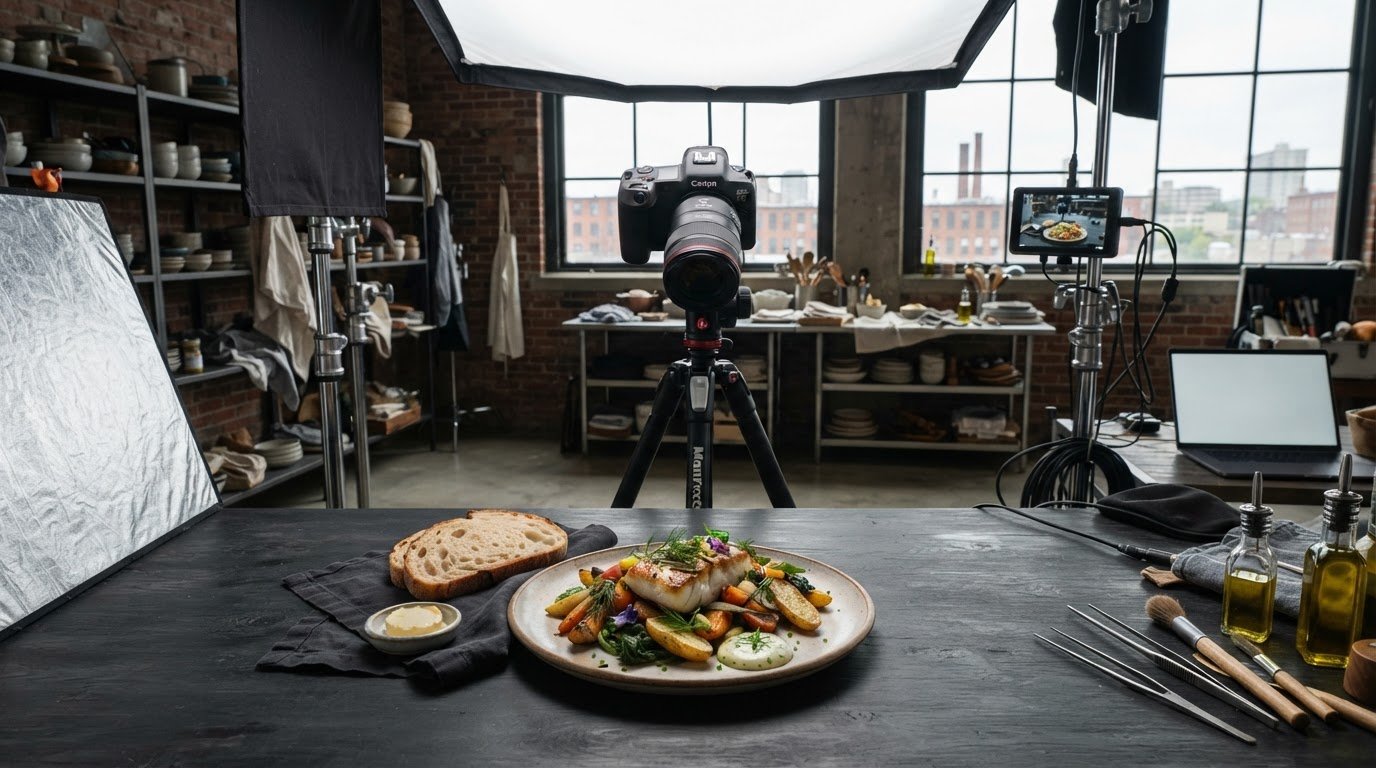
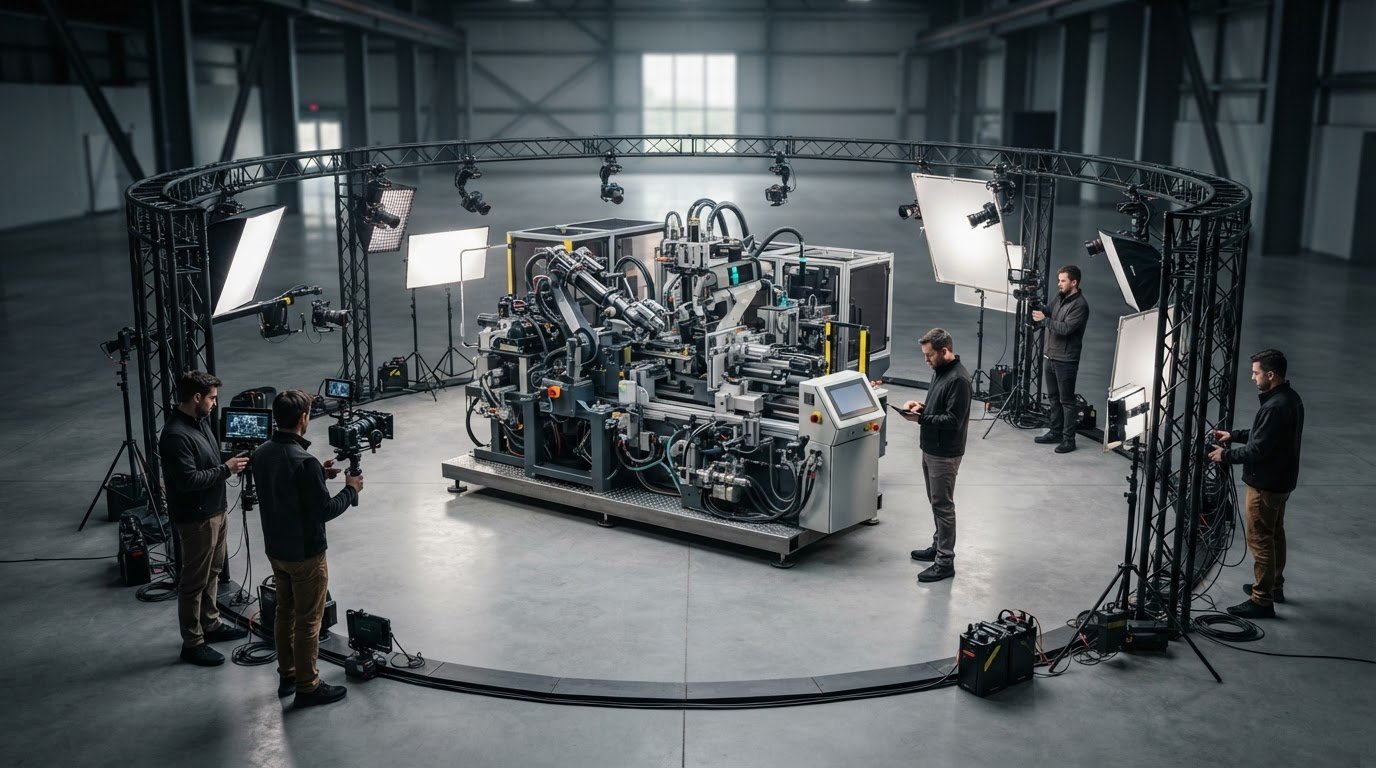
A photography studio makes it easier to control conditions from one frame to the next. A consistent background and carefully arranged lighting help create portraits with a unified look, without relying on changing window light. A studio can also accommodate other commercial photography, including product or automotive work where reflections, surfaces, and composition need close attention.
Artwork and other finely detailed subjects may call for a different capture method. Image-Tec’s BetterLight scanning for art reproduction captures fine detail for high-resolution reproduction. It serves a different purpose from team photography, but illustrates why the imaging process should match the subject. Professional practice in photography is also supported by resources from the Professional Photographers of America.
On-Location Excellence in New England
For an office session, a mobile photography setup brings professional lighting and camera equipment to the people being photographed. For businesses in regional hubs such as Boston, Manchester, New Hampshire, and Newburyport, an environmental portrait can show more than an employee’s face. It can include the workspace, architecture, or tools that give the organization local character. The setting should support the subject, not compete with them.
Prepare a boardroom by clearing table clutter, removing distracting materials, and choosing a background with enough space for the planned framing. Identify an area for equipment and a quiet place where employees can wait without interrupting meetings. These small preparations help the photographer work efficiently and make the room feel intentional in the final images.
Manage disruption with a schedule rather than improvising on the day. Assign appointment windows, share preparation notes, and choose a coordinator to keep participants moving. Group employees by location or department where practical, and allow time between appointments for transitions and equipment adjustments. A clear sequence helps maintain consistent lighting while staff return to their work between portraits.
A corporate team photography studio can help determine which portraits suit a controlled setting and which benefit from workplace context. Image-Tec provides commercial photography for businesses, connecting technical image-making with practical production needs. Explore Image-Tec’s commercial photography when planning studio portraits or workplace imagery.
Engineering Consistency: The Professional Studio Workflow
Consistent team photography starts before the camera is set up. Begin with the company’s goals, then translate them into choices about framing, lighting, background, color, and file delivery. Portraits for a formal leadership page may call for a different treatment than approachable images for recruiting, but both should belong to the same visual system.
During a session, tethered shooting connects the camera to a display so the photographer and a designated company representative can review images as they are made. This makes it easier to check expression, focus, framing, and lighting on a larger screen, then make adjustments before the next person steps in. A reference image can help keep the look consistent throughout the shoot.
Technical precision matters when images need to serve several purposes and formats. After capture, post-production can bring the set together through consistent color treatment, restrained skin retouching, and background matching where appropriate. The aim is a polished, believable result that preserves natural features rather than making every portrait look artificially identical.
Wardrobe and Branding Alignment
Clothing should support the company palette without turning portraits into uniforms. Share simple guidance in advance: choose solid or lightly textured garments, avoid tight repeating patterns that can produce moiré on camera, and check that colors work with the selected background. Clean collars and lint-free fabric help, too. Posing should feel composed rather than rigid, with relaxed shoulders and natural expressions that convey confidence.
- Coordinate, don’t match: Choose complementary colors instead of asking everyone to wear the same shade.
- Keep patterns simple: Fine stripes and dense checks can create distracting interference patterns.
- Prepare for the frame: Consider how jackets, collars, and accessories will appear in the planned crop.
Managing Large-Scale Team Logistics
For a team of 100 or more, quality depends on a repeatable sequence, not rushed attention to each portrait. Schedule employees in groups, maintain consistent lighting and camera settings, and review tethered images at regular intervals. A coordinator can track arrivals and completed portraits while the photographer focuses on expression and image quality. Clear file names based on employee or department make selection and delivery easier to manage.
A digital asset management system can organize approved files by person, department, date, and usage. That helps teams find the right image for a profile or company publication and distinguish drafts from final selections. Image-Tec’s imaging services also extend to archival materials: BetterLight scanning captures fine detail, and historical image restoration can help prepare older photographs for anniversaries and organizational histories.
High-volume commercial imaging works best when a repeatable technical process is paired with careful attention to each person. That balance helps a session stay organized without letting efficiency replace judgment.

Beyond Digital: Transforming Portraits into Office Art
A team portrait can serve as more than a website asset. Printed at scale, it can connect a lobby, boardroom, or shared workspace with the people behind the organization. Moving from a digital file to a finished display takes planning. The image needs enough detail for its intended size, and the print surface and frame should suit both the photograph and the room.
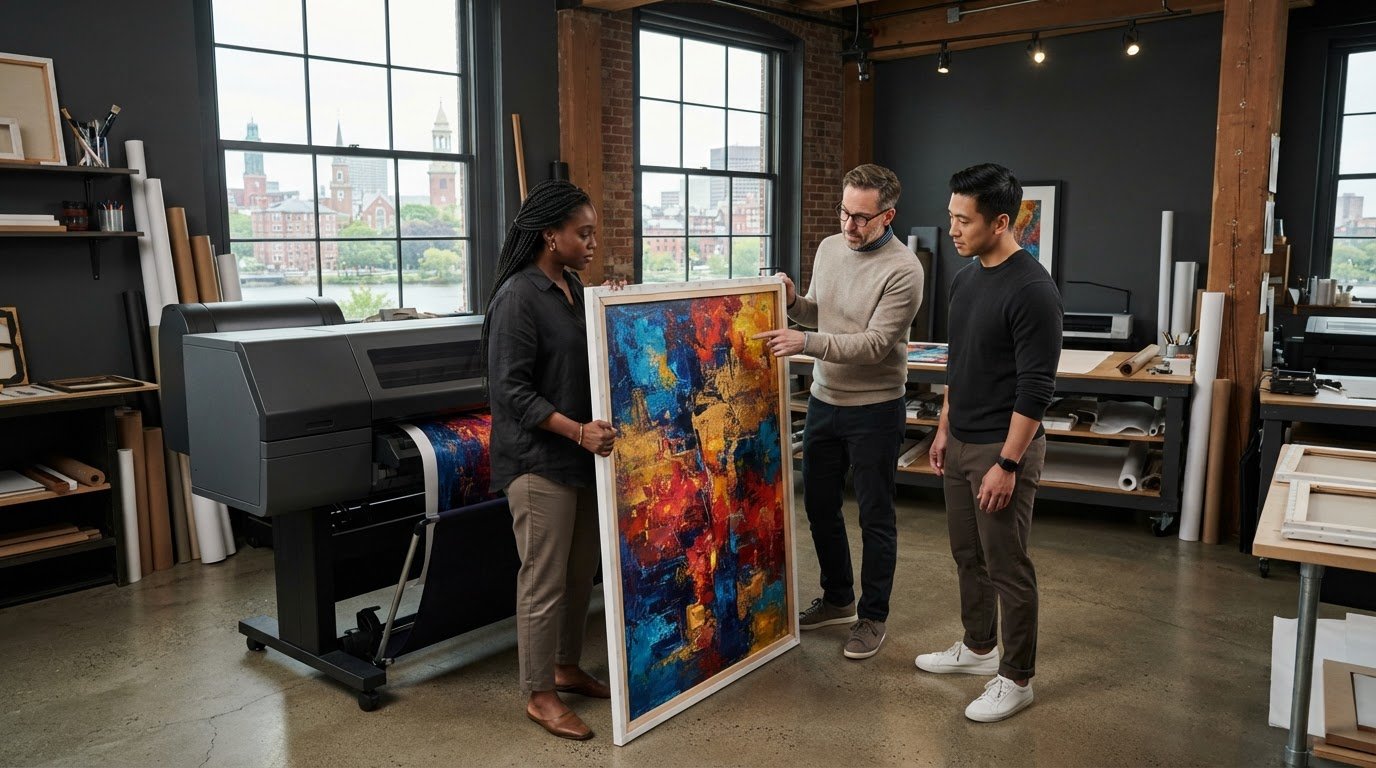
High-resolution capture gives a company more flexibility when preparing portraits for large-format display. Image-Tec produces Giclée canvas prints up to 60 inches wide, bringing commercial photography and print production together. A carefully prepared portrait can become a focal point in an executive space or part of a coordinated series reflecting the breadth of a team. Large-format fine art printing offers a way to present image detail at a larger scale.
The Giclée Printing Standard for Corporate Decor
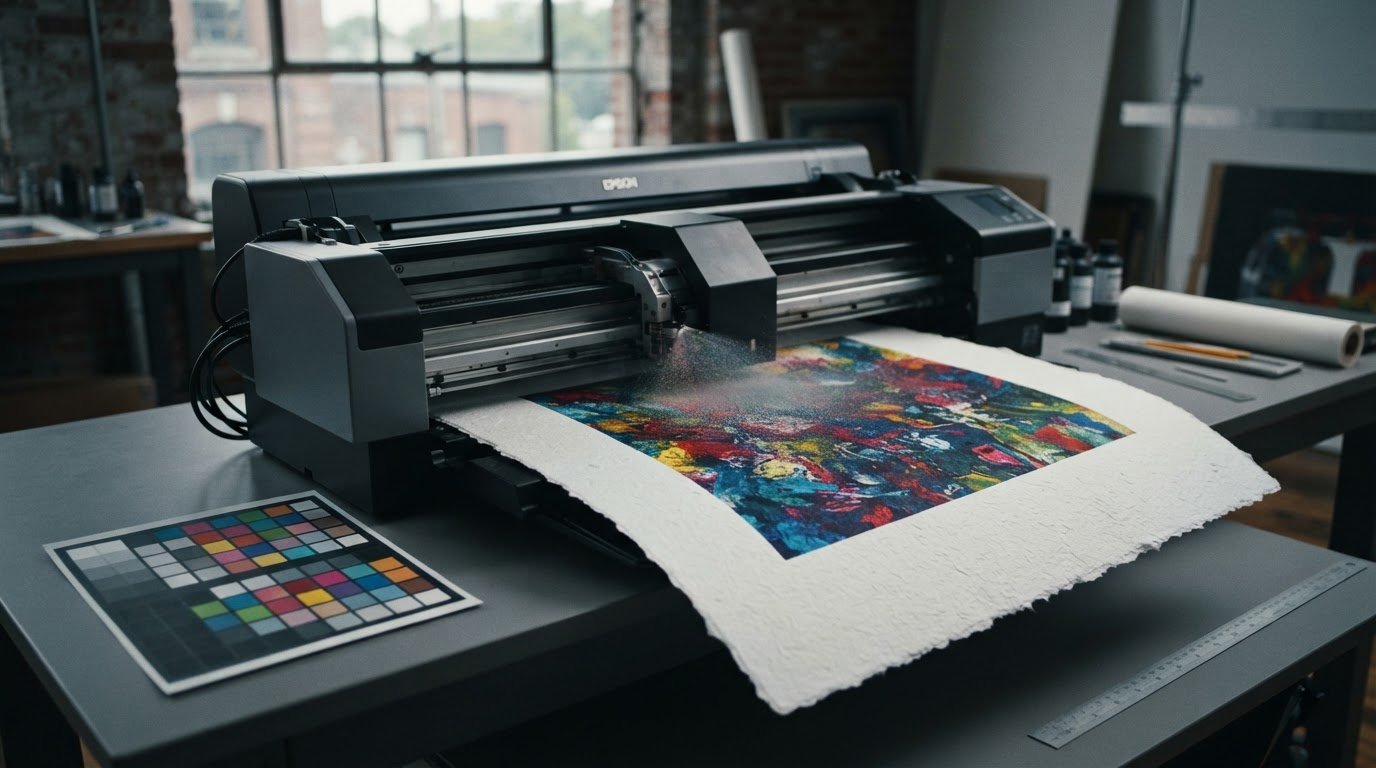
Giclée printing is a fine-art inkjet printing method used to produce detailed images on materials such as canvas. The quality and longevity of a finished piece depend on the source file, print materials, and how the work is displayed and cared for. For an office installation, consider a print surface suited to the image and plan for the room’s light and placement.
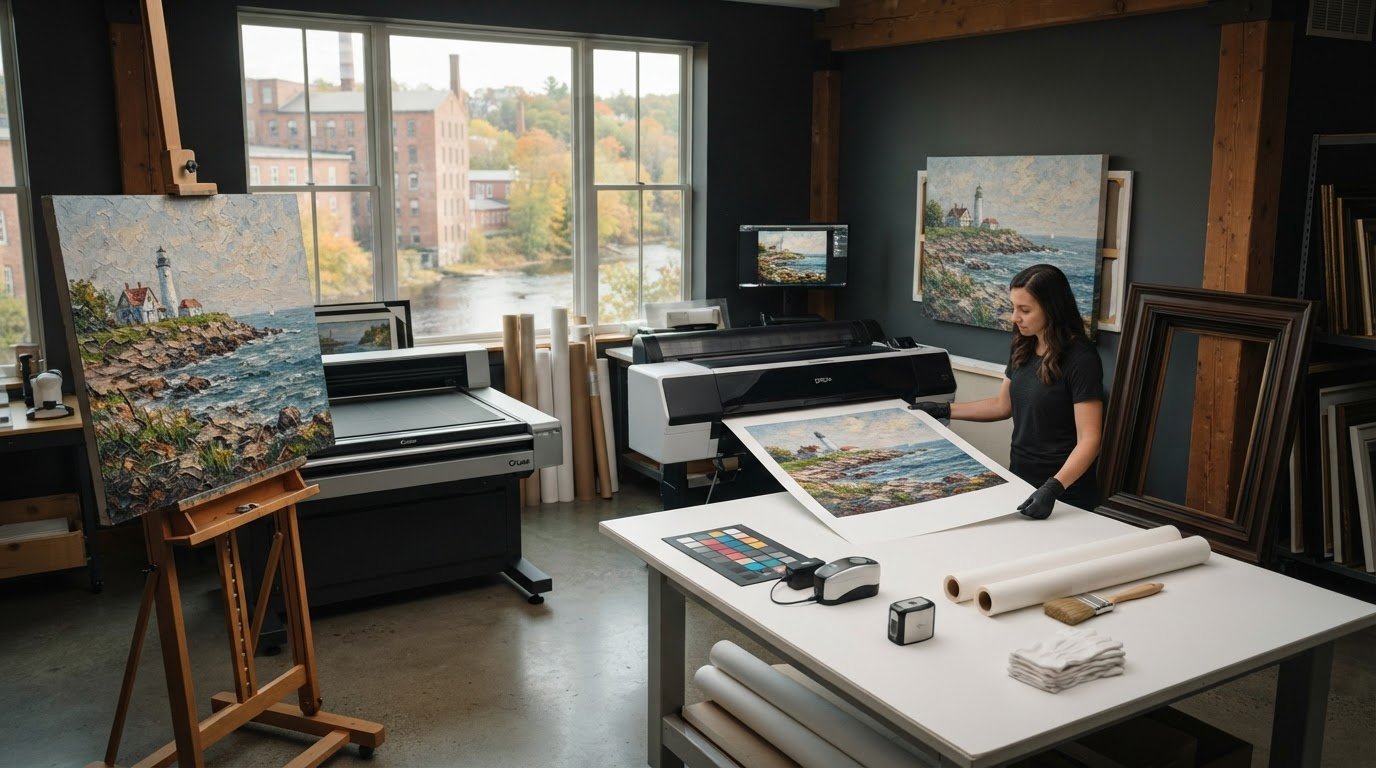
A large print needs an image file with enough detail to reproduce clearly at the intended viewing distance. New portraits should be captured with the planned display size in mind. Existing film, artwork, or historical photographs may need careful digitization. BetterLight scanning captures fine detail from suitable originals, while high-resolution camera capture serves other subjects. These methods are not interchangeable, so choose based on the source material.
Corporate art can also connect today’s team with earlier chapters of the organization’s story. Image-Tec’s historical image restoration service can help prepare archival photographs for an anniversary display or company history. Restored legacy images can be presented alongside contemporary portraits to make an office installation feel rooted in the organization’s past as well as its present.
Custom Framing and Installation
Framing gives a photograph a finished presence and helps it relate to its surroundings. Image-Tec pairs custom framing with print production, allowing the canvas, frame profile, and presentation to be considered together. Based in Methuen, Image-Tec brings photography and framing into the same project.
For a cohesive result, consider wall color, room lighting, furniture finishes, and the visual weight of nearby artwork. Archival-quality materials can be selected with the goal of protecting the print, while frame choices can complement the interior without overpowering the image. A group of portraits may call for consistent framing; a single lobby piece may benefit from a distinct scale or presentation.
Image-Tec brings commercial photography, Giclée canvas printing, and custom framing together for office displays. Plan a corporate portrait-to-print project that carries your team’s visual identity from capture to finished artwork.
Choosing Your Corporate Photography Partner in New England
A useful photography partner brings more than a camera to a corporate project. They help translate your organization’s goals into images and apply technical judgment to capture, reproduction, and presentation. For businesses in Methuen and Greater Boston, Image-Tec combines commercial photography with fine art reproduction, including high-resolution BetterLight scanning, Giclée canvas printing, and custom framing.
That range is useful when a project has connected needs. A team portrait may begin as a digital asset for company profiles, then become part of an office display. An anniversary project might pair new portraits with restored archival photographs. When photography and reproduction are handled within the same studio, each stage can be planned around the final use.
Serving the Boston to Manchester NH Corridor
Image-Tec is based in Methuen and serves businesses across the Boston and New England area, including Manchester, New Hampshire, and Newburyport. Its local presence offers a point of connection for organizations planning commercial imagery, team portraits, or office artwork. The studio brings photography and image reproduction together to address the needs of regional businesses and organizations.
Image-Tec’s technical range includes commercial photography, 360-degree imaging, BetterLight scanning, historical image restoration, and print production. These services address different imaging needs, from presenting a current team to preserving a company’s visual history. The right approach depends on the subject and intended use, whether the final asset belongs online, in an archive, or on a wall.
Next Steps: Planning Your Corporate Session
Before requesting a project estimate, outline the purpose of the images and the deliverables you have in mind. For a team session, note the approximate number of participants, preferred setting, intended uses, and relevant brand guidelines. For team-sports or other commercial photography, describe the subject, location, and kinds of images required. These details give the project discussion a clear starting point.
For printing and framing, gather information about the photograph or artwork, display location, desired print dimensions, and room style. If you’re working with an older corporate image, note its condition and how it will be used. Historical restoration can help prepare it for a presentation or anniversary display. A corporate team photography studio can connect creative goals with practical capture and production decisions.
Image-Tec combines commercial image-making with the technical expertise to carry photographs into finished prints and framed work. Contact Image-Tec about your corporate team photography project with the intended use and the imaging approach you have in mind.
Set the Direction for Your Next Brand Image
Your next photography project is an opportunity to decide how your organization wants to be seen, not simply to update a set of portraits. Start with where the images will appear, who needs to use them, and whether they may become part of your physical workspace. Those decisions give the creative and technical process a clear purpose.
A corporate team photography studio can help carry that intent from the original capture through its final presentation. Image-Tec combines commercial photography with BetterLight high-resolution scanning, Giclée prints up to 60 inches wide, and custom framing for projects that connect current team imagery with office displays.
Bring your goals, intended uses, and ideas for print or framing into the conversation. A clear starting point helps shape a session around your organization rather than a generic portrait template. Plan your corporate team photography project with Image-Tec and create imagery that reflects your team with confidence.
Frequently Asked Questions
What should our team wear for a corporate photography session?
Choose clothing that suits your workplace and looks cohesive without requiring everyone to dress alike. Have each participant try on the full outfit beforehand, including jackets or accessories they may remove, and check that garments fit comfortably while seated and standing. If company uniforms or branded clothing are part of your team’s day-to-day identity, decide whether they belong in the portraits. A spare top can help with unexpected marks or wrinkles.
How much space is needed for an on-location corporate photo shoot?
The space needed depends on the portrait style, group size, and equipment arrangement, so assess the specific room rather than relying on a fixed measurement. Check for a suitable background, room for the photographer and lighting, and a clear path for employees to enter and leave. For offices in Methuen, Boston, Manchester, New Hampshire, or Newburyport, sharing a few room photographs during planning can help identify obstacles in advance.
How long does it take to receive the final retouched images?
Build the image delivery schedule around the project’s scope and finishing needs. The number of images, review process, and level of retouching all affect the time required to prepare final files. Identify any date the images must be ready for a website update, company announcement, or print project, and decide who will approve the selections. Setting those requirements early gives the production schedule a clear target.
Can you match the lighting and style of our existing corporate headshots?
Existing portraits can serve as a visual reference for planning a consistent new set. Share representative images and identify what matters most to preserve, such as background tone, crop, contrast, or overall formality. Those references can guide lighting and image treatment while allowing for differences in the original files. You can also decide whether to maintain the established look or refine it as the company’s brand evolves.
Do you provide large-format prints for office lobby displays?
Yes. Image-Tec produces Giclée canvas prints up to 60 inches wide, suitable for corporate displays such as a lobby portrait or a visual feature in a meeting space. Before preparing a print, consider the wall’s viewing distance, available width, lighting, and whether the image should be framed. Those choices help determine an appropriate composition and presentation. Print planning can be considered alongside the original photography for offices in Greater Boston and nearby New England communities.
What is the difference between a standard headshot and a commercial branding portrait?
A standard headshot usually focuses on an individual’s face and expression for directories, profiles, or business communications. A commercial branding portrait can include more context, such as a work setting, tools, or interaction with colleagues, to communicate something about the person’s role and the organization. A consultant may need a simple profile image, while a company introducing its design team may benefit from portraits that show people in their working environment.
How do you handle photography for very large teams of 50 or more?
Large teams benefit from preparation that keeps the participant roster connected to the final image files. Create a current list with each person’s preferred display name, department, and any distinct portrait requirements, then assign one coordinator to track attendance and selections. If employees need different image formats or backgrounds, identify those needs before the shoot. This gives the photography and file organization a clear structure as the team grows.
Is retouching included in the corporate team photography packages?
Retouching should be defined by the intended look of the finished portraits. Decide whether the goal is subtle finishing, such as reducing a temporary blemish, or a more uniform treatment across the set. It is also useful to identify what should remain natural, including skin texture and distinguishing features. Agreeing on the desired finish in advance helps keep the final images appropriate to your brand and consistent across employees.




Leave A Comment
You must be logged in to post a comment.