
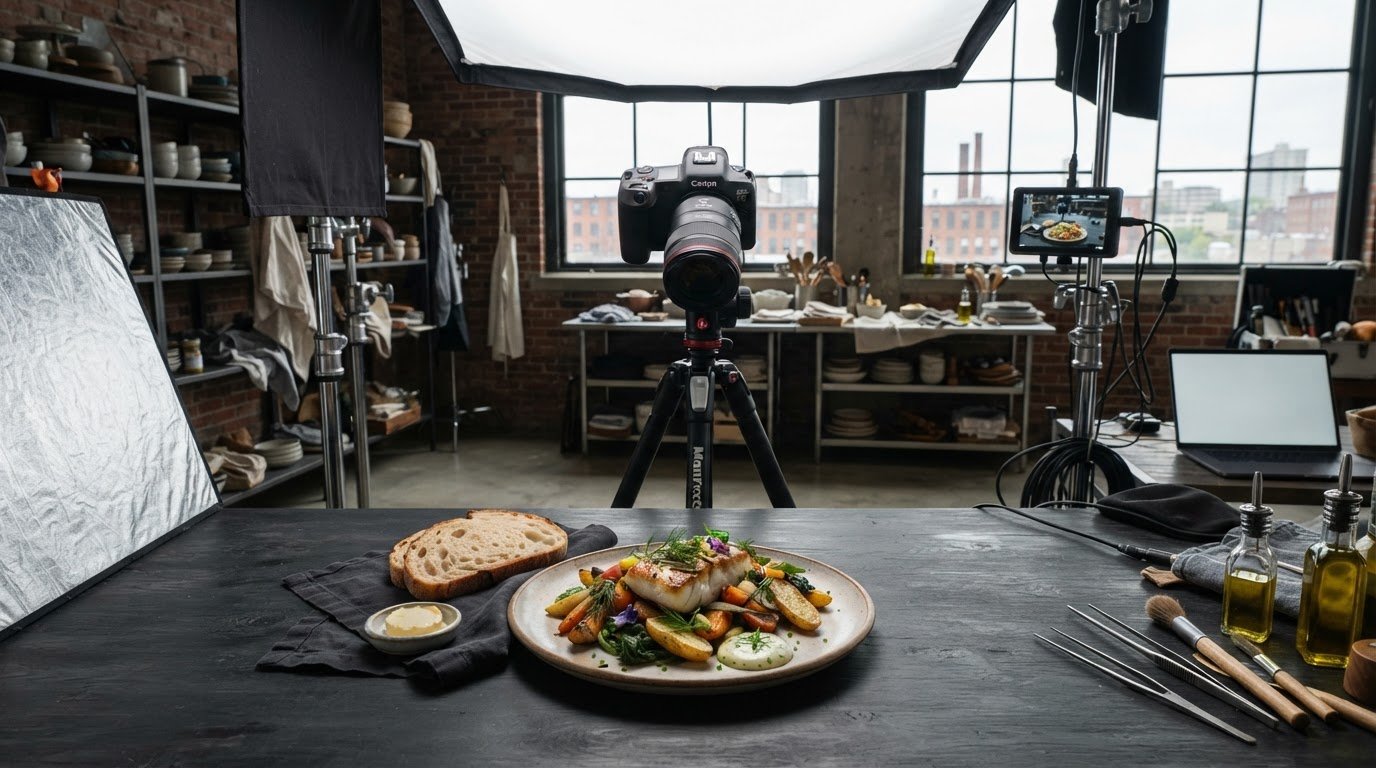
Can a polished food shoot still feel true to your restaurant or product? For businesses searching for a food photography studio Manchester NH, Image-Tec provides commercial food photography in its studio or on location. The right setting depends on what you want the images to communicate and where you plan to use them.
Before a shoot, it helps to decide what the images need to do, what to prepare, and whether studio lighting suits your food and brand. A menu, website, and promotional campaign may need different compositions, settings, and visual direction. Clarifying those needs early makes it easier to plan a focused session.
This guide walks through planning a food photography project, from the initial brief to shoot day. You’ll learn what to clarify, how to choose between an in-studio and on-location approach, and how to align the images with your menu and brand. Based in Methuen, Massachusetts, Image-Tec serves businesses in Manchester, NH, Boston, and Newburyport with food photography as part of its commercial photography services.
Key Takeaways
- Start with where and how you’ll use the images, then shape the brief, visual direction, and shot list around those needs.
- Choose a studio or on-location setup based on the food, desired atmosphere, access, and image requirements.
- Prepare representative dishes and agree on their presentation before shoot day to keep the session focused.
- Find a food photography studio Manchester NH businesses can work with for commercial images in-studio or on location.
- Plan image use alongside the shoot so the photographs support your menu, brand, and marketing channels.
Manchester, NH Food Photography: Benefits for Business
Commercial food photography creates purposeful images for business uses such as menus, marketing, packaging, websites, and online ordering. The photographs are planned around the food, brand, and places customers will see them, rather than simply recording a meal.
That planning helps a business show dishes clearly and establish a consistent visual identity across channels. Coordinated lighting, color, and composition can make a menu feel cohesive, while an image that shows a dish’s ingredients and presentation helps customers understand what they’re considering. Food photography can take many forms, but commercial work starts with a defined purpose and audience.
Casual snapshots and customer-generated images can still convey the dining experience and add a personal perspective. Professional images have a different role: they’re created to fit specific business needs, with deliberate framing and repeatable visual choices. A food photography studio Manchester NH businesses work with can help develop an approach for a particular menu, product, or campaign.
Which Manchester-area businesses use professional food photography?
Restaurants may need clear, consistent images for printed menus, websites, digital ordering, and seasonal promotions. Cafés can introduce signature drinks, baked goods, or rotating specials, while caterers may use images to communicate portion, presentation, and menu range to prospective clients.
Food producers can use product-focused imagery for packaging, online listings, and marketing materials. Hospitality businesses may need photography for a hotel restaurant, event dining, or a broader campaign. Priorities differ by project: one business may need a small group of hero images, while another needs a consistent set showing several menu items. Let the intended use, audience, and brand guide the shot list instead of relying on a generic package of images.
What makes food images effective across marketing channels?
Effective images make food appealing while representing it accurately. Natural-looking color helps ingredients appear true to life, and intentional composition directs attention to the dish without allowing props or background details to compete. Consistency matters as well. A coordinated set of photographs can help a website, menu, and campaign materials feel like parts of the same brand.
Plan the framing around where each image will appear. A wide website banner may need open space around the dish for text, while a menu layout or social post may call for a tighter crop. If one photograph needs to work in several placements, raise that before the shoot so the composition can account for different aspect ratios and focal points. Identify the main channels and what each image should communicate; those choices give a commercial photographer serving Manchester businesses a practical direction for the project.
How a Commercial Food Photography Shoot Takes Shape
A commercial shoot works best when creative choices serve a clear business purpose. Images should represent the dishes or products accurately, fit the brand, and suit the places customers will encounter them. A focused brief gives the photographer a useful guide and helps everyone prepare for the same result.
A commercial food photography project moves from defining goals and planning images to preparing the food, photographing the dishes, and reviewing how the images will be used. Each step informs the next. A restaurant promoting a seasonal menu, for example, may need a different visual direction and shot list from a producer creating product listings.
- Define goals: Identify what the images need to communicate and who they’re intended to reach.
- Plan the images: Select priority dishes, visual references, and placements such as menus, websites, or campaigns.
- Prepare the food and setting: Coordinate presentation, surfaces, props, access, and timing.
- Photograph and review usage: Capture the planned images and confirm how the final photographs will be used.
Build a useful brief before the shoot
List the dishes or products to photograph, the audience you want to reach, and the image placements you have in mind. Add brand references, such as colors, materials, or examples of photography that capture the tone you want. Separate essential shots from optional ideas. This keeps priorities clear if the session needs to focus on the most important images first.
Include practical details, too: the proposed location, access to the space, timing, and any operating constraints that could affect setup or food preparation. Image-Tec uses these details to plan an in-studio or on-location shoot around the project’s needs.
Coordinate food presentation and image direction
Discuss how each dish should appear before the shoot. Consider serving pieces, surfaces, backgrounds, and props as elements of one visual plan, not separate decorations. A simple setting can keep attention on a detailed dish; a more atmospheric composition may suit a brand that wants to convey a particular dining experience. There’s no universal formula.
Agree on who will prepare and present the food, and how dishes will be ready as photographs are made. Lighting also shapes the result: natural light can create a softer, location-specific feel, while controlled light offers greater consistency across different setups. The right choice depends on the desired mood and practical conditions. Food photography tips for restaurants can help clarify how lighting, composition, and presentation work together.
For a project serving Manchester, discuss the goals, image use, and shoot setting with Image-Tec’s commercial photography studio. A shared plan connects the food, visual direction, and production choices to a clear purpose from the outset.
Studio vs. On-Location Food Photography: Choosing the Right Setup
The setting affects the look and practical rhythm of a food shoot. A studio offers more control over backgrounds and lighting, while a restaurant or kitchen can bring authentic surroundings into the frame. Neither approach is automatically better. Choose based on the food, the atmosphere you want to convey, the location’s access and conditions, and how the images will be used.
Use this comparison to identify which setup fits your project:
Setting | Useful scenarios | Planning considerations
Studio: Product images, menu photography, or campaigns that need a consistent look. Plan the backgrounds and lighting direction, and decide how the food will be brought to the shoot.
Restaurant or kitchen: Images that benefit from a recognizable dining room, workspace, or sense of place. Consider available space, ambient light, access, and the effects of business activity.
Other client location: Food or products tied to a particular setting or process. Check that there’s room to work and that the location supports the intended composition.
When an in-studio food photography setup makes sense
A studio can be useful when you need repeatable results across several dishes or products. Backgrounds and lighting can be arranged to support a coordinated visual direction, helping images feel consistent even when the subjects differ. This can suit a planned menu update, product photography, or a campaign where images need to work together across placements.
Studio work also gives the shoot a dedicated setting rather than relying on a restaurant’s existing light or available surfaces. That control can simplify decisions about how each dish is framed and presented. When selecting a food photography studio Manchester NH businesses can work with, consider the project’s requirements, including the number and type of images and the overall look you want to achieve.
When on-location photography suits the story
Photographing at a restaurant, kitchen, or workplace can give images context that a neutral studio background won’t provide. A dining room may help communicate the experience of eating at the restaurant; a working kitchen can connect a dish to the place where it’s prepared. Choose this approach when the surroundings are part of the message.
Location shoots need practical planning. Confirm that the working area can accommodate the photography setup, note how ambient light affects the scene, and consider access and normal business activity. These factors can shape timing and composition, so include them in the project plan. Image-Tec, based in Methuen, Massachusetts, serves Manchester, NH businesses with commercial photography in-studio and on location. The team plans the approach around the project’s goals and setting.

How to Prepare for Food Photography in Manchester, NH
A well-prepared shoot gives the photographer and business a shared plan, keeps essential images at the center, and helps the day run smoothly alongside restaurant or production work. Start by deciding what the images need to accomplish, then connect each dish, location, and timing decision to that purpose.
Food photography preparation checklist: define image goals and uses, choose representative dishes, confirm their presentation, organize props and the shooting space, rank must-have images, and assign a contact person and workable schedule.
Prepare dishes, props, and the shooting space
Select dishes that represent the menu or product range and match the brief. A restaurant updating its menu might prioritize signature dishes and a few seasonal items; a food producer may choose products that show the range clearly. Decide in advance how each selection should be presented, including serving pieces, surfaces, props, and any brand elements that belong in the frame.
For an on-location shoot, identify a usable area and remove background distractions that don’t support the image. Make sure the space can accommodate the planned setup and that dishes can be brought there without interrupting normal work. A commercial photography studio near Boston can also provide context for planning a project with a professional studio.
Organize image priorities and shoot-day logistics
Rank requested photographs by business importance. A campaign launch, menu update, product listing, and website refresh may each have different must-have images. Mark essential shots separately from secondary ones so the team knows where to focus if the schedule shifts. Share the intended placements, too, since a menu image may need different framing from a website banner.
Plan the order of dishes around preparation. Coordinate who is responsible for preparing and presenting each item, and set a schedule that fits the business’s workflow. A designated contact person can answer questions, keep priorities clear, and coordinate access without relying on several staff members to make competing decisions. For businesses planning a food photography studio Manchester NH project, these details connect the brief to real operating conditions.
Before shoot day, review the selected dishes, presentation, location, image priorities, and schedule with everyone involved. Image-Tec serves Manchester, NH with commercial photography in-studio and on location. Plan your food photography project with Image-Tec by bringing your business goals and intended image uses into the conversation.
Work with Image-Tec for Food Photography Serving Manchester, NH
Image-Tec is a commercial photography and art reproduction studio based in Methuen, Massachusetts, serving businesses in Manchester, NH. Food photography is part of its commercial photography work, with projects photographed in-studio or on location. That lets businesses plan the setting alongside the purpose of the images, whether they’re creating menu visuals, product photographs, or marketing content.
A productive project begins with a shared understanding of what the images need to do. A focused conversation can bring together your business goals, the dishes or products you want photographed, where the images will appear, and the setting that suits the work. For businesses searching for a food photography studio Manchester NH can work with, this planning connects creative direction to practical image needs.
A local commercial photography partner for food businesses
Image-Tec is based in Methuen and serves Manchester, NH, as well as Boston and Newburyport. Its food photography is part of a broader commercial photography practice, bringing a business-focused perspective to projects of different types and scales. The studio provides commercial photography in-studio and on location, so the approach can reflect the food, intended atmosphere, and working environment.
Plan your next food photography project
You don’t need a finished production plan to begin. A clear outline gives the project a useful starting point and helps shape the right approach. Bring together:
- Your business type and the goal for the images.
- The dishes or products you want to feature, including priority selections.
- Where you plan to use the photographs, such as a menu, website, product listing, or campaign.
- Your preferred setting, along with any location or scheduling considerations.
These details help define the project scope and image requirements. A set of menu images, for example, may call for a different visual direction from a campaign focused on atmosphere or a product listing centered on clear presentation. The conversation can also clarify whether an in-studio or on-location shoot best suits the intended use. Image-Tec serves Manchester-area businesses with food photography as part of its commercial photography work, planned around the project’s goals and setting.
If you’re ready to talk through your needs, share your business goals, image priorities, and preferred setting with Image-Tec. Discuss a commercial photography project and start shaping a food photography plan for your business.
Give Your Next Food Campaign a Clear Visual Direction
Your next menu update, product launch, or seasonal promotion is an opportunity to make every image serve a clear purpose. Before production begins, decide what you want customers to notice and what feeling you want the photographs to convey. Those choices can guide a distinctive visual direction instead of a collection of disconnected images.
If you’re considering a food photography studio Manchester NH businesses can work with, bring your ideas, priorities, and intended image uses into the conversation. Image-Tec’s commercial food photography can be planned for an in-studio or on-location setting, based on what best suits the project. A focused starting point turns your goals into practical creative decisions.
You don’t need every detail settled before taking the next step. Share what you’re planning and what you want the images to accomplish. Discuss your food photography project with Image-Tec, and move forward with a visual plan built around your business.
Frequently Asked Questions
What is commercial food photography?
Commercial food photography creates images for a business’s communication and sales needs, rather than simply recording a meal. A food photography studio Manchester NH businesses work with can plan images around a restaurant menu, packaged product, or marketing campaign. The goal is to show the food clearly and appropriately for its audience and placement. Details such as portion, ingredients, and presentation should remain true to the actual offering.
Can a food photographer shoot at my restaurant in Manchester, NH?
Yes. Image-Tec provides commercial photography on location, including food photography for Manchester-area businesses. A restaurant shoot can show dishes in the setting where guests enjoy them, or capture details of the dining space that establish atmosphere. Before the session, identify the areas that best represent the business and consider how to keep customer-facing spaces functional during photography. Choose a point person to coordinate staff and answer questions about the menu.
How should I prepare food for a professional photography shoot?
Prepare each dish as closely as possible to how customers receive it, including the usual portion, plate, garnish, and arrangement. Select fresh ingredients that match the current recipe, and have delicate finishing elements ready to add at the right moment. If presentation varies between cooks or shifts, agree on a preferred version in advance. This helps the photographs represent the real menu rather than an unusual one-off presentation.
Is studio or on-location food photography better?
Neither setting is automatically better; choose based on what the images need to communicate. A studio can suit images that benefit from a consistent background and visual treatment, such as a group of product photographs. A restaurant location can add recognizable surroundings or a sense of place. Consider whether context or visual uniformity matters more, along with the space and light available. Image-Tec offers both in-studio and on-location commercial photography.
What can food photography images be used for?
Food images can support printed menus, restaurant websites, online ordering pages, social media, advertising campaigns, product listings, and packaging. The intended placement affects how a photograph should be framed, so identify key uses before the shoot. Clarify image-use permissions as part of the project agreement, particularly if you plan to share images with a partner, use them in paid advertising, or apply them to printed materials.
How much does commercial food photography cost?
Commercial food photography costs depend on the scope of the project, so a single figure won’t suit every shoot. The number and variety of dishes, the setting, and the range of images needed can all affect the work involved. Start by defining your priority photographs and intended uses. Image-Tec can discuss the project requirements with you and shape an approach around the images your business needs.
How do I choose images for a restaurant menu photography shoot?
Begin with the dishes customers need to recognize or understand, such as signature items, new additions, or dishes with distinctive ingredients. Check the menu layout to see where photographs will appear and whether images need to show full plates or emphasize a particular detail. Keep the selection current with the dishes you serve. A focused set that reflects the menu’s range can help customers compare options without making the menu feel visually crowded.



Leave A Comment
You must be logged in to post a comment.