
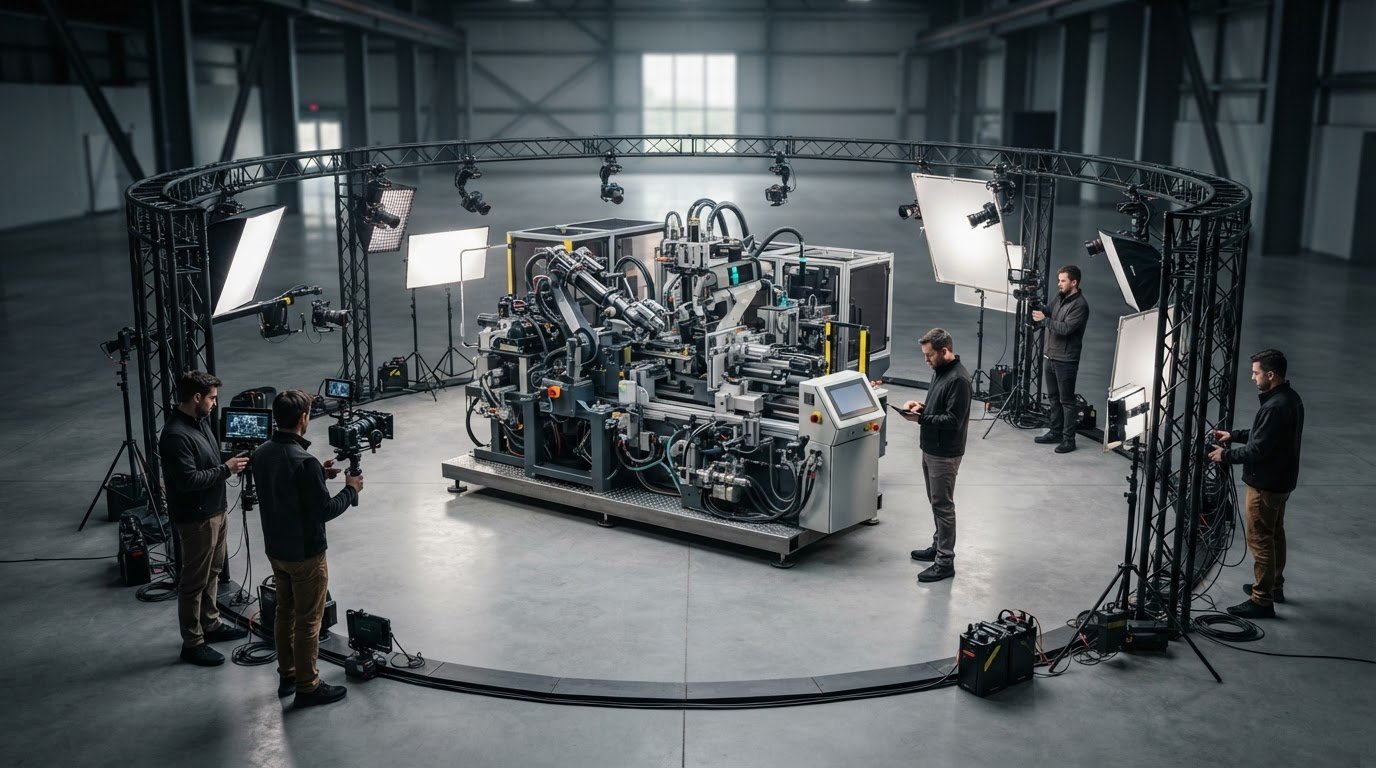
What if the detail a buyer needs is on the side of the machine your main product photo never shows? Flat images can make complex industrial equipment difficult to assess, especially when customers need to understand its shape, layout, and visible features. 360 photography for industrial equipment gives viewers a fuller look, but the result depends on choosing the right format and planning the views around what buyers need to evaluate.
This guide explains what a 360 spin can show, how it differs from interactive 3D and a full 3D model, and how to choose the right approach for your equipment and intended use. You’ll also learn how to prepare a focused brief, organize equipment for photography, and plan a shoot around access to large or operational machinery. Image-Tec provides commercial and 360 photography in studio and on location from Methuen, Massachusetts, serving Boston, Manchester, New Hampshire, and Newburyport. The following sections cover the decisions that help make your visual assets useful for sales and documentation.
Key Takeaways
- Use a 360 spin to help buyers inspect equipment configuration, orientation, and visible exterior features from multiple viewpoints.
- Choose between a photographic spin, interactive 3D experience, or 3D model based on how viewers need to explore the equipment.
- Evaluate equipment dimensions, surfaces, movement limits, access conditions, and intended audience before planning 360 photography for industrial equipment.
- Prepare a focused brief that covers equipment readiness, operating restrictions, safety procedures, and the imagery’s sales or documentation purpose.
- Plan for studio or on-location photography according to the equipment and project needs. Image-Tec serves industrial clients from Methuen, including Boston, Manchester, New Hampshire, and Newburyport.
Why 360 Photography Can Make Industrial Equipment Easier to Evaluate
A product image shows a machine from one angle. A 360 spin presents a sequence of photographs that lets viewers move among the captured viewpoints and inspect the equipment’s visible exterior. For industrial teams, this can make the machine’s overall shape, orientation, and external components easier to understand before a buyer visits a facility or sees a unit in person. What is 360 Product Photography? offers further background on the format and its capture methods.
The value of 360 photography for industrial equipment depends on matching the views to real buyer questions. A viewer might want to see where access panels sit, how a component is oriented, or how exterior features relate to the rest of the machine. A purposeful rotation lets buyers inspect the photographed sides themselves instead of inferring the full layout from a few selected angles.
A spin has limits: it shows only what the camera captured and what remains visible from those viewpoints. It doesn’t reveal concealed parts, establish internal condition, or verify performance. Specifications, diagrams, demonstrations, and close-up photographs still have essential roles. Use a spin as one part of a clear product information set, with technical documents providing measurements and details that imagery alone cannot establish.
A 360 view supports visual inspection of photographed surfaces; technical verification still depends on specifications, diagrams, and appropriate testing.
Which industrial buying questions can a 360 view help answer?
Surrounding views can clarify a machine’s visible form and overall arrangement, including which side carries an external panel, where an access point appears, and how major exterior features relate to one another. This can help when a buyer can’t inspect a physical unit in person, such as during an early comparison or a remote sales discussion. The imagery helps orient the viewer, but it shouldn’t imply visibility into blocked or hidden areas.
Before capture, identify the questions a prospective buyer is most likely to ask. If orientation matters, make sure the selected views show the relevant sides. If a small control or label needs to be read, plan a separate close-up rather than relying on the spin alone.
When is a 360 spin more useful than a gallery of stills?
A gallery presents a fixed selection of angles chosen by the seller. A 360 spin lets viewers move between captured viewpoints themselves, which can help when equipment has a complex exterior or buyers need to inspect its arrangement from multiple sides. Stills are better for focused detail: a label, control panel, connection, or other key feature can be framed clearly without asking viewers to find it in a rotation.
Choose the combination according to the equipment’s complexity and the questions customers need answered. A simple product may need only well-chosen stills; a large or visually complex machine may benefit from a spin supported by detail images and technical materials. The goal isn’t to add an interactive format for its own sake. It’s to make the equipment easier to understand without overstating what a photograph can prove.
360 Spin, Interactive 3D, or 3D Model: Understand the Differences
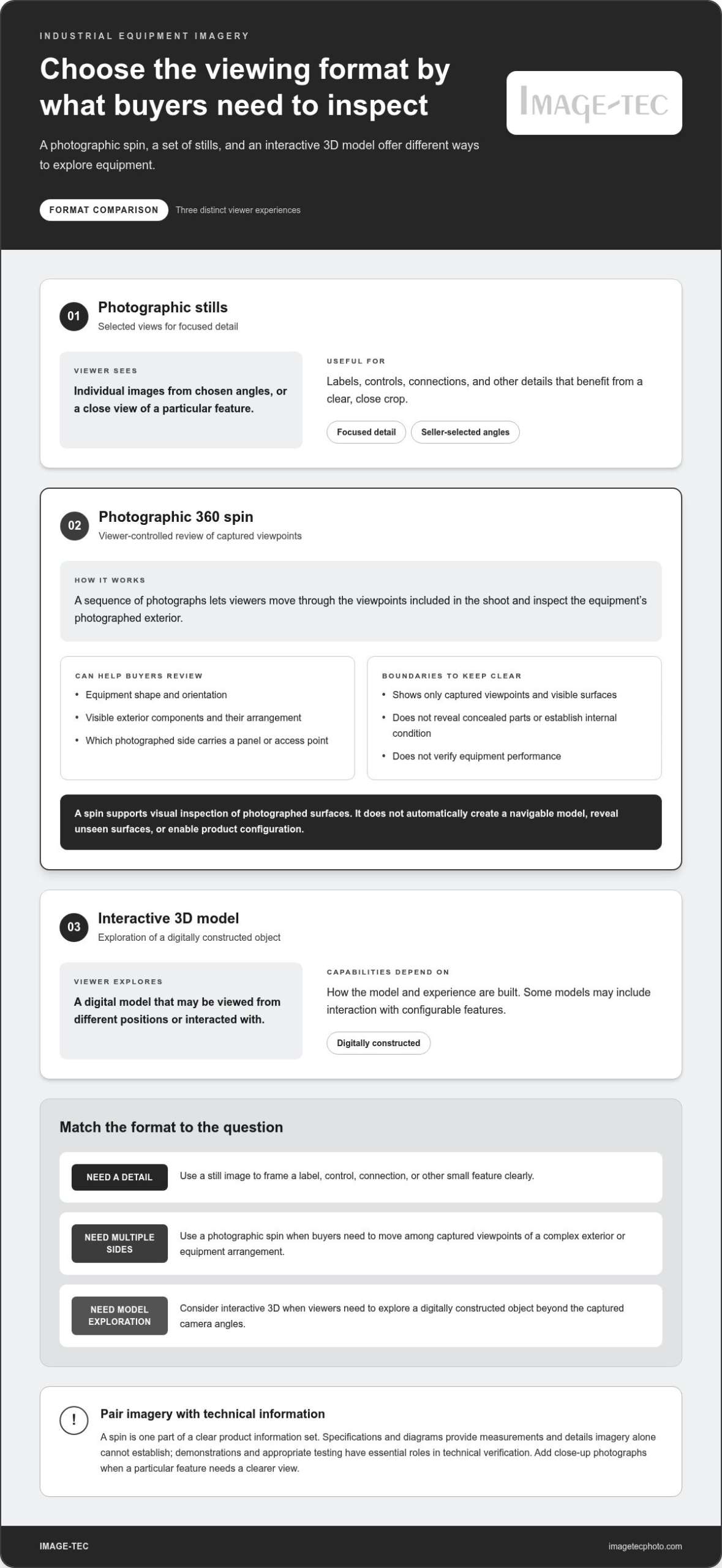
These terms describe different viewer experiences, not interchangeable ways to present the same file. A photographic spin lets someone move through captured images of a real piece of equipment. Interactive 3D and 3D models can offer a digitally constructed object for viewers to explore or, in some cases, configure. Choose based on whether customers need to review photographed viewpoints, examine specific features, or interact with a modeled product.
Photographic stills: Individual images show selected angles or details. They work well for focused views of labels, controls, connections, or other features that benefit from a close crop.
Photographic 360 spin: A sequence of photographs lets viewers rotate through the angles captured during the shoot. It supports user-controlled viewpoint review, but only for the photographed views.
Interactive 3D model: A digitally modeled object may support exploration beyond captured camera angles, such as viewing from different positions or interacting with configurable features. Its capabilities depend on how the model and experience are built.
A photographic 360 spin lets viewers move among captured photographs; a 3D model lets them explore a digitally constructed object. A spin doesn’t automatically create a navigable model, reveal unseen surfaces, or support product configuration. Keeping that distinction clear helps teams set accurate expectations for sales materials and customer-facing tools.
What does a photographic 360 spin show?
Viewers rotate through a sequence of images showing the photographed unit from the viewpoints included in the capture. The equipment, its position, and the capture setup determine which sides and details appear. The required image quality and visible detail depend on the project, so a broad equipment view and a close study of a small component may call for different images.
For 360 photography for industrial equipment, think of the spin as a controlled way to review photographed perspectives, not a substitute for a drawing or engineering model. Pair it with still photographs when a particular feature needs a closer, clearer view.
When should an industrial business consider 3D visualization instead?
Consider modeled 3D when the customer experience calls for interaction beyond rotating through captured photographs. For example, buyers may need to explore possible configurations or engage with a virtual representation of equipment. Those goals differ from reviewing the visible exterior of a specific photographed unit, where a spin may be the more direct format.
Neither approach is universally better. Match the format to the task:
- Review viewpoints: use a photographic spin.
- Study a specific feature: use targeted stills, alongside a spin if helpful.
- Explore digital configurations: consider a modeled 3D experience.
Image-Tec provides commercial and 360 photography in studio and on location from Methuen, Massachusetts. If a photographic spin fits your project, explore Image-Tec’s 360 photography for presenting equipment from multiple captured angles.
How to Evaluate an Industrial 360 Photography Project
A useful project starts with the equipment and the decisions viewers need to make. Before choosing a capture approach, consider the machine’s dimensions, weight, surface finish, moving parts, and access conditions. These details shape where photography can take place, which viewpoints are practical, and whether the equipment can be presented safely without interrupting essential work.
Define the audience, too. A prospective buyer comparing products may need a clear view of the exterior arrangement, while a sales team may need consistent imagery for presentations and a digital catalog. For 360 photography for industrial equipment, a spin can provide broad viewpoint coverage, but still photographs, diagrams, specifications, or other documentation may be better for answering specific questions. Decide what each asset should communicate instead of asking one format to do every job.
Which equipment characteristics affect the photography approach?
Scale and weight influence whether equipment is suited to studio photography or needs to be photographed at its operating location. Finish matters, too: reflective or polished surfaces can affect how the machine appears in photographs, while a visually complex exterior may call for careful angle selection. Identify movement constraints, nearby obstructions, and safe access requirements before planning camera positions or equipment handling.
Be clear about the scope. A 360 spin presents photographed exterior views; requests for internal, operational, or technical documentation may call for other materials or a different capture plan. Separating these goals early keeps the project focused and sets realistic expectations for what the imagery will show.
Which deliverable and viewing requirements belong in the brief?
State where the finished imagery will appear, such as a product page, sales presentation, or digital catalog. Then describe the viewpoints customers need to explore and list priority components for accompanying still photographs. A control panel, connection point, or identification label may need a dedicated close-up rather than a small place in the rotation.
Include practical requirements for delivery and use. Identify the file types and image dimensions your team needs, the platform where viewers will access the spin, and any accessibility requirements for the finished experience. Align these details with the people responsible for sales, marketing, product information, and digital publishing before production begins. A well-defined brief makes it easier to assess whether the proposed assets answer customer questions.
Project-fit checklist: equipment size and finish; movement and safe access; studio or on-location setting; audience and viewing platform; priority angles and details; and the role of stills, diagrams, and technical documents.
Use the checklist to focus the discussion on the equipment and its intended use. The strongest project plan gives every requested view a purpose, uses a capture location suited to the machine, and delivers assets that fit the way customers will review them.
Prepare Industrial Equipment for a Successful 360 Photography Shoot
A well-organized shoot begins before the camera is set up. For industrial equipment, preparation means aligning the image goals with the machine and its location. A clear shot plan gives the photography team agreed priorities, while the equipment team coordinates access, positioning, and readiness with the people responsible for the site.
What should the equipment team prepare before the shoot?
Start with a brief that identifies the equipment, summarizes its key visible features, and states who will view the finished imagery. List preferred viewpoints and any components that need special attention. Then coordinate site access, equipment positioning, and operating restrictions with responsible staff. Identify relevant safety procedures and communicate the conditions for working around the machine before photography begins.
Next, prepare the visible surfaces and any components intended to appear in the photographs. Clean the equipment as appropriate for its materials and use, remove unrelated clutter from the frame, and arrange detachable parts in the agreed positions. Consistent staging matters: if parts move or the machine’s configuration changes during capture, the resulting views may not present one coherent version of the equipment.
Choose the setting according to the equipment and access needs. A manageable item may be photographed in a studio; large machinery or equipment that cannot be moved may be better suited to an on-location shoot. Image-Tec offers commercial photography in studio and on location, so the project can be planned around where the equipment can be prepared and photographed.
How should the team review and use the resulting imagery?
Review the finished views against the brief. Check that the rotation represents the agreed viewpoints and intended equipment configuration, and that priority features are clearly shown. Someone familiar with the machine can help catch misplaced components or a mismatch between the photographed unit and the product information customers will see.
Then decide how the imagery fits into the wider set of materials. A spin can give an overall sense of the equipment, while still photographs can highlight selected features. Diagrams and specifications can carry precise technical information that photographs aren’t designed to establish. Place these assets together where they answer related questions, rather than expecting the 360 view to stand alone.
- Before the shoot: share product details, intended viewers, priority angles, access conditions, and operating restrictions.
- During preparation: ready the visible surfaces, position the equipment, and arrange the components included in the brief.
- At review: compare the delivered views with the agreed configuration and plan their placement with supporting product information.
Include intended destinations, file requirements, and platform needs in the project workflow so the imagery is prepared for its actual use. Plan industrial 360 photography around your equipment and location with Image-Tec’s commercial photography services.
Work with Image-Tec on Industrial 360 Photography in New England
Industrial equipment projects need an imaging plan shaped around the machine, its setting, and how customers will use the finished visuals. Image-Tec provides commercial and 360 photography for equipment imagery, with projects photographed in studio or on location according to the equipment and production goals. Based in Methuen, Massachusetts, the studio serves businesses in Boston, Manchester, New Hampshire, and Newburyport.
What can a project discussion establish?
A focused discussion can define which equipment will be photographed, who needs to view it, and what questions the imagery should help answer. It can also establish whether an in-studio or on-location approach best suits the machine, including its size, position, and access needs. From there, the team can set priorities for the 360 view and complementary commercial photographs, giving each asset a clear purpose.
For 360 photography for industrial equipment, start with the decisions your customers need to make. A sales team may want a broad view of a particular configuration, while product information may call for still photographs of selected features. Clarifying those priorities early aligns the capture plan with how the assets will be presented, rather than producing views without a defined role.
How do you take the next step with Image-Tec?
Prepare a concise project overview with equipment details, the photography location, preferred timing, and intended image use. Note any access conditions or operating restrictions that could affect the project, along with the viewpoints and components you consider most important. Sharing the purpose behind the imagery helps Image-Tec shape the photography approach around the project’s requirements.
Identify where the finished visuals will appear, such as a digital catalog, product page, or sales presentation. That context can inform the balance between a 360 view and supporting still photographs, as well as the delivery needs your team should plan for. Clear goals give the project a practical starting point.
Image-Tec combines a local commercial photography studio with the flexibility to work on location, serving industrial clients in Methuen, Boston, Manchester, New Hampshire, and Newburyport. Discuss your equipment, viewing goals, and project requirements with the team to plan a fitting approach.
Discuss your industrial equipment photography project
Turn Your Equipment Images into a Lasting Sales Resource
Give your imagery a role beyond the initial launch. As equipment configurations change or new models are introduced, a consistent visual plan can help your team keep product pages, sales materials, and documentation aligned. Decide which views should remain standard across products and which details need a fresh capture for each configuration. Planning these priorities can make future updates easier to organize.
With 360 photography for industrial equipment, the goal isn’t simply to create an interactive view. It’s to produce clear, useful assets that support how customers understand your equipment and how your team presents it. Start with the questions your imagery needs to answer, then shape the project around those priorities.
Image-Tec brings commercial photography experience to equipment projects and can tailor the approach to the work. Plan your industrial equipment photography project and take the next step toward imagery built around your goals.
Frequently Asked Questions
What is 360 photography for industrial equipment?
360 photography for industrial equipment presents a series of photographs in a viewer that lets someone move through captured angles of a machine. For example, a buyer reviewing a pump assembly online can rotate the view to better understand its exterior arrangement before requesting a closer discussion. The experience represents the photographed unit and selected viewpoints, so pair it with accurate product information when viewers need details beyond what the images show.
Is a 360 product spin the same as a 3D model?
No. A product spin is made from photographs of a real item, while a 3D model is a digital representation that may support additional interactions. That difference matters if a customer needs to compare a photographed machine with a proposed configuration. A spin shows the angles captured during photography; it doesn’t generate alternate components or views of surfaces that weren’t photographed. Choose based on the experience customers need.
Can 360 photography show small details on machinery?
It can show small features if they’re captured clearly, but a rotating overview may not make a tiny part easy to inspect. A fastener, serial label, or narrow control may occupy only a small portion of the frame. For details customers need to read or compare, request separate close-up photographs and identify the precise feature in the shot plan. This is especially helpful when product teams use the imagery alongside technical records.
Can large industrial equipment be photographed on location?
Yes. Equipment that is difficult to move can be photographed where it is installed, with the shoot planned around site access, equipment position, and operating conditions. Image-Tec offers on-location commercial and 360 photography. Based in Methuen, the studio serves the surrounding region, including Boston, Manchester, New Hampshire, and Newburyport. Share the location and access context early so the photography plan accounts for the machine’s setting.
How many images are needed for a 360-degree product view?
A standard 360 rotation commonly uses 24 to 72 individual frames, according to the research summarized for this guide. The appropriate frame count depends on how the viewer experience should feel and how much separation is useful between viewpoints. More frames don’t automatically reveal finer details. If buyers need to inspect a small component, plan dedicated close-ups instead of relying only on additional rotation frames.
What should we prepare before an industrial equipment photoshoot?
Prepare the machine’s product name, configuration, key features, and the views customers need to understand. Coordinate equipment positioning and site access with responsible staff, and communicate operating limits and applicable safety procedures. Clean visible surfaces and arrange any detachable components that should appear. If your team is in Methuen, Boston, Manchester, or Newburyport, share the shoot location and intended use so the project plan reflects the actual setting.
How much does industrial 360 photography cost?
Project pricing depends on the equipment and work involved, so there isn’t one useful figure for every industrial shoot. Scope can be affected by the machine’s size, surface characteristics, capture location, access needs, number of desired views, and whether supporting still photographs are also required. When planning a project in Methuen, Boston, Manchester, or Newburyport, provide those details along with your imaging goals so the requirements can be considered together.





Leave A Comment
You must be logged in to post a comment.