
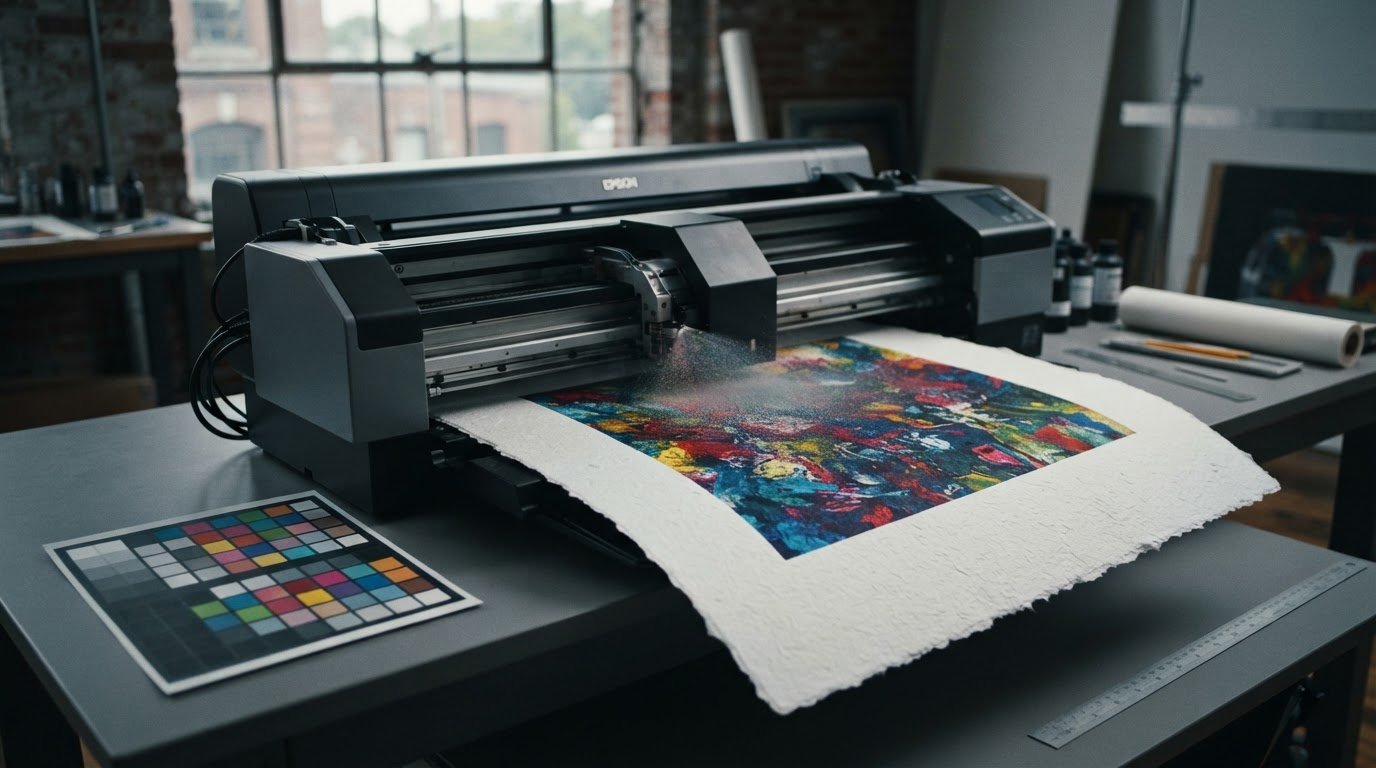
A print can be called giclée, but the word is not a universal quality guarantee. If you’re asking what is giclee, the short answer is a fine art reproduction made with a professional inkjet process. The term describes an approach to printing, but it doesn’t certify how closely a print matches the original or how long it will last.
That distinction matters when reproducing artwork. A successful result depends on more than the label: capturing the original clearly, preparing the image with careful color handling, and choosing a suitable printing surface all play a part. Giclée is commonly pronounced “zhee-CLAY” and comes from a French word meaning “to spray.”
This guide explains what the term means, how the reproduction process works, and what to consider beyond the label. It also covers how professional capture, including BetterLight scanning when appropriate, can support artwork reproduction. Image-Tec’s studio in Methuen, Massachusetts, produces giclée and canvas prints up to 60 inches wide for artists and collectors in the region, including Boston, Manchester, New Hampshire, and Newburyport.
Key Takeaways
- Learn what is giclee and how the term differs from a specific medium, artistic style, or formal quality certification.
- Follow the main steps in making an artwork reproduction, from preparing the image to reviewing the finished print.
- Understand why inkjet describes a broad printing technology, while giclée usually refers to its fine art reproduction use.
- Assess whether a reproduction suits your goals by considering artwork size, viewing distance, print surface, and display setting.
- Explore how Image-Tec’s Methuen studio connects artwork capture, fine art reproduction, Giclée printing, and presentation.
What Does Giclée Mean? A Clear Definition of the Term
Giclée commonly refers to fine art inkjet printing used to reproduce artwork. The word describes a printing approach, not the material used to make the original, a particular art style, or the person who created it. A watercolor painting, for example, can be reproduced as a giclée print, but the reproduction itself isn’t a watercolor.
If you’re wondering what is giclee beyond a label on a print, think of it as a term associated with fine art reproduction rather than a standalone measure of quality. A print’s fidelity and expected lifespan depend on decisions made during image capture, preparation, printing, and presentation. The word alone doesn’t identify the inks or surface, confirm color accuracy, or promise how long the print will last.
Giclée names a fine art printing approach. Claims about a print’s quality and longevity depend on the materials and production details behind it. This distinction helps artists and buyers interpret the term without assuming every print carrying the label was made to the same specifications.
How Do You Pronounce Giclée, and Where Did the Word Come From?
Giclée is commonly pronounced “zhee-CLAY.” The word comes from the French verb gicler, meaning “to spray,” a reference to how an inkjet printer deposits ink. As Giclée explains, printmaker Jack Duganne is commonly credited with coining the term in 1991 for fine art inkjet prints. The word’s history explains its connection to printing, but it doesn’t establish a universal technical standard.
Is Giclée a Printing Process or a Quality Certification?
Giclée is widely used to describe fine art prints made with inkjet technology, but it isn’t a formal certification that requires one specific combination of ink, paper, resolution, or lifespan. The term can indicate the intended context of a print, but it doesn’t tell you every detail of how that print was produced.
For a more useful assessment, look at the available information about the reproduction: the surface it’s printed on, the materials used, and how the image was captured and prepared. These details help you judge whether a print suits the artwork and your display plans. In a professional reproduction workflow, the source image and careful color handling matter alongside the printer and chosen surface.
How Giclée Printing Turns Artwork into a Reproduction
A giclée reproduction starts with an image, but the preparation depends on what the image represents. A digital illustration already exists as a file. A painting, drawing, or other physical original must first be captured as a digital image through scanning or photography. The file is then prepared for its intended print size and surface, printed, and reviewed.
The workflow moves from capture or file preparation to print setup, production, and review. Each stage affects how the artwork appears in reproduction. The aim is a considered print, not a promise that a copy will be identical to the original. Physical artwork and digital files each have limits, and reproduction must work with the information available.
From Original Artwork to a Print-Ready Image
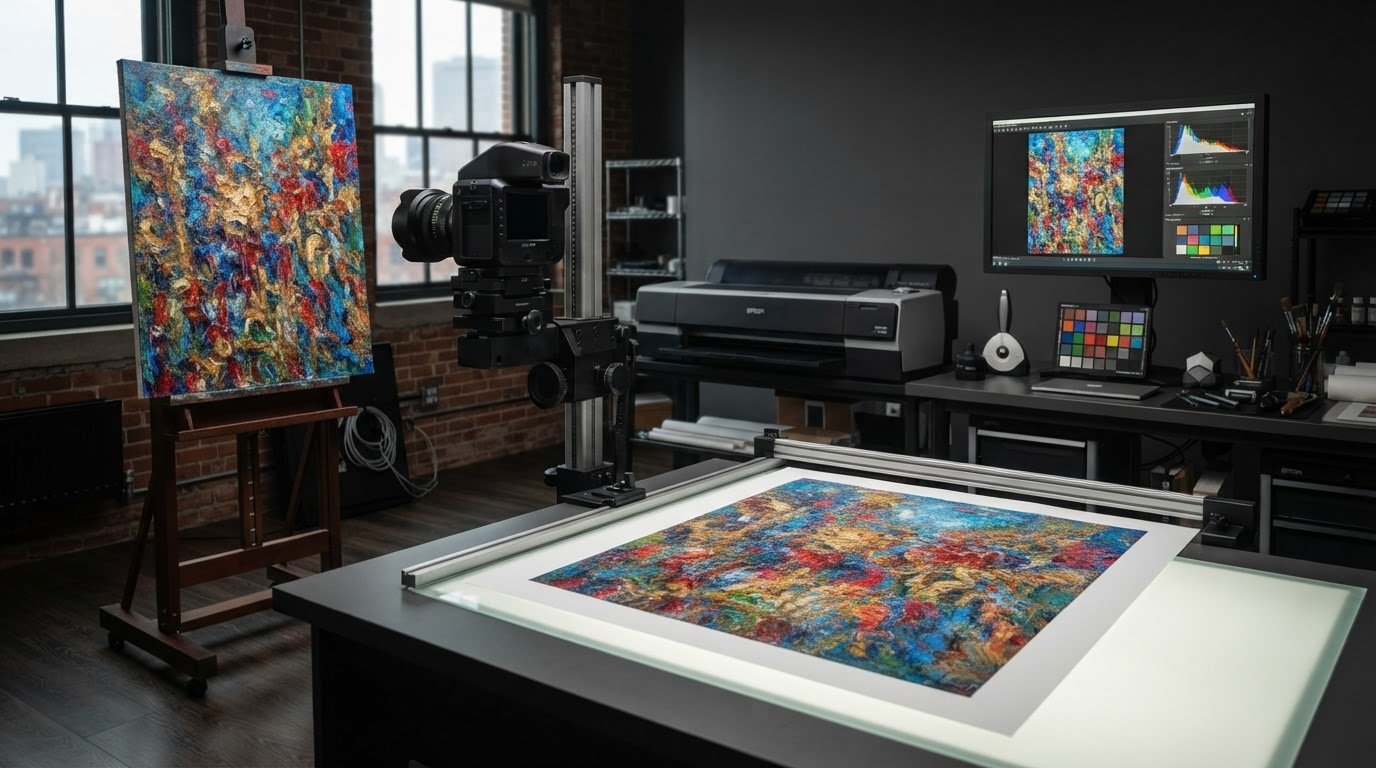
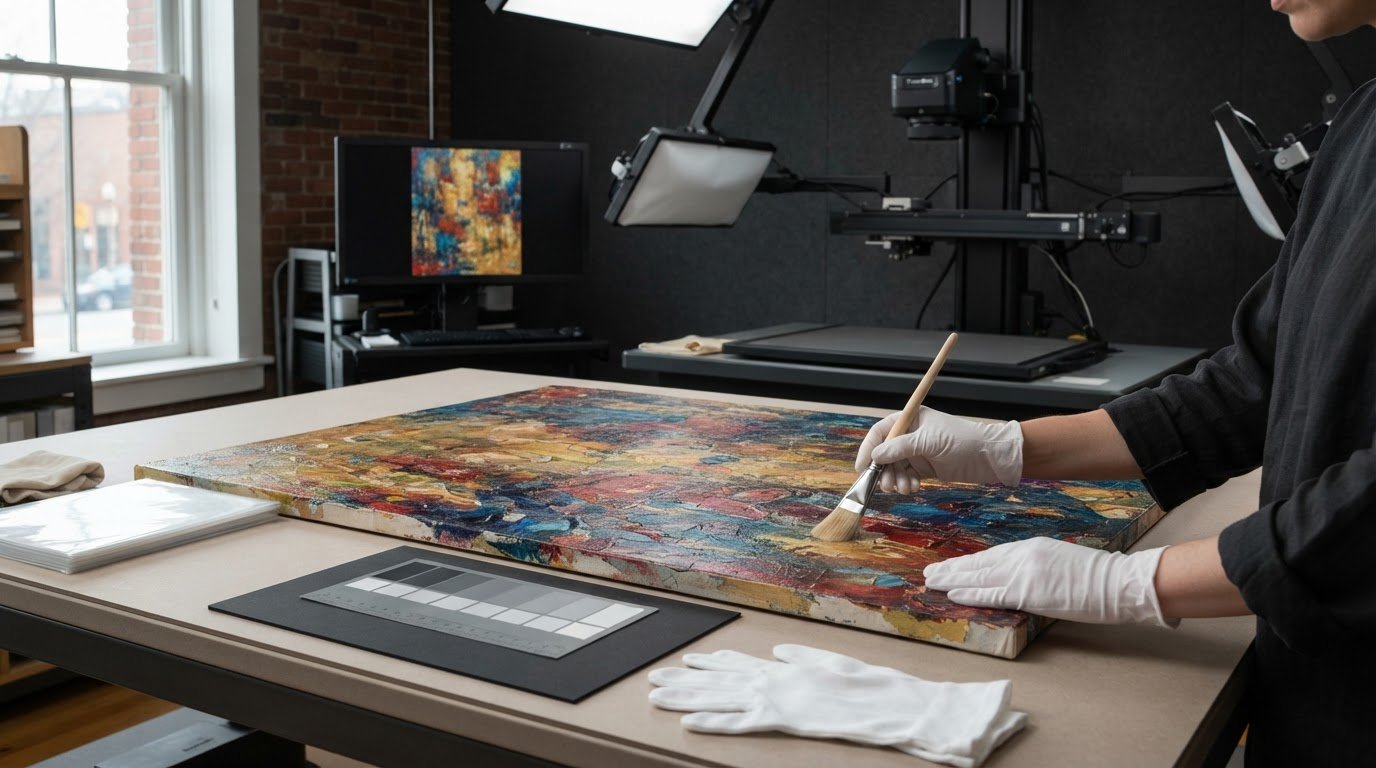
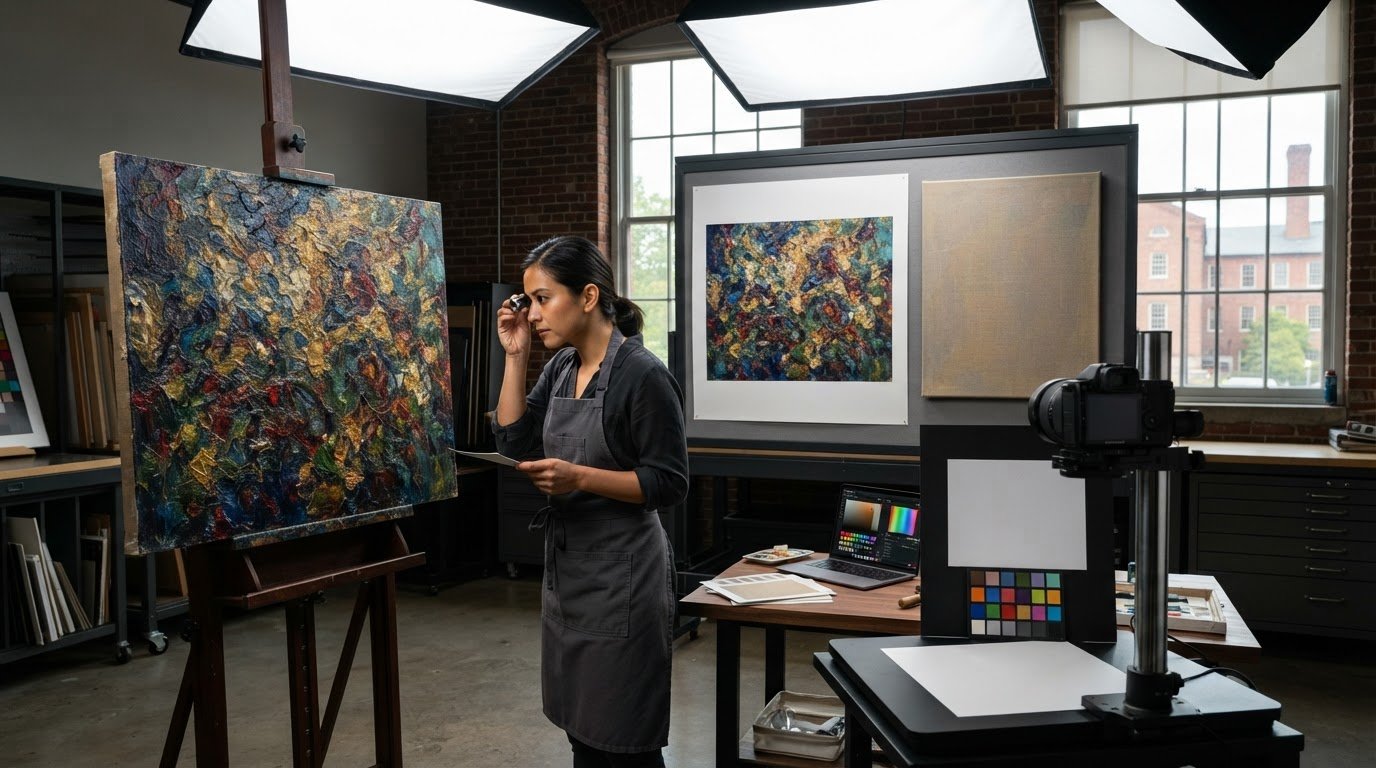
For a physical original, capture quality affects how much visible detail the digital file can retain. Professional scanning can suit flat artwork, while photography can capture works that call for a camera-based approach. Image-Tec offers BetterLight scanning for high-resolution art reproduction. A digital illustration skips the capture stage, but still needs preparation for the selected print dimensions and surface. The art reproduction guide offers more context on preparing artwork for reproduction.
During preparation, the image can be reviewed for framing, scale, and color handling. Careful adjustments can help the reproduction reflect the source image, although colors may appear differently across screens, materials, and print settings. A file with limited detail can also constrain the size or sharpness of the finished print.
What Happens During the Printing and Review Stages?
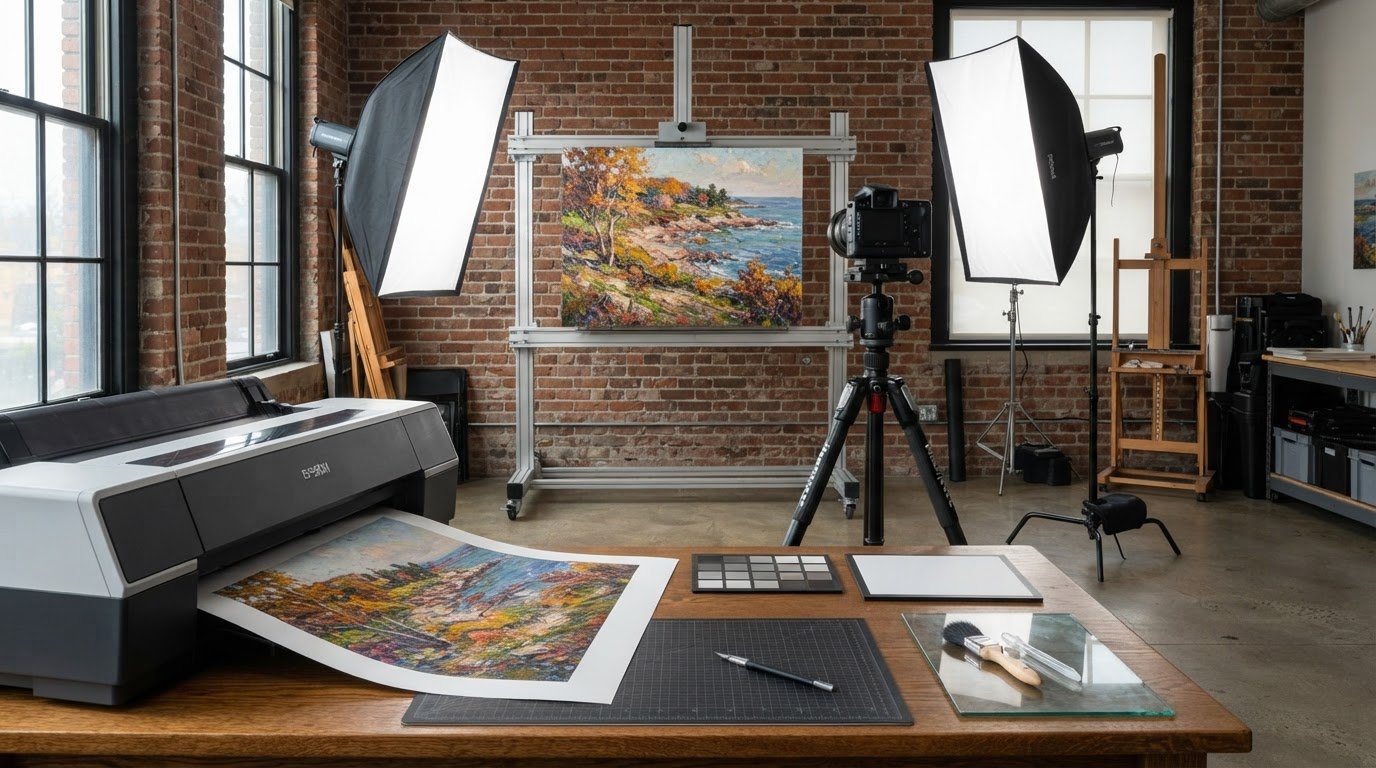
Once prepared, the image file is sent to a professional inkjet printer and printed on a selected fine art paper or canvas surface. This digital reproduction workflow differs from traditional techniques that create an image through a physical matrix or another hands-on method. The process of printmaking includes a range of approaches, each with its own materials and methods.
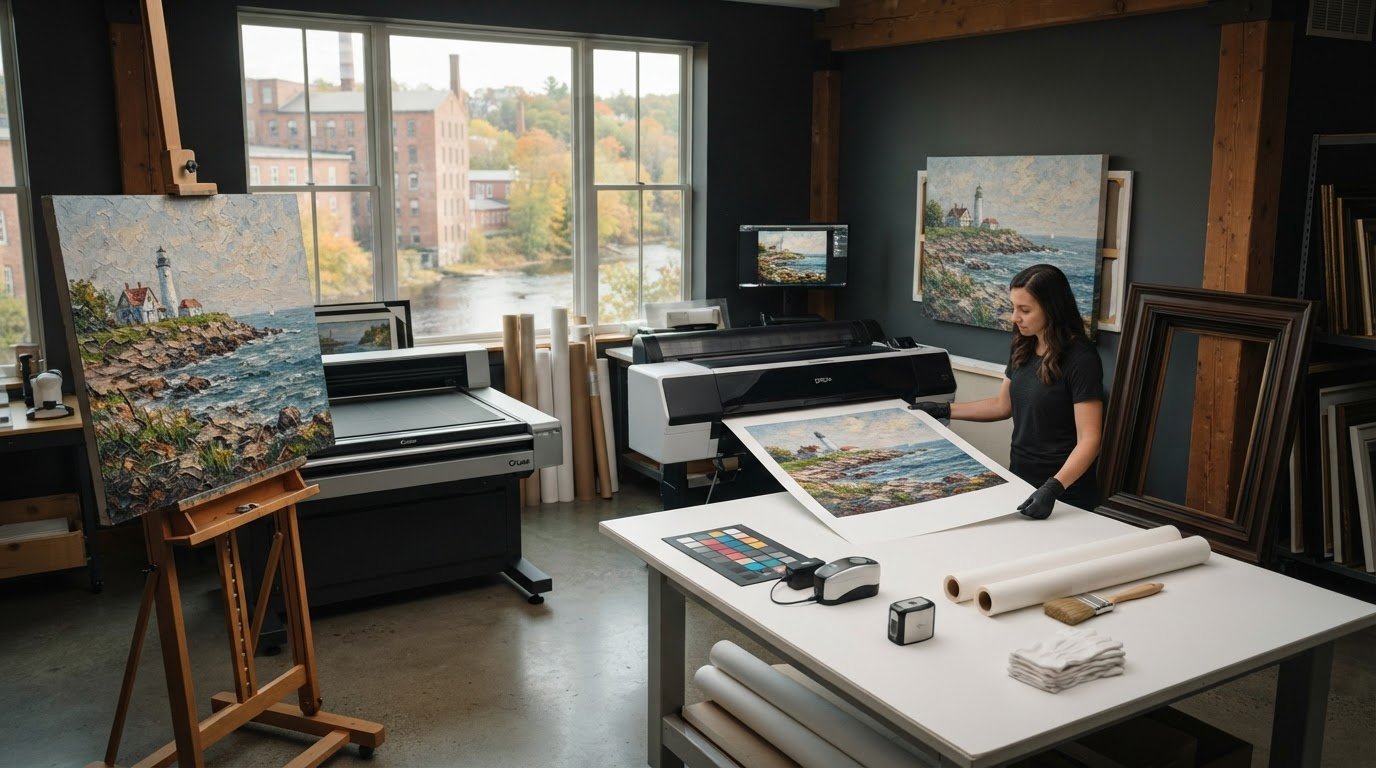
After printing, review the result from a practical viewing distance. Check whether the colors and fine details read clearly, whether the scale suits the artwork, and whether the surface supports the intended presentation. Image-Tec produces fine art and canvas prints up to 60 inches wide, with custom framing also available.
Understanding what is giclee also means understanding how an image moves from source to finished print. Learn more about Image-Tec’s fine art reproduction and printing.
Giclée vs. Standard Inkjet: What the Term Can and Cannot Tell You
Both giclée and standard inkjet printing use inkjet technology to put an image onto a surface. The difference is mainly in how the terms are used: “inkjet” describes a broad printing technology, while “giclée” generally signals a fine art reproduction context. Neither label, on its own, tells the whole story about how a particular print was made.
| Consideration | Standard inkjet | Giclée usage |
|---|---|---|
| What the term describes | A broad printing technology used for many kinds of output. | Inkjet printing used in a fine art or artwork-reproduction context. |
| Materials and preparation | Depend on the printer and the job. | Should be assessed from the actual ink, paper or canvas, and image-preparation details. |
| What the label establishes | That inkjet technology is involved. | The intended fine-art context, but not a particular quality level or lifespan. |
This is a distinction in terminology, not a guarantee that one print will outperform another. A carefully prepared standard inkjet print may suit its purpose, and prints called giclée can still vary in materials and execution. In practical terms, treat the label as a clue about intended use, then review the details of the specific reproduction.
Does Giclée Automatically Mean Archival or Museum Quality?
No. The word alone doesn’t establish archival performance or museum status. How well a print holds up depends on the materials used and how it’s handled, displayed, and stored. Light, environmental conditions, and framing can affect a print over time. Any claim about permanence should be grounded in information about the actual materials and conditions, rather than inferred from the giclée label.
Which Print Details Matter More Than the Label?
Focus on the specifications behind the finished work. Consider the following:
- Surface and ink: Identify the paper or canvas and the ink specifications for the print.
- Source and preparation: A reproduction depends on the detail in the original file and how its color is handled for printing.
- Presentation: Finish, framing, and display conditions influence how the image looks in its setting and how it’s protected.
These details connect the label to the actual print. A reproduction intended for close viewing may need different image preparation from one designed to be seen across a room. Matching the file, surface, and presentation to the artwork’s purpose gives you a more practical basis for judging the result.

When Is a Giclée Reproduction the Right Choice?
A giclée reproduction can help artists share their work beyond a single original, prepare copies for an exhibition, or produce selected formats for display. It can also make artwork available to people who want to enjoy an image without acquiring the original. The right choice depends on the print’s purpose, the quality of the source image, and how the finished piece will be presented.
Start with the intended audience and setting. A print viewed close up in a gallery may need to retain detail at a different scale from one displayed across a room. The original’s dimensions and the detail captured in its file also affect practical print size. A reproduction interprets information recorded in a digital file, so it may not perfectly match the original’s texture, color, or dimensional qualities.
For a closer look at choosing scale, read the guide to large-format fine art printing.
What Should Artists and Collectors Consider Before Printing?
Decide where the reproduction will be seen and what role it needs to serve before selecting a size or surface. Smooth paper, textured canvas, or a glossy finish can change how the image looks and reflects light. Consider the room’s lighting and the viewer’s distance, too. Even careful reproduction has limits: captured information can guide a faithful interpretation, but an exact duplication of the original isn’t guaranteed.
How Do Size, Canvas, and Framing Affect the Finished Print?
Choose dimensions that suit both the source image and the available display space. Enlarging a small or low-detail file may make its limitations more visible, while a print that’s too small can lose impact across a large room. Image-Tec offers canvas printing up to 60 inches wide, giving artists the option to consider larger formats. Custom framing can complete the presentation and help the print sit comfortably in its setting.
Surface and framing choices work together. Canvas has a different visual character from paper, and the frame affects how the artwork relates to its surroundings. For guidance on coordinating these decisions, explore the custom framing and Giclée printing guide.
To plan a reproduction, explore Giclée printing and fine art reproduction and consider a format suited to your artwork and display goals.
Getting a Giclée Print Made with Image-Tec
Turning artwork into a finished reproduction involves more than sending an image to a printer. The source may be a digital file or a physical original that needs to be captured. The image, intended print size, surface, and final presentation all help shape the project. Image-Tec’s studio in Methuen, Massachusetts, brings Giclée printing and fine art reproduction together, with scanning and custom framing as part of the workflow.
Knowing what is giclee gives you a useful starting point. Next, define what you want the reproduction to do: share an artwork with an audience, prepare it for display, or create a particular print format. Clear project goals help guide decisions from source capture through presentation.
What Can Image-Tec Help You Produce?
Image-Tec produces fine art and canvas prints, including large-format work up to 60 inches wide. For physical artwork that needs digital capture, BetterLight scanning supports the reproduction workflow. Once the image is ready for printing, custom framing offers a finishing option for display. Together, these services connect the stages of a project, from capturing an original to producing and presenting a print.
The right combination depends on the artwork and its intended use. A digital file may be ready for print preparation, while a physical original may need scanning first. Canvas and paper create different presentations, so choose a format by considering the artwork and where it will be shown.
What Information Helps Start a Reproduction Project?
A few practical details help define the work:
- The source: Describe whether you have a physical original or an existing digital file.
- The intended size: Share the approximate print dimensions you have in mind.
- The purpose: Explain where the print will be displayed and who will view it.
- Presentation priorities: Note any important color, detail, surface, or framing considerations.
These details give the reproduction project direction without assuming every artwork needs the same workflow. They also help connect the source image to a format and presentation that suit its intended role.
To move your project forward, explore Image-Tec’s printing and reproduction services and bring your artwork, file, or project goals into focus.
Turn Your Artwork into a Thoughtful Reproduction
Now you can answer what is giclee: it’s a term commonly used for fine art inkjet printing, not a certification that guarantees a print’s materials, accuracy, or lifespan. The finished reproduction depends on the source image, its preparation, the printing surface, and how the work will be displayed. Considering those elements together helps you choose a format that serves your artwork and its purpose.
Image-Tec’s Methuen studio brings Giclée printing and fine art reproduction together. Canvas prints are available up to 60 inches wide, and BetterLight scanning can support projects that begin with a physical original. Custom framing can complete the presentation.
Whether you’re preparing artwork for display or creating reproductions to share, start with the source, intended size, and final setting. Explore Image-Tec’s Giclée printing and art reproduction services to plan a reproduction for your work.
Frequently Asked Questions
What is giclée in simple terms?
In simple terms, giclée is a term commonly used for fine art inkjet prints made to reproduce artwork. If you’re asking “what is giclee,” think of it as a description of the printing context, not a particular art style or material. A reproduction might be printed from a digital illustration or an image captured from a painting. The term itself doesn’t certify the print’s materials, color accuracy, or expected lifespan.
Is giclée the same as inkjet printing?
Giclée printing uses inkjet technology, but the terms aren’t interchangeable in every context. Inkjet is the broad name for a printing method used for many kinds of output. Giclée is commonly used for inkjet prints made in a fine art or artwork-reproduction context. The label can indicate the intended use, but it doesn’t specify the exact paper or canvas, ink, image preparation, or quality of an individual print.
Does giclée mean a print is archival quality?
No. The word “giclée” alone doesn’t verify that a print is archival quality or establish how long it will last. Longevity depends on the materials used, as well as handling, display, and storage conditions. For a specific print, evaluate available information about its paper or canvas and ink rather than relying on the label. Framing and the display environment can also affect its care over time.
How is a giclée print made from an original painting?
A giclée reproduction of a painting begins by capturing the physical artwork as a digital image, usually through scanning or photography. The image is prepared for its intended print size and surface, with attention to color and detail, then produced on an inkjet printer. BetterLight scanning is one capture option for art reproduction at Image-Tec in Methuen. The print reproduces captured information, so it may not perfectly match the original.
Are giclée prints worth buying?
They can be worthwhile if you want to own or display a reproduction of an artwork rather than the original. Value depends on what matters to you, such as the image, print size, surface, presentation, and documented production details. Don’t assume the term alone guarantees archival materials or a particular level of fidelity. Consider how the print will be used and displayed, and review the specifications available for that reproduction.
Can giclée prints be made on canvas?
Yes. Giclée prints can be produced on canvas as well as fine art paper. The surface affects the finished print’s appearance, so consider the artwork’s character, intended viewing distance, and display setting when choosing a format. Image-Tec offers canvas printing up to 60 inches wide, along with custom framing. Its Methuen studio serves art reproduction needs in the local region, including Boston, Manchester, New Hampshire, and Newburyport.
What is the difference between a giclée print and an original artwork?
An original artwork is the artist’s primary physical or digital creation. A giclée print is a reproduction made from a digital file, which may come from a scan, photograph, or digital artwork. A print can preserve many visible features of the source, but it doesn’t become the original simply because it reproduces it closely. Texture, surface, and other qualities may differ depending on the source and how it’s reproduced.


Leave A Comment
You must be logged in to post a comment.