
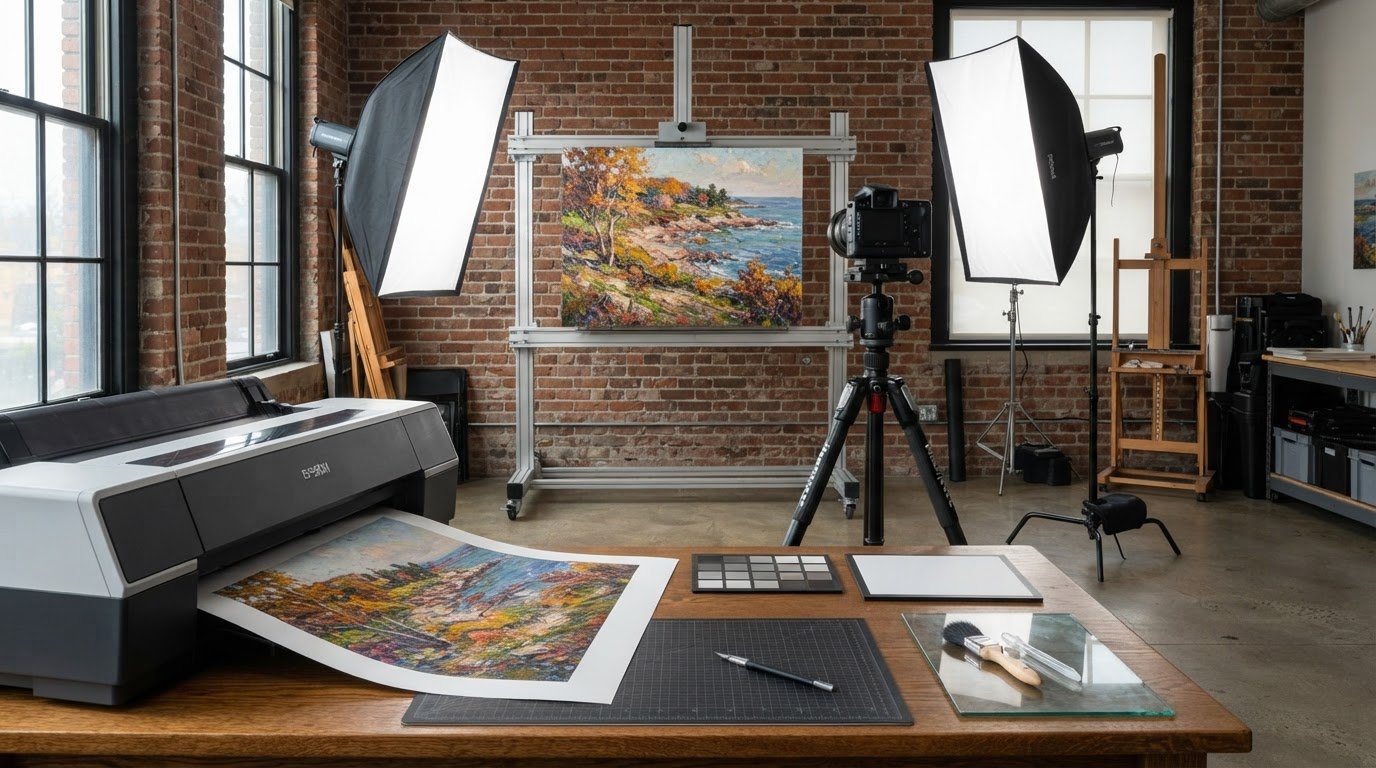
What if the sharpest photograph still produces a disappointing print? The best way to reproduce oil paintings depends on more than camera resolution. Glossy varnish can reflect light, and capture or editing can shift color, brightness, and proportions. Even a carefully photographed original may need a controlled workflow before it is ready to print.
If you’re unsure whether a home setup can preserve the painting’s detail, start by defining the result you need. A digital portfolio image and a large fine art print have different requirements. This guide explains how to reduce glare, position lighting and camera equipment, and check color before printing. It also helps you decide when DIY photography is adequate and when specialist capture is a better fit.
We’ll follow the image from the original painting through capture, color management, and print preparation, then compare workflows for different goals. For projects where fine detail and print readiness matter, Image-Tec offers BetterLight scanning, followed by Giclée printing and, where appropriate, custom framing.
Key Takeaways
- The best way to reproduce oil paintings starts with the intended result, whether you need documentation, online sharing, an archival reference, or a finished print.
- Reduce perspective distortion by keeping the camera parallel to the artwork, and use even lighting to limit glare from varnish or glass.
- Choose DIY photography or specialist capture based on the artwork’s surface, required detail, and final print size.
- Check orientation, perspective, tone, and color against the original under consistent lighting before preparing the file for print.
- Plan the full workflow from capture through printing and framing. Image-Tec’s Methuen studio offers BetterLight scanning and Giclée printing for reproduction projects.
Best way to reproduce oil paintings: begin with the intended result
Oil painting reproduction means capturing an existing painting as a faithful digital image, then preparing that image for its intended use. Capture creates the digital file; reproduction printing turns it into a physical copy, such as a fine art print. The best way to reproduce oil paintings depends first on whether you need documentation, an online image, an archival reference, or a print-ready master file.
Each goal calls for a different level of precision. An inventory image needs to show the complete work clearly. A file for a large print must retain enough detail at the intended dimensions and allow careful color evaluation. A digital file can also be used to make a print through Giclée printing, a term commonly used for fine art inkjet prints.
What details make an oil painting difficult to photograph?
Oil paintings present challenges beyond sharp focus. Glossy varnish or glass can reflect windows, room lights, the camera, or the photographer. These reflections may cover parts of the image and be mistaken for changes in paint color or brightness. Textured brushwork adds small variations in surface height, so uneven illumination can make some passages appear too bright while others fall into shadow.
Framing and alignment matter, too. If the camera is angled instead of parallel to the painting, the near edge may look larger than the far edge. Uneven cropping or a slight tilt can change the work’s apparent proportions. The painting’s size also affects the capture method: a large piece needs a setup that covers the full surface evenly while preserving detail across the frame.
What should the reproduction be used for?
For documentation or online sharing, prioritize a complete, in-focus image with straight edges and dependable color. An archival reference may call for closer attention to fine surface detail and consistent image quality, especially if the file will help compare condition over time.
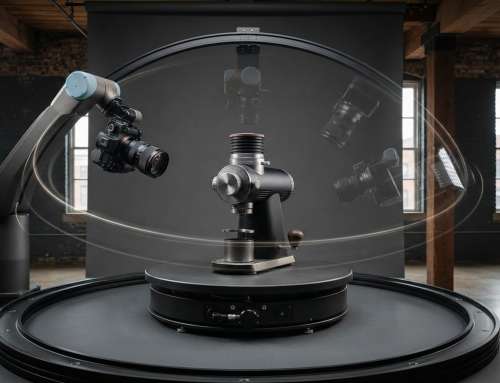
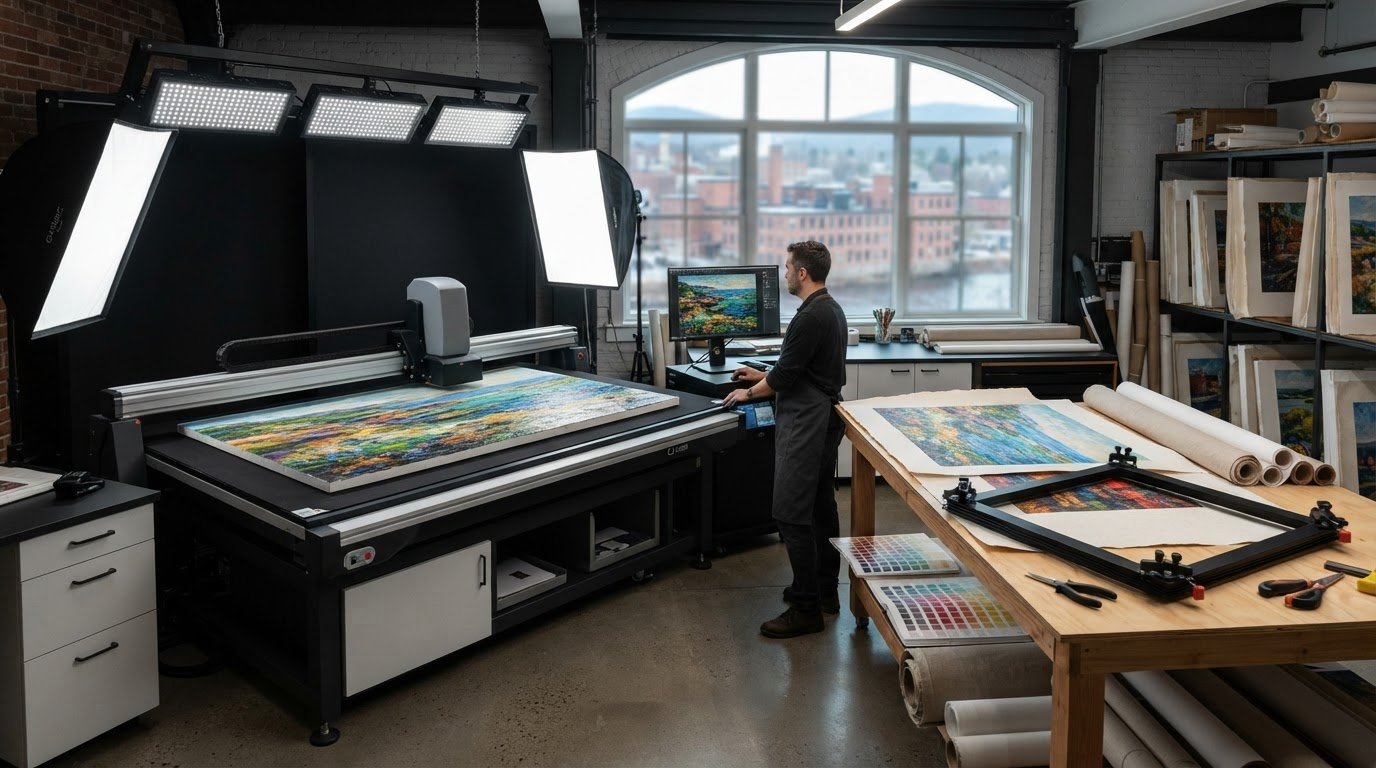
Print production requires planning around the finished dimensions. A file that looks clear on a phone may not retain enough detail when enlarged. Compare color and tonal transitions with the original available, and consider how much detail the painting contains and how the print will be viewed. For a valuable, highly detailed, or large work, specialist capture can be a practical choice. Image-Tec offers BetterLight scanning for high-resolution art reproduction when a print-ready file matters.
How to photograph an oil painting with even light and minimal glare
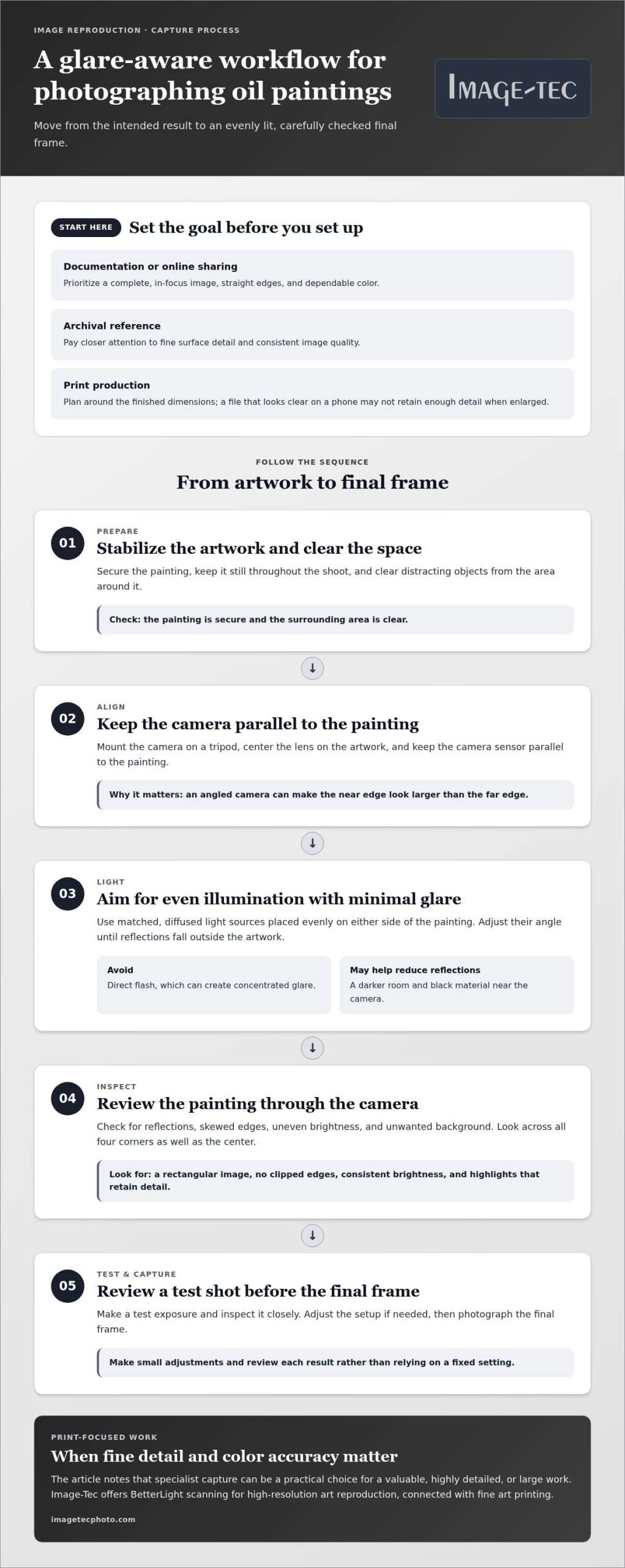
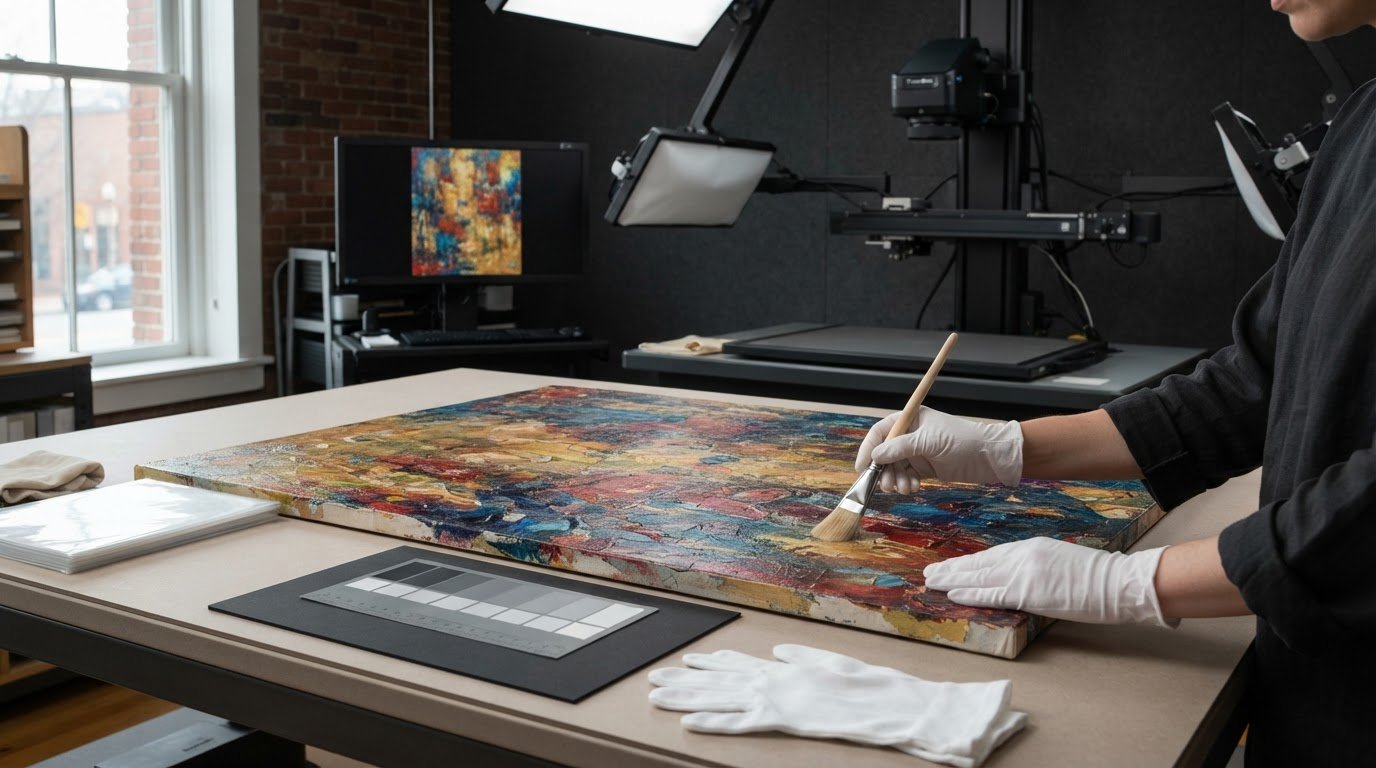
A controlled setup matters more than simply adding brightness. Follow the same order each time: prepare the artwork and space, align the camera, arrange the lights, inspect reflections and illumination, then make a test exposure. This repeatable process helps reveal problems before they affect the final file.
- Prepare: Secure the painting and clear distracting objects from the area around it. Keep the artwork still throughout the shoot.
- Align: Mount the camera on a tripod and position its sensor parallel to the painting. Center the lens on the artwork.
- Light: Use matched, diffused light sources placed evenly on either side of the painting.
- Inspect: Check the camera view for reflections, skewed edges, uneven brightness, and unwanted background.
- Capture: Make a test shot, review it closely, adjust the setup if needed, then photograph the final frame.
How should you position the painting, camera, and lights?
Place the painting securely, then aim the camera lens perpendicular to its center so the sensor and painting remain parallel. A tripod helps maintain alignment and consistent framing. Position matching lights symmetrically, then adjust their angle until the artwork receives even illumination without direct reflections. Review all four corners: converging edges suggest perspective distortion, while corners that look lighter or darker may indicate uneven lighting.
How can you control reflections on varnish or glass?
Look at the painting through the camera, not just from beside it. Move or angle the lights until their reflections fall outside the artwork. A darker room and black material near the camera can also reduce reflected room detail. Avoid direct flash, which can create concentrated glare. Don’t remove glazing or alter the painting to improve a photograph. Delicate or valuable works need careful handling.
Before the final capture, inspect the full frame at a useful magnification. Check that no edge is clipped, the painting looks rectangular rather than trapezoidal, and brightness is consistent from the center to the corners. A test image can also show whether highlights are losing detail. Exposure and light placement depend on the painting’s surface, the room, and the equipment. Make small adjustments and review each result rather than relying on a fixed setting.
For print-focused work where detail and color accuracy are priorities, Image-Tec offers BetterLight scanning. Its art reproduction services connect artwork capture with fine art printing.
DIY photography or professional scanning: which reproduces an oil painting better?
Neither method is right for every painting. The best way to reproduce oil paintings depends on the final use, the artwork’s surface and size, and how much fine detail the image needs to retain. A controlled home photograph can work well for a personal record or modest online display. A reflective surface, intricate brushwork, or a file intended for a demanding print may call for specialist capture.
| Consideration | DIY photography | Specialist capture |
|---|---|---|
| Typical use | Personal records and online viewing | High-detail reproduction and print preparation |
| Best suited to | Works that can be evenly lit and photographed square-on | Complex reflections, fine surface detail, or large originals |
| Key limitation | Lighting, alignment, and available resolution affect results | Requires a dedicated capture workflow suited to the artwork |
When can a careful home photograph be enough?
For a personal record or a modest online image, a home setup may be adequate if the painting is evenly lit and the camera is aligned. Review the file at full size: confirm that brushwork is in focus, edges are straight, exposure is even, and colors look credible beside the original. Judge the result at the size it will actually be viewed. A file that works on a screen may not preserve enough detail for a larger print.
When is specialist art reproduction a better fit?
Specialist capture is worth considering when varnish or glazing creates persistent reflections, fine details are difficult to resolve, the original is large, or the file must support print production. Image-Tec offers BetterLight scanning for high-resolution art reproduction, providing a dedicated capture option when detail and print readiness matter. For a wider overview of the process, see the art reproduction guide.
Use the intended output as the deciding test. If a carefully made photograph meets the requirements for clarity, color, and viewing size, DIY may be sufficient. If glare, detail, scale, or print expectations exceed what the setup can reliably deliver, specialist capture can help create a more suitable reproduction file.
How to edit, check color, and prepare an oil painting reproduction for print
Editing should correct the capture, not reinterpret the painting. Start by fixing orientation and perspective so the image’s edges are square. Then review overall tone and color. This sequence helps preserve the character of the original while making the image easier to assess.
A screen can guide color decisions, but its appearance alone can’t guarantee a matching print. Screens emit light; a print reflects it. Display brightness and room lighting also affect what you see, so compare the image with the painting under consistent viewing light rather than relying on memory.
How do you check color without over-editing the painting?
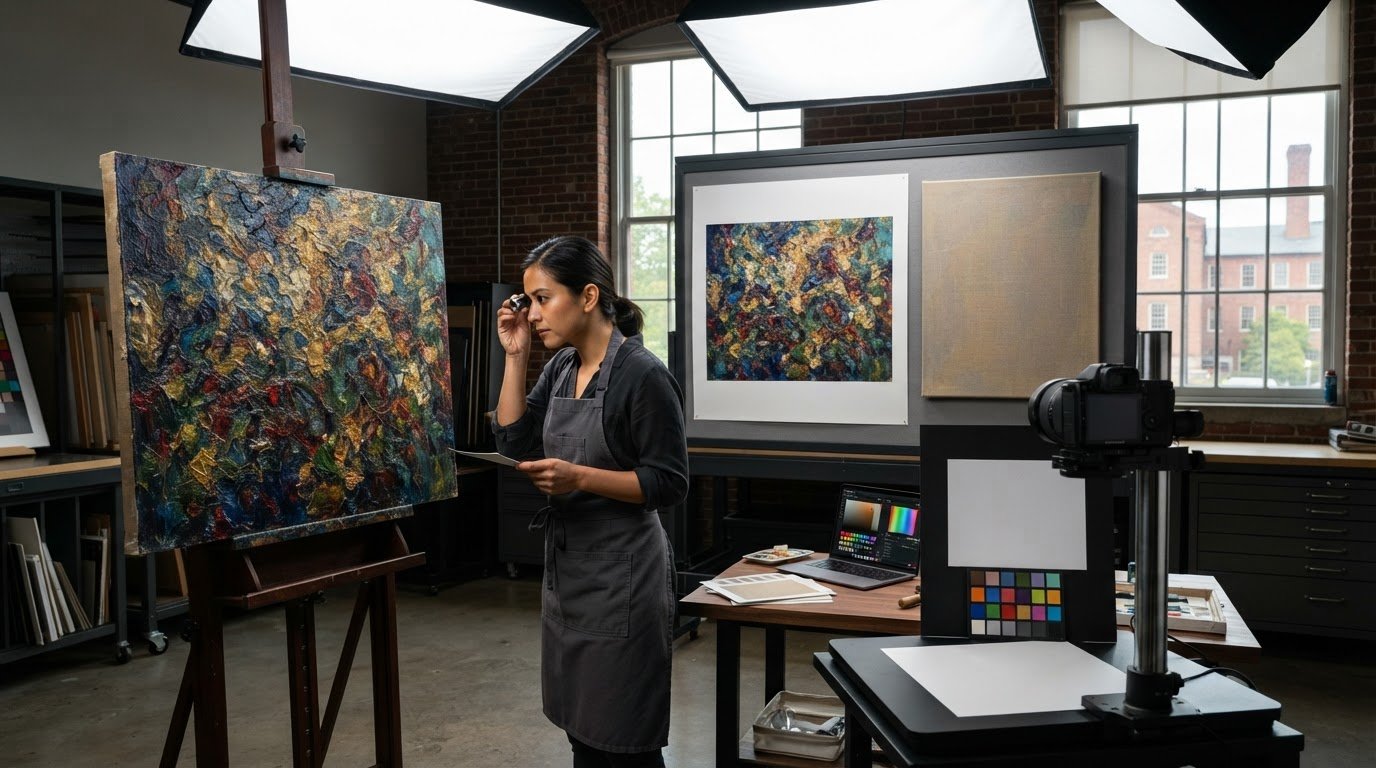
If available, include a neutral reference in the same lighting as the artwork. Use it to guide white-balance corrections, then compare the edited image beside the original. Keep adjustments restrained: avoid clipping highlights or shadows, and preserve subtle tonal transitions in the paint. If a dark passage loses detail or a highlight becomes flat, revisit the adjustment rather than forcing a stronger correction.
Review the image on a consistent display setting and in steady room light. A color judgment made while screen brightness or surrounding light changes can lead to unnecessary edits. The aim is a credible, balanced reproduction, not a more vivid version of the painting.
What should you check before making a fine art print?
Assess the file at the intended print dimensions and consider the viewing distance. Fine detail that reads clearly on a small screen may appear soft when enlarged. Before production, review the crop, edge alignment, color, tonal range, and visible surface detail. A physical proof lets you assess the printed result before committing to a larger run. Paper or canvas, along with the light reflected from the print, can affect how the image appears.
For additional guidance on planning image detail and scale, read the large format fine art printing guide. Image-Tec offers Giclée printing and canvas prints up to 60 inches wide. Its fine art printing services connect a reproduction file with the finished print.
Reproduce an oil painting in New England: move from original artwork to finished print
A successful reproduction is a connected process, from deciding what the image needs to do through preparing a finished print. The best way to reproduce oil paintings is to plan for the final use before choosing how to capture the original. A digital record, a display print, and repeatable reproductions can call for different levels of detail and review.
What happens from artwork capture to a finished reproduction?
Start by identifying the goal and gathering the practical details: intended use, approximate artwork dimensions, and desired print scale. Capture comes next. Then review the image for color, tone, composition, and detail before selecting print dimensions and finish. This order helps ensure that the file and print choices suit the painting rather than forcing the artwork into a preset format.
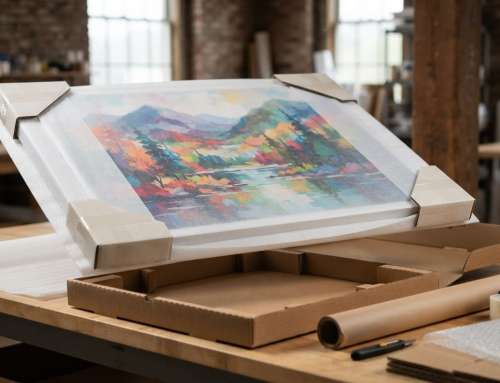
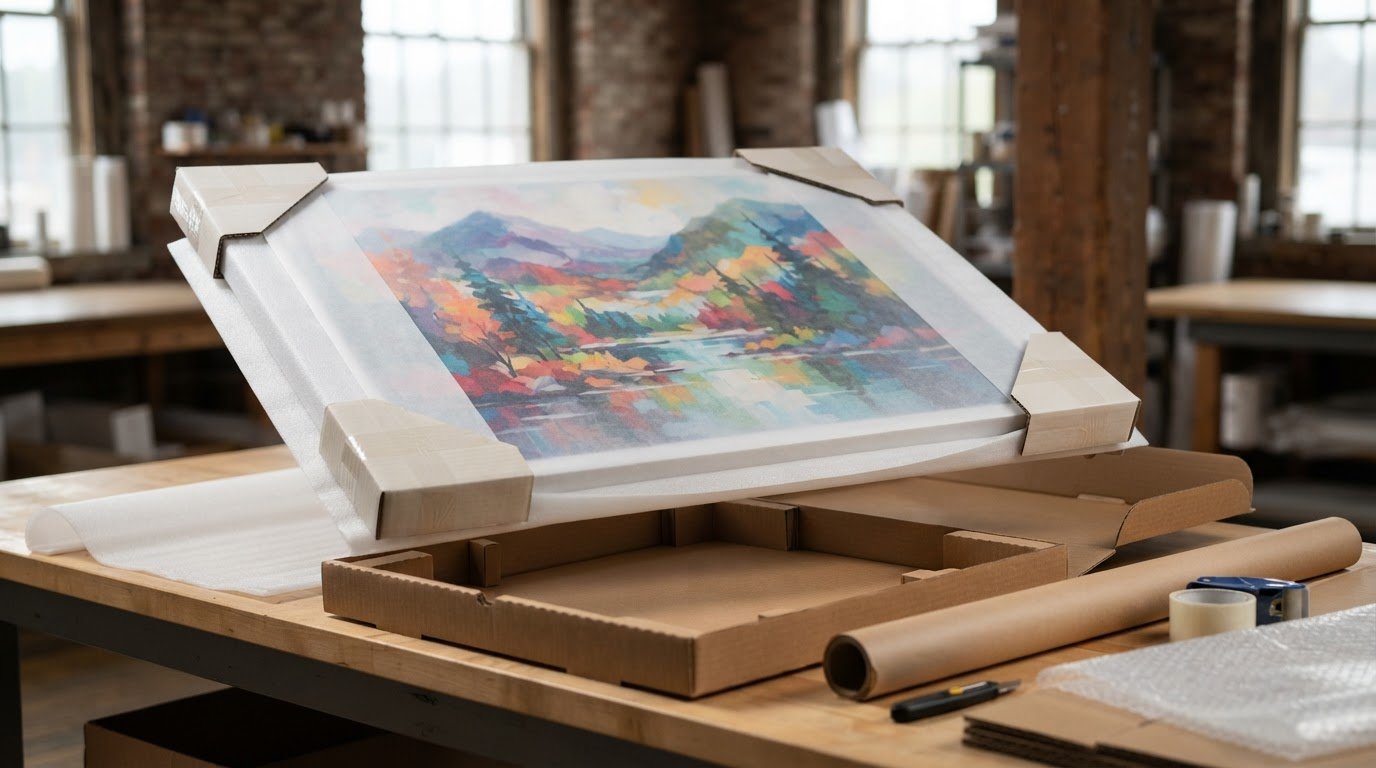
Image-Tec’s Methuen, Massachusetts studio connects BetterLight scanning for high-resolution art reproduction with Giclée printing and canvas prints up to 60 inches wide. Custom framing can complete the finished piece. Print surface and frame choices affect how the reproduction will look on display, so consider them together. The custom framing and Giclée printing guide offers more detail on those decisions.
For a single print, review the chosen image and scale as one finished object. For repeatable reproduction, careful capture and file review provide a consistent starting point for subsequent prints.
How can artists and collectors take the next step?
Artists and collectors in Boston, Newburyport, Manchester, NH, and nearby communities can work with Image-Tec’s local studio in Methuen. Before planning a project, consider the painting’s approximate dimensions, intended use, and preferred print scale. These details help connect the artwork’s capture needs to its planned output.
From a high-resolution file to a Giclée or canvas print and optional custom framing, each stage supports the next. Image-Tec’s art reproduction services bring the process from original painting toward a finished print.
Bring your oil painting from original to finished print
The best way to reproduce oil paintings is to plan for the intended result, control reflections during capture, and review color and detail before printing. A careful home photograph can suit documentation, while specialist capture is a practical option when the artwork’s surface or print requirements demand greater precision.
For artists and collectors in New England, Image-Tec’s Methuen studio brings these stages together with BetterLight scanning for high-resolution art reproduction, Giclée printing, and custom framing. Fine art and canvas prints are available up to 60 inches wide, carrying a reproduction from digital capture to a finished piece.
Whether you’re documenting a painting or preparing a print for display, begin with the image and scale you need. Explore Image-Tec’s art reproduction services and take the next step toward a faithful reproduction.
Frequently Asked Questions
How do you photograph an oil painting without glare?
Use two matching light sources positioned to the sides of the painting, then inspect the camera view for reflections before taking the image. Keep the camera square to the artwork and avoid direct flash. If varnish or glazing still reflects light, adjust the lights or darken the surrounding room. Don’t rely on heavy editing to remove reflections, since they can obscure painted detail or affect the image’s color.
Can you reproduce an oil painting with a regular camera?
Yes. A regular camera can make a useful reproduction for documentation or online viewing if the painting is evenly lit, sharply focused, and photographed straight on. The file may be less suitable for demanding print use if it lacks detail, accurate color, or consistent illumination. The best way to reproduce oil paintings depends on the intended use, so assess the image at its expected viewing size before deciding it’s ready.
What is the best lighting for photographing an oil painting?
Use two matching, diffused light sources arranged symmetrically to illuminate the painting evenly. Adjust their positions to control reflections, especially if the artwork has varnish or glazing. Review the whole image, not just its center. Bright spots, dark corners, or reflections can make the reproduction less useful, even if the overall exposure looks acceptable. A test photograph can reveal uneven light before you capture the final image.
Should you scan or photograph an oil painting?
The right method depends on the painting’s surface, size, detail, and intended use. A carefully controlled photograph can work well for straightforward documentation when the artwork can be evenly lit and aligned. Specialist art capture may be a better fit if reflections persist, fine details are important, or the image is for print production. Consider the final file’s purpose and print dimensions before choosing how to capture the original.
How do you get accurate color when reproducing an oil painting?
Start with consistent, neutral lighting and include a neutral reference for white-balance evaluation when possible. Make measured corrections, then compare the image with the painting under similar viewing conditions. Avoid relying on memory or changing room light to judge color. Screen brightness and color vary, so a screen preview alone can’t establish how a physical print will look. Review tonal transitions carefully to preserve subtle detail in the paint.
Can you print a reproduction of an oil painting on canvas?
Yes. A digital reproduction can be prepared for canvas when the image has enough detail for the intended size. Before production, review the crop, color, and tonal range, and consider a physical proof if a close comparison matters. Image-Tec offers canvas printing up to 60 inches wide, with custom framing available to complete the finished piece. Planning print dimensions before capture helps ensure the file suits the desired output.
When should you use a professional art reproduction service?
Consider specialist reproduction for paintings with reflective varnish, fine detail, a large surface, or print requirements that call for careful image review. Image-Tec offers BetterLight scanning for high-resolution art reproduction, along with fine art printing and custom framing. Its Methuen studio serves artists and collectors in Boston, Manchester, NH, Newburyport, and nearby communities. A connected capture-to-print workflow helps align image quality with the needs of the finished reproduction.


Leave A Comment
You must be logged in to post a comment.