
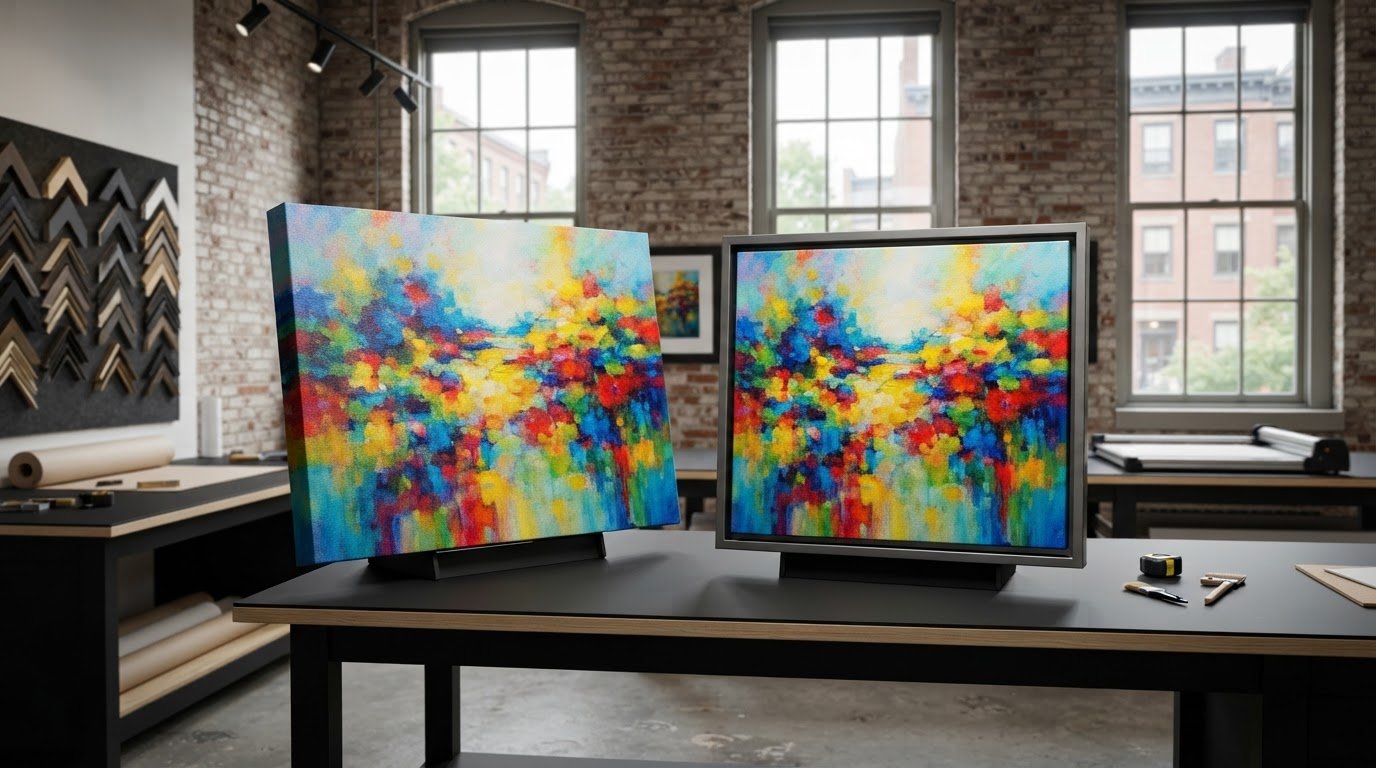
Will a frame give your canvas print a more finished presence, or compete with the image for attention? The answer depends on the artwork’s scale, colors, and setting, so choosing custom framing for canvas prints Boston starts with the piece itself, not a passing trend. A stretched canvas can make a clean, unframed statement; a carefully selected frame can add definition and help the work feel at home in a room.
Proportions, finishes, and the canvas’s construction all affect the result. This guide explains how to compare frame profiles, decide between a float frame and an unframed presentation, and prepare useful project details before choosing. Image-Tec brings Giclée canvas printing and custom framing together through one studio.
Based in Methuen, Massachusetts, Image-Tec serves Boston and nearby communities, producing canvas and fine art prints up to 60 inches wide. Whether you’re preparing a new print or planning the presentation of an existing piece, use the steps below to choose an approach that suits the artwork and its setting.
Key Takeaways
- Choose a frame by considering the artwork’s subject, scale, and visual character, rather than following a trend.
- Understand how a float frame creates space around a canvas and how that presentation differs from displaying canvas without an outer frame.
- Compare framed and unframed options in the context of the room, so the finished piece feels balanced without letting the frame overpower the art.
- Before planning custom framing for canvas prints Boston, record the canvas dimensions and note whether it’s already stretched.
- Coordinating canvas printing and custom framing through Image-Tec lets you plan the image and its presentation together.
Custom Framing for Canvas Prints in Boston: Start With the Artwork
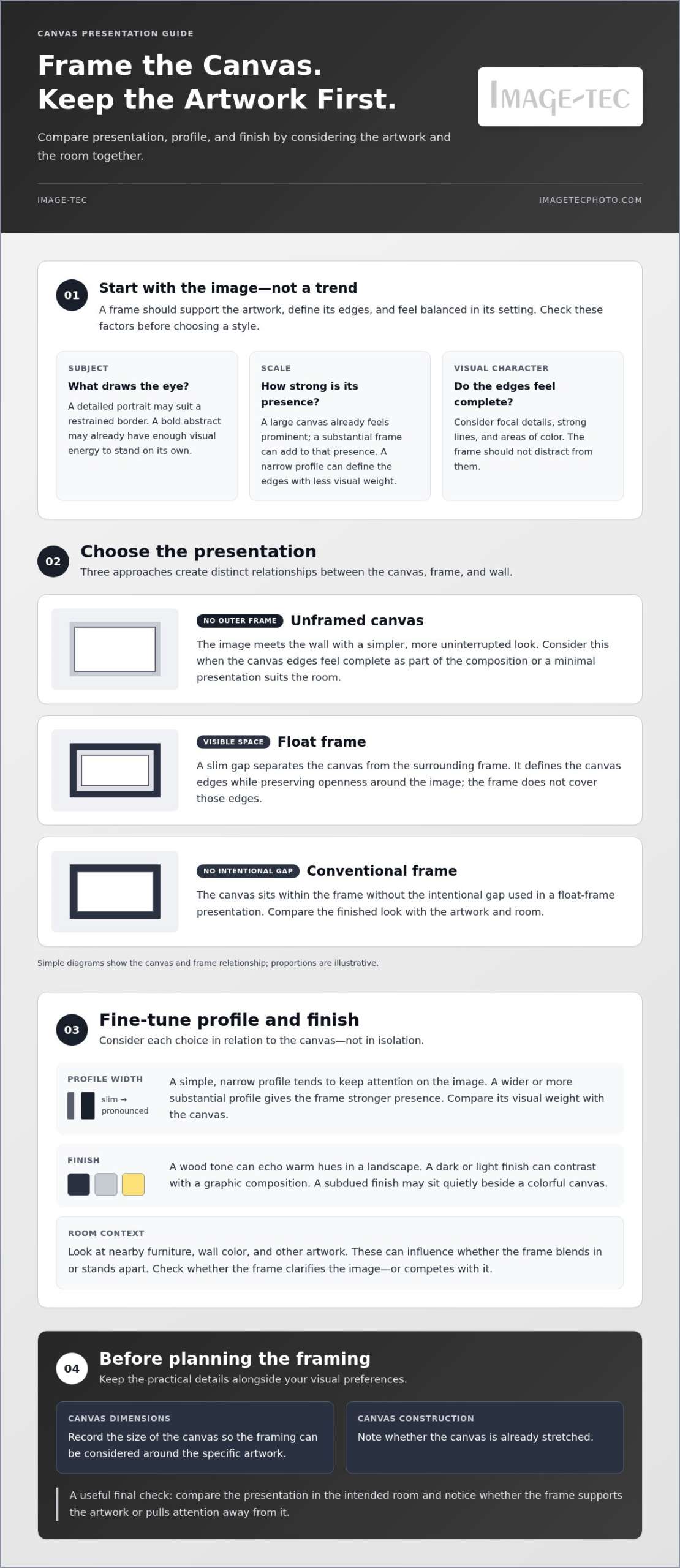
Should a canvas have an outer frame, or hang as a clean, uninterrupted image? For Boston-area customers, the answer depends on the artwork and where it will be displayed. A detailed portrait may benefit from a restrained border that gives the image definition. A bold abstract composition may already have enough visual energy to stand on its own.
Consider the subject, scale, and visual character together. A large canvas already has a strong presence, so a substantial frame can make it feel even more prominent. A narrow, simple profile can define the edges without competing with the image. On a smaller canvas, a frame can help establish the piece within a larger wall arrangement. In each case, the frame should support the artwork, not distract from focal details such as a face, a strong line, or a carefully balanced area of color.
Custom framing is a presentation designed around a specific artwork, its dimensions, and the setting where it will be displayed. That makes the choice more practical than simply picking a favorite finish. A useful overview of frame components and types is available in the Picture frame Wikipedia article, but let the canvas guide your decision. For people searching for custom framing for canvas prints Boston, the goal is a considered relationship between image, frame, and room.
What a frame can add to a canvas print
A frame creates a visible boundary between the canvas and the surrounding wall. This separation can help define the artwork, especially when the wall color is similar to tones at the canvas edge. It can also give the piece a more finished presence in a home or professional space, such as above a living-room console or in a reception area. Check the frame’s width and visual weight against the artwork: a suitable profile can make the piece feel composed, while one that draws the eye too strongly may distract from the image.
When an unframed canvas may suit the artwork
Without an additional outer frame, the image meets the wall with a simpler, more uninterrupted look. This can suit artwork whose edges feel complete as part of the composition, or a setting where a minimal presentation is preferred. Look closely at the canvas edges and consider how the piece will sit among nearby furnishings and other works. If the edges feel consistent with the artwork and the room, leaving it unframed can be a deliberate choice, not an unfinished one.
There’s no universal rule. A quiet landscape in a formal setting may call for a defined boundary, while a graphic image in a spare interior may feel at ease without one. If you can, compare both presentations in the intended room. Notice whether a frame clarifies the image or competes with it, and whether the canvas edges look complete on their own. This keeps the decision grounded in the artwork’s character.
Canvas Frame Styles and Construction: Understand the Main Choices
Once you’ve decided that a canvas should have an outer frame, consider how the frame relates to the image. A float-frame presentation leaves a narrow, visible space between the canvas and the surrounding frame. In a conventional framed presentation, the canvas sits within the frame without that intentional gap. Both frame the canvas, but they create distinct visual effects.
A float frame gives the canvas a subtle separation from its border, while an unframed canvas has no separate outer frame at all. That difference can guide your decision as you compare options for custom framing for canvas prints Boston. The frame’s profile, width, and finish all affect visual balance, so consider them together rather than choosing each detail in isolation.
How a float frame presents a canvas
A float frame surrounds the canvas while leaving a slim gap, making the artwork appear to sit inside the frame rather than touch it. The visible space defines the canvas edges and preserves a sense of openness around the image. Because the frame doesn’t cover those edges, the artwork remains visually prominent. It’s one presentation style to consider, not a requirement for every canvas.
Think about how the gap will look from the usual viewing distance. Up close, a small gap may read as a fine outline; across the room, it can create a clean separation. If the image has strong colors or a distinct edge, the space can mark its boundary without adding another visual element across the artwork. This differs from displaying a canvas with no outer frame, where the canvas edges meet the surrounding wall directly.
Choosing a frame profile and finish
A simple, narrow profile tends to keep attention on the image, while a wider or more substantial profile gives the frame a stronger presence. Neither is automatically right. A small, detailed image may benefit from a clearer border, while a large, expressive canvas may call for a frame that feels proportionate without dominating it. Compare the frame’s visual weight with the canvas, not just its measurements.
Finish adds another layer of balance. A wood tone can echo warm hues in a landscape, while a dark or light finish can contrast with a graphic composition. A subdued frame may sit quietly beside a colorful canvas; a more distinct finish can create a deliberate boundary. Look at the room as well: nearby furniture, wall color, and other artwork can influence whether the frame blends in or stands apart.
- Profile: Consider whether a slim outline or a more pronounced border better suits the artwork’s visual weight.
- Gap: Decide whether the separation of a float-frame presentation complements the canvas edges.
- Finish: Look for a tone that relates to colors in the image and room, or creates a considered contrast.
These details are useful to consider as part of the complete presentation, especially when the canvas is being printed and framed together. Image-Tec’s Methuen studio serves Boston and nearby communities, with Giclée canvas printing and custom framing through one studio. If you’re planning a new piece, explore Image-Tec’s canvas printing and framing services while considering how a frame could complement the finished image.
Framed Canvas or Unframed Canvas: Compare the Finished Look
A frame changes the boundary around a canvas, while leaving it unframed keeps attention on the image and its edges. The best choice depends on how the artwork relates to its wall, furnishings, and viewing distance. A framed canvas adds a defined border to the presentation; an unframed canvas lets the image meet the room without a separate outer frame.
| Consideration | Framed canvas | Unframed canvas |
|---|---|---|
| Visual effect | Creates a distinct boundary and adds another visual element around the artwork. | Offers a clean, uninterrupted presentation focused on the canvas itself. |
| Room fit | Can relate the artwork to nearby finishes, furniture, or other framed pieces. | Can suit a pared-back setting or a wall where a frame might feel visually busy. |
| Presentation | Profile and finish contribute to the piece’s overall character. | The canvas edges remain part of the visible presentation. |
How the room and artwork scale affect the choice
Scale is relative to the wall. A large canvas on a broad, open wall may accommodate a more noticeable frame, while the same frame could feel heavy in a compact space viewed at close range. A proportionate frame can help a larger work feel balanced, but there’s no fixed width that suits every canvas. Consider the full display area, including nearby furniture and the open space around the artwork.
Viewing distance matters, too. A profile that appears subtle up close may read more strongly from across a room. If possible, assess the canvas where it will hang, or compare frame options against a photograph of that wall. This helps you judge whether the border gives the image definition or draws too much attention.
Matching the frame to the artwork’s character
Artwork with fine detail, layered marks, or many competing colors may benefit from restrained framing that doesn’t add another busy element. A simple profile can provide separation while keeping the image in focus. A canvas with a strong composition may suit a more noticeable profile that becomes part of the overall presentation. The frame should feel intentional, not automatic.
Look at the art and setting together. A dark finish might echo a shadow or nearby furnishing; a lighter or natural finish could complement a softer palette. These are starting points, not rules. For custom framing for canvas prints Boston, compare the canvas, potential frame, and intended wall as one composition. The right presentation is the one that feels balanced in that specific space, whether the finished piece is framed or left unframed.
Plan a Canvas Framing Project: Size, Setting, and Preparation
A clear plan helps you compare framing options against the actual canvas and the place it will hang. Before choosing a profile or finish, gather the basic details: what the artwork is, how it’s prepared, and how it should relate to its surroundings. This information also makes it easier to discuss the project with a local studio.
- Identify the canvas. Note whether it’s an existing artwork or a new print, and whether the image continues around the edges.
- Measure the canvas. Write down its width and height, and note whether it’s already stretched over a supporting frame. Keep these canvas measurements separate from any estimate of the finished framed dimensions.
- Define the display location. Consider the available wall area, nearby furnishings, surrounding colors, and the normal viewing distance.
- Set a presentation goal. Decide whether you want a defined outer border or a simpler look, then consider how a frame’s scale and finish could support that goal.
Measure and describe the canvas accurately
Start with the canvas itself. Record its width and height, and indicate whether it’s stretched; that distinction helps clarify what’s being framed. Include the canvas depth if it’s already stretched, since this affects how an outer frame relates to it. The finished dimensions will be larger than the canvas if a frame is added, with the final size depending on the framing design. Image-Tec produces canvas prints up to 60 inches wide. That refers to print width, not a maximum finished framed dimension.
If you’re planning a new print, the large format fine art printing guide can help you think through scale before settling on the display plan. Keep the canvas dimensions distinct from the frame when considering the finished size.
Consider where the finished piece will hang
Take note of the wall area and nearby furnishings, then view the intended location from the distance where people will usually see the artwork. A frame that reads as a fine outline up close may carry more visual weight across a room. Nearby colors matter, too: a finish can blend with the setting or create a distinct edge around the canvas. These observations help you compare options for a home, studio, or workplace without relying on fixed sizing rules.
With measurements and display notes in hand, you can make the framing discussion more specific and keep the artwork’s intended setting in view. Image-Tec brings Giclée canvas printing and custom framing together at its Methuen studio, serving Boston and nearby communities. Plan your canvas printing and framing with Image-Tec as you bring the project details together.
Custom Canvas Framing Near Boston: Work With Image-Tec in Methuen
For Boston-area customers planning a canvas print, Image-Tec brings printing and custom framing together through one local studio. Based in Methuen, Massachusetts, the studio serves Boston and nearby communities with Giclée canvas printing and custom framing. Coordinating both parts of the project in one place keeps the artwork’s scale and intended presentation in view from print planning through framing.
A local studio for canvas printing and framing
Image-Tec specializes in art reproduction and produces canvas and fine art prints up to 60 inches wide. This print capability supports projects at a range of scales. The print width isn’t the finished framed dimension; adding a frame changes the overall size according to the framing design.
Planning printing and framing together lets you consider the image and its final presentation as related parts of one project. Canvas dimensions, visible edges, and the choice between a framed or unframed look can all inform the plan. Image-Tec’s Giclée printing and custom framing services bring those decisions together in Methuen.
Bring your canvas project to Image-Tec
A focused project description is a useful starting point. Gather the artwork or print file, the canvas dimensions, and a note about whether the canvas is already stretched. Describe where it will hang, including the wall space and nearby colors, and say whether you’re considering an outer frame or prefer a simpler canvas presentation.
These details help shape a framing plan around the particular work instead of treating every canvas as the same project. A large print destined for a broad wall may call for different considerations than a smaller piece planned for a close viewing area. The aim is to coordinate the canvas and its presentation so the frame, if chosen, complements the image and setting.
- Artwork: Identify the image or print you want to display.
- Dimensions: Record the canvas width and height, and whether it’s stretched.
- Setting: Note the intended wall, surrounding furnishings, and usual viewing distance.
- Presentation: Describe whether you’re leaning toward a frame or an unframed look.
If you’re looking for custom framing for canvas prints Boston, Image-Tec offers a local way to coordinate Giclée printing and framing with the artwork’s intended display in mind. Explore Image-Tec’s printing and framing services to begin planning your canvas project.
Give Your Canvas a Clear Next Step
A framing decision becomes easier when you treat the artwork and its future setting as one project. Before choosing a presentation, consider how you want the piece to feel in the room: quietly integrated, clearly defined, or visually prominent. That intention can guide the choice and keep the focus on a finished piece that feels right in its setting.
If you’re ready to plan a specific project, Image-Tec can bring printing and framing together. Gather the artwork, its dimensions, and the location where you expect to display it. Those details create a practical starting point for custom framing for canvas prints Boston, tailored to the individual work rather than a one-size-fits-all choice.
Explore Image-Tec’s canvas printing and custom framing services to start planning a considered, complete presentation for your canvas.
Frequently Asked Questions
Does a canvas print need glass?
No, canvas prints are commonly displayed without glazing, leaving the printed surface visible and avoiding reflections from a layer over the image. That doesn’t mean glass is never appropriate. Consider the artwork, where it will hang, and the effect you want before deciding. For example, a canvas displayed near a bright window may look different with a reflective covering. Include the glazing question in the framing plan so the presentation suits its setting.
Can a canvas print be framed after it has already been stretched?
Yes, a stretched canvas can be displayed with or without an additional frame. Before planning the finished presentation, record the canvas’s width, height, and depth, since the depth affects how an outer frame relates to the canvas. Also note whether the image continues around the edges. That detail can influence whether you want those edges visible or prefer a frame to create a distinct boundary around the artwork.
How do I clean a framed canvas print?
Clean it gently, and don’t apply liquid or household cleaner directly to the canvas or frame. If dust has collected, use a clean, soft tool with a light touch, avoiding pressure on the printed surface. The right care can depend on the canvas and frame finish, so don’t assume a method that works for one piece suits another. For valuable or delicate artwork, avoid experimenting and seek advice from a qualified conservator.
Will sunlight damage a canvas print?
Prolonged direct sunlight can contribute to fading or other changes in printed artwork over time. If you have a choice, display the canvas away from strong direct sun, and avoid locations regularly exposed to excessive heat or moisture. For example, a wall that receives direct light for much of the day may be less suitable than a spot with more consistent conditions. Follow care guidance appropriate to the print’s materials and display environment.
How should I transport a framed canvas print?
Protect the artwork’s face, corners, and frame from pressure and impact during transport. Keep it upright when practical, and don’t place heavy objects against it. Use clean protective packaging that won’t rub against the image surface. A large framed piece needs a plan suited to its dimensions and weight, including enough room to carry and position it without leaning it against other cargo or putting pressure on the frame.
Can a large canvas print be custom framed?
Yes, large canvas prints can be planned for custom framing, with the finished presentation depending on the canvas dimensions and frame selected. Image-Tec produces canvas prints up to 60 inches wide; that figure describes print capability, not a maximum framed size. Its Methuen studio serves customers in Boston, Manchester, New Hampshire, and Newburyport. For custom framing for canvas prints Boston projects, have the canvas measurements and intended display details ready.









Leave A Comment
You must be logged in to post a comment.