

Treating commercial photography as purely creative work is one of the costliest mistakes an e-commerce brand can make. At its core, professional in-studio product photography functions as a technical risk-management discipline. When uncontrolled ambient light shifts between product batches or reflective surfaces produce muddy glare, the defect isn’t merely aesthetic; it damages conversion rates and compromises buyer trust.
You already know the frustration of coordinating shoots where mismatched colors trigger high return rates, or where difficult materials like polished metals, glass, and liquids stall your launch schedule. Managing expanding catalogs across dozens or hundreds of SKUs requires strict, repeatable technical control rather than improvised tabletop setups.
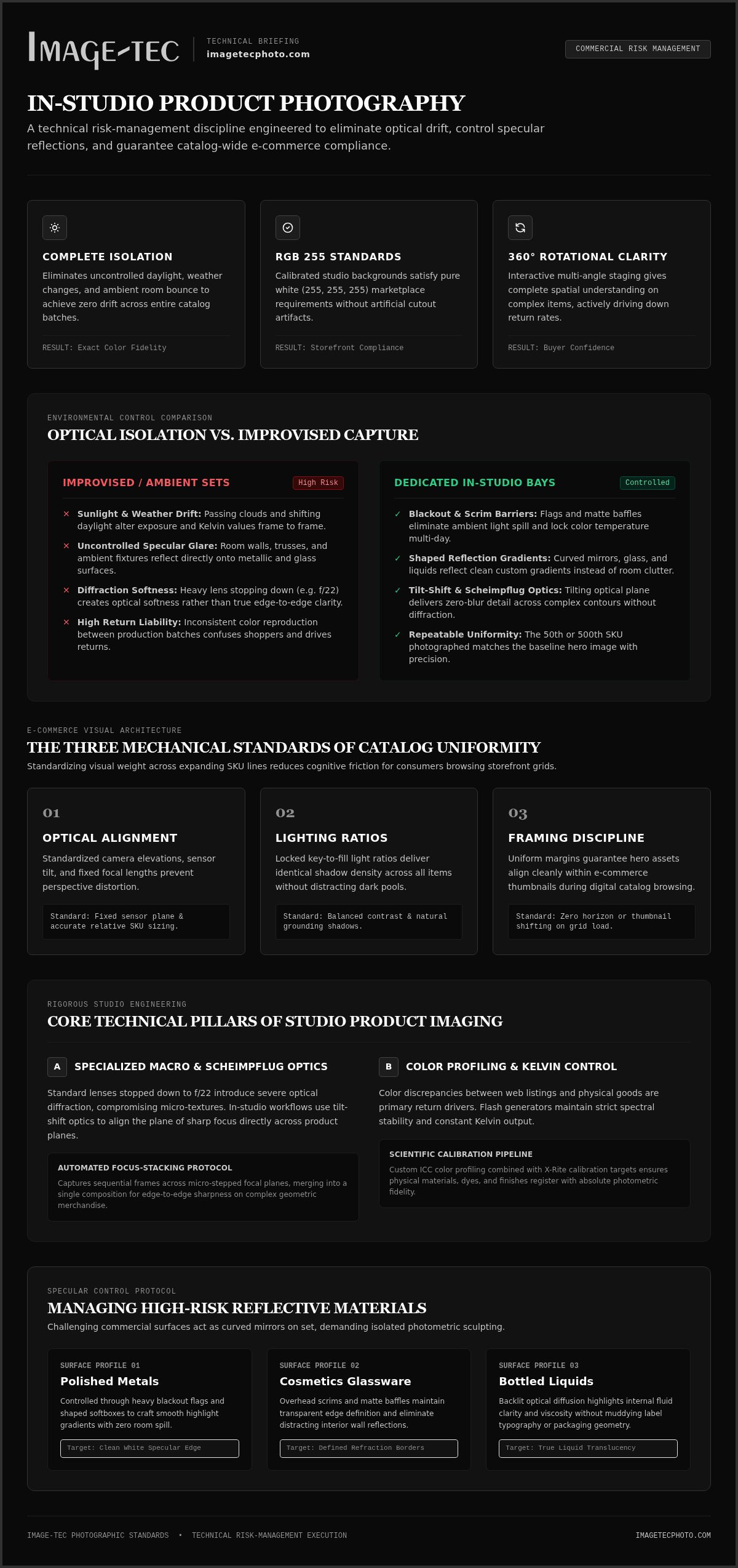
In this guide, you’ll discover how dedicated studio lighting, precise color calibration, and technical staging elevate commercial product imagery and drive measurable sales. We’ll examine the production standards, equipment configurations, and streamlined workflows required to keep your catalog visual assets uniform, compliant, and built to convert.
Key Takeaways
- Complete environmental isolation eliminates variable ambient light, ensuring repeatable framing and exact color fidelity across entire production batches.
- Deploying tilt-shift optics and custom profiling makes professional in-studio product photography essential for achieving edge-to-edge sharpness on complex merchandise.
- Calibrated studio backgrounds guarantee seamless compliance with major e-commerce standards, including pure white RGB 255, 255, 255 marketplace requirements.
- Systematic pre-production staging and sample screening protocols accelerate catalog delivery schedules while reducing post-production retouching costs.
- Interactive 360-degree rotational imaging provides complete spatial clarity, helping buyers evaluate complex items and driving down return rates.
In-Studio Product Photography: Why Control Is Paramount
Professional in-studio product photography is the practice of photometric capture within an optically isolated environment. Rooted in the disciplined composition of the still life artistic style, commercial execution requires technical repeatability above all else. Relying on ambient window light or improvised on-location spaces introduces uncontrollable shifts in illumination, weather, and color temperature. A passing cloud or an afternoon sun angle alters exposure and tonal values from one frame to the next, quickly eroding visual quality across expanding product lines.
Optical isolation removes these variables entirely. By isolating the subject from external daylight and ambient fixtures, commercial studios deliver uniform hero images across hundreds of catalog SKUs with zero drift between production days.
The Elimination of Optical Variables in Commercial Environments
Dedicated studio bays control every lumen that reaches the sensor. Professional lighting crews deploy heavy blackout flags, overhead scrims, and matte baffles to prevent ambient light spill from washing out shadow details or polluting calibrated color balances. Strobe generators and calibrated continuous sources hold a steady Kelvin rating across multi-day shoots, ensuring the fiftieth item photographed matches the first precisely.
This isolation becomes vital when handling challenging commercial materials. Polished metals, cosmetics glassware, and bottled liquids act as curved mirrors on set. Without a controlled environment, stray room reflections, ceiling trusses, and colored interior walls bounce directly into specular highlights. Enclosed studio sets allow technicians to shape clean white reflection gradients while keeping unwanted reflections entirely out of the frame.
Catalog Uniformity: Ensuring Seamless E-Commerce Visual Architecture
Digital storefronts demand visual architecture that feels cohesive. When browsing a collection grid, shoppers immediately notice subtle discrepancies in product sizing, horizon lines, or contrast levels. Professional studio production establishes rigid standardization across three key mechanical areas:
- Optical Alignment: Standardized camera elevations, sensor tilt, and focal lengths prevent perspective distortion and keep products sized accurately relative to one another.
- Lighting Ratios: Locked key-to-fill ratios deliver identical shadow density, grounding items naturally without distracting dark pools or harsh cutouts.
- Framing Discipline: Uniform product margins guarantee that hero images align cleanly within e-commerce thumbnails, eliminating distracting layout shifts during browsing.
Delivering consistent visual weight across your entire inventory reduces cognitive friction for consumers. Buyers can evaluate functional details, textures, and finishes without second-guessing whether color variations stem from manufacturing differences or sloppy lighting setups.
Core Technical Pillars of Professional Studio Product Imaging
Achieving commercial-grade visual assets relies on a strict technical triad: specialized optics, scientific color profiling, and high-volume tethered capture. While standard photography compromises depth of field and color rendition to match available lighting, dedicated in-studio product photography controls every optical parameter at the capture stage. This disciplined approach guarantees that complex materials, intricate textures, and subtle gradations register with absolute physical fidelity.
Specialized Optics and Focus-Stacking for Zero-Blur Detail
Photographing three-dimensional merchandise at close working distances introduces severe optical limitations. Stopping a conventional lens down to f/22 to gain depth of field introduces diffraction, which softens fine details across the sensor. To solve this, commercial studios deploy tilt-shift macro lenses. By tilting the optical axis relative to the image sensor, photographers align the plane of sharp focus directly along the product’s primary surface according to the Scheimpflug principle.
When merchandise features complex geometric contours, automated focus-stacking takes over. The camera captures sequential frames across micro-stepped focal planes, merging them into a single composition that delivers corner-to-corner sharpness without optical softness.
Color Management: X-Rite Calibration and ICC Color Workflows
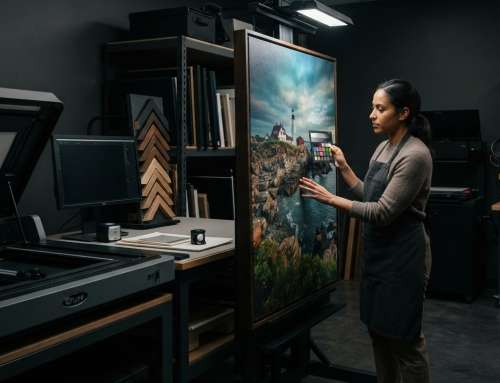
Color discrepancies between web listings and physical merchandise remain a primary driver of customer returns. Studio color fidelity begins with flash generator stability, ensuring spectral output doesn’t drift across different power levels. During production, technicians integrate X-Rite ColorChecker charts into the scene lighting to generate custom ICC profiles upon RAW ingest. These profiles map dye formulations, textile weaves, and metallic coatings directly into calibrated color spaces, ensuring that final sRGB assets represent physical products accurately across standard consumer displays.
High-Volume Tethered Capture and Real-Time Asset Ingestion
Precision production requires immediate visual feedback. Tethering cameras directly to capture workstations running Capture One enables instant evaluation on color-calibrated monitors at 100% magnification. This real-time visibility delivers three critical operational advantages:
- Automated Ingestion: Ingest scripts apply standardized SKU naming schemas, IPTC copyright metadata, and marketplace crop overlays instantly upon release.
- Collaborative Art Direction: Creative directors and brand managers review highlight placement, label alignment, and micro-reflections before moving to the next setup.
- Quality Control: Technicians catch dust particles, surface abrasions, or packing defects on set, avoiding expensive retouching cycles later.
For brands scaling large SKU catalogs across New England, partnering with an experienced commercial studio like Image-Tec provides the optical precision and systematic capture infrastructure required to keep multi-item production runs strictly on schedule.
In-Studio vs. On-Location Product Photography: Commercial Comparison
Deciding between an isolated studio bay and an on-location lifestyle shoot comes down to risk management and asset utility. On-location environmental photography offers emotional context, but it introduces logistical friction: weather permits, site rental fees, changing daylight, and uncontrollable backdrops. For foundational e-commerce inventory, in-studio product photography remains the gold standard for commercial scalability, cost efficiency, and platform compliance.
| Commercial Criterion | Dedicated Studio Capture | On-Location Environmental |
|---|---|---|
| Lighting Repeatability | Absolute; dialed strobe setups remain identical across months. | Variable; shifts with time of day, cloud cover, and seasonal angles. |
| Retail Compliance | Native pure white (RGB 255, 255, 255) background execution. | Requires extensive clipping paths and manual post-production masking. |
| Scalability | High SKU throughput per shoot day using fixed camera rigs. | Low SKU volume; restricted by physical staging resets and transit. |
| Asset Lifespan | Timeless; decoupled from decor trends, wardrobe, or weather. | Shorter; tied to seasonal foliage, styling choices, and architectural fads. |
Retail Platform Compliance and Pure White Sweep Standards
Major retail platforms enforce rigid imagery criteria that on-location photography simply cannot fulfill natively. Amazon mandates that primary hero images feature a pure white background (RGB 255, 255, 255), with the product filling 85% to 100% of the image frame without extraneous props, watermarks, or text. Google Shopping and enterprise wholesale portals impose matching restrictions to maintain clean search grids.
Executing these specifications in a physical studio requires balancing background illumination against subject key light. Overexposing a white cyclorama creates edge flare, wrapping white light around the product boundaries and washing out edge definition. In-studio product photography manages this balance precisely by calculating distance ratios and deploying black cut-off cards. The result is a true pure-white perimeter with sharp product edges, yielding clean alpha-channel clipping paths effortlessly during post-production.
Asset Longevity and Omnichannel Marketing Scalability
Controlled studio captures serve as durable foundation assets across an enterprise tech stack. Lifestyle photography carries an expiration date; a background featuring autumn foliage, a specific home interior, or trendy clothing models limits where and when you can deploy the photo. Studio assets provide multi-year evergreen value unaffected by changing trends.
Isolated studio renders integrate seamlessly into broader digital campaigns. Graphic design teams can drop studio captures directly onto marketing landing pages, packaging mockups, trade show booths, and motion graphics ads. By investing in dedicated bay production upfront, marketing managers build a permanent, flexible visual library that drives returns long past the initial product launch.
Preparing for a Commercial Studio Shoot: An Actionable Checklist
Flawless commercial imagery begins well before turning on a strobe. The difference between an efficient shoot and an expensive logistical bottleneck lies in meticulous merchandise preparation. Professional in-studio product photography magnifies every surface flaw, micro-scratch, and misaligned label under high-output illumination. Implementing a systematic pre-production protocol protects production schedules and eliminates unnecessary retouching hours in post-production.
- Sample Screening: Inspect and isolate reference-grade inventory directly from early factory runs.
- Decontamination: Clean all surfaces under raking light using anti-static tools before staging.
- Shot List Architecture: Define angles, aspect ratios, and detail macros within a shared spreadsheet.
- Component Flagging: Identify highly reflective metals, transparencies, or liquids requiring dedicated scrims.
- Logistical Staging: Group inventory by size, setup type, and SKU sequence for frictionless intake.
Step 1 & 2: Sample Selection, Lint Eradication, and Surface Prep
Never pull commercial photography samples at random from general fulfillment stock. Select early production-line units free from molding flash, uneven paint coats, seam bubbles, or shipping abrasions. Catching a mechanical defect during pre-production takes seconds; painting it out across dozens of high-resolution RAW files requires hours of costly retouching.
Once samples arrive on set, maintain strict clean-room handling. Unpack items using lint-free white cotton gloves to keep skin oils and fingerprints off sensitive coatings. Technicians clear optical surfaces and glossy enclosures using anti-static microfiber cloths, compressed air blowers, and specialized electrostatic brushes immediately prior to exposure.
Step 3 & 4: Constructing a Precise Commercial Shot List
A functional commercial shot list is a technical blueprint, not a general mood board. Structure your production document to outline exact deliverables for every SKU in the queue:
- Framing & Crops: Specify required output ratios, such as 1:1 square crops for digital catalog grids or wide 16:9 banners for digital displays.
- Coverage Angles: Detail necessary perspectives per SKU, including 45-degree isometric hero shots, direct overhead flat-lays, and macro captures of connection ports or technical interfaces.
- Material Flags: Note challenging finishes like chrome accents, gloss black plastics, or clear liquid reservoirs so lighting grips can stage custom diffusion panels in advance.
Step 5: Logistics, Staging, and Regional Inventory Transport
High-volume catalog throughput depends on physical staging discipline. Group incoming merchandise in labeled plastic bins or crated pallets keyed directly to master spreadsheet SKUs. Establish dedicated intake and outtake zones to ensure tested products do not mix with pending inventory. For companies operating across Greater Boston, the Merrimack Valley, and southern New Hampshire, regional studio proximity simplifies physical product drop-off and collaborative inventory handoffs.
Ready to streamline your upcoming catalog rollout? Schedule a commercial photography consultation to align your inventory staging with professional studio production.
Advanced Studio Solutions: From 360-Degree Imaging to Large-Scale Staging
Modern e-commerce requirements extend beyond single-angle still frames. When merchandise features complex ergonomics, intricate mechanical connections, or substantial physical footprints, standard tabletop setups reach their practical limits. Expanding into advanced in-studio product photography unlocks specialized capture methodologies that bridge the tactile gap between digital listings and hands-on retail evaluations.
Interactive 360-Degree Product Spin Photography
Static images often fail to convey the complete profile of technical gear, consumer electronics, or engineered components. Rotational imaging solves this limitation by mounting merchandise on heavy-duty, motorized turntables synchronized directly with optical strobes and camera shutters. Standard sequences capture 24, 36, or 72 individual frames per revolution, creating fluid, interactive HTML5 rotational assets that consumers manipulate directly inside their browsers.
This interactive transparency drives tangible commercial value. Buyers gain complete spatial clarity over port placements, hinge actions, and rear contours. Because shoppers can inspect every angle before purchasing, online merchandise return rates drop significantly while buyer confidence rises.
Industrial Scale, Automotive Staging, and Versatile Studio Architecture
Not all products fit neatly on a light table. Manufacturing machinery, industrial assemblies, and automotive components require dedicated studio architecture engineered for heavy payloads and broad angles of view. Managing these larger subjects involves three structural elements:
- Clear Ground Access: Open bays facilitate roll-in access for heavy crated freight, oversized prototypes, and bulky component housings.
- Overhead Suspension: Heavy boom arms and motorized truss systems suspend massive diffusion silks, eliminating hot spots on curved automotive finishes and expansive sheet metal.
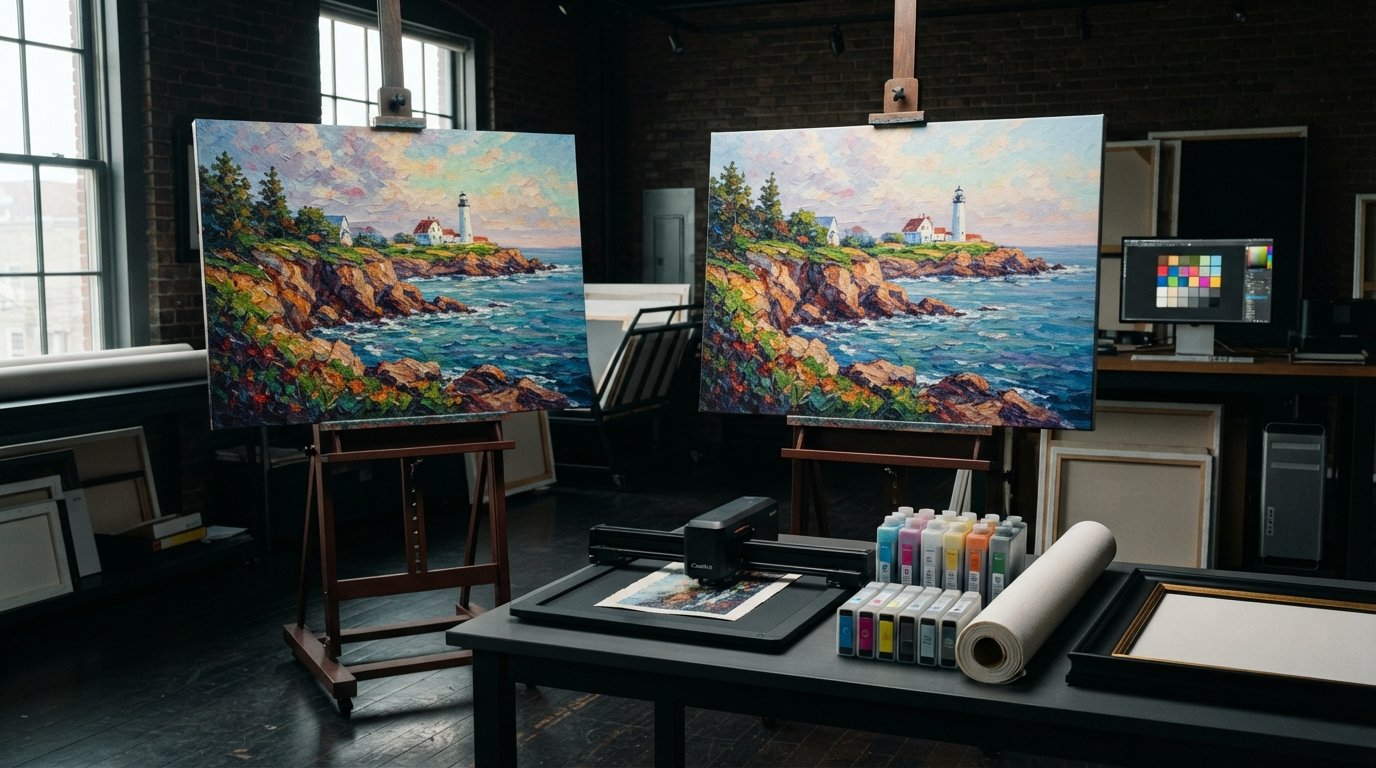
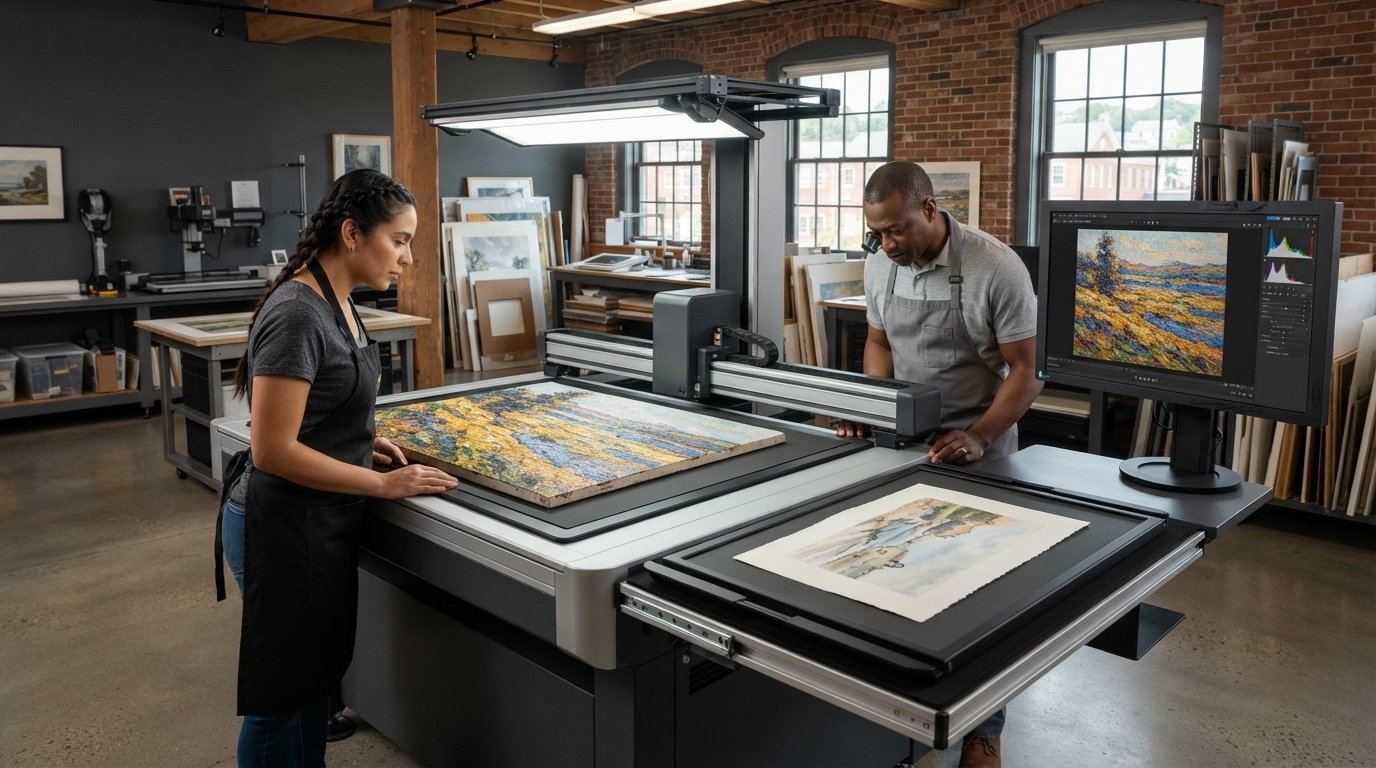
- Integrated Reproduction Capabilities: Direct alignment with BetterLight scanning and specialized Giclee printing services allows studios to handle technical image reproduction alongside commercial product capture.
Partnering with New England’s Commercial Photography Specialists
Technical execution at this scale requires proven infrastructure and seasoned experience. Image-Tec brings over three decades of professional imaging expertise, having operated a dedicated commercial facility in Methuen, Massachusetts since 1994. Serving regional clients across Boston, Manchester NH, Newburyport, and the Merrimack Valley, the studio provides the specialized optical gear and lighting control needed for demanding catalog runs.
Proximity simplifies logistics. Local regional access allows marketing teams to drop off high-value inventory directly, coordinate complex physical staging, and review high-volume assets without freight delays. To elevate your commercial imagery for upcoming catalog expansions, visit Image-Tec to discuss your production requirements.
Scale Your E-Commerce Visuals with Purpose-Built Studio Control
High-impact commercial imagery is ultimately an exercise in disciplined risk management. Investing in dedicated in-studio product photography eliminates ambient lighting drift, locks in corner-to-corner optical sharpness, and enforces strict color calibration across every SKU in your catalog. These controlled production standards protect your bottom line by curbing product returns and building unshakeable buyer confidence across modern digital storefronts.
Image-Tec brings over 30 years of commercial studio imaging experience to brands throughout Methuen, Boston, Manchester NH, and Newburyport. Whether your campaign requires high-volume white sweep captures, large-scale equipment staging, or specialized 360-degree spin photography, our Massachusetts studio delivers the technical infrastructure and meticulous craftsmanship your merchandise deserves. Partner with Image-Tec for your next commercial studio shoot to streamline your production schedule and transform your visual catalog into high-converting assets.
Frequently Asked Questions
What is the difference between tabletop product photography and full commercial studio production?
Tabletop setups focus strictly on small, self-contained objects using compact light tents or basic tabletop sweeps. Full commercial in-studio product photography utilizes expansive, optically isolated bays, heavy overhead grip equipment, and high-wattage strobe generators. This infrastructure accommodates everything from delicate cosmetics to large industrial assemblies, providing precision perspective control, calibrated color workflows, and high SKU throughput that simple tabletop rigs cannot match.
Why is color calibration so critical for online e-commerce product listings?
Uncalibrated product images cause color shifts between digital screens and delivered physical goods, directly inflating customer return rates. Studio color management utilizes physical X-Rite color targets during capture to build custom ICC camera profiles for specific lighting setups. This process aligns spectral dye values with digital sRGB color profiles, ensuring fabric weaves, plastics, and painted surfaces appear accurate across consumer phone screens and computer monitors.
How many angles or shots should I plan for each product SKU?
Most commercial catalogs perform best with three to five core captures per SKU. Start with an eye-level or 45-degree isometric hero image on a clean white background. Follow this with a direct profile shot, an overhead or rear angle showing mechanical ports, and a close-up macro detailing textures, craftsmanship, or branding. Complex technical items often benefit from supplementary dimensional graphics or complete rotational sequences.
What file formats and resolutions are typically delivered after a studio product shoot?
Clients typically receive uncompressed 16-bit TIFF files for master archival use and print collateral, alongside web-optimized JPEGs or WebP assets. Delivered web files generally measure between 2,000 and 3,000 pixels on the longest side to satisfy marketplace zoom thresholds, such as Amazon’s 1600-pixel minimum requirement. Assets can also include embedded sRGB color profiles and transparent background clipping paths saved as native alpha channels or layered PSDs.
How does 360-degree product photography benefit an e-commerce website?
Interactive 360-degree photography allows customers to rotate merchandise smoothly in any direction, providing complete spatial awareness that static images cannot deliver. This hands-on virtual inspection clarifies connection ports, rear panel controls, and material finishes, boosting buyer confidence and increasing on-page conversion rates. Removing spatial ambiguity also helps lower return rates, particularly for technical equipment, footwear, and consumer electronics.
How should we clean and prepare delicate or reflective products before shipping them to the studio?
Inspect items under raking light to choose pristine units free of scuffs, paint pooling, or molding seams. Wipe surfaces using lint-free microfiber cloths, pack merchandise inside anti-static bags, and handle finished metal or glass wearing white cotton gloves to prevent skin oils from transferring. Label each sample with its exact digital SKU tag, and ship using cushioned dividers to prevent impact scuffs during transit to the studio.
Can large equipment or automotive components be photographed inside a professional commercial studio?
Yes, properly equipped commercial facilities easily handle oversized merchandise. Commercial in-studio product photography studios featuring ground-level bay access can roll in crated industrial machinery, palletized equipment, and automotive sub-assemblies. Facilities like Image-Tec in Methuen serve clients throughout Boston, Manchester NH, and Newburyport, utilizing overhead boom systems and massive diffusion silks to cleanly illuminate wide reflective panels, cast iron housings, and engine components without harsh hotspots.





Leave A Comment
You must be logged in to post a comment.