

Why does a digital file that looks vibrant on your screen often appear dull and lifeless once it hits the canvas? You’ve likely experienced the frustration of a print that lacks the depth of the original or arrives in a frame that feels flimsy and mass-produced. It’s a common disappointment when the technical execution doesn’t match your artistic vision. If you’re investing in custom framed canvas prints, you expect a result that mirrors the quality of a museum gallery, not a discount retail shop.
Achieving this level of excellence requires a methodical approach to reproduction. We’ll show you how to bridge the gap between a digital file and a physical masterpiece by utilizing the technical standards and archival materials required for professional results. This guide explores the critical role of high-resolution BetterLight scanning, the precision of Giclée printing up to 60 inches wide, and the structural framing choices that preserve artwork for decades. You’ll learn how to navigate sizing, color accuracy, and material selection to ensure your work commands the attention it deserves.
Key Takeaways
- Learn how BetterLight scanning captures intricate textures and details that standard digital cameras miss, ensuring high-fidelity reproductions.
- Understand the archival standards for inks and materials required to produce museum-quality custom framed canvas prints that resist fading for decades.
- Explore the differences between modern floater frames and traditional mouldings to determine which style best enhances the visual weight of your artwork.
- Discover the resolution and file handling requirements necessary for successful large-format printing up to 60 inches wide in commercial or residential spaces.
- Identify the benefits of local expert guidance for precise color calibration and professional sizing to achieve a gallery-ready final product.
Beyond the Photo Gift: What Defines a Professional Custom Framed Canvas?
While mass-market services treat art as a commodity, a professional canvas print intended for gallery display operates on a different technical plane. These pieces aren’t just printed; they’re engineered for longevity and visual impact. Collectors and professional photographers prioritize archival standards because they ensure the work remains a stable asset over time. When you invest in custom framed canvas prints, you’re moving beyond the “photo gift” category and into the realm of fine art reproduction.
A master printer acts as the bridge between raw digital data and a physical masterpiece. Unlike automated platforms that apply generic filters, a professional studio technician performs manual color correction and file optimization. They adjust for the specific texture of the canvas and the unique chemistry of the inks used. This level of oversight ensures that every print maintains the integrity of the original artwork, preserving subtle gradients and shadow details that automated systems often crush.
Giclée vs. Standard Inkjet Printing
The industry gold standard for reproduction is the Giclée process. Standard consumer inkjet printers typically rely on dye-based inks, which are prone to rapid fading and color shifting when exposed to UV light. In contrast, archival Giclée processes utilize pigment-based inks. These pigments are solid particles that bond with the substrate, offering superior resistance to environmental degradation. To complement these inks, a professional studio uses pH-neutral, acid-free canvas substrates. This combination prevents the “yellowing” effect common in cheap prints and ensures the material won’t become brittle or crack as it ages over several decades. For professionals like One Vision Photography | South Wales Wedding Photographer, these archival standards are essential for delivering a product that stands the test of time.
The Value of Local Professional Oversight
Automated “one-click” filters fail when they encounter complex artistic compositions. Shadows can become muddy and highlights often blow out without the steady hand of an expert. By working with a local studio in Methuen, artists from Boston to Manchester NH gain access to in-person consultations that digital-only platforms can’t replicate. You can see physical proofs and discuss how different lighting environments will affect the final piece. This localized expertise doesn’t just result in a better product; it supports the New England art community through shared craftsmanship and technical accountability. Choosing custom framed canvas prints from a seasoned professional ensures your work receives the precise calibration and structural integrity required for a true gallery-ready presentation.
The Technical Foundation: BetterLight Scanning and Archival Inks
The transition from a physical painting or a digital file to museum-grade custom framed canvas prints relies on the precision of the initial data capture. Standard digital cameras often struggle with color shifts and barrel distortion, especially when documenting large-scale works. Professional studios solve this by investing in specialized technical infrastructure, such as wide-format printers capable of producing work up to 60 inches wide. This equipment maintains consistent tension and ink distribution, which is critical for preventing banding or artifacts in the final reproduction.
Achieving true color accuracy requires more than just high-end hardware. It involves rigorous ICC profiling and regular calibration of every device in the production chain, from the scanner to the display monitor and finally the printer. This methodical approach ensures that the “digital proof” you see on screen matches the physical output exactly. When these technical elements align, the result is a print that possesses the same visual weight and color depth as the original artwork.
BetterLight Scanning for Original Art
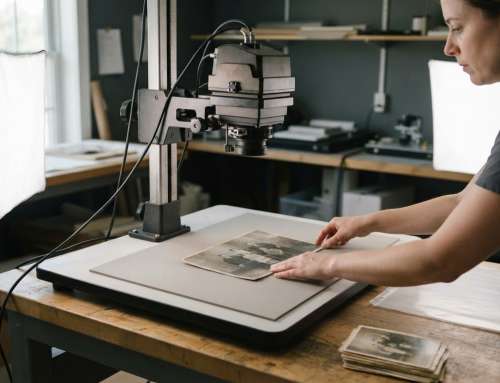
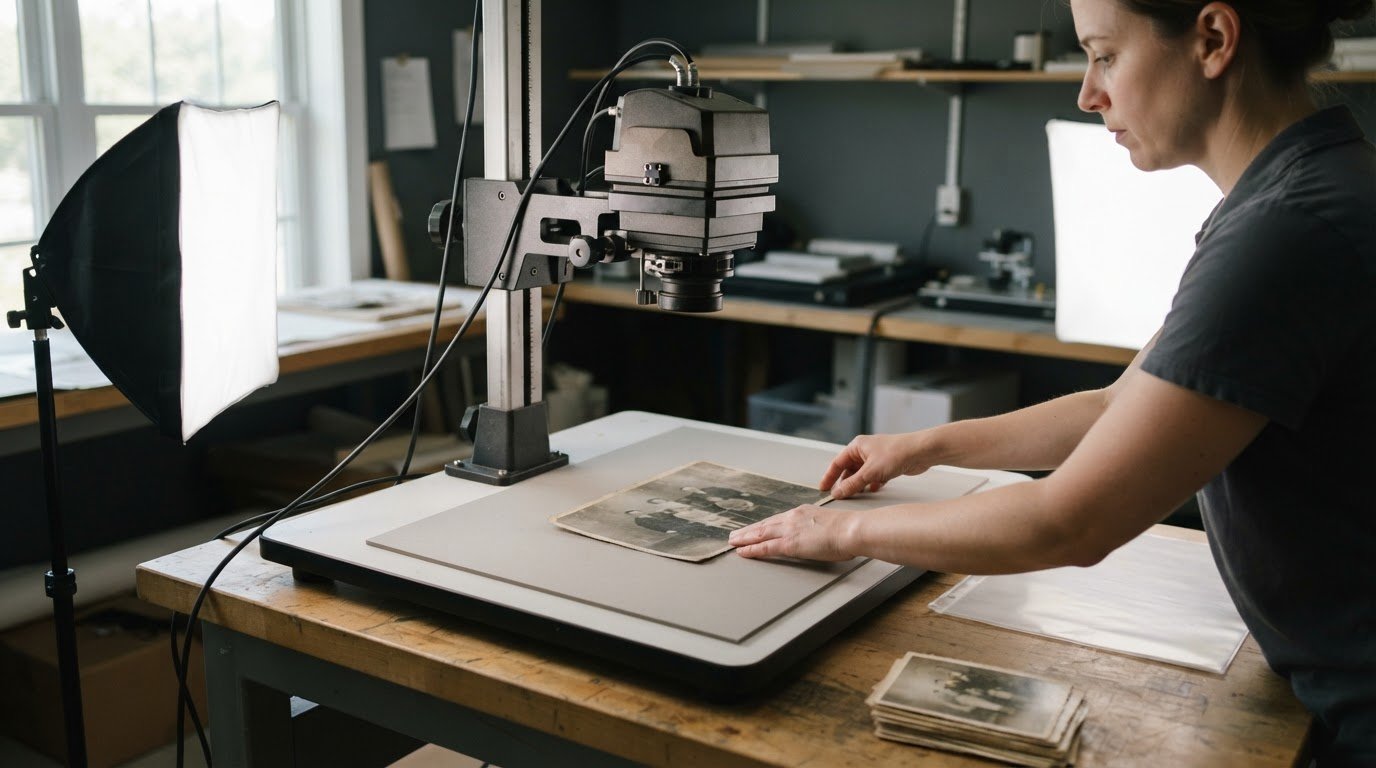
BetterLight scanning is a high-resolution digital capture method for fine art that utilizes a specialized scanning back to record image data line-by-line. Unlike a traditional camera that captures a single “snapshot,” this system moves a tri-linear sensor across the image plane. This process eliminates the moiré patterns and chromatic aberration common in standard photography. By recording the subtle height of brushstrokes and the exact texture of the substrate, the scan provides a file that feels three-dimensional. It’s the most reliable way to ensure that the fine gradients in a watercolor or the heavy impasto of an oil painting translate accurately to a new canvas.
Archival Materials and Longevity
The longevity of a print is determined by the chemical interaction between the ink and the canvas. Most professional studios adhere to strict archival standards for photographic prints by using pigment-based inks rather than dyes. Pigments are microscopic particles of color that sit on the surface of the material, providing a natural defense against UV degradation and moisture. When paired with a high-quality canvas weave, these materials ensure that the artwork won’t fade or shift toward yellow tones over time.
Choosing the right weave is equally important. A fine weave suits detailed photography, while a coarser texture can enhance the painterly feel of a reproduction. For those focused on Mastering Art Reproduction for New England Artists, understanding these material nuances is the difference between a temporary print and a legacy piece. If you’re unsure which substrate fits your project, discussing your goals with a technician at Image-Tec can provide the technical clarity needed for a successful project.
Selecting the Perfect Frame: Floater Frames vs. Traditional Moulding
Selecting a frame is a critical final step that determines the visual weight and structural presence of your artwork. A well-chosen frame doesn’t just surround the piece; it anchors it to the room’s architecture. Unlike the plastic or composite options found in big-box retail stores, professional custom framed canvas prints utilize solid wood or metal mouldings that provide lasting stability. This choice ensures the canvas remains taut and protected from warping while adding a level of sophistication that matches the technical quality of the Giclée print itself.
Floating frames have become the standard for modern art display because of their unique “gap” construction. This design leaves a small space between the canvas edge and the frame, creating a shadow line that makes the art appear to float. This is the ideal choice for full-bleed compositions where the artist’s work extends to the very edge of the substrate. Hardwood options like maple or walnut offer a grounded, organic feel, while metallic finishes provide a crisp, industrial edge for commercial environments. Because no part of the frame overlaps the front of the canvas, the viewer sees the entire composition exactly as it was intended.
Custom Traditional Framing
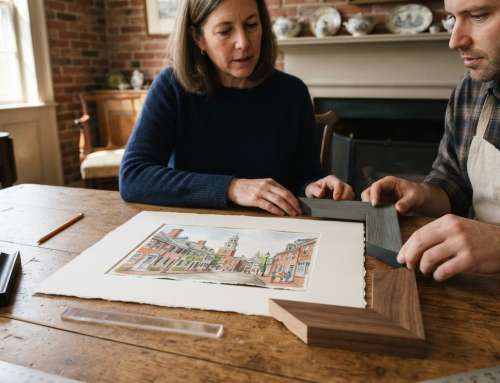
Traditional custom framing utilizes mouldings that overlap the front edge of the canvas, creating a classic “window” into the art. This method is often used to give a reproduction a sense of historical scale and importance. Before a traditional frame is applied, the canvas must be meticulously stretched over a wooden frame, a process that requires a master’s touch to ensure even tension across the entire surface. This ensures the material doesn’t sag or ripple over time. For a deeper look at these technical requirements, see our guide on Custom Art Framing and Giclée Printing in Methuen, MA. Using larger mouldings in this style can provide the “gravitas” needed for high-end residential lobbies or traditional gallery settings.

Planning for Scale: Designing Large Format Canvas Displays
Large format displays command attention in commercial lobbies and high-end residential entryways. When a piece exceeds 40 inches, the technical challenges multiply. You aren’t just printing an image; you’re managing the physical tension of the substrate and the structural integrity of the frame. Professional custom framed canvas prints at this scale require specialized knowledge of material behavior to prevent the canvas from sagging or the frame from twisting under its own weight.
Choosing between a gallery wrap and a museum wrap is essential for large-scale pieces. A gallery wrap extends the image around the sides of the stretcher bars, which is often preferred for unframed looks. However, a museum wrap uses a solid color on the edges, making it the superior choice when the piece will be placed in a deep floater frame. Regardless of the wrap style, oversized canvases require heavy-duty, kiln-dried stretcher bars with internal cross-bracing to ensure the display remains perfectly flat over time.
Printing Up to 60 Inches Wide
Image-Tec’s ability to produce prints up to 60 inches wide opens possibilities for panoramic photography and life-sized art reproductions. This width capacity allows for a seamless presentation that smaller consumer-grade printers simply cannot achieve. Maintaining structural integrity at this scale is a matter of engineering; our studio utilizes high-tension stretching techniques that accommodate the natural expansion and contraction of the fabric. For more detailed insights, you can explore our Large Format Fine Art Printing: The Ultimate Guide. These wide-format capabilities are ideal for artists in Boston and Manchester NH looking to create high-impact installations that fill large architectural voids.
Resolution and File Preparation
The “viewing distance” rule is a fundamental concept in large-format design. While a small print is held at arm’s length, a 60-inch canvas is typically viewed from several feet away. This allows for more flexibility in file resolution, though professional interpolation is often necessary to scale a file without introducing pixelation or soft edges. We use advanced scaling algorithms to optimize your digital files, ensuring every detail remains crisp at gallery scale. If you’re planning a major installation, consulting with Image-Tec on file optimization early in the process will save time and ensure a flawless final result. This hands-on approach prevents the low-resolution results often seen in automated, mass-market printing services.
The Image-Tec Advantage: Local Expertise in New England
Choosing a production partner for custom framed canvas prints involves more than just selecting a price point. It requires finding a studio that understands the nuances of the artistic and commercial environment in the Northeast. With over 30 years of studio experience, Image-Tec provides the technical infrastructure of a global lab with the personal service of a local specialist. This combination ensures that every project receives individual attention, from the initial digital capture to the final assembly of the frame.
The process of getting started is designed to be straightforward for both professionals and hobbyists. Clients can begin by uploading high-resolution digital files through our secure portal or by bringing original artwork directly to our Methuen studio for professional scanning. This dual approach accommodates digital photographers and traditional painters who need precise physical-to-digital translation. Once the image is captured and the proof is approved, our team manages the entire production cycle in-house, ensuring the final piece meets the rigid standards expected of a professional gallery.
Serving the Boston and Merrimack Valley Community
Artists from Newburyport to Boston trust our studio because we eliminate the risks associated with shipping original artwork to remote, automated facilities. Handling a physical painting requires a level of care that can’t be replicated by a mass-market carrier. By serving as a local pillar for the Boston and Manchester NH art scenes, we offer the convenience of in-person consultations where you can touch material samples and view color proofs under controlled lighting. This localized support helps maintain the integrity of your portfolio while fostering a collaborative environment where technical questions are answered by the experts doing the work.
Beyond Printing: A Full-Service Creative Partner
Our capabilities extend beyond standard reproduction to solve complex visual challenges for commercial and private clients. We integrate specialized services like 360-degree photography and commercial photography with our fine art production line, allowing businesses to manage their entire visual identity under one roof. For those with family heirlooms, our historical image restoration services can revive damaged or faded photographs, transforming them into vibrant Giclée prints on new canvas. This versatility makes us a comprehensive partner for any project that demands longevity and precision.
If you’re ready to elevate your work, Contact Image-Tec today for a custom framing and Giclée consultation. Whether you’re preparing for a gallery opening or designing a commercial lobby, our team provides the technical expertise and local handling required to produce museum-grade custom framed canvas prints.
Elevate Your Artwork with Gallery-Standard Reproduction
High-fidelity art reproduction is a technical feat that combines precise digital capture with archival chemistry. By prioritizing professional BetterLight scanning and Giclée standards, you move beyond temporary photo gifts to create lasting assets for any collection. These technical choices, combined with expert framing and thoughtful scaling up to 60 inches, define how your work is perceived in a gallery or professional commercial environment. Every step in the process, from color calibration to the final stretch, contributes to the piece’s enduring quality.
Our local studio provides the specialized infrastructure and master-level oversight necessary for these complex projects. We take pride in serving the Boston and New Hampshire art communities with a commitment to technical excellence and personal service that mass-market platforms simply can’t replicate. When you choose custom framed canvas prints from a seasoned partner, you’re investing in a legacy of craftsmanship. If you’re ready to see your vision realized with professional precision, we’re prepared to manage the details of your next installation.
Request a Quote for Your Custom Framed Canvas Project and begin the journey toward a museum-quality display today.
Frequently Asked Questions
What is the difference between a Giclée print and a standard canvas print?
Giclée prints use archival pigment-based inks and acid-free substrates, while standard canvas prints often rely on dye-based inks found in consumer printers. This technical distinction ensures superior color depth and long-term stability. Standard prints are prone to fading and color shifting within a few years. Professional custom framed canvas prints produced via the Giclée process meet museum standards, offering a level of detail and longevity required by collectors in Boston and beyond.
Can you print a custom framed canvas from an old, damaged photograph?
Yes, we can transform damaged photographs into new canvas displays through our historical image restoration service. Our technicians manually repair cracks, water damage, and fading before the printing process begins. This allows you to preserve family heirlooms as high-quality custom framed canvas prints that look vibrant and new. We handle the entire workflow in our Methuen studio, ensuring your original physical photos are treated with expert care throughout the restoration.
How large can Image-Tec print on canvas?
Image-Tec specializes in large-format production, with the capability to print on canvas up to 60 inches wide. This wide-format infrastructure is ideal for creating high-impact installations in commercial lobbies or residential spaces across New England. Because we manage the printing and custom framing in-house, we ensure that even at this significant scale, the canvas remains perfectly taut and structurally sound. This prevents the sagging often seen in mass-market oversized prints.
What is a floating frame and why is it popular for canvas prints?
A floating frame features a unique construction where the canvas is mounted with a small gap between the artwork and the frame’s inner edge. This creates a shadow line that gives the illusion the art is suspended or “floating” within the moulding. It’s a popular choice for modern galleries because it showcases the entire image without overlapping the front edges. It’s particularly effective for pieces where the artistic subject extends to the very edge.
Do I need to professionally scan my artwork before printing it on canvas?
Professional scanning is highly recommended for original paintings or physical photographs to ensure the highest level of detail. We utilize BetterLight scanning technology, which captures intricate textures and brushstrokes that a standard digital camera would miss. This high-resolution capture is the essential first step for artists in Manchester NH and Boston who want their reproductions to mirror the original’s depth. It provides a clean, color-accurate file that serves as the foundation for a gallery-quality print.
How long will a Giclée canvas print last before it starts to fade?
Can I see frame samples in person at your Methuen studio?
You can certainly view our full range of frame samples in person at our Methuen, MA studio. We encourage local artists and clients from Newburyport and the surrounding Merrimack Valley to visit and handle the mouldings before making a final selection. Seeing the textures of the hardwoods and the finishes of the metallic frames helps you visualize how they’ll complement your specific artwork. Our staff is available to provide expert guidance on sizing and aesthetic choices.
What file format is best for high-quality large format canvas printing?
For the best results in large-format printing, we recommend submitting files in TIFF or high-quality JPEG format. TIFF files are preferred because they’re lossless, meaning they preserve all the original image data without compression artifacts. It’s important to ensure your file has an adequate resolution for the intended print size, typically 150 to 300 DPI at the final dimensions. If you’re unsure about your file’s readiness, our technical team can assist with optimization and professional interpolation.





Leave A Comment
You must be logged in to post a comment.