

The frame should complement the artwork, not compete with it. Choosing the right frame for your art in Newburyport starts with the medium, condition, style, and display setting. A professional framer can help determine whether the piece needs a frame and guide choices about materials, glazing, and mounting.
A print or photograph may need different framing than a canvas or a delicate work on paper. The right combination gives the image room to stand out and helps protect it from contact with glazing, light, and other sources of wear.
This guide explains how a framer assesses artwork, balances its character with the room, and approaches unusual or delicate pieces. You’ll also learn what to consider when choosing frame styles, colors, and materials for prints and photographs.
Key Takeaways
- Choose a frame that respects the artwork’s era and character while keeping attention on the image.
- For fragile or unusual pieces, consider how the frame, glazing, and mounting can support protection and presentation.
- Compare frame profiles, colors, and materials in relation to both the artwork and its display space.
- For prints and photographs, weigh matting, glazing, and mounting choices according to the medium and desired focal point.
Choosing a frame that suits the artwork’s period and history
- Begin with the artwork’s history. A professional framer considers its age, medium, condition, and any original frame before recommending a style. An early 20th-century painting may have been created to hang without a frame, while a later work might benefit from a traditional profile. If an original frame has historical value, the framer can assess whether its fit or condition could harm the artwork.
- Set the frame’s visual relationship to the piece and room. The frame should support the artwork without competing with it, while also relating to the display space. A framer determines frame size and mat proportions by considering the artwork’s dimensions, visible image area, and the visual balance of the whole presentation. A mat can add breathing room and distinguish the image from the frame.
- Choose glazing for the work and its setting. A framer compares regular glass, UV-protective glass, and acrylic according to the artwork’s condition, display environment, and presentation needs. UV-filtering glazing can help reduce light-related fading, while the chosen surface should remain compatible with the artwork’s appearance. For a delicate work on paper, the framer can also ensure the mat separates the art from the glazing.
- Account for heat, light, and humidity. A frame and glazing can help create a protective environment, but placement matters too. A framer considers nearby heat sources, direct light, and damp walls when planning the presentation. For works on paper or other vulnerable media, suitable materials and a well-sealed enclosure can help limit exposure to external conditions.
- Share details that guide the framing decision. Provide the medium, artwork dimensions, visible image size, condition, and any known history. For canvas, include its depth and shape; for an older piece, mention an original frame or previous damage. A professional can then decide whether framing will improve presentation and protection, or whether a properly finished canvas can hang well without one.
Designing custom framing solutions for fragile or unusual works
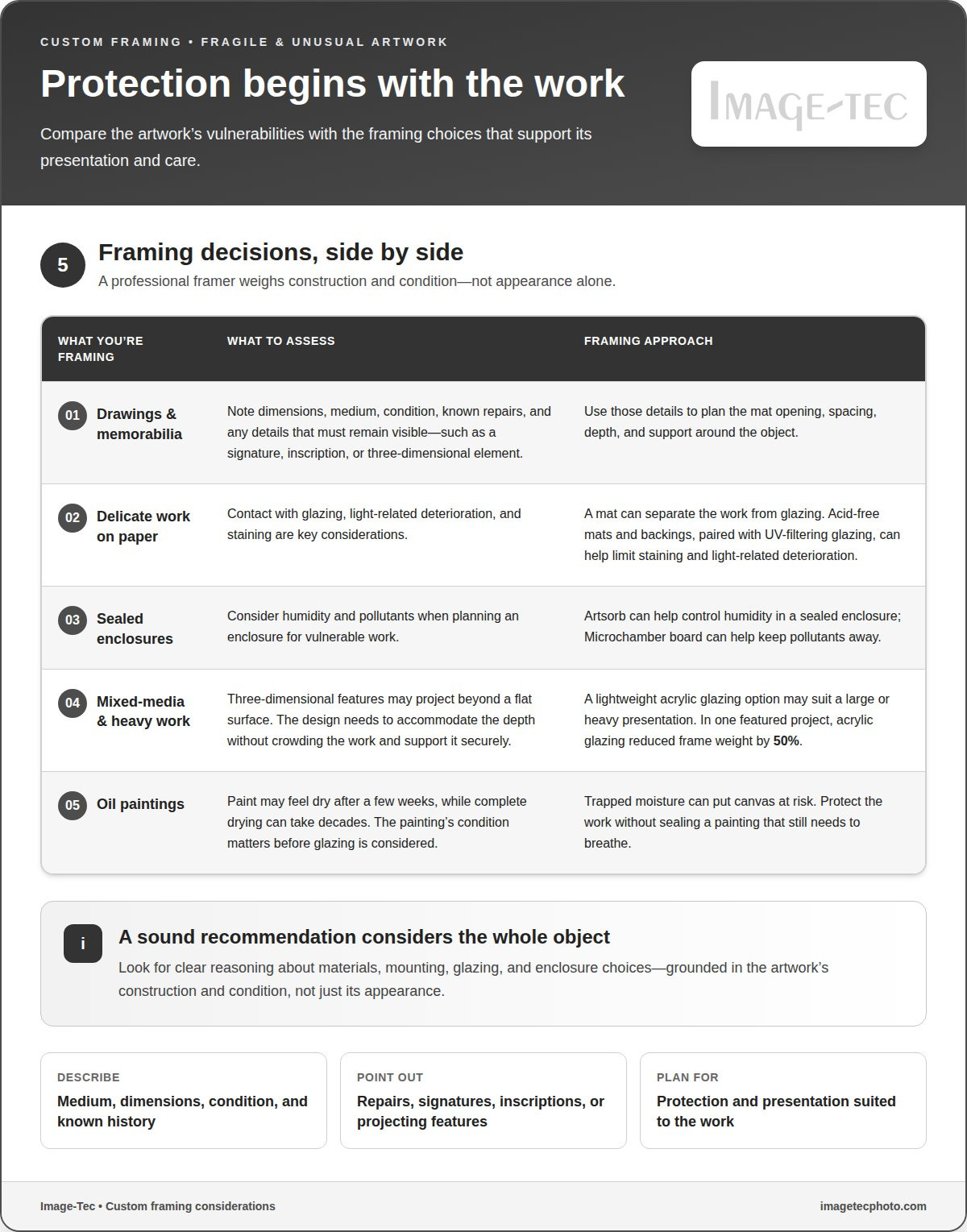
- Compare framers by the care and reasoning they bring to the work. Look for clear explanations of materials, mounting, glazing, and enclosure choices, plus examples of custom projects for fragile or unusual pieces. A sound recommendation addresses the artwork’s construction and condition, not just its appearance.
- Describe the object and its history before planning the design. For a delicate drawing, bring its dimensions, medium, condition, and any known previous repairs. For memorabilia, explain which details must remain visible, such as a signature, inscription, or three-dimensional element. These details help shape the mat opening, spacing, depth, and support.
- Plan protection around the work’s vulnerabilities. A mat can separate a drawing from glazing, helping reduce condensation-related contact. Acid-free mats and backings, paired with UV-filtering glazing, can help limit staining and light-related deterioration. For a sealed enclosure, Artsorb can help control humidity, while Microchamber board can help keep pollutants away.
- Adapt the frame to unusual depth and weight. Mixed-media artwork may project beyond a flat surface, so the design must accommodate its three-dimensional features without crowding them. A lightweight acrylic glazing option may suit a large or heavy presentation, while the frame profile and mounting must support the object securely. An in-home consultation can also help assess wall space, light, and viewing distance.
- Give oil paintings room to breathe. Oil paint may feel dry after a few weeks, yet complete drying can take decades. A framer considers the painting’s condition before placing it behind glazing, since trapped moisture can put canvas at risk. The framing plan should protect the work without sealing a painting that still needs to breathe.
For rustic work, Eddie Forbes finds weathered lobster-trap planks work well as frames for original art and reproductions on old wood and other rustic surfaces. For works on paper, acid-free mats and backings, along with UV-filtering glass or Plexiglass, can help limit staining and sun-related deterioration. Framers also recommend checking whether an original frame is safe and upgrading it when possible.
A mixed-media frame should account for the work’s three-dimensional qualities as well as the frame’s bulk or lightness. The featured framers used an acrylic glazing material that reduced frame weight by 50 per cent. Paintings behind glass may be at risk of trapped moisture, and an oil painting’s canvas could rot if it is not sufficiently dry and cannot breathe.
Browsing frames by style, color, material, and use
Compare frame options with the artwork’s visual character and the room where it will hang. A professional framer can help balance both.
-
Choosing a Frame Style for Art and Decor with a Professional Framer
Bring the artwork and describe where you plan to display it. A framer can recommend minimalist, traditional, or carved profiles to suit the image and decor. Flat, rounded, beveled, and stepped profiles create a restrained contemporary look. Traditional ornament can suit a painting that calls for more detail. Avoid a frame that distracts from the image or clashes with the room.
- Discuss whether the art or the frame should be the focal point. A dark frame can create moderate contrast around a light painting, helping separate it from nearby walls. For mid- to late-20th-century Op Art, Pop Art, Minimalism, or Photo Realism, minimalist gilded frames may complement the work. Some collectors instead choose antique-inspired carved moldings for contemporary paintings, matching the frame to the piece’s character rather than a trend.
-
Reviewing Frame Colors and Materials with a Professional Framer
Compare frame samples beside the artwork, considering finish, color, and profile together. With gilding, the clay color affects the visual tone: red clay creates warmer gold, while blue-gray clay produces cooler gold. A framer can help you compare these effects with the artwork’s palette and surrounding decor. Choose a finish that supports the image rather than competing with its colors or surface.
- Consider how the frame will be viewed and used, not just how it looks on its own. A simple profile can preserve the clean lines of minimalist art, while ornament can echo a traditional interior or contrast with contemporary work. A darker finish may define the edges of a light painting; a quieter frame can keep attention on a richly colored image. Judge each option beside the artwork.
Frames for prints and photographs
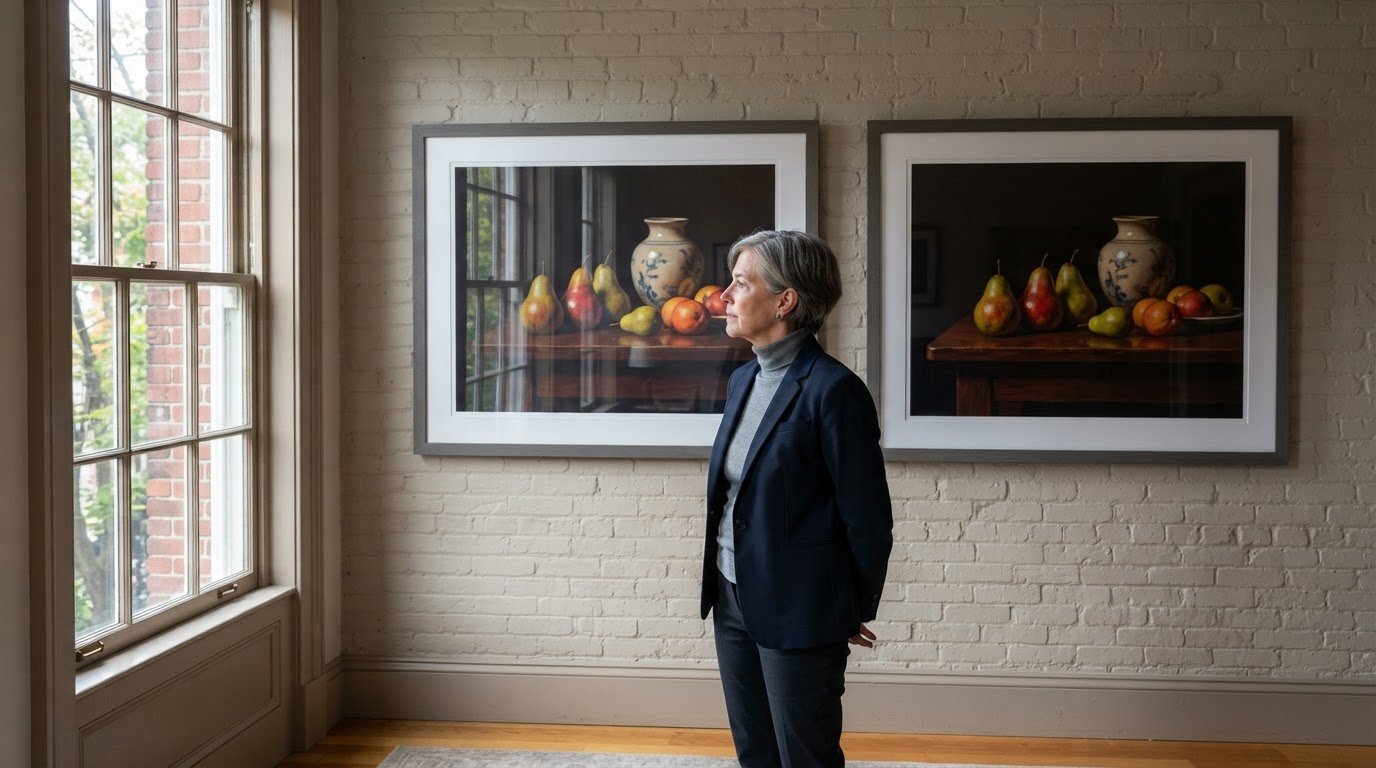
Prints and photographs need framing choices suited to their surface, scale, and intended display. The mat, glazing, and frame profile work together to present each image clearly. Choosing the right frame for your art in Newburyport means considering how these elements affect both viewing and presentation.
- Decide what should draw the eye. Choose whether the photograph or its frame should be the focal point. For a black-and-white photograph, a black or white frame can reinforce the image’s tonal range. A quieter profile can keep attention on a detailed print, while a more distinct frame can define its edges against a simple wall. The image’s contrast and composition help guide that choice.
- Match the frame depth to the work. A photograph, fine art print, and canvas can each require different depth, glazing, and mounting choices. The framer considers the work’s thickness and how it will sit inside the frame. For a paper print, a mat adds visual space and helps keep the image from touching the glazing. These details influence how the finished piece appears from different viewing angles.
- Choose glazing for the viewing conditions. Low-reflective glass can reduce distracting reflections when its surface does not interfere with the artwork. The print’s finish and the room’s light affect whether that option suits the image. Choosing the right frame for your art in Newburyport also involves matching glazing and matting to the print’s surface, not just its colors.
- Balance presentation with protection. A mat can enhance a photograph’s layout while helping protect the print. The framer considers the visible image area, the space around it, and the frame’s proportions as one composition. This keeps a small photograph from feeling crowded and gives a larger print a deliberate visual boundary. For a coordinated result, explore custom framing options for prints and photographs.
Image-Tec
Image-Tec offers custom framing for artwork, alongside Giclée printing and canvas prints up to 60 inches wide. Turn to the studio when you’re ready to move from comparing frame styles to planning a finished presentation. The artwork’s medium, dimensions, condition, and intended display can guide decisions about the frame and how the piece will be shown. For prints that need a coordinated presentation, custom framing can bring the image and its surrounding materials together as one considered piece. If you’re preparing a new print, Giclée printing and framing can support the project from image production through presentation. Contact Image-Tec to discuss framing your artwork.
Move from frame ideas to a finished presentation
Choosing the right frame for your art in Newburyport means making a considered choice for a work you value. Before settling on a design, decide what matters most: preserving the artwork’s character, giving it a distinct presence, or connecting it visually with the room. That priority provides a useful starting point for discussing the frame, especially when the piece has personal meaning or belongs to a collection.
A professional framer can turn that intention into a finished presentation, refining the details so the frame feels connected to the artwork. The result should suit the space where you plan to display it and remain true to what drew you to the piece.
For thoughtful guidance on your project, contact Image-Tec about your framing needs. Your artwork deserves a presentation that feels distinctly its own.
Frequently Asked Questions
How can a professional framer help you decide whether to frame your art?
A professional framer assesses the artwork’s construction, condition, and intended display before recommending a frame or an unframed presentation. A stretched canvas with a finished edge and suitable depth, for example, may look complete on its own. The framer can also assess whether an existing frame is a safe fit, weighing appearance alongside the artwork’s physical needs.
How do conservation framing materials protect valuable or delicate artwork?
Conservation materials help limit exposure to potentially damaging substances and conditions. Cotton board, for example, can replace wood-pulp backing that may contribute to staining, while careful cleaning and de-acidification can prepare a work before framing. The framer selects materials according to the artwork’s medium and condition, since paper prints, photographs, and canvases respond differently to their surroundings.
What are common framing mistakes that can damage artwork?
Common mistakes include choosing a frame that presses against the artwork, displaying a work where heat or dampness can affect it, and framing an oil painting before it is sufficiently dry. A poorly fitting frame can also damage an older work over time. Avoid storing valuable or sentimental art in an attic, where changing conditions can put it at risk.






Leave A Comment
You must be logged in to post a comment.