

Imagine pulling a century-old portrait from a cedar chest only to find the edges crumbling and the faces obscured by a web of fine cracks. It’s a common fear that touching these fragile pieces might destroy them forever, leaving you stuck between preserving a hidden relic and risking its total loss. You aren’t alone in wanting to see those memories restored to their former glory without losing the tangible history of the original. Finding a reliable path for photo restoration and printing on canvas shouldn’t feel like a gamble with your family’s heritage.
This guide clarifies the professional process of transforming a damaged image into a museum-quality masterpiece. You’ll learn how advanced BetterLight scanning protects your original while capturing every microscopic detail for digital repair. We’ll explain why archival Giclée printing on canvas offers a level of depth and durability that standard paper simply cannot match. From understanding technical color correction to selecting the right custom frame, this definitive overview provides the clarity you need to move from a faded past to a vibrant, wall-ready future.
Key Takeaways
- Discover how BetterLight scanning technology captures every microscopic detail of a fragile original without risking physical damage.
- Understand the benefits of professional photo restoration and printing on canvas for creating durable, museum-quality heirlooms that resist fading.
- Learn the technical standards of Giclée printing and why archival pigment inks are essential for high-fidelity color reproduction.
- See how in-house custom framing protects your artwork while enhancing the historical aesthetic of the restored image.
- Explore the advantages of a localized, end-to-end studio process that ensures your precious family photos remain secure and handled by experts.
The Value of Professional Photo Restoration and Canvas Printing
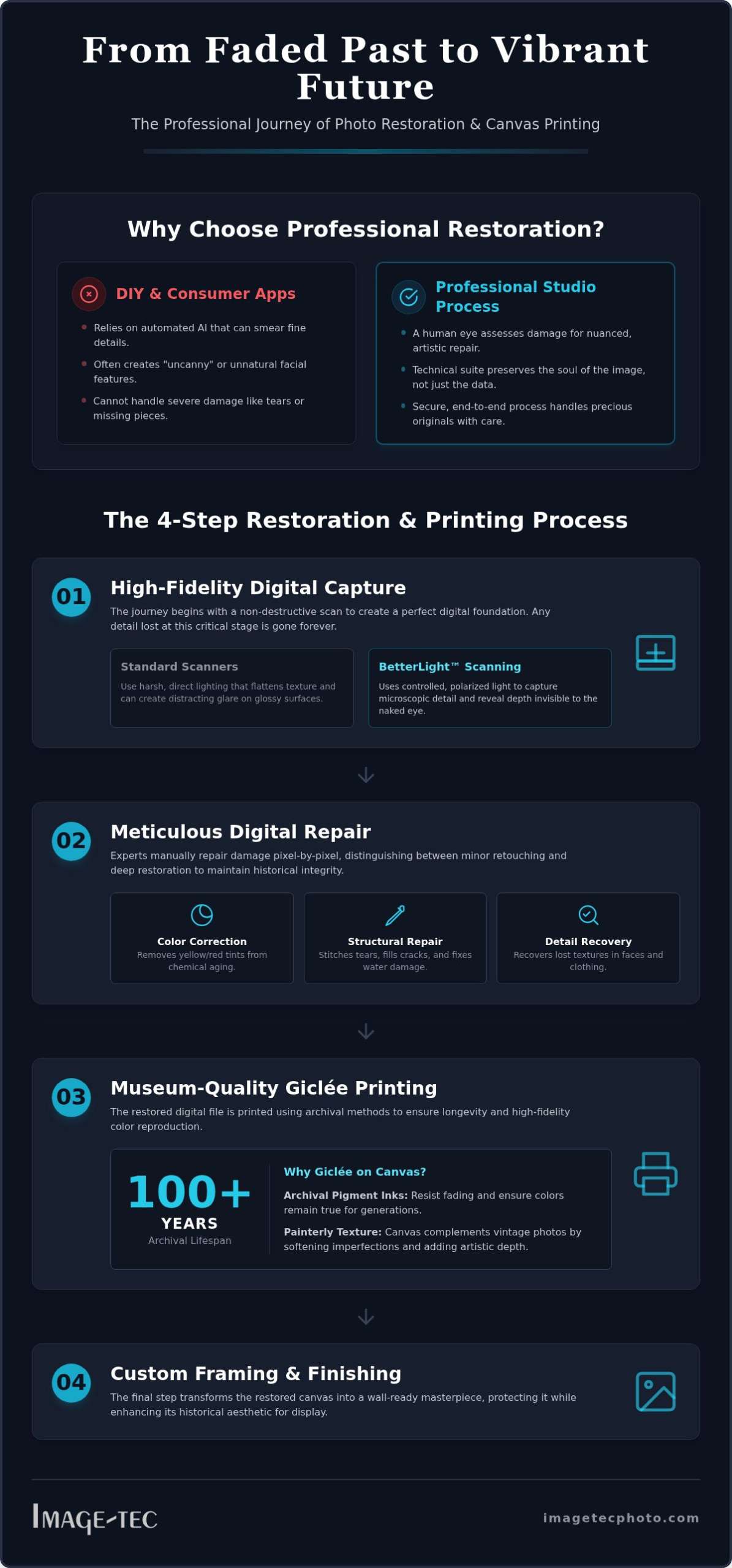
Professional photo restoration is a technical rescue mission for your family’s history. It involves more than just adjusting brightness or applying a sepia filter. True restoration is the process of extracting every possible detail from a damaged original and reconstructing what time has erased. When you pair this level of expertise with Giclée technology, the result is a seamless blend of photo restoration and printing on canvas that transforms a brittle artifact into a museum-quality centerpiece.
Many people try DIY consumer apps to fix old photos. These tools often rely on automated AI that can smear fine details or create “uncanny” facial features. A professional studio approach is different. It relies on a human eye to assess damage and a technical suite to repair it. This ensures the final reproduction looks like the original but “new,” maintaining the soul of the image while removing the scars of age. Investing in professional services protects the emotional and financial value of your archive, ensuring these images don’t vanish as the original paper continues to decay.
Preserving History with Archival Integrity
The primary goal of professional restoration is to stop the clock on physical degradation. Paper photos are susceptible to humidity, light, and acidic backing. By digitizing the image and using archival pigment inks, we ensure the reproduction will last for 100 years or more. Choosing canvas as your substrate adds a unique, painterly texture. This slight grain is ideal for historical images because it complements the vintage aesthetic and naturally softens minor imperfections that might appear harsh on glossy paper.
Restoration vs. Retouching: Knowing the Difference
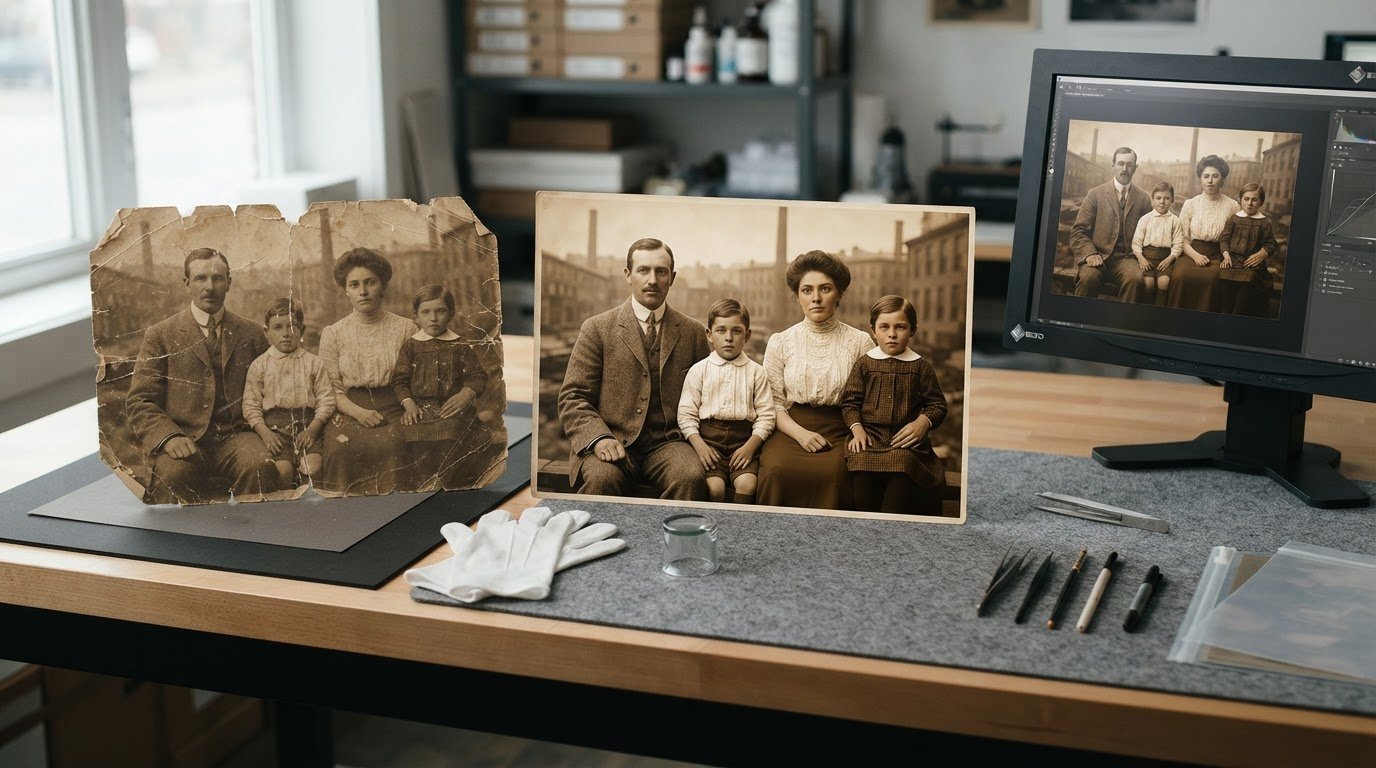
It’s helpful to distinguish between simple retouching and deep restoration. Retouching typically handles minor blemishes, like a stray dust speck or a small scratch on a modern portrait. Digital photograph restoration goes much further. It addresses structural damage, such as deep tears, water stains, or missing corners. Experts can reconstruct missing elements by analyzing the surrounding patterns and light. This includes:
- Color correction: Removing the harsh red or yellow tints caused by chemical aging.
- Structural repair: Stitching together images that have been torn into multiple pieces.
- Detail recovery: Bringing back the texture of clothing or facial features lost to fading.
The final result isn’t just a fixed file; it’s a durable piece of art ready for display. By moving the image from fragile paper to a stable canvas, you’re creating an heirloom that can be handled and enjoyed without fear.
The Technical Process: From BetterLight Scanning to Digital Repair
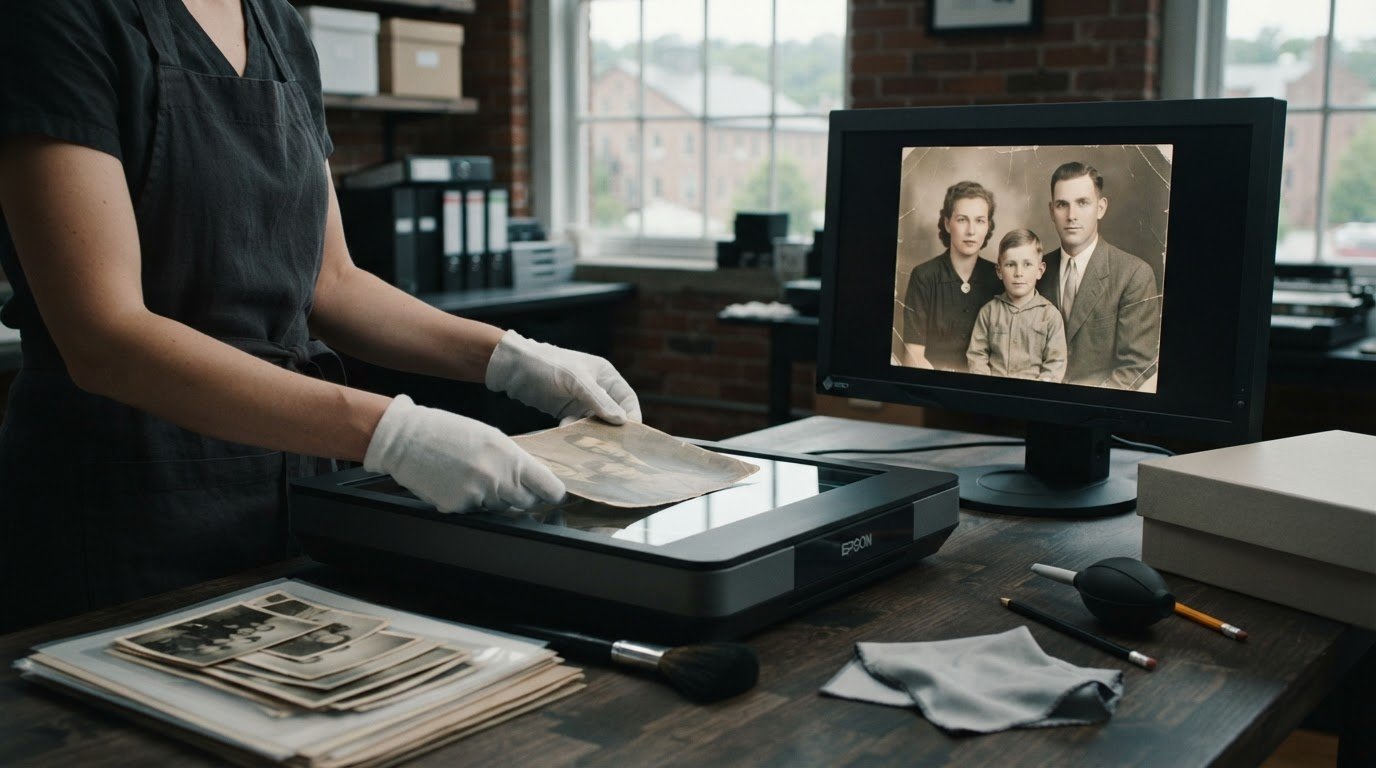
The journey from a damaged original to a museum-quality reproduction is a methodical, multi-stage craft. It begins with the BetterLight scanning system, a high-end digital capture technology that far exceeds the capabilities of standard consumer equipment. This initial step is vital because any detail lost during the scan cannot be recovered later. By capturing the image at an ultra-high resolution, we create a digital foundation that allows for precision repair without sacrificing the authentic texture of the original piece.
Why the Scan is the Most Critical Step
Standard flatbed scanners often use harsh, direct lighting that flattens textures or creates distracting glare on glossy surfaces. In contrast, professional art scanning uses controlled, polarized light to reveal depth and detail that is often invisible to the naked eye. This level of clarity is essential for successful photo restoration and printing on canvas because it provides the restorer with a clean, sharp map to work from. If you want to understand the nuances of this stage, you can read our detailed guide on how to digitize artwork for printing.
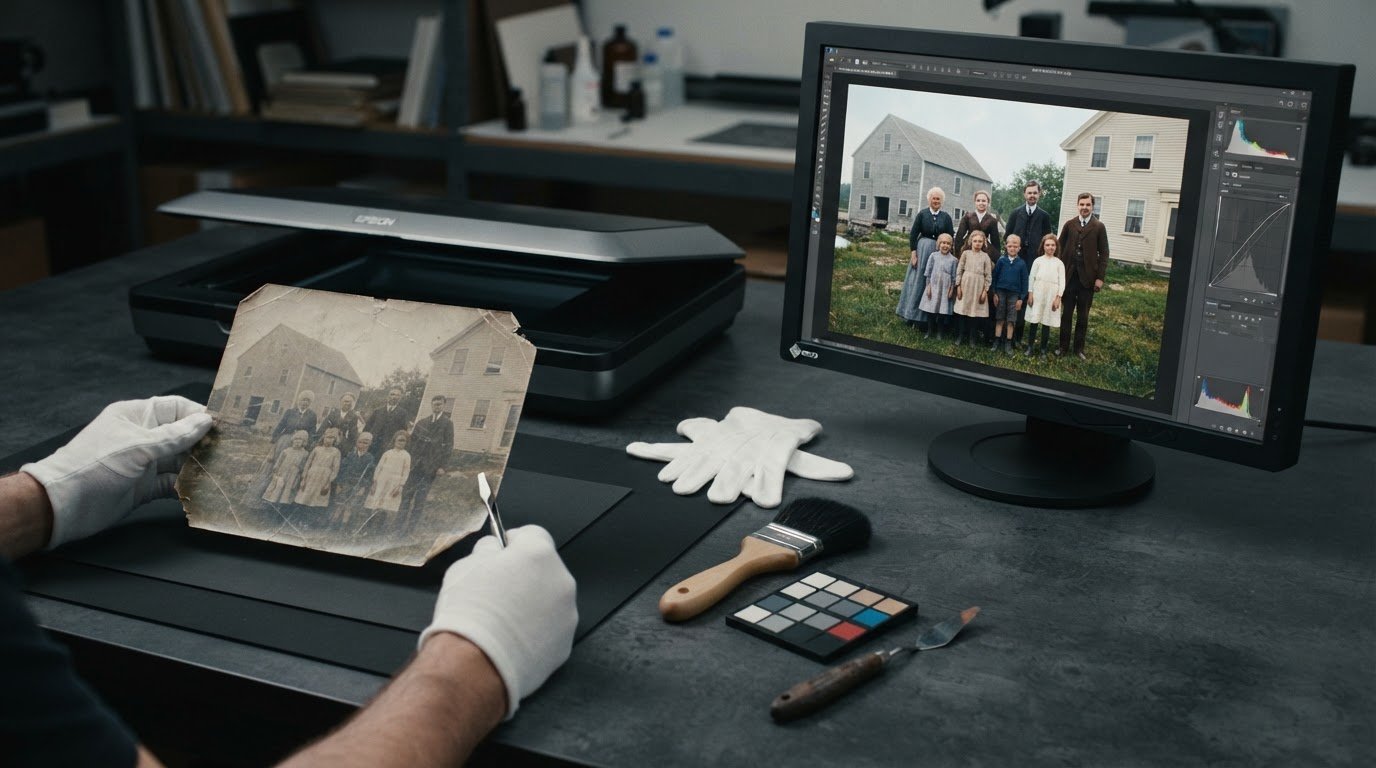
Once the scan is complete, a restoration expert performs a digital analysis to assess damage. This includes identifying structural issues like tears or water spots and chemical issues like fading or severe color shifts. Adhering to professional photograph conservation principles, the goal is to repair the image while maintaining its historical integrity. We meticulously remove scratches and reconstruct missing elements by hand, ensuring every pixel aligns with the original aesthetic.
Advanced Digital Restoration Techniques
A common mistake in low-end restoration is over-smoothing. This happens when automated filters remove the natural grain of the photo, making faces look plastic or blurry. We use grain-matching techniques to ensure that any repaired areas blend perfectly with the surrounding original texture. This maintains the soul of the photograph. We also re-establish contrast in faded images, pulling detail out of deep shadows without losing the subtle mid-tones that define a vintage look.
The final stage involves color balancing and master file preparation. We calibrate the file specifically for large-format Giclée output, ensuring the colors on the screen will translate accurately to the archival canvas. This level of preparation ensures that the final piece looks like a pristine, well-preserved version of the original. If you have a fragile heirloom that needs this level of care, our team in Methuen can help you start the restoration process with a professional evaluation.
Choosing Canvas: Why Giclée is the Standard for Restored Images
Selecting the right substrate is just as vital as the digital repair itself. While a digital file can be printed on many materials, the combination of photo restoration and printing on canvas offers a specific set of technical and aesthetic advantages. We utilize the Giclée process, which involves high-precision inkjet technology and archival pigment-based inks. This isn’t a standard desktop print; it’s a fine art reproduction designed to last a century without fading.
The natural weave of a high-quality canvas provides a depth that paper often lacks. For historical images, this texture serves a functional purpose. It subtly masks microscopic grain or minor imperfections that survived the restoration process, giving the image a rich, tactile quality. This “painterly” feel honors the era of the original photograph while providing a durable surface that resists moisture and UV damage better than traditional photographic paper.
Canvas vs. Fine Art Paper for Restored Photos
Traditional fine art paper is excellent for small, intimate portraits, but canvas is the superior choice for statement pieces. If you’re looking to create a large-scale display, our studio produces prints up to 60 inches wide. Canvas doesn’t require glass, which eliminates distracting reflections and allows the viewer to connect directly with the image. For those exploring their options, our professional fine art canvas printing service ensures that even the largest reproductions maintain their sharp detail and color accuracy.
Archival Standards for Canvas Prints
Longevity is a non-negotiable standard in our studio. We use acid-free canvas to prevent the yellowing or brittleness that plagues cheaper consumer products. To understand the full technical scope of this medium, you can explore our guide on what is a Giclée print. We also offer various finishing options to suit your display needs:
- Gallery Wrap: The image continues around the sides of the wooden stretcher bars, providing a modern, frameless look.
- Museum Wrap: The edges are a solid color, often black or white, which is ideal if you plan to use a traditional custom frame.
Using pigment-based inks ensures that the vibrant colors and deep blacks won’t shift over time. This commitment to archival materials means your restored family history remains a permanent fixture in your home, protected from the environmental factors that destroyed the original.
Customization and Framing: Transforming Restored Photos into Wall Art
A successful project doesn’t end when the printer stops. The final stage of professional photo restoration and printing on canvas is the transition from a specialized digital file to a finished piece of wall art. Custom framing serves two critical purposes: it provides structural protection for the archival substrate and creates a visual bridge between the image and your home’s interior. By handling both restoration and framing in-house, we ensure that the physical dimensions and aesthetic requirements of the piece are perfectly aligned from the start.
Selecting the Right Frame for Your Canvas
Choosing a frame depends largely on the era of the photograph and the desired display style. Floating frames have become the modern standard for canvas prints. They create a small gap between the edge of the canvas and the frame, making the artwork appear as if it’s “floating” within the border. This style is excellent for maintaining a clean, contemporary look while protecting the corners of the piece.
For 19th-century portraits or early 20th-century family groups, traditional ornate frames often provide a more appropriate historical context. These heavier moldings add a sense of gravity and importance to the restored image. Beyond aesthetics, custom framing for fine art prints ensures structural stability. Large-format canvas, especially those reaching 40 to 60 inches, requires a sturdy frame to prevent the wooden stretcher bars from warping over time.
Planning Large Scale Canvas Displays
Visualizing a large-format print requires careful consideration of the intended space. A 60-inch canvas creates a powerful impact in a foyer or over a mantel, turning a small family snapshot into a significant architectural element. When planning these displays, think about the lighting in the room. Because canvas prints don’t require glass, you won’t have to deal with the distracting glare that often plagues traditional framed photos. This allows the fine details of the restoration to remain visible from all angles.
If you have a collection of smaller restored images, consider a gallery wall. Mixing different sizes and frame styles can tell a chronological story of your family history. Whether you’re planning a single statement piece or a multi-image installation, you can consult with our framing experts in Methuen to find the perfect finish for your project. We’ll help you navigate the technical requirements of scale and weight to ensure your art is safely secured and beautifully presented.
Image-Tec: Expert Restoration and Large-Format Printing in Methuen
Since 1994, Image-Tec has served as a reliable partner for artists, historians, and families throughout New England. We offer a specialized, end-to-end workflow for photo restoration and printing on canvas that keeps your precious originals safe within our Methuen studio. Many online services require you to mail fragile photos to a distant warehouse, risking loss or further damage. We prefer a personal approach. Our clients often visit us for a professional consultation, allowing them to see our technical setup and discuss the specific goals for their historical projects in person.
Serving the Boston and Manchester NH Communities
Local historians and professional artists from Boston to Manchester NH trust us because we manage the entire production cycle under one roof. Having high-resolution BetterLight scanning, digital repair, and custom art framing and Giclée printing in Methuen in a single facility eliminates the logistical risks of moving artwork between multiple vendors. This integrated model ensures that the color profile captured during the initial scan remains consistent through the final print and framing stages. We take pride in our technical excellence and offer custom quotes tailored to the unique damage and scale of your specific project.
Beyond Restoration: Full-Service Commercial Photography
Our expertise extends beyond archival work into the broader professional imaging market. As a full-service commercial photography studio near Boston, we apply the same level of lighting precision and technical rigor to every project we touch. This commercial background provides a significant advantage for historical accuracy. We understand how light interacts with different surfaces and textures, which is critical when re-establishing depth and contrast in a faded vintage print.
Working with seasoned professionals provides a level of peace of mind that automated consumer apps simply cannot match. We treat every original as an irreplaceable asset, using white-glove handling throughout its stay in our studio. Our integrated approach to photo restoration and printing on canvas ensures that your family’s heritage is preserved using museum-grade standards. If you’re ready to see what’s possible for your collection, you can contact us for an evaluation or visit our facility to see our large-format capabilities first-hand.
Preserving Your Legacy for the Next Century
True preservation requires more than a simple digital scan. It demands a technical foundation like BetterLight scanning and the archival durability of Giclée inks. By choosing professional photo restoration and printing on canvas, you aren’t just fixing a damaged image; you’re creating a stable, museum-quality heirloom. This meticulous process ensures that your family’s history moves from a fragile, hidden drawer to a prominent place on your wall, protected for generations to come.
Image-Tec has served the New England community as a local pillar since 1994. We provide the technical expertise and white-glove care needed to handle delicate historical originals. Our Methuen studio offers a complete, in-house workflow, including custom framing and large-format printing up to 60 inches wide. You can trust our seasoned team to protect your original photos while transforming them into vibrant pieces of art that are ready for display. Don’t let your memories fade away when they can be beautifully restored and shared.
Request a Restoration Quote from Image-Tec Today
Frequently Asked Questions
Can a photo that is torn into multiple pieces be restored?
Yes, we can restore photographs even if they are torn into several fragments. Our process involves carefully aligning the physical pieces during the BetterLight scanning stage to create a unified digital foundation. From there, our restoration experts use precision digital tools to mend the seams and reconstruct any missing paper fibers or image data. The final result is a seamless reproduction that shows no evidence of the original structural damage.
How long does the professional photo restoration and printing process take?
The timeline for a complete restoration project typically depends on the severity of the damage and the complexity of the repair. Most projects move through the scanning, digital restoration, and Giclée printing stages within a few weeks. We prioritize technical precision over speed to ensure every detail is preserved. Once you provide the original for evaluation, we can offer a more specific estimate based on our current studio production schedule.
Will the original photograph be damaged during the restoration process?
No, your original photograph remains completely safe and untouched throughout the entire restoration process. We use a non-contact BetterLight scanning system that captures high-resolution data without pressing the photo against glass or using rollers. All actual repair work happens digitally on a master file. Once the scan is complete, your original is placed in a protective archival sleeve and stored securely until it’s returned to you alongside the new canvas print.
What is the maximum size you can print a restored photo on canvas?
We can produce canvas prints up to 60 inches wide in our Methuen studio. The final size of your reproduction often depends on the quality and resolution of the initial scan. Because we use high-end BetterLight technology, we can often enlarge small vintage snapshots into significant wall art without losing clarity. This capability is a cornerstone of our service for photo restoration and printing on canvas for large residential or commercial displays.
Do I need to bring the original photo to your Methuen studio?
Yes, we highly recommend bringing your original photograph to our Methuen facility for the best results. A physical evaluation allows us to determine the most effective scanning settings and identify subtle textures that might be missed in a digital preview. This personal consultation ensures that we understand your goals for the project. Serving the New England area since 1994, we provide a secure, local environment where your family heirlooms never leave our care.
How much does professional photo restoration cost?
The cost of restoration is determined by the amount of time required to repair the specific damage on your photograph. Minor blemishes or simple color corrections require less labor than reconstructive work on torn or water-damaged images. We provide custom quotes after a physical or digital assessment of your original. This ensures you receive a fair price based on the technical complexity of the project rather than a generic, one-size-fits-all fee.
Is canvas better than paper for a photo that is over 100 years old?
Canvas is often the superior choice for century-old images due to its durability and aesthetic qualities. The natural texture of the fabric complements the vintage look and helps mask microscopic imperfections that can appear harsh on smooth paper. Additionally, our archival canvas is acid-free and moisture-resistant, offering a level of physical stability that fragile paper cannot match. It provides a robust medium for photo restoration and printing on canvas that lasts for generations.
Can you restore color to a black and white photograph?
Yes, we can professionally colorize black and white or sepia images to bring a new level of realism to historical portraits. Our experts analyze the tones and lighting in the original to apply natural, historically accurate colors. This process is handled with the same technical rigor as our structural repairs, ensuring the final Giclée print feels authentic. We avoid the artificial, oversaturated look common in automated apps, focusing instead on a balanced and professional palette.




Leave A Comment
You must be logged in to post a comment.