
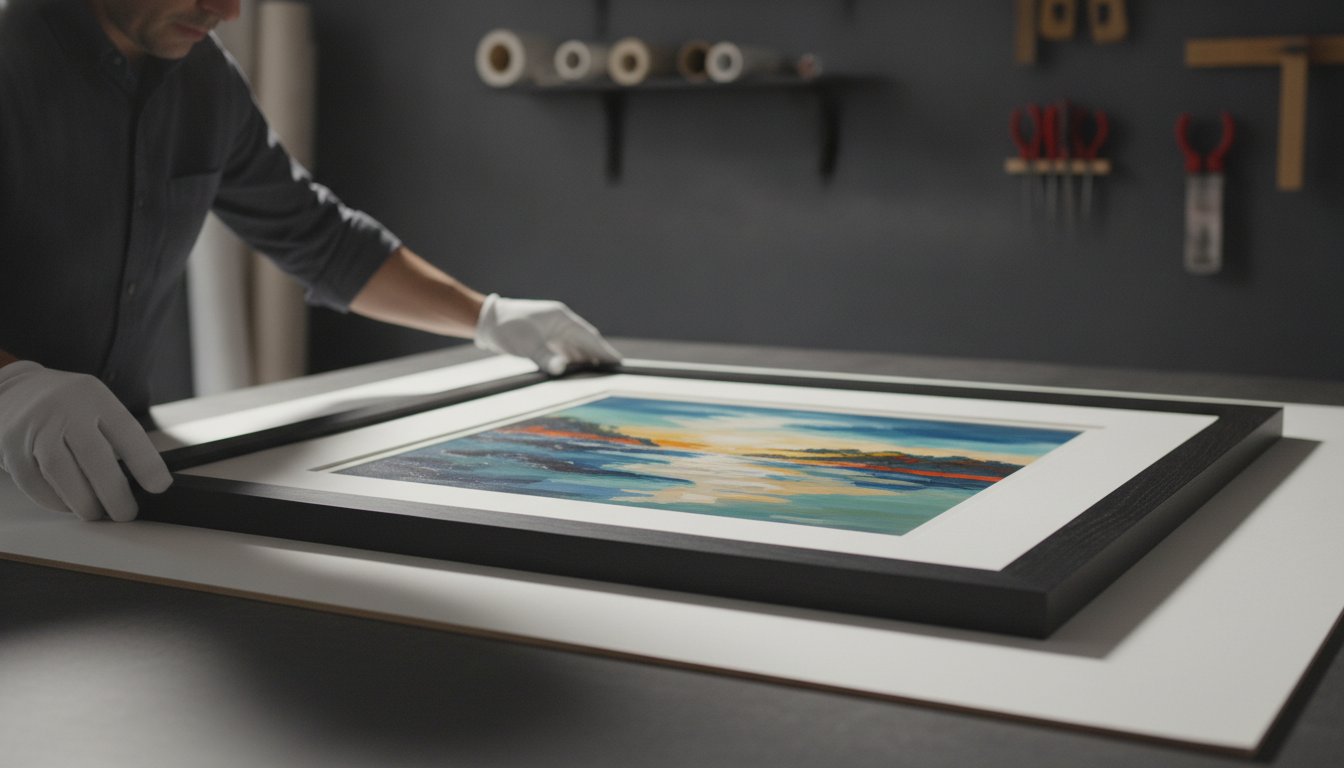
A frame is not merely a decorative accessory; it’s a technical preservation environment that dictates whether a piece of art survives for generations or degrades within a few short years. Many collectors worry that an investment in custom framing for fine art prints might be undermined by sub-par materials that lead to UV damage or acid-leaching. You likely recognize that high-value work requires more than a simple off-the-shelf solution, especially when dealing with large-format pieces that reach up to 60 inches in width. Generic online services often lack the structural integrity and archival standards necessary to support and protect such substantial works.
We’ll show you how professional custom framing protects your investment and elevates the presentation of fine art prints through archival materials and expert craftsmanship. You’ll learn how to identify the specific components that define a high-end finish, including UV-protective glazing and 100% cotton matting. We will also examine the technical advantages of working with a local studio that understands the nuances of archival hinging and structural support. By the end, you’ll have a clear framework for selecting materials that ensure your artwork remains as vibrant and stable as the day it was first produced.
Key Takeaways
- Learn why archival components like UV-protective glazing and 100% cotton matting are essential for preventing long-term fading and acid damage.
- Understand how professional custom framing for fine art prints provides the necessary structural support for large-format works up to 60 inches wide.
- Discover the benefits of a physical studio inspection to ensure precise measurements and material selection that online services cannot match.
- Identify the most effective framing styles for your specific medium, including modern canvas floater frames and traditional wood profiles.
- Explore the efficiency of a one-stop-shop workflow that integrates high-resolution BetterLight scanning with expert archival framing.
The Importance of Custom Framing for Fine Art Prints
Custom framing for fine art prints is a specialized engineering process designed to isolate a work from environmental hazards. It’s much more than a decorative border. A bespoke solution considers the specific physical properties of the paper or canvas, creating a controlled environment that balances aesthetic presentation with structural integrity. When a Giclée print is mounted correctly, it gains a sense of permanence and authority. This professional finish significantly elevates the perceived value of the work in both gallery and private settings.
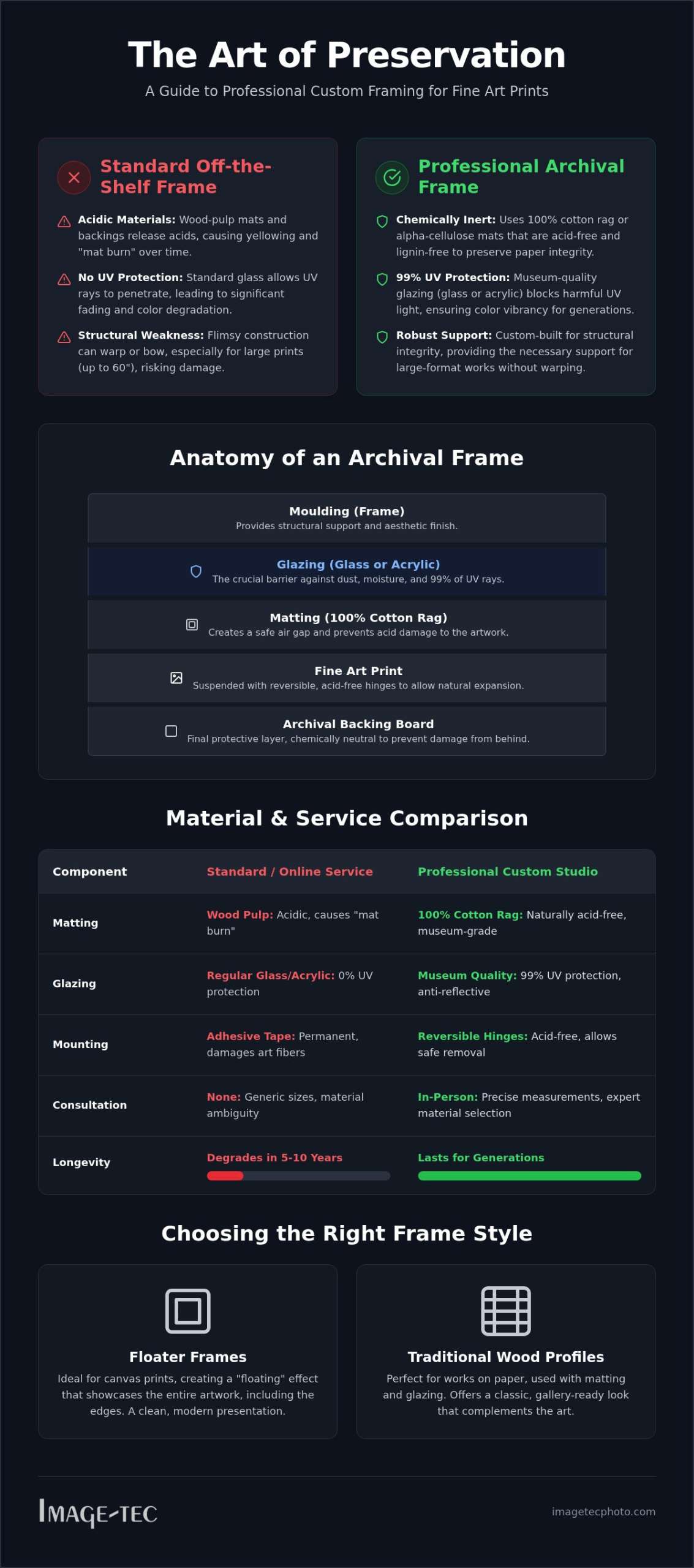
Standard off-the-shelf frames often use materials that contain high levels of lignin and acid. Over time, these chemicals migrate into the artwork. This leads to the “burning” or yellowing often seen on older, poorly handled prints. For large-format works reaching up to 60 inches, structural failure is another significant risk. Thin, pre-made frames often bow under the weight of the glazing or the tension of the print. This results in warping or, worse, the art coming into direct contact with the glass, which can cause permanent damage.
Preservation vs. Decoration
The visual impact of a frame is immediate, but its primary function remains protection. Professional framers prioritize the chemical stability of every component, from the backing board to the mounting hinges. This technical approach is deeply rooted in the history of conservation and restoration of painting frames, where the goal is to maintain the original state of the work for as long as possible. Artists choose this route because it ensures their work is gallery-ready and chemically shielded.
- Atmospheric Protection: Seals the art away from dust, pollutants, and humidity.
- Physical Spacing: Uses mats or spacers to prevent the art from sticking to the glazing.
- Chemical Neutrality: Employs alpha-cellulose or cotton materials to prevent acid-leaching.
The Long-Term ROI of Professional Framing
Investing in high-quality framing is a proactive financial decision. It effectively eliminates the need for expensive restoration services later in the print’s life. A well-documented, archival frame package also bolsters the resale value of a piece. Collectors recognize that the art has been maintained under museum-standard conditions. Beyond the financial aspect, the emotional resonance of a perfectly presented piece is profound. For those using gift funds from a milestone event to build their collection, you can discover גיפטי (Gifty) to simplify receiving contributions toward these lasting pieces. A professional finish ensures the artist’s original intent is preserved without the distraction of yellowed mats or buckling paper. It’s a commitment to the longevity of the investment.
Archival Materials: Protecting Your Art from the Inside Out
The internal chemistry of a frame determines the lifespan of the artwork. High-quality custom framing for fine art prints utilizes chemically inert materials to create a stable micro-environment. It isn’t just about looks. Without these standards, wood-pulp based components will eventually release acids that cause brittle paper and yellowing. Every layer, from the backing to the glazing, must work together to neutralize environmental threats.
Matting and Mounting Standards
Matting serves as a primary defense against both chemical and physical damage. While many standard mats are made from wood pulp, archival standards require alpha-cellulose or 100% cotton rag mats. Alpha-cellulose mats are made from wood fibers with the lignin and acids chemically removed. Cotton rag mats are naturally acid-free and remain the gold standard for museum-quality preservation. These materials ensure that the mat never “burns” the art or causes the unsightly brown edges often seen in older frames.
Mounting techniques must prioritize reversibility. Professional framers use a “hinging” method, typically employing acid-free Japanese paper and a non-acidic adhesive like rice starch or methyl cellulose. This process allows the art to be removed in its original state without sticky residues or torn fibers. Unlike standard tapes, these hinges allow the paper to expand and contract naturally with humidity changes. Proper spacers or mat windows also create a necessary air gap between the art and the glazing, preventing moisture traps and ink transfer.
Glazing Options: Glass vs. Acrylic
Glazing is the final barrier against light and physical pollutants. Museum glass is a premium choice, offering nearly invisible clarity and 99% UV protection. For large-format prints, particularly those reaching the 60-inch mark, acrylic glazing is often the superior option. It is significantly lighter than glass and shatter-resistant, making it safer for high-traffic environments or shipping. Archival glazing is designed to filter out 99% of ultraviolet radiation, shielding the art from the primary cause of fading.
- Museum Glass: High clarity with anti-reflective coatings and maximum UV filtering.
- Conservation Acrylic: Lightweight and durable, ideal for oversized works.
- Sealed Dust Covers: A backing layer that prevents dust and insects from entering the frame.
Consulting with a specialist on archival framing components helps bridge the gap between simple decoration and long-term preservation.
Custom Studio Framing vs. Online Mass-Market Services
Online “upload-and-frame” services prioritize volume and speed, often sacrificing the nuance required for high-end work. Choosing custom framing for fine art prints through a professional studio offers a level of technical oversight that automated factories cannot replicate. A physical inspection of the actual print allows a framer to identify subtle paper curls, surface textures, or color shifts that might be missed on a digital screen. Precision is the primary advantage here. When dealing with non-standard dimensions or large-format pieces, a fraction of an inch can be the difference between a secure mount and a structural failure.
Hand-assembled frames undergo rigorous quality checks that automated lines miss. Joints are reinforced and sanded to perfection, ensuring no gaps or misalignment. This level of craftsmanship is essential for custom framing for fine art prints where the frame must be as enduring as the art it holds. Every component is measured and fitted to the specific print, rather than forcing the art into a pre-cut, standard-sized kit.
The Human Element in Art Presentation
A seasoned framer evaluates the “visual weight” of a profile against the composition of the art. A delicate charcoal sketch requires a different structural and aesthetic approach than a heavy, textured canvas reproduction. Studio professionals provide material consultations that go beyond simple color matching; they consider how light interacts with the frame’s finish and the print’s surface. Shipping also presents a significant hurdle for mass-market providers. Transporting glass and large frames through national courier networks often results in damaged corners or shattered glazing. Local pickup ensures the piece remains in a climate-controlled, stable environment until it reaches its final destination.
Technical Capabilities and Scale
Handling large-scale prints up to 60 inches wide requires specialized equipment and a deep understanding of tension and weight distribution. At this scale, the choice of materials is no longer just about style; it’s about engineering a support system that won’t bow or warp over time. For those producing high-resolution reproductions, the transition from print to frame should be seamless. Utilizing a studio that handles the entire workflow, from high-resolution capture to Giclée printing and final assembly, ensures that the integrity of the image is maintained at every stage. This integrated approach allows for a level of quality control that disparate online services simply can’t offer.
Choosing the Right Frame Style for Your Art Medium
Selecting a frame style is an extension of the creative process. It acts as a bridge between the artwork and its environment. While mass-market retailers often categorize their products by generic “decor styles,” professional custom framing for fine art prints focuses on the specific physical requirements and visual language of the medium. The goal is to select a profile that supports the artwork’s weight, protects its edges, and enhances its narrative without becoming a distraction.
Framing Giclée on Canvas
Canvas prints require a unique structural approach because they lack the protection of glazing. For large-format Giclée reproductions, heavy-duty stretcher bars are a prerequisite. These bars provide the necessary tension to keep the canvas flat and prevent the wood from bowing over time. Canvas floater frames have become the modern standard for this medium. By leaving a small gap between the edge of the canvas and the interior of the frame, floater frames allow the viewer to see the entire image, including the wrapped sides. This creates a sophisticated, three-dimensional effect that feels both contemporary and gallery-ready.
In some cases, a traditional “lip” frame is more appropriate. These frames feature a recessed edge that overlaps the front of the canvas. This style is often chosen for historical restorations or when a piece requires a more classic, substantial border. Regardless of the style, the frame must be deep enough to accommodate the thickness of the stretcher bars to ensure the piece sits flush against the wall.
Framing Fine Art Paper and Photography
- Modern Metal Frames: These offer sleek, narrow profiles that complement contemporary photography and minimalist prints.
- Traditional Wood Frames: Walnut, maple, and oak grains add organic warmth to landscapes and traditional fine art.
- Shadow Boxes: These are ideal for heavily textured paper or pieces with three-dimensional elements, providing depth and protection.
Color theory also plays a vital role in material selection. A frame finish should pick up on the subtle secondary tones within the print rather than matching the dominant color exactly. If you’re ready to finalize your presentation, you can explore our custom framing options to find a profile that perfectly matches your medium and aesthetic goals.
Bespoke Framing and Printing Services in Methuen and Boston
Image-Tec operates as a comprehensive production hub for artists and collectors across New England. Unlike national e-commerce platforms that rely on automated workflows, our studio provides an integrated, one-stop-shop experience. We manage the entire lifecycle of a project, from the initial high-resolution capture to the final assembly of the frame. This closed-loop system ensures that the technical standards established during the printing phase are maintained throughout the framing process. Our proximity to the creative communities in Boston, Manchester, and Newburyport allows us to function as a local pillar for professionals who require exacting standards and personal accountability.
We provide customized solutions tailored to the specific needs of different environments. Galleries require museum-standard preservation to protect the resale value of their inventory. Corporate offices often prioritize durable, high-impact presentations for large-scale installations. Private collectors seek a balance of aesthetic harmony and long-term stability. By offering custom framing for fine art prints within the same facility where the Giclée printing occurs, we eliminate the logistical risks of transporting unprotected art between multiple vendors.
From Digital Scan to Gallery-Ready Frame
The quality of a reproduction begins with the digital capture. Our studio utilizes BetterLight scanning to record every nuance of an original work, from subtle brushstroke textures to complex color gradients. Before your artwork ever reaches our studio, understanding how to digitize artwork for printing with proper lighting and color management ensures the resulting file is worthy of a museum-quality frame. This high-fidelity digital file serves as the foundation for a precise Giclée print. We possess the technical infrastructure to produce and frame large-format prints reaching up to 60 inches in width, ensuring structural stability for even the most ambitious projects. This seamless workflow means that the master technician who understands the color profile of your print is the same person overseeing its mounting and housing.
Visit Our Methuen Studio
Digital previews cannot replicate the tactile experience of selecting materials in person. Visiting our Methuen studio allows you to see and feel the weight of different frame profiles and evaluate the clarity of museum-grade glazing under professional lighting. This physical consultation is essential for matching the “visual weight” of a frame to the specific tone of your art. You’ll have the opportunity to consult directly with our technicians to solve unique challenges, such as housing heavily textured canvases or selecting the right mat width to enhance a delicate photograph. We invite you to contact Image-Tec for a custom framing consultation to discuss your next preservation project and explore our full range of archival materials.
Securing Your Artistic Legacy
Choosing the right environment for your artwork is a critical investment in its future stability. It’s more than a simple design choice. We’ve explored how archival materials like UV-filtering glazing and acid-free mats act as a chemical shield against long-term degradation. While online services offer convenience, they can’t match the technical oversight of a professional studio. High-quality custom framing for fine art prints requires a hands-on approach that considers the specific texture and scale of every individual piece.
Since 1994, Image-Tec has served the New England art community with a specialized workflow that integrates BetterLight scanning and expert Giclée printing. Whether you’re a gallery preparing a new exhibition or a private collector protecting a single investment, we provide the infrastructure to handle prints up to 60 inches wide with museum-standard care. Our team ensures that every component is chosen for its longevity and visual harmony. You’ve spent time creating or acquiring exceptional art; it deserves a presentation that lasts.
Request a Custom Framing Quote for Your Fine Art today. We look forward to helping you preserve your most valued pieces for years to come.
Frequently Asked Questions
What is the difference between custom framing and ready-made frames?
Custom framing is a bespoke preservation solution tailored to the specific dimensions of the artwork, while ready-made frames are mass-produced in standard sizes. Ready-made options often use wood-pulp materials that contain acids, which will damage art over time. A custom approach allows for exact measurements and the use of archival components that protect your investment for decades rather than just providing a temporary decorative border.
How do I know if my frame uses archival, acid-free materials?
You can confirm the quality of your materials by asking for pH-neutral or acid-free certifications on all components. Professional framers use alpha-cellulose or 100% cotton rag mats that won’t release harmful gases. If you see a brown or yellow edge on a mat window, it’s a sign that the material is not archival. We provide detailed information on every layer used in our studio to ensure total transparency.
Can you frame large-format prints up to 60 inches wide?
Yes, our studio specializes in custom framing for fine art prints that reach up to 60 inches in width. Handling large-scale work requires a deep understanding of weight distribution and structural tension. We use reinforced corners and heavy-duty hardware to ensure these substantial pieces remain secure on your wall while maintaining their aesthetic integrity. This specialized approach prevents the bowing or warping often seen in lower-quality, oversized frames.
What is UV-protective glass and do I really need it for fine art?
UV-protective glazing is a specialized barrier that filters out 99% of harmful ultraviolet radiation. It is a critical component of custom framing for fine art prints because it prevents the irreversible fading of pigments. Even if your art isn’t in direct sunlight, ambient light can still cause damage over time. This protective layer ensures the colors remain as vibrant as the day the piece was printed.
How long does the custom framing process usually take at your studio?
The timeline for a project typically ranges from two to three weeks depending on the complexity and material availability. This duration allows our technicians to source specific wood profiles and execute precise assembly of the archival package. We don’t rush the process because the structural integrity of the frame depends on careful curing of adhesives and rigorous quality control. We provide a projected completion date at the start of every consultation.
What are floater frames and when should I use them for my art?
Floater frames are designed for canvas works, creating a small gap between the art and the frame edge so the piece appears to float. You should use them when you want to show the full wrap of a canvas without a frame lip overlapping the image. This style provides a sophisticated, gallery-standard presentation that highlights the three-dimensional nature of the medium while adding structural protection to the corners.
Do you offer framing for original paintings as well as prints?
Our studio provides professional framing for both original paintings and high-resolution reproductions with equal precision. We adjust our mounting techniques based on the medium, ensuring that oil paintings have room to breathe and watercolors are shielded by archival mats. Every original piece undergoes a thorough assessment to determine the best preservation strategy. This ensures that the frame supports the artwork’s physical needs without compromising its original condition.
Is it better to frame a canvas print with or without glass?
Canvas prints are traditionally framed without glass to showcase the natural texture of the fabric and prevent moisture from being trapped. Most Giclée prints on canvas are finished with a protective coating that resists dust and light handling. However, if you are displaying art in a high-traffic or high-humidity area, we can use spacers to add glazing. This provides a physical barrier without allowing the glass to touch the canvas surface.





Leave A Comment
You must be logged in to post a comment.