
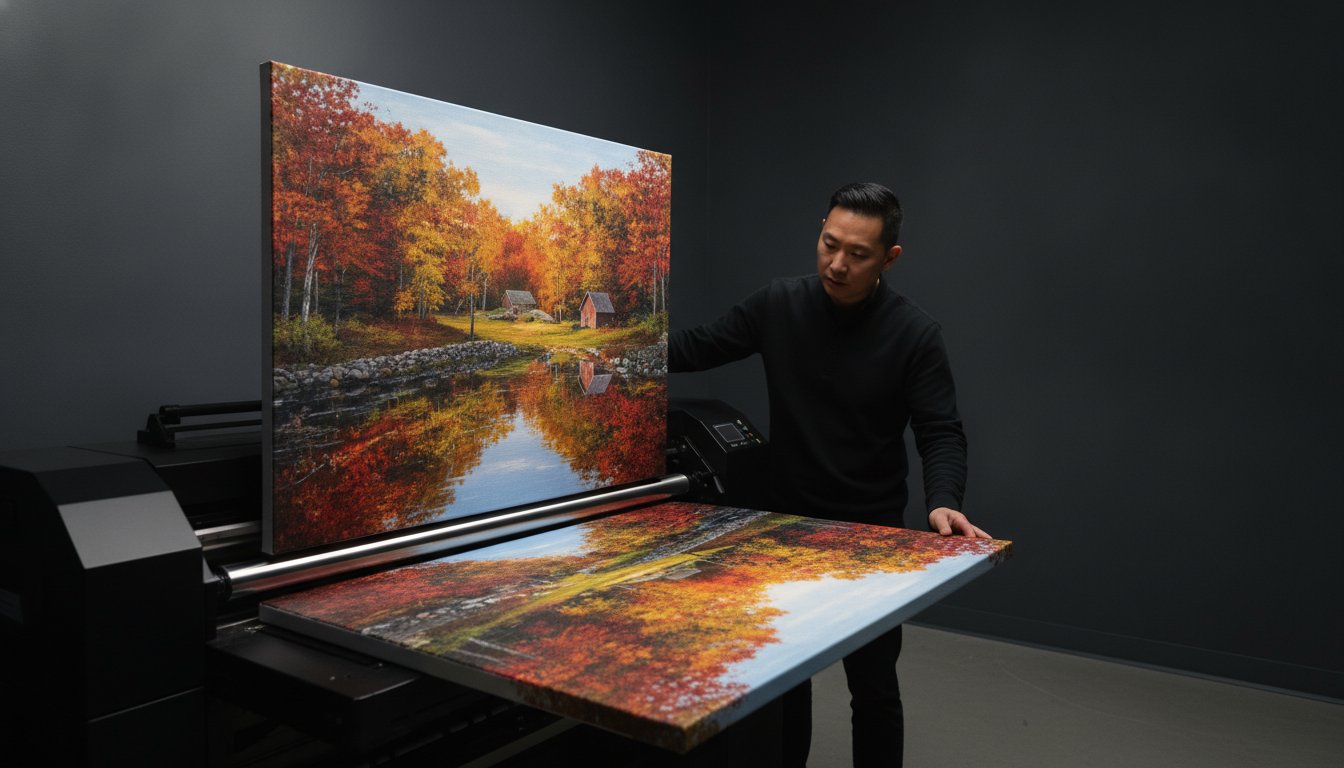
You’ve spent weeks perfecting the brushstrokes on your latest oil painting, only to receive a canvas reproduction that looks muddy and feels like thin plastic. It’s a common frustration for creators who trust their work to automated, high-volume labs. You understand that a digital file is only the beginning of the journey. You need a partner who respects the nuance of your palette and the texture of your medium. Finding a professional fine art canvas printing service in Massachusetts that bridges the gap between digital capture and physical masterpiece shouldn’t be a gamble.
This guide will show you the technical standards and archival processes required to transform your artwork or photography into museum-quality canvas prints that last for generations. We’ll explore the precision of BetterLight scanning, the necessity of archival-grade materials, and why local, large-format expertise is essential for prints up to 60 inches. From color fidelity to custom framing, you’ll learn how to select a studio that treats your vision with the same seasoned professionalism you put into the original work.
Key Takeaways
- Identify the specific archival standards and pigment chemistries required to prevent fading and ensure your reproductions last for generations.
- See how BetterLight scanning technology eliminates the detail loss and lens distortion common with standard consumer-grade equipment.
- Evaluate the structural differences between gallery wraps and traditional stretching to ensure your canvas remains taut and professional over time.
- Learn how a local fine art canvas printing service provides the color-matching precision and large-format capabilities that automated online labs often lack.
- Select the ideal canvas texture and finish to complement your specific medium, from high-contrast photography to heavily textured oil paintings.
Defining the Standards of a Fine Art Canvas Printing Service
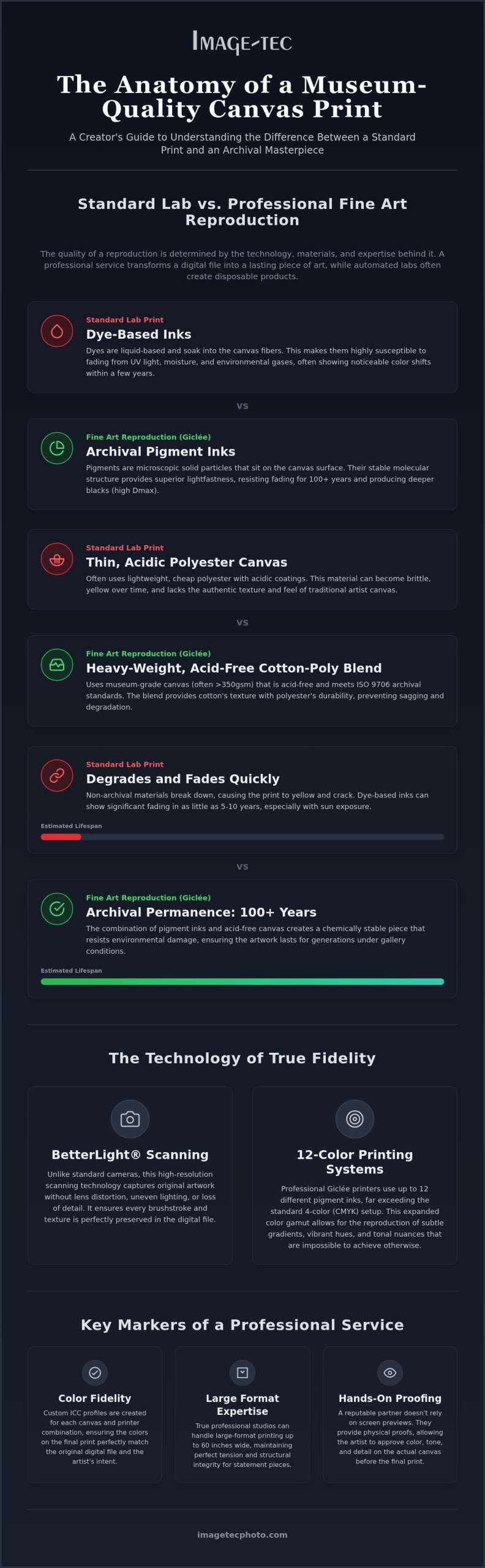
The term “canvas print” covers a wide spectrum of quality, ranging from decorative retail products to museum-grade reproductions. For a professional fine art canvas printing service, the distinction lies in the chemistry of the materials and the precision of the output. While standard inkjet prints often utilize dye-based inks on thin, acidic polyester, true fine art reproductions rely on the Giclée printing process. This method requires specific combinations of archival-grade substrates and pigment-based inks to meet the rigorous demands of galleries and collectors.
Archival standards, specifically ISO 9706, provide the benchmark for permanence in the art world. This standard ensures that the paper or canvas is chemically stable, acid-free, and resistant to environmental degradation. In a professional studio, the use of pigment inks is non-negotiable. Unlike dyes that dissolve in liquid and fade quickly when exposed to UV light, pigment inks consist of microscopic solid particles that sit on the surface of the canvas. This results in a print that maintains its integrity for over 100 years under normal gallery conditions.
What Makes a Print ‘Fine Art’ Quality?
The foundation of a high-end print is the material composition. Professional studios utilize acid-free cotton-poly blends that provide the structural durability of polyester with the tactile, natural feel of cotton. This prevents the canvas from yellowing or becoming brittle as it ages. Visual depth is achieved through an expanded color gamut; professional 12-color printing systems far exceed the limitations of standard four-color CMYK setups. Archival quality refers to the print’s ability to resist fading and chemical breakdown over a lifespan exceeding a century.
The Artist’s Requirement: Consistency and Fidelity
Reproducing original work requires a technical partnership built on accuracy. A reputable fine art canvas printing service manages every step of the workflow through custom ICC profiling, ensuring that the colors captured from the original art translate perfectly to the final canvas texture. Artists shouldn’t rely on digital previews alone. Physical proofing allows for the adjustment of mid-tones and highlights, ensuring the final product matches the artist’s intent. This transition from a digital file to a tactile, stretched canvas is a deliberate process that transforms a simple image into a durable piece of art.
The Giclée Advantage: Archival Inks and Museum-Grade Canvas
The durability of a reproduction depends entirely on the chemical compatibility of the ink and the substrate. A professional fine art canvas printing service prioritizes the use of pigment-based inks, which differ fundamentally from the dye-based inks found in standard consumer printers. While dyes are liquid-based and prone to rapid oxidation, pigments are solid, microscopic particles suspended in a carrier fluid. This molecular structure provides the lightfastness required for museum displays, often rated for over 100 years without significant color shifting.
Pigment vs. Dye: Why Professionals Choose Pigments
Pigment inks offer superior molecular stability. They resist the fading effects of environmental moisture and ozone, which are primary factors in the deterioration of long-lasting reproductions. Beyond longevity, pigments allow for a higher Dmax, or maximum density. This technical term refers to the deepest black a printer can produce. High Dmax values are essential for artists who need to maintain the dramatic contrast and subtle shadow details of their original works. Without this depth, a print can appear flat or “washed out” compared to the original.
Canvas Material Selection
Selecting the right canvas involves more than just picking a brand. The weight and weave of the material dictate how it will handle the tension of being stretched. Professional studios typically use heavy-weight canvas, often exceeding 350gsm, to prevent sagging over time. It’s a critical detail that separates museum-quality work from budget alternatives.
- Cotton-Polyester Blends: These provide the best of both worlds. The cotton offers a traditional art feel, while the polyester adds the “memory” needed to keep the canvas taut during seasonal humidity changes.
- Matte Finishes: These are ideal for fine art reproductions where you want to minimize glare and emphasize the texture of the original brushstrokes.
- Satin and Gloss: These are often preferred for photography, as they enhance color saturation and provide a modern, crisp appearance that mimics traditional photo paper.
Physical protection is the final step in the archival process. Even the most stable pigment inks benefit from an archival top-coating. This clear, UV-resistant layer shields the surface from airborne pollutants and minor abrasions. It also locks in the color, ensuring the print remains vibrant for decades. If you’re preparing an exhibition or a limited edition run, you can explore these archival canvas options to find the specific texture that suits your style. This methodical approach to materials ensures that the final product is a faithful, enduring extension of your creative vision.
BetterLight Scanning: The Secret to High-Resolution Art Reproduction
Standard flatbed scanners are designed for flat documents, not the nuanced textures of an oil painting or the subtle gradients of a watercolor. When you’re looking for a fine art canvas printing service, the quality of the initial digital capture is the most significant factor in the final result. If the scan is poor, no amount of digital editing can restore the lost detail. This is where BetterLight scanning technology becomes the essential tool for professional art reproduction.
BetterLight systems function as a digital scanning back within a large-format camera body. Instead of a single “snap,” the system moves a high-resolution sensor across the image area, capturing data with incredible precision. This method eliminates the lens distortion and edge softness often seen in traditional photography. It allows for the reproduction of oversized works with a level of clarity that supports prints up to 60 inches wide without pixelation or loss of fidelity.
From Physical Original to Digital Master
The process begins in a controlled studio environment where lighting is the primary variable. By utilizing specialized lighting techniques, a technician can either suppress or emphasize the physical texture of the paint. This captures the “soul” of the work, including the depth of the brushstrokes and the weave of the original canvas. Unlike standard flatbed scanners that require “stitching” multiple small images together for large works, BetterLight captures the entire piece in a single, continuous scan to eliminate visible seams or alignment errors. A skilled technician then calibrates the digital file against the physical original to ensure the color values remain faithful to your palette.
Digitizing Large Scale Art
Handling oversized originals requires a specialized infrastructure that most consumer labs don’t possess. Whether it’s a 48-inch landscape or a 60-inch abstract piece, the work must be perfectly parallel to the sensor to ensure sharp focus across the entire surface. Our studio has refined this process over 30 years, providing the stability needed for high-fidelity capture. Once the digital master is created, it serves as the foundation for a fine art canvas printing service to produce wide-format outputs. This ensures that even the largest reproductions maintain the crispness and color depth of the artist’s original vision, allowing for a seamless transition from the easel to the gallery wall.
Custom Sizing and Framing: Completing Your Canvas Presentation
A print’s presence is defined as much by its physical dimensions as its color accuracy. For many artists and commercial designers, standard off-the-shelf sizes are insufficient for modern interior spaces. A professional fine art canvas printing service should provide wide-format capabilities, allowing for reproductions that reach up to 60 inches on the short side. This scale allows for the creation of statement pieces that maintain the technical integrity of the original work while filling expansive wall areas effectively.
Large Format Canvas Printing
Producing oversized work introduces unique mechanical challenges that smaller prints don’t face. When a canvas exceeds 36 or 48 inches, the physical weight of the material and the tension required for a professional stretch can cause standard wood bars to bow or warp. To counter this, we utilize heavy-duty, kiln-dried stretcher bars designed to maintain structural rigidity over decades. This ensures the canvas remains perfectly taut and doesn’t develop the sagging common in budget reproductions. Whether you’re preparing a gallery exhibition or a commercial installation, the visual impact of wide-format art relies on this foundational stability.
Professional Framing Solutions
The framing process serves as the essential final step in protecting and presenting your work. While a gallery wrap allows the image to continue around the edges for a modern look, adding a frame provides a necessary physical barrier against edge damage and environmental wear. Floater frames have become the industry standard for canvas prints. These frames create a small gap between the edge of the canvas and the frame itself, giving the illusion that the artwork is suspended in space. This style maintains the modern aesthetic of a wrap while adding the polished finish of a traditional frame.
Choosing the right presentation involves balancing the medium’s needs with the display environment. Traditional stapling methods are often hidden by the frame, while gallery wraps require precise alignment to ensure no critical part of the composition is lost on the sides. You can explore our options for custom framing for fine art prints to see how different profiles can enhance your specific piece. Integrating the printing and framing stages into a single fine art canvas printing service workflow eliminates the risk of damage during transport between different vendors. If you are ready to finalize your presentation, our team provides the specialized expertise needed for professional canvas finishing and framing.
Professional Canvas Printing in the Boston and Methuen Area
National online labs often prioritize high volume over individual project requirements. For artists in Methuen, Boston, and Manchester NH, choosing a local fine art canvas printing service ensures that your work receives the personal attention it deserves. Image-Tec has operated as a local pillar in the New England art community since 1994, providing a specialized environment where technical expertise meets traditional craftsmanship. Over three decades of experience allows us to navigate the complexities of art reproduction with a steady, reliable hand.
Working with a studio in the Merrimack Valley eliminates the logistical anxiety of shipping original masterpieces. Transporting high-value artwork through national carriers involves risks of temperature fluctuations, rough handling, and potential loss. By visiting our studio in person, you maintain a secure chain of custody. This protects your investment from the moment it leaves your workspace until the final framed piece is ready for collection or local delivery to Newburyport and the greater Boston area.
Local Expertise for Methuen and Boston Artists
A local partnership offers more than just logistical safety; it provides a comprehensive, integrated workflow. Most national providers require you to upload a digital file, assuming you have already handled the complex task of high-resolution capture. We function as a one-stop shop where we manage the BetterLight scanning, archival Giclée printing, and custom framing in a single location. This approach prevents the color shifts and communication gaps that often occur when moving a project between multiple vendors. We understand the professional photography standards required for gallery-ready work and apply them to every project, regardless of its scale.
Start Your Art Reproduction Project
The path to a museum-quality reproduction begins with a collaborative consultation. We encourage artists to bring their original works to the studio so we can compare physical proofs directly against the source material under calibrated lighting. This in-person proofing process is the only way to guarantee that the final canvas matches your specific palette and artistic intent. It’s a methodical process that removes the guesswork from the digital-to-analog transition.
When you are ready to begin, ensure your original work is clean and free of loose debris. We will discuss your preferences for canvas texture and framing styles to create a presentation that complements your artistic voice. You can schedule a consultation at our Methuen studio to review our materials and start the reproduction process. Our commitment to longevity and stability ensures that your work is not just printed, but preserved for the future using a professional fine art canvas printing service that the local community has trusted for years.
Elevate Your Artwork with Archival Reproductions
Reproducing your original artwork requires more than a high-volume printer; it’s a technical partnership between high-resolution capture and archival chemistry. By prioritizing pigment-based inks and museum-grade substrates, you ensure your work maintains its vibrance for over a century. A professional fine art canvas printing service provides the specialized equipment and seasoned expertise needed to bridge the gap between a physical original and a stunning large-format display.
Image-Tec has served the Boston, Methuen, and Manchester communities for over 30 years. Our studio utilizes BetterLight scanning technology to achieve 100% detail accuracy, capturing every brushstroke and subtle gradient. Because we handle custom framing in-house, your project remains in a secure, professional environment from the initial scan to the final delivery. This integrated approach eliminates the risks of shipping and ensures a cohesive aesthetic for your gallery presentation.
Ready to see your work on museum-quality canvas? Request a quote for your fine art canvas project and let our team help you create a lasting legacy for your portfolio.
Frequently Asked Questions
What is the difference between a standard canvas print and a Giclée print?
A Giclée print utilizes archival-grade pigment inks and acid-free substrates to meet museum standards for longevity and color accuracy. Standard canvas prints often rely on dye-based inks and lower-quality polyester materials that are prone to fading and yellowing over time. By choosing Giclée, you ensure a wider color gamut and a finished product that maintains its integrity for decades.
How large can you print on canvas?
Our studio produces canvas prints up to 60 inches wide on the short dimension. This wide-format capability allows artists to create significant statement pieces for galleries or commercial installations. We utilize heavy-duty stretcher bars for these larger sizes to maintain proper tension and prevent the material from sagging as environmental conditions change.
Can you print on canvas from an original oil painting?
Yes, we reproduce original oil paintings by first creating a high-fidelity digital master using BetterLight scanning technology. This specialized equipment captures the depth of brushstrokes and the specific nuances of your palette without the glare or distortion common in traditional photography. Once digitized, the file is color-matched to the original before being printed onto archival canvas.
Do I need to frame my canvas print?
While a gallery-wrapped canvas can be displayed without a frame, professional framing provides a necessary layer of physical protection for the edges. Floater frames are a popular choice because they provide a modern aesthetic while shielding the canvas from abrasions and environmental wear. Framing also helps the piece maintain its structural shape over a long period of time.
How long do fine art canvas prints last?
A professional fine art canvas printing service produces reproductions that are rated to last over 100 years under normal indoor display conditions. This longevity is achieved through the chemical stability of pigment-based inks and acid-free cotton-poly blend canvases. To maximize the lifespan of your print, keep it away from direct sunlight and areas with high humidity.
What file resolution is needed for a 60-inch canvas print?
To achieve a crisp result at 60 inches, the digital file should ideally have a resolution between 150 and 300 DPI at the final print size. If your current file is lower in resolution, our scanning services can create a new high-density master from your original work. Proper resolution prevents the pixelation and softness that often occur when smaller files are enlarged beyond their capacity.
Do you offer art scanning and printing as a combined service?
We provide a fully integrated fine art canvas printing service that handles every stage of reproduction in our Methuen studio. This includes the initial high-resolution scan, color proofing, Giclée printing, and final custom framing. Managing the entire workflow in one location ensures the highest level of color fidelity and eliminates the risks associated with shipping artwork between different vendors.
How do I care for and clean my fine art canvas?
The best way to maintain your canvas is to dust it periodically with a soft, dry microfiber cloth or a clean natural hair brush. You should never use water, spray cleaners, or damp rags, as moisture can seep into the fibers and cause the archival coating to cloud. If the piece is displayed in a high-traffic area, a professional frame offers the best defense against dust and accidental contact.


Leave A Comment
You must be logged in to post a comment.