
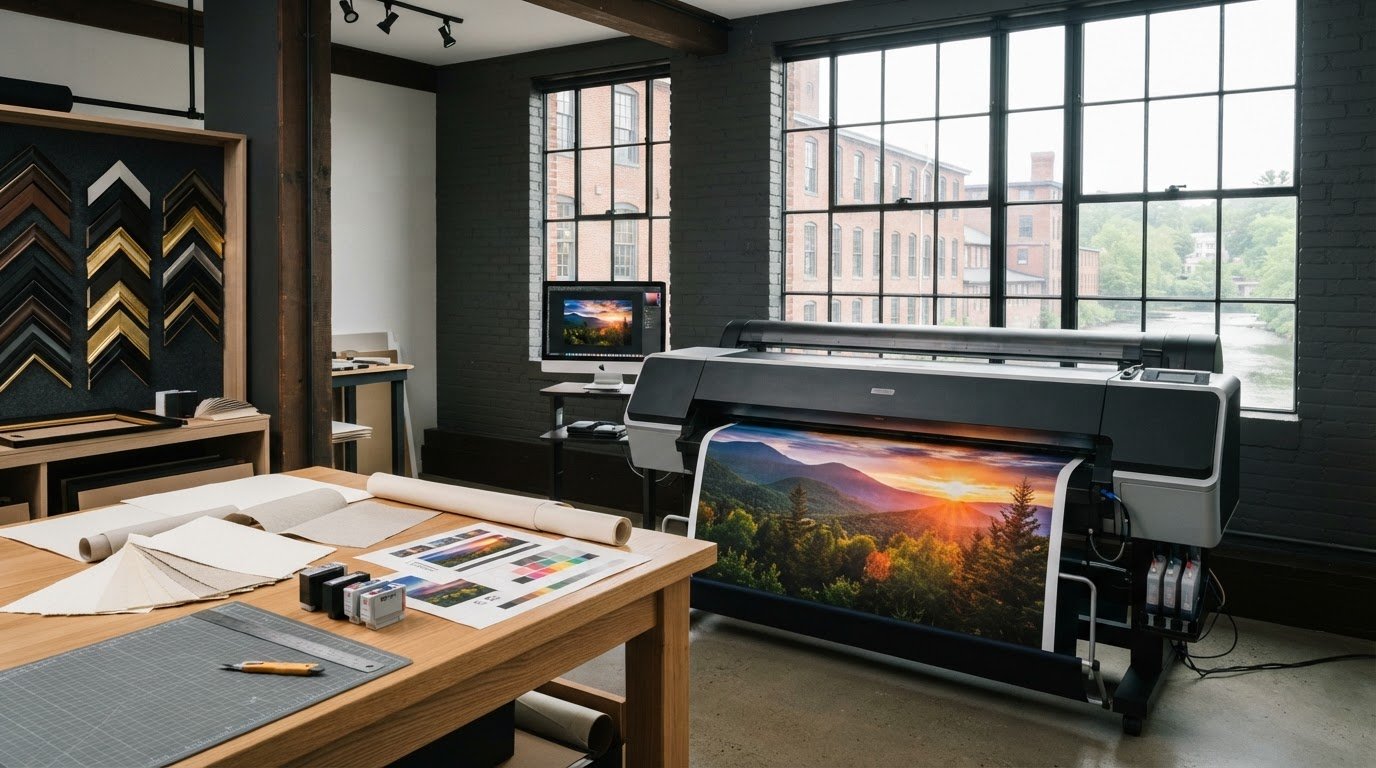
The strongest print projects start with a production-ready file, not a last-minute adjustment. For limited edition print services in Manchester, NH, prepare the final artwork, print dimensions, edition quantity, and finishing preferences before production. File format, resolution, color settings, and bleed can all affect the result.
It’s easy to focus on the image and leave production details until later, but those choices shape how faithfully the finished print represents the original. A clear plan helps match the artwork to the print method, scale, and presentation you want.
This guide explains what to prepare, how printing and canvas options differ, and which project details affect cost. You’ll also learn how quantity, file preparation, and finishing shape the process, so you can make informed decisions for a custom print project in Manchester, NH.
Key Takeaways
- Match the print method to the project: digital printing can suit shorter runs, while offset printing is often chosen for larger quantities and consistent color.
- Plan costs around the factors that shape production, including quantity, printing method, materials, and finishing; pricing is provided after a quote request.
- Choose canvas for a gallery-style presentation, and consider how the image’s color and detail will translate to the finished surface.
- Compare giclée, screen printing, and lithography by the look, production process, and edition needs you want to achieve.
- For fine art reproduction, Image-Tec offers giclée canvas prints up to 60 inches wide, custom framing, and BetterLight scanning.
Art canvas printing
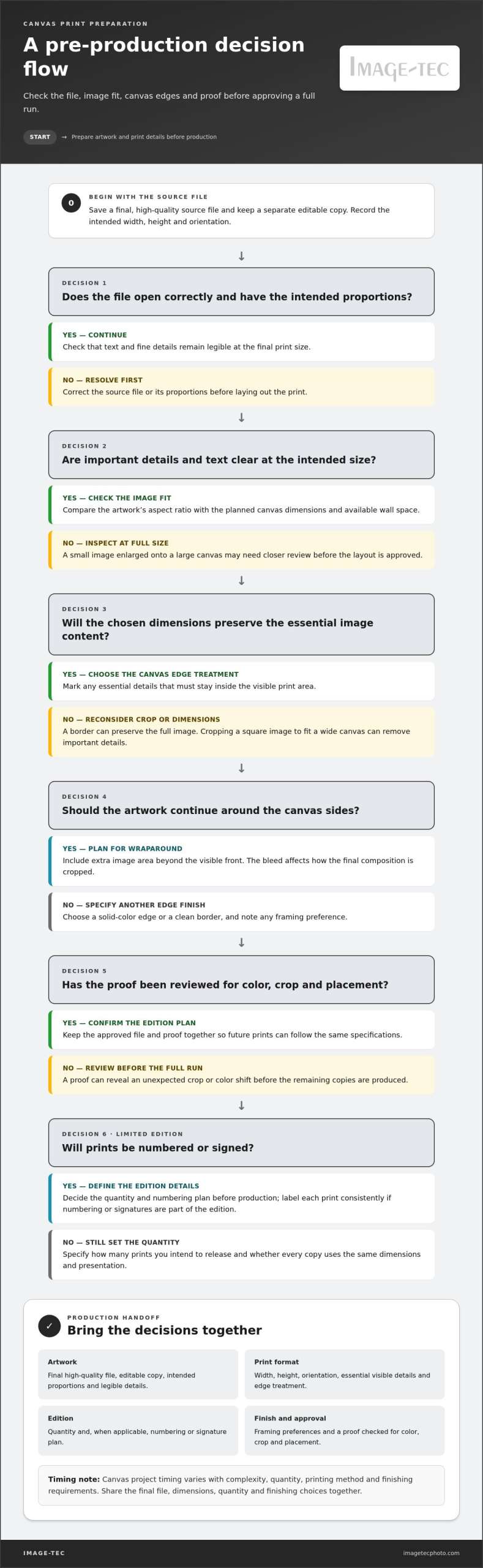
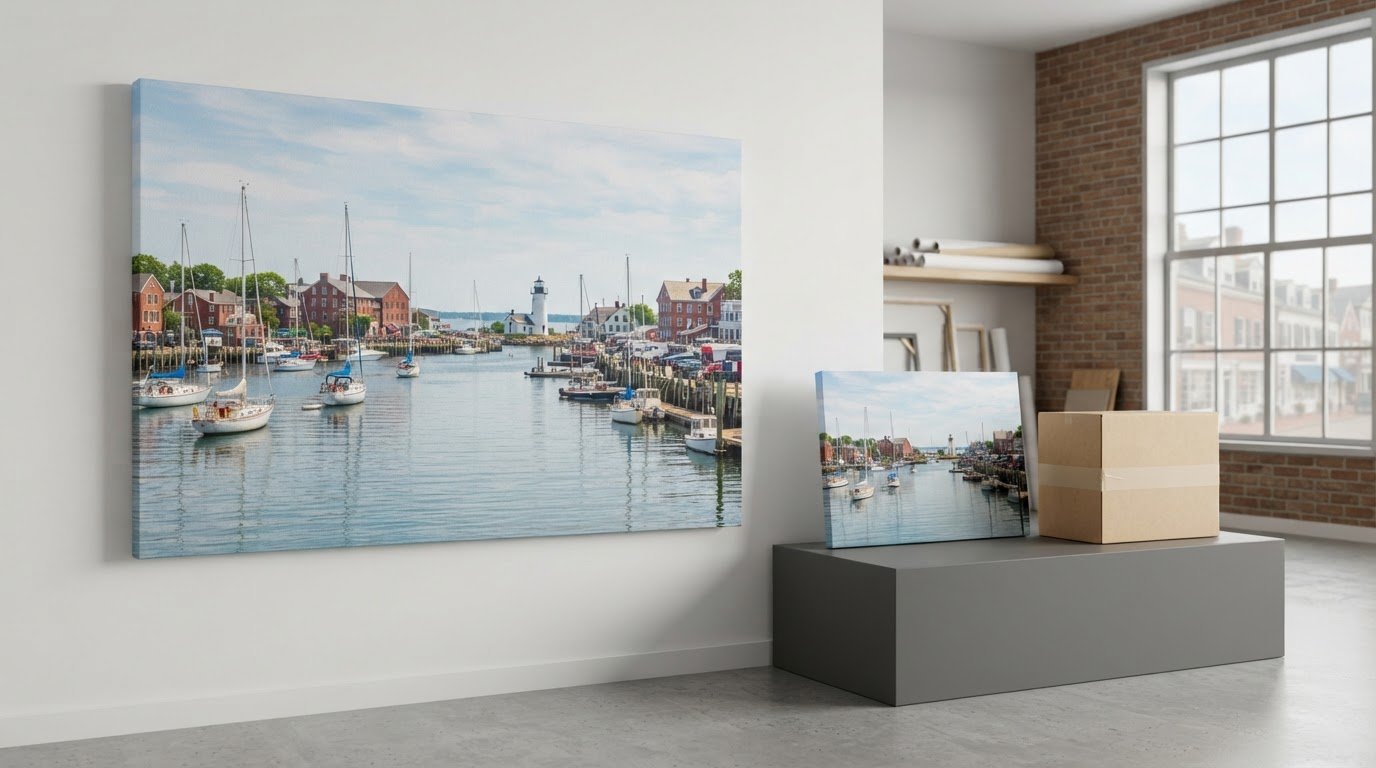
Canvas printing gives a digital image a textured surface and distinctive presentation. Before production, decide whether the artwork should fill the canvas edge to edge or leave a border for framing. A landscape designed to wrap around the sides, for example, needs extra image area beyond the visible front. That bleed affects how the final composition is cropped.
Start with the source file. File format, resolution, color settings, and bleed can affect print quality, so prepare them before production. A high-resolution photograph and a vector graphic behave differently when enlarged. Check that the file opens correctly, the artwork has the intended proportions, and text or fine details remain legible at the final size. If a small image is going on a large canvas, inspect it at full size before approving the layout.
Choose the finished dimensions to suit both the image and its display location. A panoramic photograph may work well in a wide format, while a portrait often calls for a taller composition. Measure the available wall space, then compare it with the artwork’s aspect ratio. Cropping a square image to fit a wide canvas can remove important details; a border can preserve the full image. Decide whether the canvas edges should continue the artwork, use a solid color, or have a clean border.
Use this preparation sequence to reduce avoidable revisions:
- Save a final, high-quality source file and keep a separate editable copy.
- Record the intended width and height, plus the desired orientation.
- Mark essential details that must remain inside the visible print area.
- Identify edge treatment and framing preferences before approving the layout.
- Review a proof for color, crop, and placement before the full run.
For a limited edition, decide on the quantity and numbering plan before production. Keep the master artwork unchanged after approval, and label each print consistently if numbering or signatures are part of the edition. A proof can reveal an unexpected crop or color shift before the remaining copies are produced. Keep the approved file and proof together so future prints can follow the same specifications.
Plan a realistic schedule for canvas projects. Timing varies with complexity, quantity, printing method, and finishing requirements. A single image with a straightforward crop needs different preparation from a set of graphics with separate layouts and framing. Share the final file, dimensions, quantity, and finishing choices together so the production team has the practical details needed to plan the work.
Printing costs
Printing costs depend on the method, quantity, image requirements, materials, and finishing. A custom art print on a particular paper or canvas, with careful color matching and framing, involves different production choices from an unframed print. For limited edition print services in Manchester, NH, describe the finished piece rather than asking only for a per-print price.
There is no single standard minimum order quantity for local art printing. Suitable edition sizes depend on the printing method, setup needs, and finishing choices. Decide how many prints you intend to release, then specify whether every copy needs the same dimensions and presentation.
Quantity can change which method makes sense. Digital printing is often suitable for shorter runs, variable-data projects, and quick-turnaround needs. Offset printing is frequently used for larger quantities where consistency and scale are priorities. It’s typically less expensive for larger quantities and often preferred when highly consistent color reproduction matters. Compare the total project, not just one print’s cost.
Several project details can shift the quote:
- Artwork preparation: File format, resolution, color settings, and bleed specifications can affect quality and preparation work.
- Print dimensions: A larger finished image requires a different production plan from a smaller one.
- Material: Paper and canvas have distinct surfaces and handling requirements.
- Finishing: Framing or other presentation choices add steps beyond printing.
- Quantity: The number of copies influences production planning and method selection.
For example, an edition of identical prints may use one approved file and a consistent specification. A series with different images, sizes, or color treatments needs separate preparation for each version. Describe those differences early, since an estimate based on one artwork may not cover the full production scope.
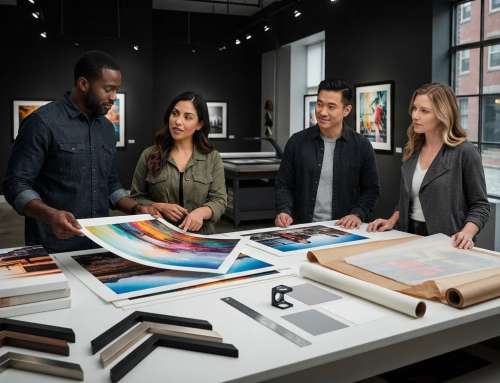
Prepare a clear brief before requesting a quote. Include the final image files, dimensions, edition quantity, material preference, framing needs, and delivery expectations. When comparing limited edition print services in Manchester, NH, these details define the production scope. If you are choosing between paper and canvas, include that in the brief because the material affects production and presentation.
For a custom print quote, provide those project details through the print studio’s website. The price depends on the case and is given after a quote request. Quantity, printing method, artwork preparation, material, dimensions, and finishing all affect the estimate.
Which print shops in Manchester, NH offer limited-edition art print services?
For a limited-edition art print in Manchester, choose a studio with fine-art reproduction experience rather than one focused only on office documents. The service should support a defined edition, consistent image production, and a finished format suited to the artwork. A painter reproducing a signed image, for example, needs different preparation from a business printing short-run flyers.
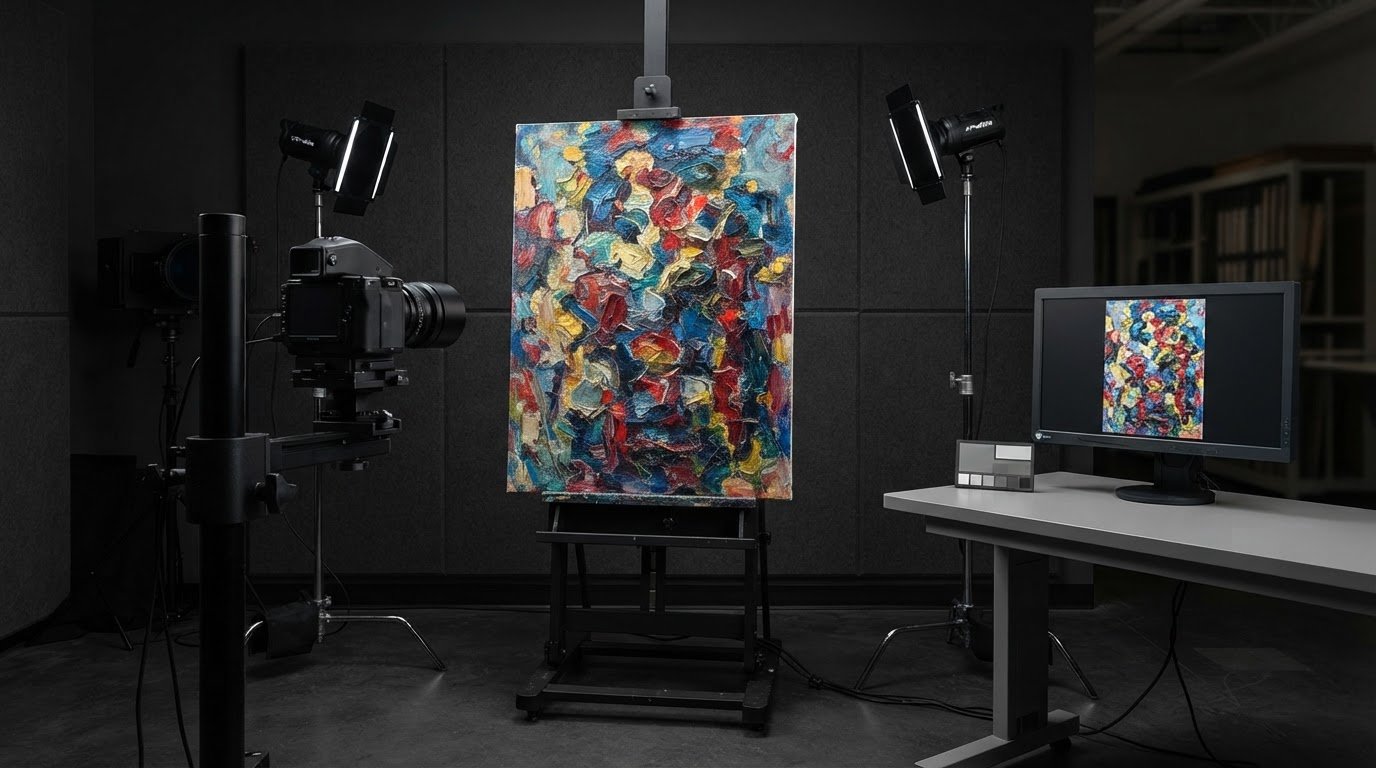
Start by identifying the work involved. A fine-art studio may handle image capture, color-managed reproduction, and printing on canvas. A general commercial printer may focus on brochures, signs, or promotional graphics. The categories can overlap, but the distinction matters when tonal range, texture, and precise cropping need to stay consistent across copies.
Use these practical criteria to match the service to your project:
- Artwork type: Identify whether you’re reproducing a painting, photograph, illustration, or mixed-media original.
- Print surface: Specify paper or canvas, plus the finished dimensions and orientation.
- Edition plan: State the number of copies and whether each print needs numbering or signing.
- Reproduction needs: Note whether the source is a digital file or a physical original requiring capture.
- Presentation: Include any framing requirements in the project description.
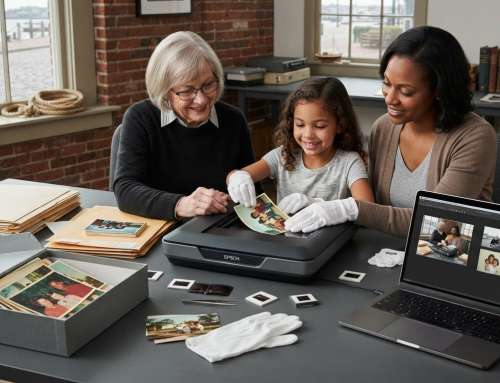
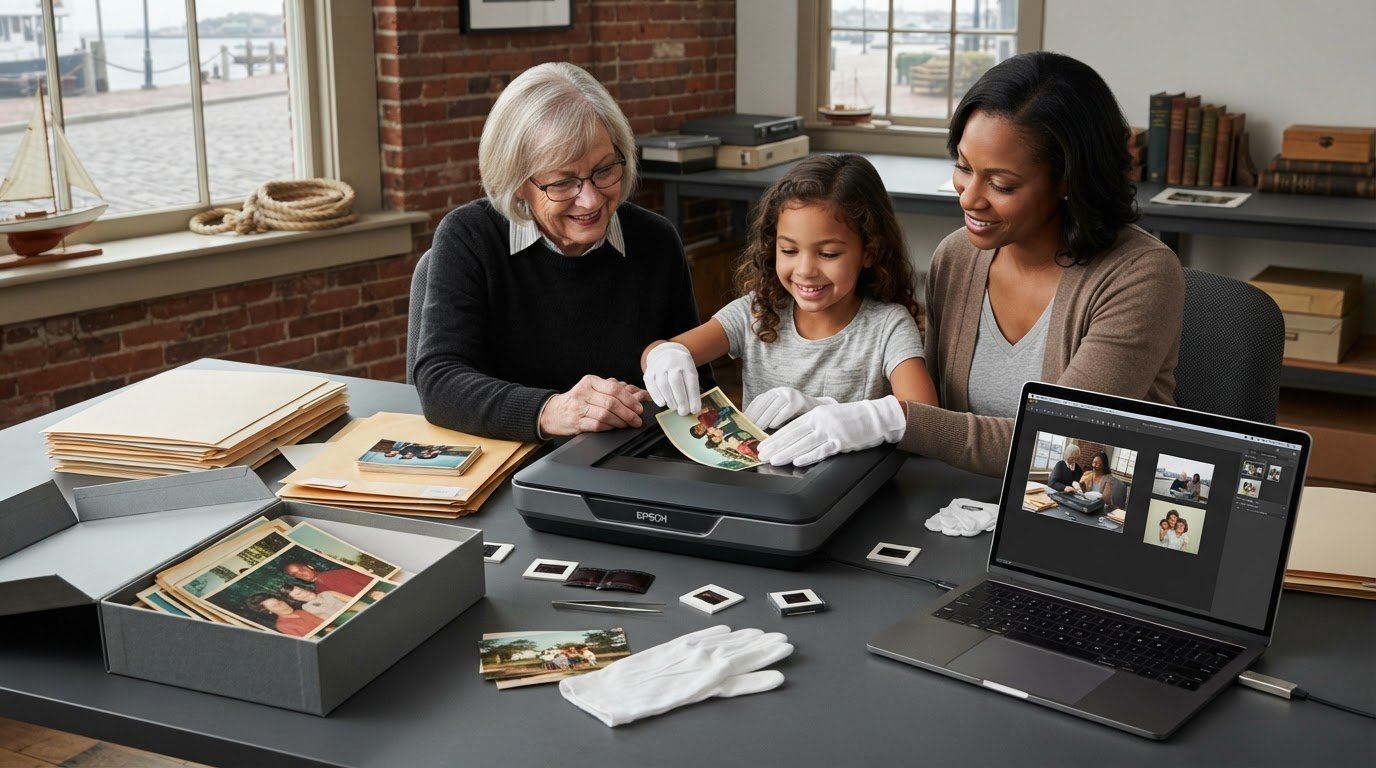
A photographer with a finished digital file may need print production alone. An artist with a physical painting may also need a high-quality digital capture before printing. An organization reproducing a collection may need several image files, each with its own crop and color treatment. Defining the workflow helps you find an art-print service suited to the work, rather than a shop focused on copying documents.
For a limited edition, prepare a production brief for each image. Include the final file, intended size, quantity, material, and finishing choices. Keep the approved proof with the brief, and use the same specifications if the edition is produced in stages. This gives you a consistent reference and reduces the risk of accidental changes between batches.
Manchester-area studios and print businesses have different production focuses, so start with your project requirements. A canvas reproduction with custom framing calls for different capabilities from standard paper copies. Match the work to the process, then compare the proposed workflow with your edition plan, source artwork, and desired presentation.
What limited-edition printing methods are available in Manchester, NH, such as giclée, screen printing, and lithography?
For a limited-edition art project in Manchester, compare giclée, screen printing, and lithography. Each produces images differently, so the artwork, desired surface, edition size, and color approach help determine the right fit. Digital printing can suit shorter runs, while offset printing is often used for larger quantities and consistent reproduction.
Giclée uses digital inkjet printing to reproduce artwork from a prepared image file. It can suit photographs, paintings, and illustrations with subtle tonal transitions. A landscape with soft skies, for example, may need smooth gradients and careful color handling. The result also depends on source-file resolution, color settings, and the selected print surface. Canvas is one option for a giclée reproduction.
Screen printing transfers ink through a mesh screen onto a surface. Each color generally requires its own screen, making the method suitable for artwork with distinct colors and defined shapes. A graphic with bold blocks of color can work well with layered passes. The number of colors and setup work affect production planning, especially for a short edition.
Lithography traditionally transfers an image from a prepared printing surface. Offset lithography uses an intermediate surface to transfer ink onto paper and is often chosen for larger quantities when consistency matters. A limited edition can use lithographic production, but the print run and setup needs should suit the process. Consider whether the artwork depends on fine tonal detail, strong color fields, or a particular print character.
Compare the methods with the artwork before setting the edition plan:
- Photograph or detailed painting: Consider giclée for reproducing nuanced tones from a digital file.
- Bold graphic with separate colors: Screen printing can support a layered, ink-based result.
- Larger, uniform run: Offset lithography may fit projects prioritizing scale and consistent color.
Before production, prepare the final image, print dimensions, quantity, and surface preference. Request a proof or sample when the project calls for close review of color and composition. For instance, compare a digital proof with the original artwork’s key colors before approving the full edition. Keep the approved file and production specifications together for consistent repeat batches.
The method also affects workflow and timing. Complexity, quantity, printing method, and finishing requirements all influence production time. A multi-color screen print has different setup steps from a digital giclée image. For a Manchester-area edition, define the artwork’s needs first, then match the process to its visual character and planned quantity.
What paper, canvas, and archival ink options do Manchester, NH print services offer?
Paper, canvas, and ink work together to shape an art print’s appearance. A soft watercolor reproduction, for example, may call for a surface that preserves delicate tonal transitions. A bold graphic may benefit from a smoother finish and stronger contrast. Choose materials based on the original artwork, viewing distance, display setting, and intended presentation.
Paper choices commonly vary in texture, sheen, and weight. Matte paper reduces reflections and can suit subdued artwork. A smoother, coated surface can make photographic details appear crisp. Textured paper may complement brushwork or a handmade look. These are general material characteristics, not guarantees of a particular result; the image file and print process also affect the finished appearance.
Canvas has a textured surface and a presentation often associated with gallery displays. Consider how the weave interacts with fine lines, small lettering, and smooth gradients. A detailed architectural image, for example, may need a close review to ensure thin lines remain clear. Decide whether the image should wrap around the edges or use a border, and account for that layout in the final artwork.
Ink selection matters too. The term “archival” signals an emphasis on lasting image quality, but it does not replace specific information about materials and care. Ask for the ink type and documented performance details relevant to the project. Protect prints from conditions that can damage artwork, and follow handling guidance for the selected surface.
Use these steps to narrow material choices:
- Match the subject: Compare matte paper, smooth paper, and canvas against the image’s detail and tonal range.
- Consider the display: A print near windows may face more light than artwork in a dim hallway.
- Review a proof: Inspect color, contrast, crop, and fine detail before approving an edition.
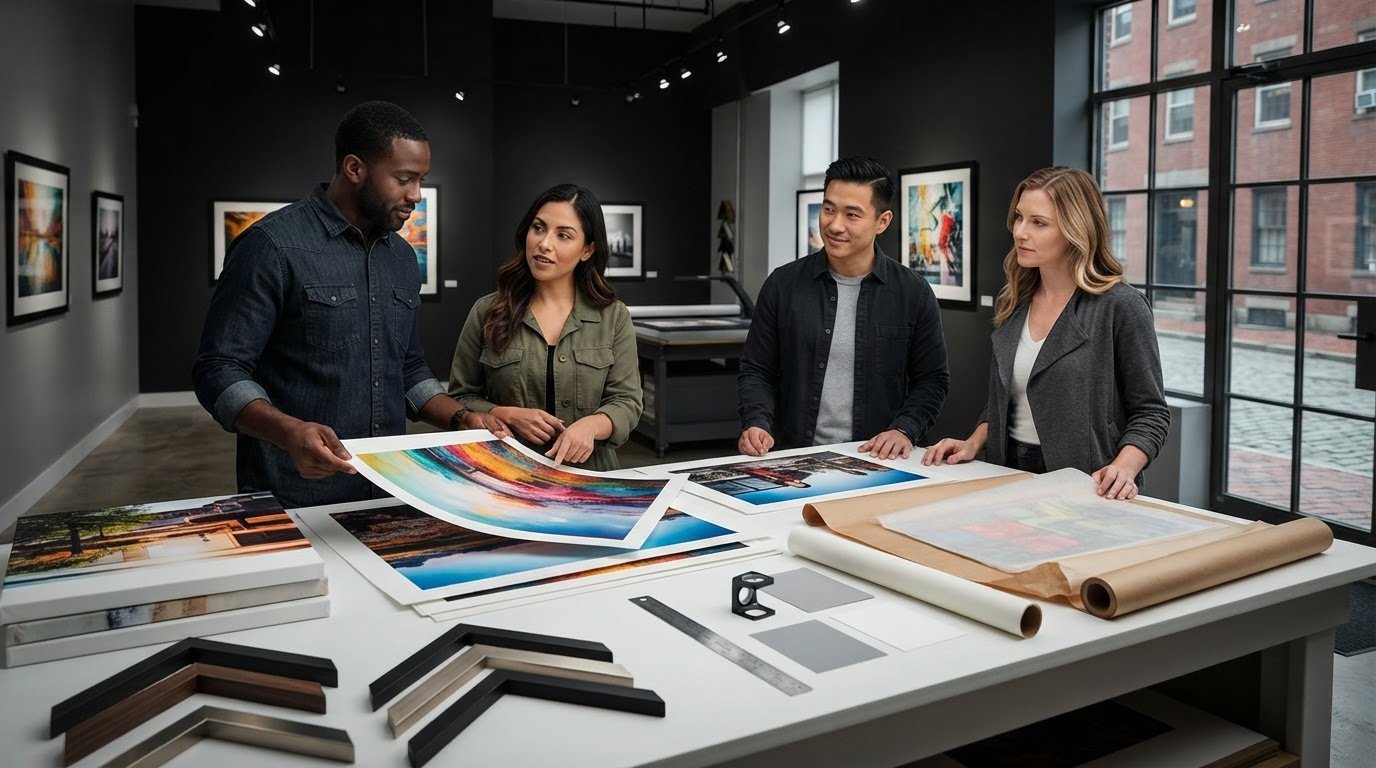
- Plan the finish: Decide on a border, edge treatment, or custom frame before finalizing dimensions.
A reproduction project can use giclée printing on canvas, with custom framing as a finishing option. The canvas print service supports finished widths up to 60 inches. Share the source image, dimensions, and preferred presentation so the material choice aligns with the artwork. A physical painting may also require accurate digital capture before printing.
For a canvas reproduction, plan your giclée print project around the artwork’s surface, scale, and framing needs. A considered material choice helps preserve the character of the image while giving the edition a consistent presentation.
Before choosing, ask the print provider which paper surfaces and canvas options are available for the specific project, and whether a proof can show how the image looks on the intended material. Check that fine details, color transitions, and edge placement remain clear at the planned display size. The standard letter-size paper used for UNH library printing measures 8.5 by 11 inches.
A familiar paper format can be a useful reference, but the best choice still depends on the artwork and presentation. Confirm the selected surface, ink, and finishing details before approving the print, and keep any care instructions with the artwork. These checks make the material decision deliberate rather than relying on a label alone.
Image-Tec: Giclee Printing Canvas prints up to 60″ wide & custom Framing
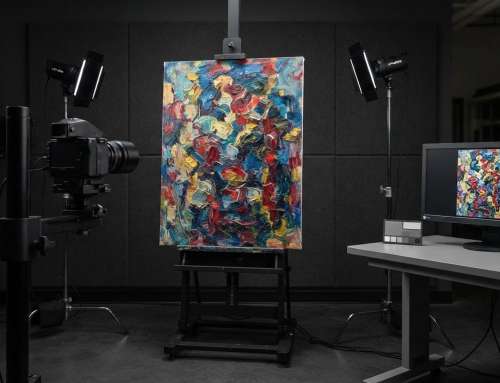
Image-Tec produces giclée canvas prints up to 60 inches wide and provides custom framing for artwork that needs a finished presentation. These services suit artists preparing a limited edition, photographers reproducing an image, or organizations producing art for display. For an original that needs digital capture before printing, BetterLight Scanning can support the reproduction workflow.
Prepare the artwork file, intended print dimensions, edition quantity, and framing preferences. If the source is a physical piece, note its medium and condition. These details help shape a practical production plan for your canvas project.
To discuss your print project, contact Image-Tec.
Take the Next Step With Your Artwork
Your next decision is how the finished edition should represent the original. Gather the artwork, preferred dimensions, edition plan, and presentation goals in one project brief before production. This gives the process a clear starting point and keeps the creative intent in view.
If you’re comparing limited-edition print services in Manchester, NH, Image-Tec can support the project with giclée canvas printing up to 60 inches wide, custom framing, and BetterLight scanning for artwork that needs digital capture. Commercial photography is also available for businesses preparing original visual assets.
Bring your project details together, including the source artwork and intended use. Contact Image-Tec about your print project to discuss a practical next step. With a defined brief and a clear presentation goal, you can move forward with confidence and give the artwork a considered finish.
Frequently Asked Questions
What should I prepare before starting a custom print project?
Prepare the final artwork, describe the intended result, and create a project brief. Include the image title, desired dimensions, edition quantity, surface preference, and presentation plan. For a series, label each artwork file consistently and note differences between images. If you are reproducing a physical original, identify its medium and condition. Keeping these details together helps the production team understand the work before preparing it for print.
How much do limited-edition art prints cost at print shops in Manchester, NH?
The price depends on the project and is provided after a quote request. Cost factors include quantity, method, dimensions, artwork preparation, material, and finishing. A canvas edition with framing, for example, involves different production steps from unframed paper prints. Describe the complete project in your quote request, including whether the edition contains one image or several. This helps define the scope and compare production plans accurately.
What file formats, resolution, and color profiles do local printers require?
File requirements depend on the artwork and finished print dimensions. Provide the highest-quality source file available, along with its pixel dimensions and intended output size. Include the color profile if one is embedded, and identify any graphics or text that must remain sharp. A small image enlarged for a large canvas, for example, may lose detail. A physical original can instead be digitized for reproduction using BetterLight™ scanning.
Which local print services offer framing, packaging, shipping, or pickup?
Image-Tec provides custom framing with giclée canvas printing and fine-art reproduction services. For a Manchester-area project, include your framing choice and finished dimensions in the production plan. Packing, shipping, and pickup are separate logistics from print and frame selection, so outline the intended handoff and destination with the project details. This keeps the artwork’s presentation and handling needs clear from the outset.
How long does limited-edition print production take in Manchester, NH?
Production timing varies with project complexity, quantity, printing method, and finishing requirements. Share the final file, dimensions, quantity, and finishing choices so the production team can plan the work.


Leave A Comment
You must be logged in to post a comment.