
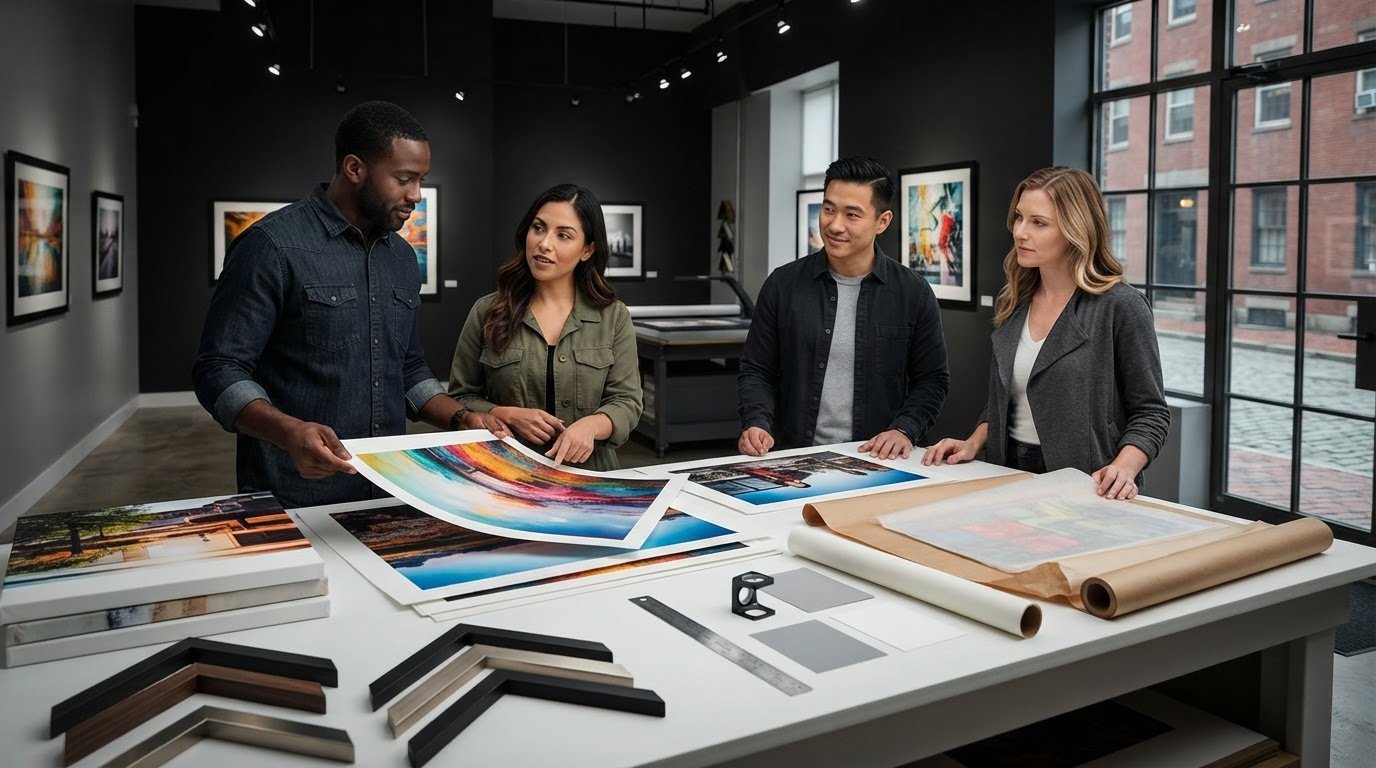
A print budget depends on production choices, not just the exhibition date. For art gallery printing services in Boston, plan around print size, paper or canvas, image preparation, quantity, and framing. The estimate reflects those requirements. Build collection time into the schedule so the finished prints are ready when you need them.
It’s easy to focus on the print and overlook decisions that affect the overall project and schedule. A clear plan helps you compare formats, set a realistic release date, and arrange collection of the finished work.
This guide explains how to plan printing costs, choose production details that suit the artwork, and coordinate proofing, release, and collection. You’ll also learn how fine-art printing, scanning, and custom framing can fit into a gallery project, so you can plan each step with greater confidence.
Key Takeaways
- Build your print budget around format, dimensions, materials, image preparation, quantity, and framing rather than relying on a single per-print estimate.
- Set your release date by mapping the production sequence, including file preparation, proof review, printing, finishing, and collection.
- Prepare artwork files with the final print dimensions and intended color handling in mind to reduce avoidable adjustments during production.
- Plan collection logistics alongside your gallery location, considering the finished prints’ size, packaging, and how they’ll be transported.
- For artwork that needs fine art reproduction, canvas printing, scanning, or custom framing, match the production approach to the piece and exhibition plan.
Printing costs
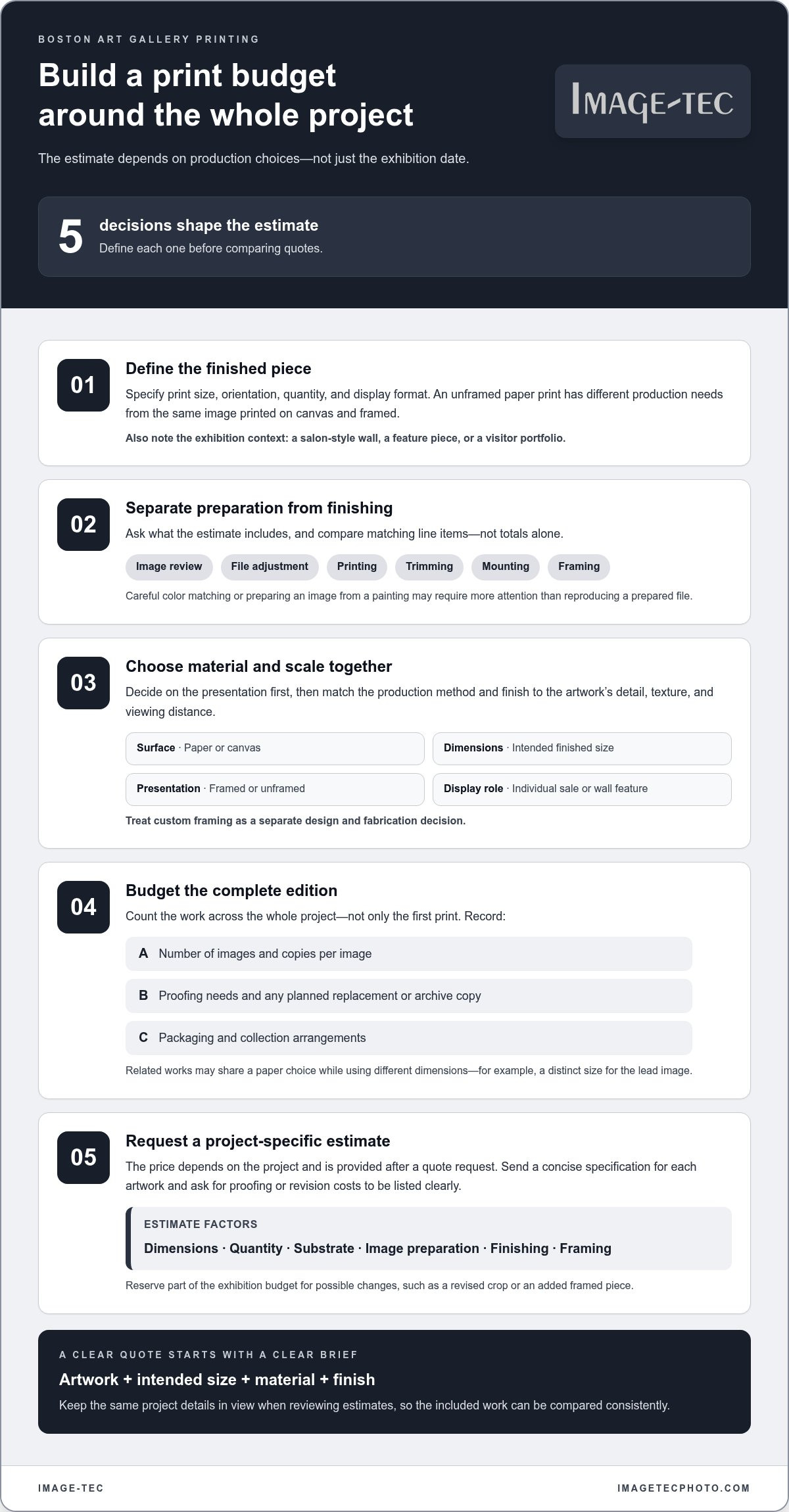
- Define the finished piece before comparing quotes. Record the intended print size, orientation, quantity, and display format. An unframed paper print differs from the same image reproduced on canvas and framed. Note the exhibition context, such as a salon-style wall, a large feature piece, or a portfolio for visitors. These choices determine what the production estimate should cover. Changing the display format after requesting an estimate may affect materials and finishing. A clear project description gives every estimate the same starting point.
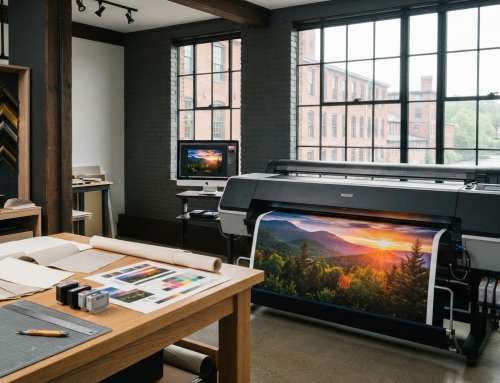
- Separate printing from preparation and finishing. Ask the estimate to identify the work included, such as image review, file adjustment, printing, trimming, mounting, or framing. These are distinct production tasks. If a painting needs careful color matching, file preparation may require more attention than reproducing a prepared image. Canvas and fine-art prints also involve different materials and finishing choices. List the services needed for each artwork, then compare estimates by matching those line items, not just the total.
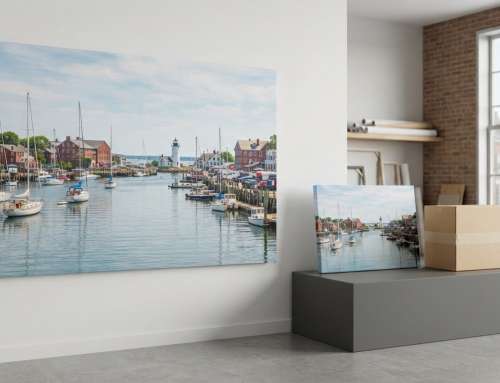
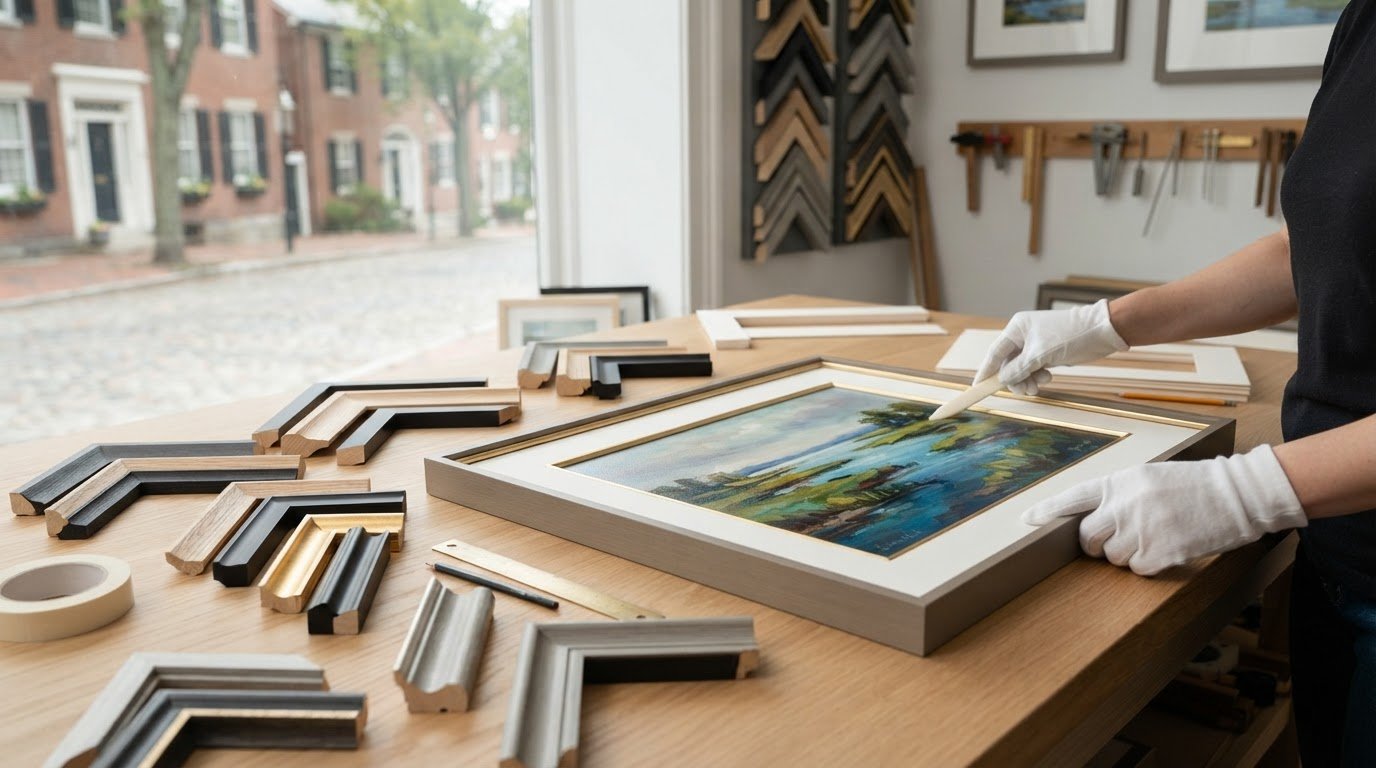
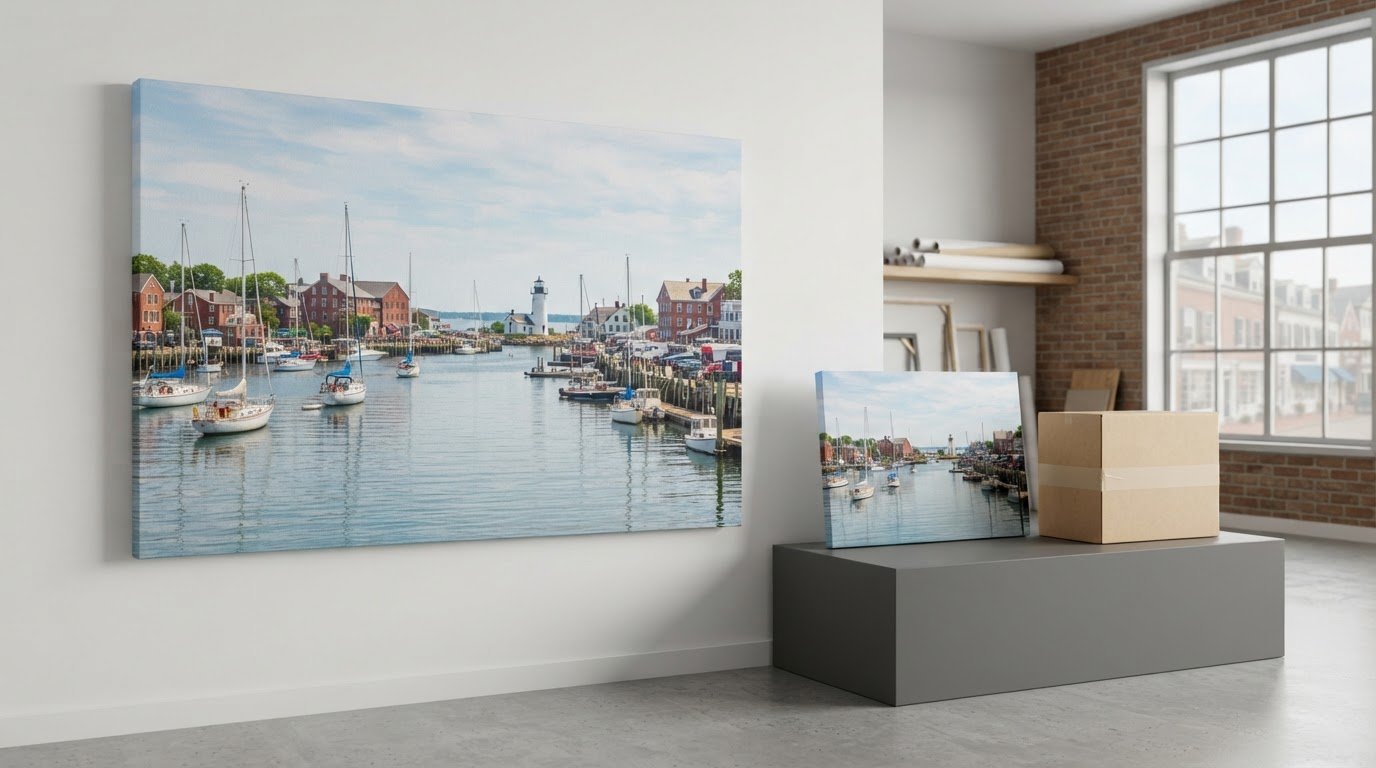
- Make material and scale decisions together. Paper surface, canvas, print dimensions, and frame selection each affect the project, so decide on the intended presentation first. A small edition may be planned for individual sale, while a large canvas might anchor the gallery wall. The production method and finish should suit the artwork’s detail, texture, and viewing distance. Include custom framing in the budget as a separate design and fabrication decision. For canvas printing, specify the finished dimensions and whether framing is part of the presentation.
- Budget the complete edition, not only the first print. Record the number of images, copies per image, proofing needs, and any replacement or archive copy you plan to produce. A series with several artworks may require separate preparation for each image, even when the prints share a format. Grouping related works in one project clarifies which choices are consistent and which vary. For example, an exhibition might use the same paper throughout but different dimensions for its lead image. Include packaging and collection in the project plan.
- Request a project-specific estimate and keep a decision buffer. The price depends on the project and is provided after a quote request. Key factors include dimensions, quantity, substrate, image preparation, finishing, and framing. Send a concise specification naming each artwork, intended size, material, and finish. Ask for proofing or revision costs to be listed clearly. Then reserve part of the exhibition budget for changes, such as a revised crop or an added framed piece. This keeps production choices visible and helps account for the project’s full needs.
What are the turnaround times for art printing in Boston?
- Work backward from the gallery’s public opening. Use the exhibition date as the final deadline, then set earlier milestones for installation, collection, final approval, and file delivery. Boston Printmakers’ 2026 North American Print Biennial is scheduled at Boston University’s 808 Gallery from September 2 to November 21, 2026. That public schedule shows why an opening date alone is not enough: prints must be ready for installation beforehand. Create a calendar with each handoff clearly dated, and leave room for review before the work leaves production.
- Separate production stages in your schedule. List image preparation, proof review, printing, finishing, and packaging as distinct milestones. A file that needs cropping or tonal adjustment requires decisions before the final print can proceed. A proof provides a review point: record who approves it and how feedback will be consolidated. For a gallery series, track each image separately while keeping shared approvals together. This makes it easier to spot whether an unresolved image could delay the exhibition set.
- Resolve artwork decisions before production begins. Final dimensions, crop, substrate, and finish can affect setup and production order. If a framed print needs a different presentation from an unframed work, settle that before setting the production calendar. For example, a change to an approved crop may require another review. Keep final artwork files, captions, and edition details organized in one delivery package. Clear approvals help prevent pauses caused by missing instructions or late changes.
- Coordinate the print schedule with the exhibition’s actual dates. Boston University Art Galleries lists Between the Bylines at Stone Gallery from September 2 to December 10, 2026. Treat its opening date as a public milestone, not the production deadline. Build backward from the gallery’s installation plan, allowing time for the prints to be received, inspected, and arranged. For a traveling or multi-location exhibition, plan around the first required delivery rather than the final show date. A collection plan should identify the receiving person and intended delivery point.
- Keep collection and release logistics in the timeline. Finished prints still need to be packed, transported, and received before display. Record who will collect the work, where it will go, and whether each piece needs protective packaging or framing before installation. A large canvas or framed series may need different handling and vehicle space than a compact portfolio. Check the edition list against the packed work, then note any pieces held back for later release. This final check helps the gallery team prepare labels, inventory, and display locations without rushing.
What file formats, resolution, and color profiles do Boston art printers require?
- Prepare a master file and a production copy. Keep the original artwork file untouched and create a separate copy for print preparation. TIFF files can preserve image detail, while JPEG files are convenient but may use compression. A layered Photoshop file can retain editable adjustments, and a print-ready PDF can preserve page dimensions and embedded elements. The right format depends on the image and production workflow. A flattened reproduction, for example, may need a different handoff from a layered file that still needs adjustments.
- Match image dimensions to the intended print size. Resolution describes how much image information is available across the printed area. A file that looks sharp on screen may look soft when enlarged. Before exporting, set the document to the artwork’s intended dimensions and inspect fine details at a realistic print scale. Enlarging a small scan substantially can reveal blurred edges, brushwork, or texture. A larger source image generally gives more flexibility for a larger print, while cropping reduces the image area available.
- Keep the original color profile attached. A color profile describes how a device or file represents color. Common working spaces include sRGB and Adobe RGB, while print workflows may use a printer-specific output profile. Converting profiles changes how colors are mapped, so avoid repeated conversions between applications. A saturated blue on a monitor, for example, can shift in print. Preserve the embedded profile in the master file and note any intentional color adjustments.
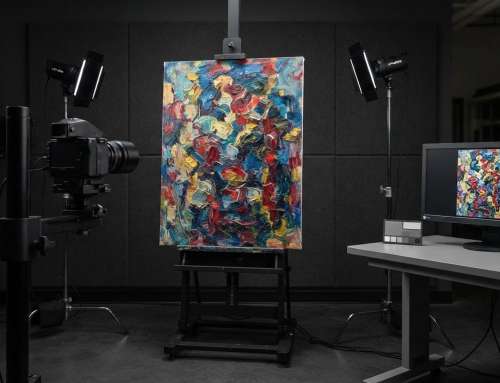
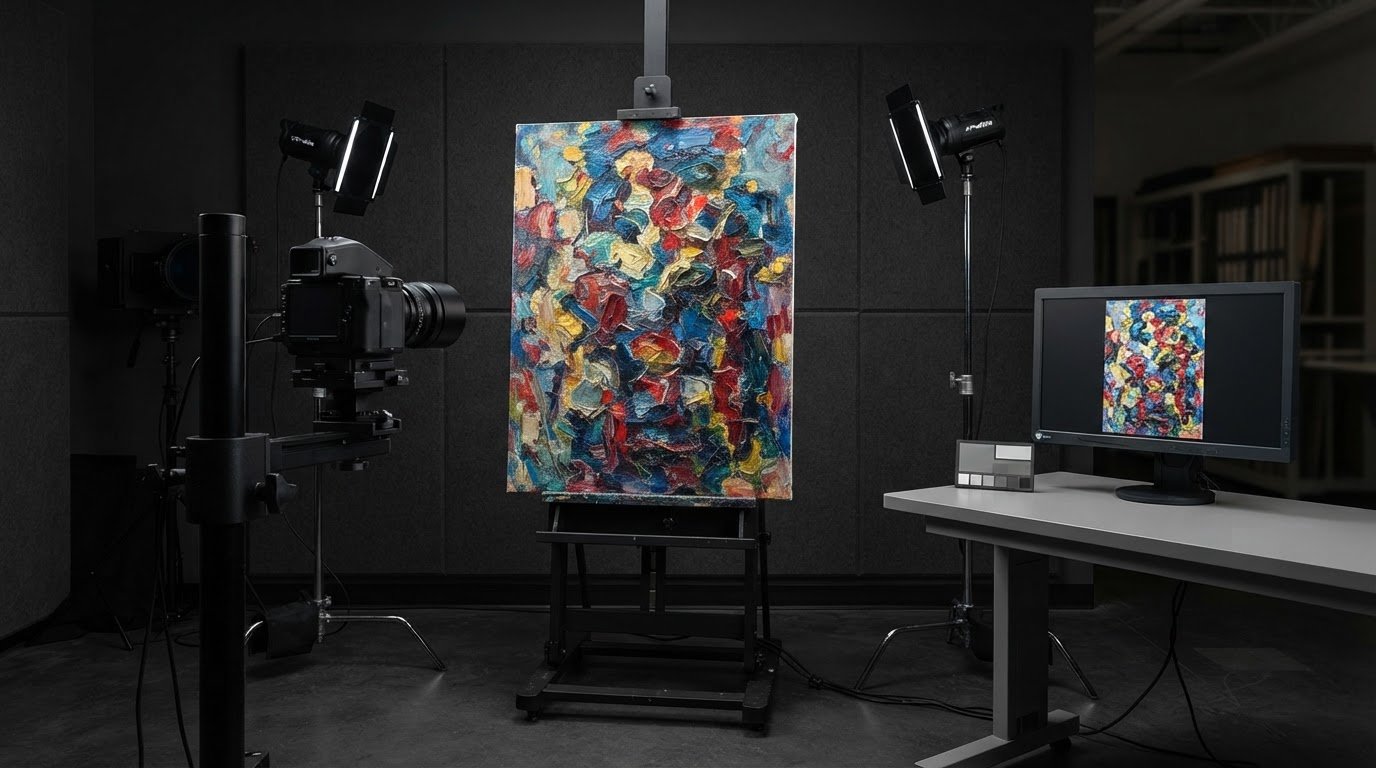
- Prepare color references for artwork reproduction. A digital photograph or scan interprets the original; it does not capture every pigment and surface neutrally. Include a reference image made under even lighting and identify colors or tonal areas that matter most. For a painting with deep shadow or subtle paper texture, mention those details during proof review. Consistent viewing conditions matter too: compare the proof and artwork under similar lighting instead of judging color on a bright phone display.
- Package files with clear names and written specifications. Use a folder for each artwork, then label files with the title, version, and intended output. A practical filename might distinguish “HarborStudy_Master” from “HarborStudy_Print.” Include final dimensions, crop direction, material, and border requirements in a short production note. Keep linked fonts and placed images available when delivering a layout file. This organization helps prevent an old revision from being printed and keeps the approved file separate from drafts.
- Review a proof before approving the full run. Check crop, sharpness, tonal range, and color balance against the original artwork. Inspect fine lines, small lettering, and gradients closely, as these details can reveal file problems. If the image appears soft, return to the source file rather than applying excessive sharpening. If the color looks wrong, identify whether the issue comes from the file, profile conversion, or viewing light. Record approved changes in one consolidated note so the final production file reflects a clear decision.
Where are art printing services located near Boston galleries and art districts?
- Map the exhibition venue before planning print collection. Boston University Art Galleries has two primary exhibition spaces: 808 Gallery at 808 Commonwealth Ave. and Stone Gallery on the first floor of 855 Commonwealth Ave. These addresses help you identify where the artwork will be displayed, but a gallery address and a print-production location serve different purposes. Put the exhibition venue and the collection point on your project map. Then plan transport between them, including who receives the prints and where they go before installation.
- Use the gallery address that matches your exhibition. Boston University Art Galleries lists its contact address as 855 Commonwealth Ave., Boston, MA 02215. Stone Gallery is on the first floor of that address, while 808 Gallery is at 808 Commonwealth Ave. The two spaces are distinct, so avoid using the general contact address as the delivery destination without matching it to your show. Add the gallery name, street address, receiving contact, and delivery instructions to your schedule. That information helps prevent prints from reaching the wrong venue.
- Plan around public access hours, not only the map. Boston University Art Galleries is open Tuesday through Saturday from 11am to 5pm and is free and open to the public. Those are visitor hours, not a delivery appointment or installation schedule. Use them to plan a gallery visit or inspect the exhibition space, then coordinate print arrival separately with the people managing the show. For example, a print collection trip during public hours may not match the gallery’s installation needs. Keep visitor access and artwork handling as separate logistics.
- Match the print route to the exhibition’s dates and location. The Boston Printmakers 2026 North American Print Biennial is scheduled at Boston University’s 808 Gallery from September 2 to November 21, 2026. Between the Bylines is scheduled at Stone Gallery from September 2 to December 10, 2026. These examples show why the exact gallery matters: the venues and exhibition schedules differ. Put the correct site and show dates on the delivery plan, then work backward from the required installation date. A calendar listing does not replace specific receiving arrangements.
- Choose a collection plan based on the finished work. Compare the print’s dimensions and finish with the vehicle, route, and gallery access available for collection. A flat paper print, a large canvas, and a framed piece each need different protection during transport. Confirm which person will collect the work and where it will be taken, whether directly to the gallery or to a separate preparation space. If you’re attending an exhibition at 808 Gallery or Stone Gallery, combine a visit with a route check, but keep pickup timing separate from public visiting hours.
Image-Tec: Giclee Printing Canvas prints up to 60″ wide & custom Framing
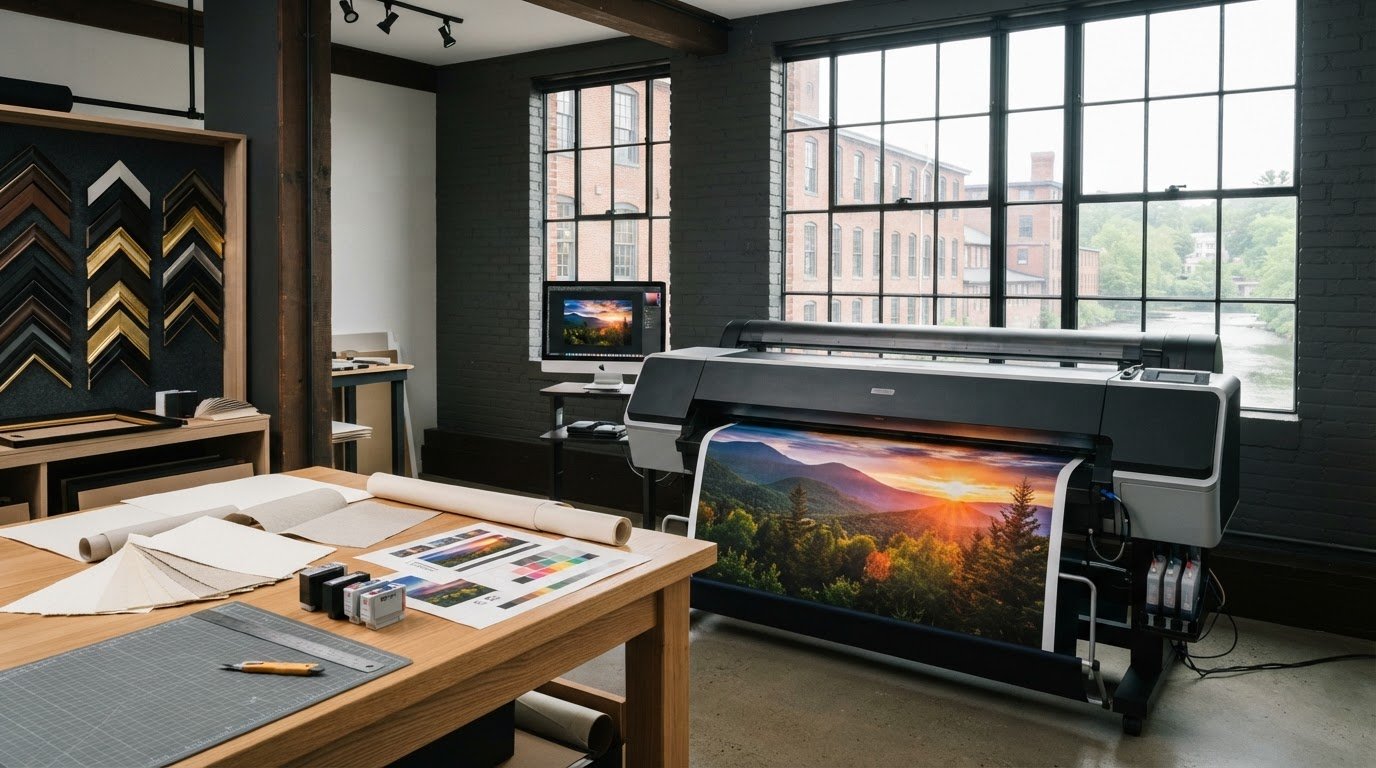
Image-Tec can help turn exhibition artwork into finished prints through Giclée printing, canvas prints up to 60 inches wide, and custom framing. For artwork that needs a digital source, BetterLight scanning supports the reproduction workflow. These options are useful when you’re preparing original work for display, producing a coordinated print series, or planning framed pieces for a gallery wall.
Bring your intended print dimensions, artwork files, and exhibition requirements to the discussion. These details help align reproduction and finishing choices with how each piece will be displayed. If you’re planning art gallery printing services in Boston, Image-Tec provides fine-art reproduction, Giclée printing, and custom framing to help bring the project together.
Contact Image-Tec to discuss your gallery print project.
Set your next exhibition up for success
Your next step is to turn the exhibition concept into a production brief. Decide which works need reproduction, how each should be presented, and what role the prints will play in the gallery. That creative direction gives the production conversation a clear purpose, whether you’re preparing a single centerpiece or a coordinated body of work.
For art gallery printing services in Boston, Image-Tec brings together Giclée printing, canvas prints up to 60 inches wide, custom framing, and BetterLight scanning. Commercial photography can also support visual content connected to a gallery project. These capabilities are useful when artwork needs careful digital capture, a finished print format, or a considered presentation for display.
Share the artwork and exhibition goals to start shaping the project. Contact Image-Tec to discuss your prints, and take the next step toward presenting your work with intention.
Frequently Asked Questions
What types of art printing do Boston galleries provide?
Boston galleries exhibit a range of printmaking, but exhibition venues don’t necessarily produce prints themselves. Works may include etching, lithography, woodcut, linocut, screenprint, digital printmaking, and dimensional pieces. If you’re preparing an exhibition, distinguish original printmaking from reproductions of existing artwork. That helps define whether you need a printmaker’s process or a fine-art reproduction service.
Do Boston art galleries offer giclée or archival fine-art printing?
Giclée and archival fine-art printing are available through fine-art reproduction studios, while a gallery may focus on exhibiting or selling work. Giclée printing can reproduce an existing image on canvas, fine-art paper, and other archival papers. For a Boston exhibition, consider the artwork’s surface and intended presentation when choosing media. A painter seeking a reproduction may prioritize texture, while a photographic work may call for a smoother finish.
How much do art printing services cost in Boston?
Printing costs depend on the project and are provided after a quote request. The estimate reflects print dimensions, quantity, material, image preparation, finishing, and framing. A single unframed reproduction and a multi-image exhibition with custom finishing have different production requirements. To make the estimate useful, prepare a list of images, intended sizes, and presentation choices. This gives the production team clear details for the quote.
Do Boston art galleries provide framing, mounting, or canvas printing?
Some galleries coordinate presentation services, while others exhibit finished work without providing printing or framing. Image-Tec offers custom framing and canvas printing as part of its fine-art services. For a gallery installation, decide whether each piece needs a frame, mounted presentation, or canvas before production begins. Align that choice with the display plan, since frame depth, hanging hardware, and surface finish affect installation.


Leave A Comment
You must be logged in to post a comment.