
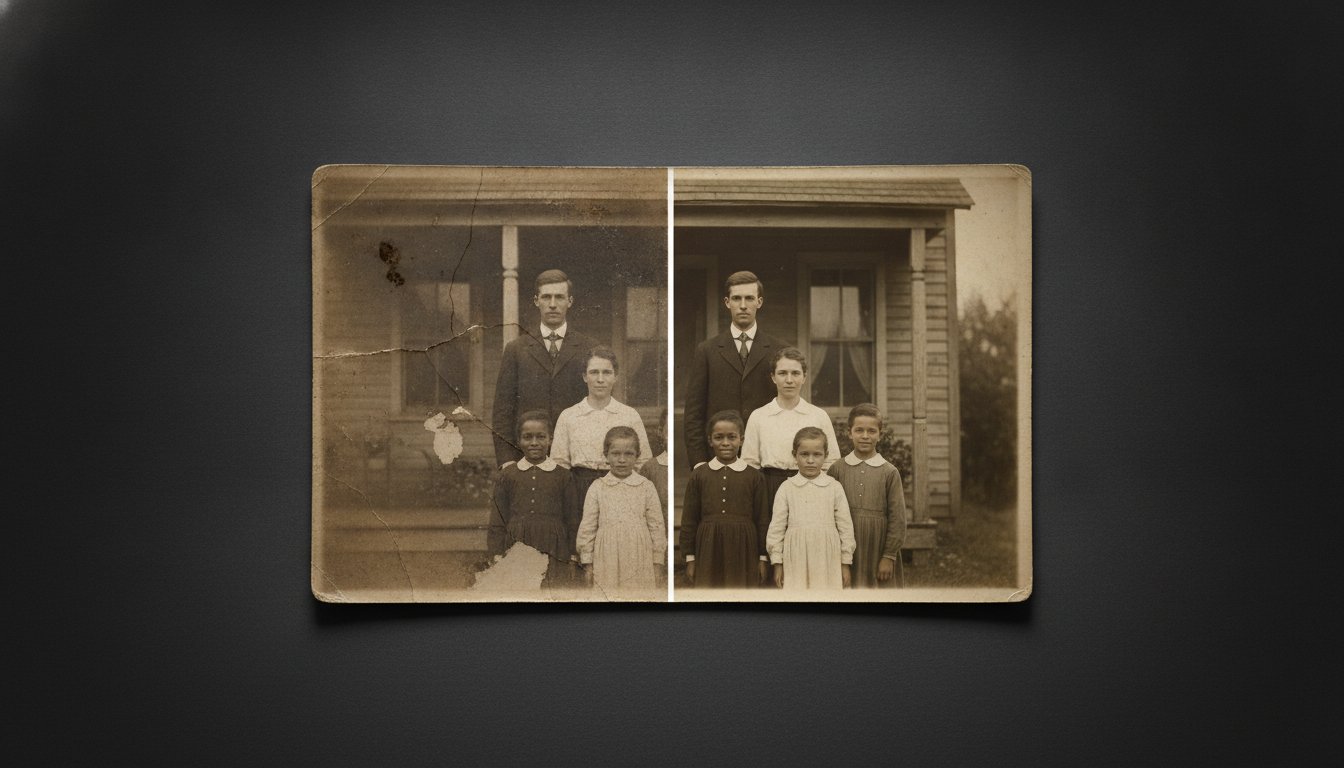
Imagine finding the only surviving portrait of a great-grandparent, only to see that time has turned their features into a pale, indistinct shadow. It’s a common fear for many families in the New England area who realize their physical history is slowly dissolving. You might feel tempted to try a quick mobile app or a basic home scanner, but these automated filters often strip away the character of the original image. To successfully restore faded photographs, one must balance sophisticated technical equipment with the steady hand of an artist who understands historical chemistry and light.
You deserve a result that feels authentic rather than artificial. In this guide, we’ll explain the precision required to bring these memories back to life using professional BetterLight scanning and archival techniques. We will walk through the specialized restoration process, offer practical advice for long-term preservation, and help you identify the expertise needed from a local Methuen studio to ensure your family’s legacy remains vivid for the next century. Understanding the difference between a simple copy and a true restoration is the first step in protecting your irreplaceable historical records.
Key Takeaways
- Identify the primary environmental and chemical causes of image degradation, from UV exposure to the breakdown of organic dyes.
- Understand the technical precision required to restore faded photographs using professional BetterLight scanning and meticulous digital cleaning.
- Compare the risks of automated AI filters that invent details against the historical accuracy maintained by a seasoned restoration expert.
- Learn to assess your collection for critical “red flags,” such as active mold or brittle edges, that require immediate professional intervention.
- Discover how archival Giclée printing and custom framing transform a digital file into a physical heirloom designed to last for generations.
Why Do Photographs Fade and Is the Damage Permanent?
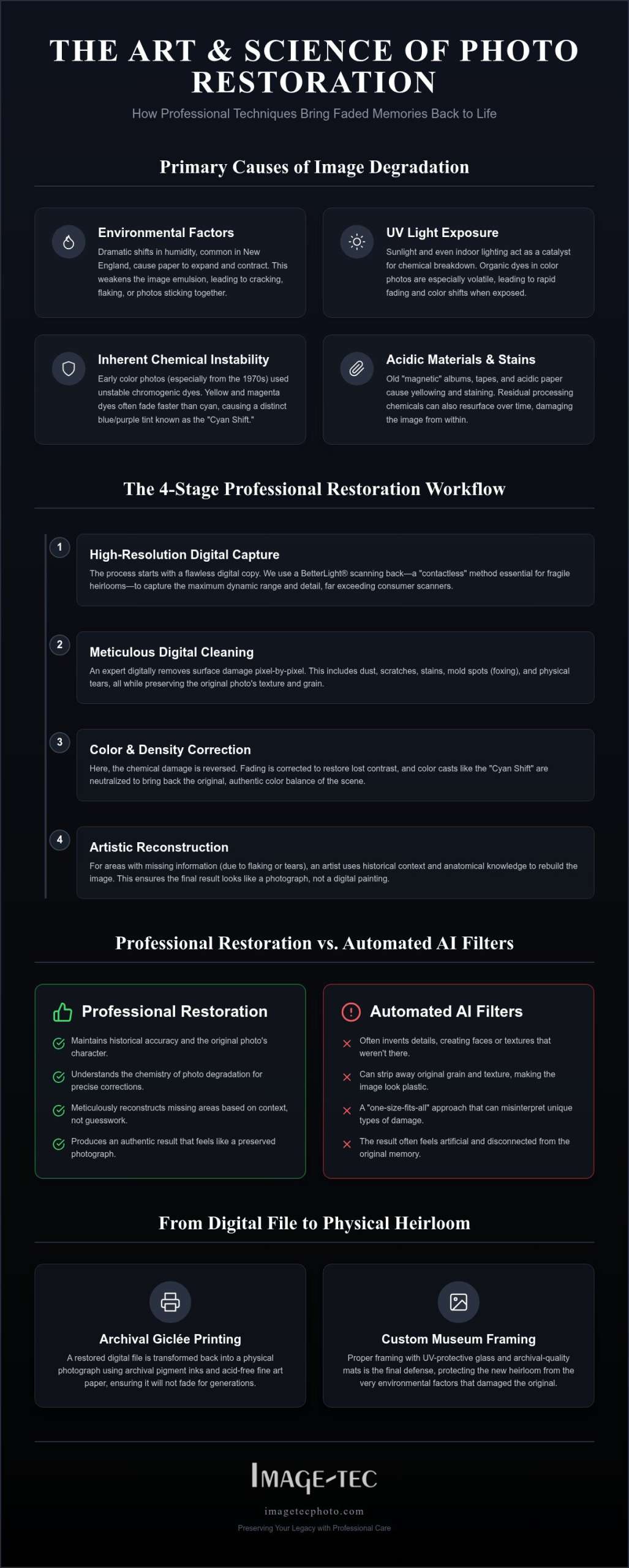
Photographic images aren’t static objects; they’re the result of complex chemical reactions that remain sensitive to their environment long after the shutter clicks. To restore faded photographs effectively, one must first identify which chemical component is failing. Silver halide, used in traditional black and white prints, is remarkably resilient but remains susceptible to sulfur and oxidation. In contrast, the organic dyes found in color prints are far more volatile and prone to rapid degradation when exposed to the elements.
Fading typically refers to a loss of image density where the highlights disappear first, making the image look washed out. Staining often results from residual processing chemicals or contact with acidic adhesives in old “magnetic” albums. Foxing appears as small, rust-colored spots caused by fungal growth or metallic impurities in the paper fibers. Understanding these distinctions is a core part of the Conservation and restoration of photographs, as each type of damage requires a different digital approach to correct.
The “point of no return” occurs when the emulsion begins to flake or “alligator.” Once the physical surface of the photo starts to crumble or liquefy due to advanced mold, digital capture becomes significantly more difficult. At this stage, professional intervention is mandatory to stabilize the image before the visual data is lost forever. While digital tools can do wonders, they rely on having enough remaining data to reconstruct the scene.
The Role of Environmental Factors in New England
New England’s climate presents unique challenges for historical preservation. The dramatic shifts in seasonal humidity cause paper fibers to expand and contract, which eventually weakens the emulsion’s bond to the base. Storing heirlooms in uninsulated attics or damp basements accelerates this process, often leading to “blocking” where photos stick together in a solid mass. Archival stability refers to the capacity of a photographic material to remain chemically and physically intact without significant change over a long duration.
Chemical Instability in 20th Century Color Prints
It’s a common surprise to find that a tintype from 1860 looks clearer than a family snapshot from 1975. This is because early color photography relied on chromogenic dyes that are inherently unstable. Over time, yellow and magenta dyes often dissipate faster than cyan, leading to a dramatic color cast known as the “Cyan Shift.” This results in the familiar orange or purple tint seen in aging albums. Professional techniques can often reverse these shifts to restore faded photographs to their original color balance. Instant films and early inkjet experiments are even more fragile, as their chemical layers weren’t designed for multi-generational longevity.
The Technical Process of a Vintage Image Restoration Professional
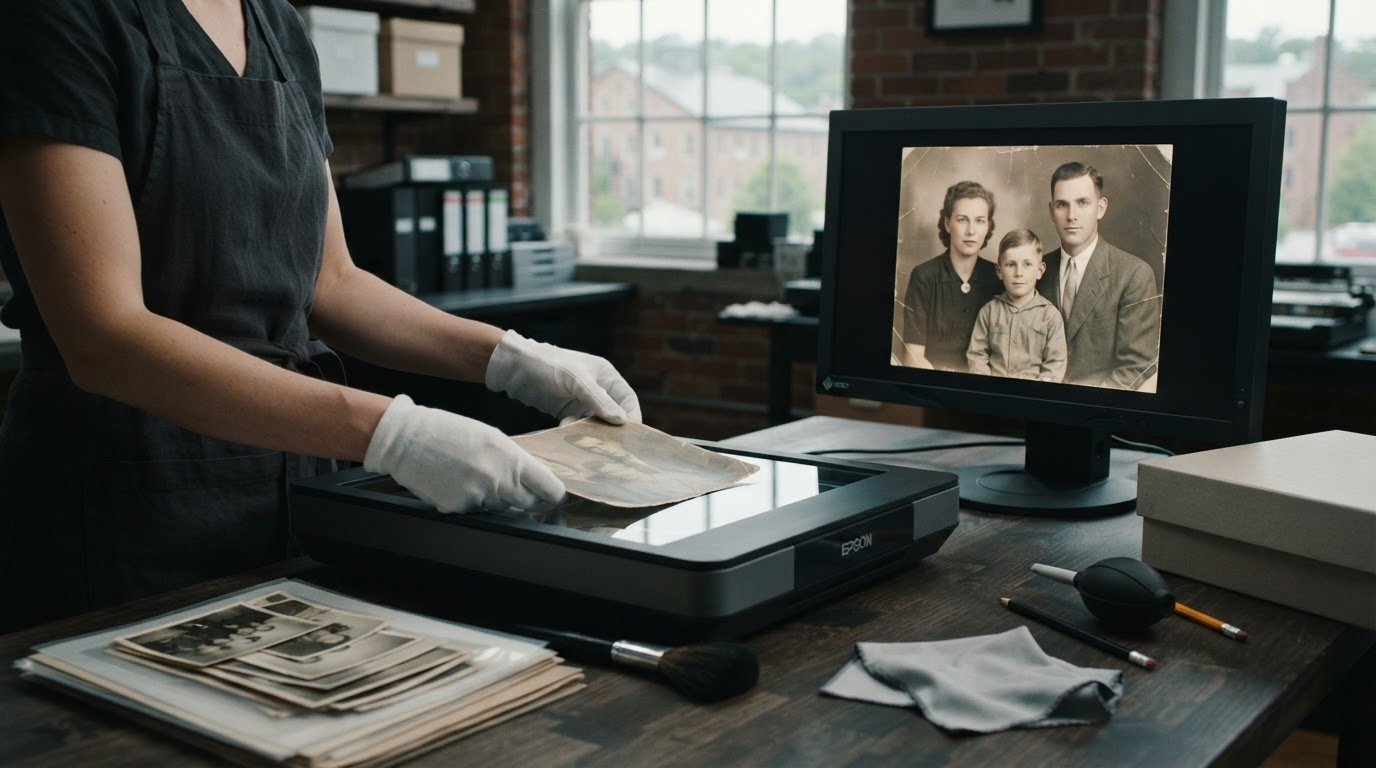
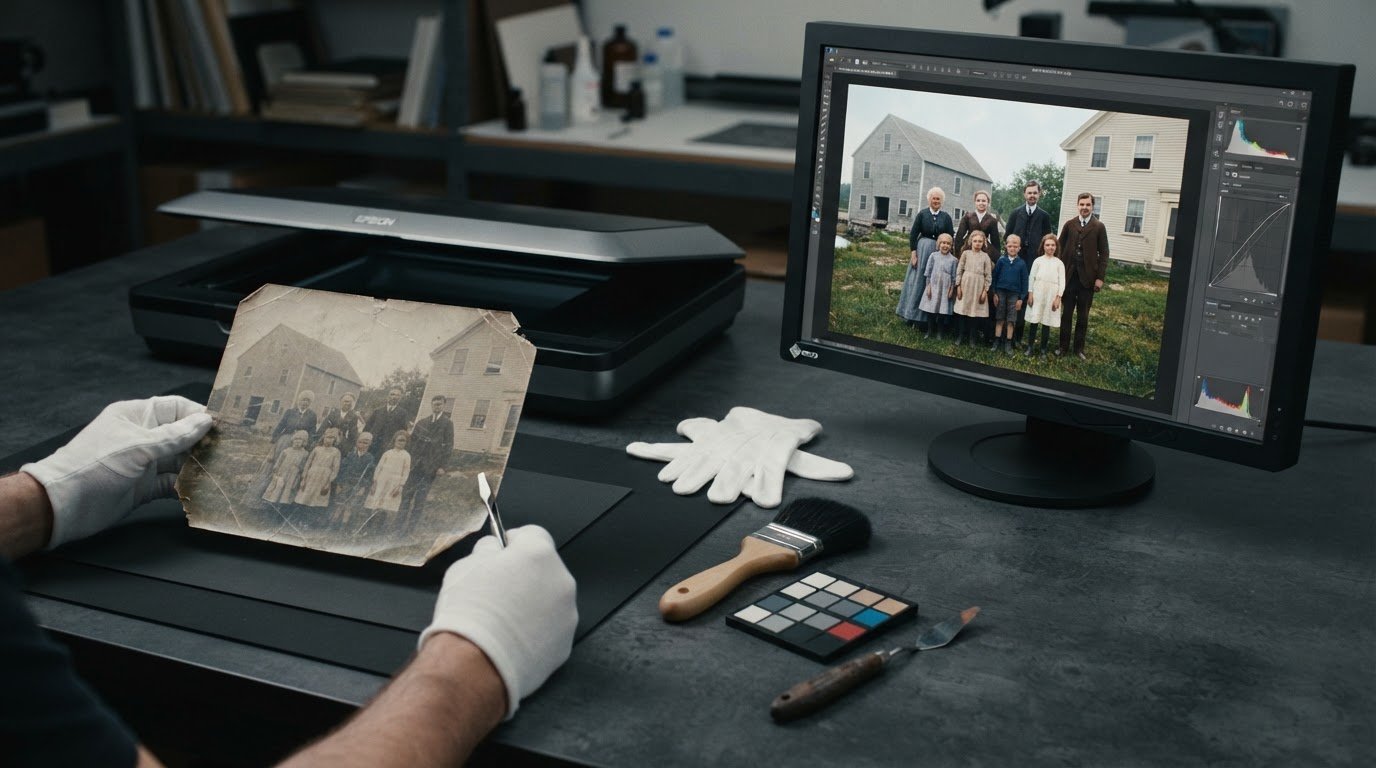
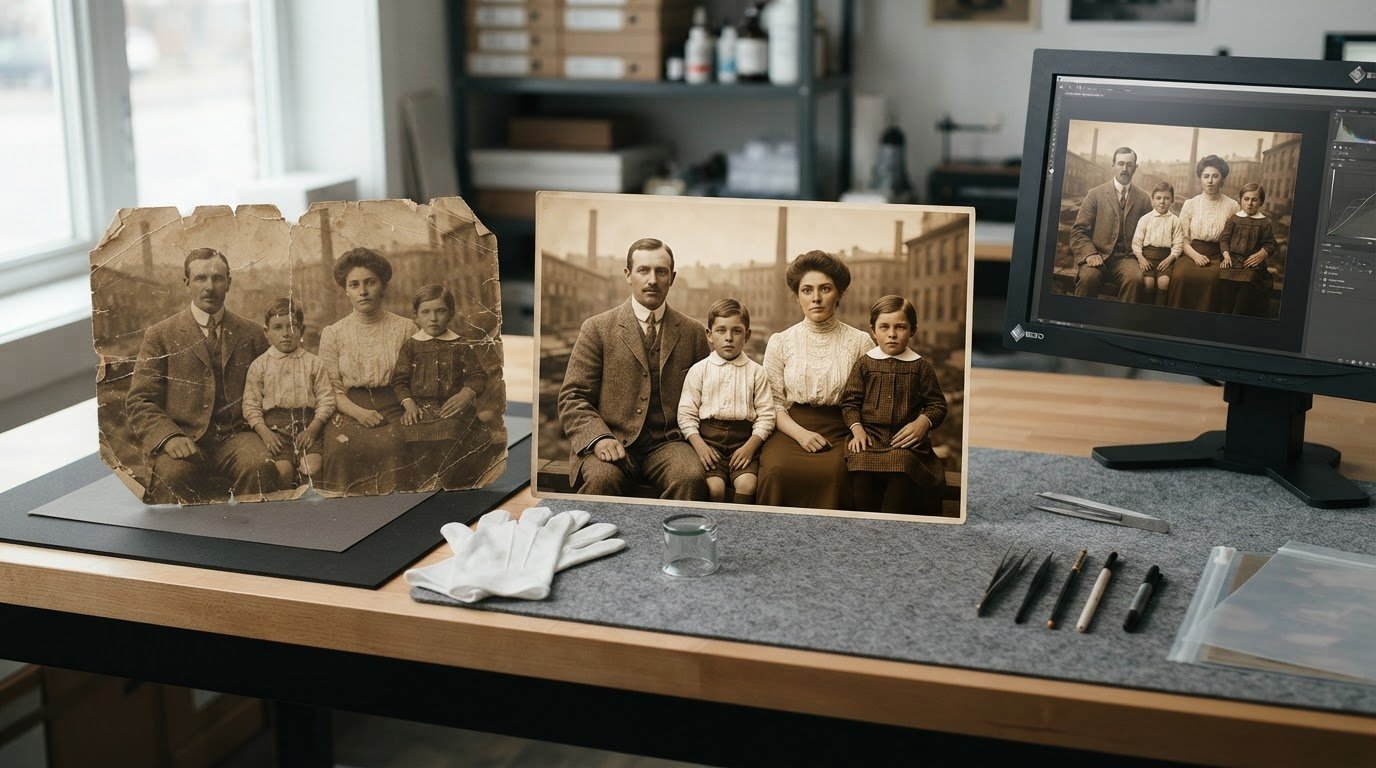
The process to restore faded photographs begins long before a single pixel is adjusted in software. It’s a methodical workflow that prioritizes the physical safety of the original while maximizing the data retrieved from it. A professional restoration typically follows four distinct stages: high-resolution digital capture, digital cleaning to remove surface damage, color and density correction, and the final artistic reconstruction of missing sections. Each step requires a specific set of technical skills and high-end equipment that goes far beyond the capabilities of consumer-grade desktop scanners.
Initial capture is the most critical phase. If the digital file doesn’t record the subtle nuances of the remaining grain and tone, no amount of software editing can bring them back. Once the image is digitized, the restorer performs a digital cleaning to meticulously remove dust, scratches, and physical tears. This is followed by density adjustments to neutralize the chemical shifts mentioned in the previous section. Finally, the restorer uses anatomical knowledge and historical context to rebuild areas where the emulsion has completely failed, ensuring the result looks like a photograph rather than a digital painting.
The BetterLight Scanning Advantage
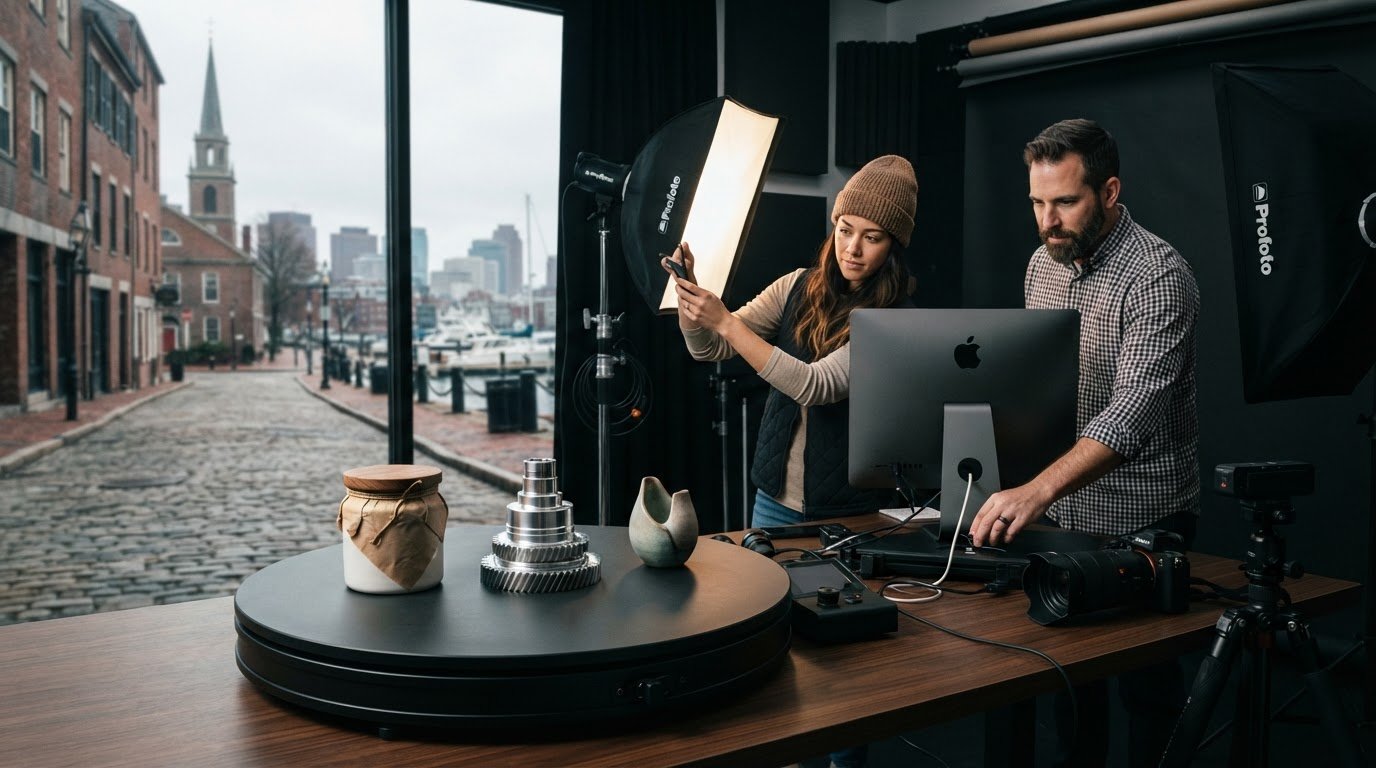
Standard flatbed scanners often struggle with the dynamic range of old photographs, especially those with deep shadows or highlights that have shifted over decades. Using BetterLight art scanning provides a significant advantage by capturing linear data across the entire surface of the image. This “contactless” method is essential for fragile heirlooms that might be stuck to glass or have a brittle emulsion that could flake under the pressure of a scanner lid. While DPI determines the size of the final print, bit-depth is what allows a restorer to extract usable visual information from the severely compressed tonal ranges found in faded originals.
Digital Reconstruction vs. Destructive Editing
Ethics play a central role in professional work; the goal is preservation rather than invention. While AI tools might guess at facial features, a professional uses the existing grain patterns and light logic to inform the reconstruction. This approach aligns with the best practices for the Care, Handling, and Storage of Photographs established by the Library of Congress. We also have to manage “silver mirroring,” a metallic sheen that occurs as silver ions migrate to the surface. By controlling the lighting during the capture phase, we can minimize these reflections before the digital work even starts. If you’re unsure about the condition of your collection, reaching out to the team at Image-Tec for a professional assessment can prevent further loss of detail.
Professional Restoration vs. AI Filters: Choosing the Right Path
One-click filters promise to restore faded photographs instantly. While these tools offer speed, they often sacrifice the historical truth of the image. AI models are typically trained on millions of modern faces and textures, meaning they “fill in” missing data by guessing. A professional restorer doesn’t guess; they preserve. By choosing a manual, expert-led process, you ensure that the final result is a faithful representation of your ancestor, not a digital approximation created by an algorithm.
Automated systems frequently struggle with specific historical details that define a period. AI often fails to render the intricate patterns of vintage lace, the precise geometry of military medals, or the unique limbal rings in a subject’s eyes. Instead of restoring what was actually there, the software creates a generic version that can feel “uncanny” or out of place. This loss of character is a significant risk when dealing with one-of-a-kind family heirlooms.
When AI Hallucinates: The Risk to Historical Accuracy
Hallucination occurs when an algorithm misinterprets a shadow or a paper crease as a physical feature. It might turn a simple fold in a sleeve into a strange anatomical detail or smooth out a distinctive facial scar that was a part of the subject’s identity. This is where a historical image restoration service proves its value. Human oversight ensures that every adjustment respects the original photographer’s intent and the subject’s actual appearance, maintaining the integrity of your family history.
The Limits of Automated Upscaling
Standard upscaling simply stretches pixels and uses math to smooth the edges. This often introduces digital noise or “halos” around high-contrast areas, making the photo look like a plastic-textured painting. A seasoned eye understands how to balance contrast without crushing shadow detail. This nuance aligns with the Library of Congress photograph preservation guidelines, which emphasize maintaining the integrity of the original media during any reproduction or conservation effort.
Finally, there’s the “Archival Gap” to consider. Most AI apps leave you with a compressed JPEG on a smartphone. A professional studio provides a high-resolution master file and a physical, archival print. Without a tangible end product, your digital assets remain vulnerable to the same technological shifts that made old film negatives or obsolete storage formats difficult to access today. A physical Giclée print ensures the restoration lives on for another century.
Assessing Your Collection: Which Photos Need Professional Intervention?
Taking an inventory of a family archive often reveals a wide range of damage. To effectively restore faded photographs, you must first perform a triage to identify which pieces are in critical condition and which are merely showing their age. Look for physical “red flags” that suggest active deterioration. Sticky surfaces, brittle paper edges, and the presence of fuzzy mold spores are signs that the material is physically failing. If you discover a photo stuck to the glass of a frame, stop immediately. Attempting to peel it yourself will almost certainly tear the emulsion; a professional can use specialized capture techniques to bypass the glass entirely without risking the original.
There is also a distinct difference between an image that is restorable and one that is simply reproducible. A restorable image requires the pixel-level reconstruction we discussed in earlier sections to bring back lost features or fix tears. A reproducible image might be in good physical condition but needs a high-end Giclée print to improve its presentation or size. Understanding this distinction helps you allocate your budget toward the pieces that truly need an expert’s hand.
Identifying Archival Threats in Your Home
The “smell test” is a practical diagnostic tool for any home archivist. A sharp, vinegar-like odor indicates that acetate-based film is undergoing chemical decay, while a sulfurous smell suggests the breakdown of older photographic papers. If you notice these scents, or if you see the emulsion starting to crack and lift like dry paint, move the items to a cool, dry environment. This stabilizes the paper fibers before you bring them to a commercial photography studio near Boston for a professional recovery. Proper stabilization is the most effective way to protect your history until it can be safely digitized.
Prioritizing Your Restoration Project
Focus your resources on “one-of-a-kind” originals like tintypes, daguerreotypes, or unique family snapshots that have no surviving negatives. Mass-produced prints from the mid-20th century are often less urgent unless they are the last remaining copy of a specific memory. When you decide to restore faded photographs, evaluate the sentimental and historical value of each piece. Consulting an expert who has been established since 1994 ensures you receive a realistic project estimate based on decades of experience with diverse photographic media.
If you are ready to stop the clock on the deterioration of your family history, contact Image-Tec for a professional assessment of your historical collection.
Preserving Restored Memories with Giclée Printing and Custom Framing
Completing the digital work is a significant milestone, but a file stored on a hard drive isn’t the final destination for a family heirloom. Digital formats can become obsolete, and hardware failure remains a constant risk for irreplaceable data. To truly restore faded photographs, the process must culminate in a physical, archival print that can be shared and displayed. A high-quality tangible print serves as a permanent backup, ensuring that the visual history you’ve recovered remains accessible to future generations without the need for specific software or devices.
The security of the original material is often the primary concern for families in the Boston and Methuen areas. Many clients feel uneasy about mailing their only copy of a 19th-century portrait to a remote processing center. Working with a local studio established in 1994 allows for personal hand-delivery and direct consultation. This face-to-face interaction provides peace of mind, as your most precious memories never leave the hands of the professionals responsible for their care. It also allows for a collaborative review of the final proofs before the archival printing begins.
Archival Printing Standards
Standard inkjet prints found at big-box retailers use dye-based inks that are prone to fading within a few years. In contrast, museum-quality Giclée prints utilize sophisticated pigment-based inks that offer superior depth and stability. These pigments are suspended in a carrier that binds to the paper fibers, creating a result that is far more resistant to environmental degradation. The archival rating of pigment inks typically exceeds 100 years when combined with acid-free media, ensuring the restoration work doesn’t need to be repeated in your lifetime. We carefully select paper or canvas textures that match the era of the original photo, whether it’s a smooth matte finish for a 1940s snapshot or a textured canvas for a large-scale family portrait.
The Final Layer of Protection: Custom Framing
Displaying a restored image requires more than just a decorative border; it requires an environmental shield. UV-protective glass is a mandatory component for any displayed restoration, as it filters out the specific wavelengths of light that cause chemical breakdown. Without this protection, even the best archival inks will eventually suffer. Acid-free matting also plays a vital role by creating a physical air gap between the print and the glass, which prevents moisture traps and the “gas-fading” caused by off-gassing from cheaper materials. For those seeking a complete solution, our custom art framing in Methuen, MA combines these technical safeguards with aesthetic expertise. This integrated approach ensures that your restored memories are both beautiful to look at and chemically protected for a century or more.
Securing Your Family’s Visual Legacy
Preserving historical memories requires more than a software filter or a basic scanner. True restoration combines high-resolution technical capture with the artistic judgment of a seasoned professional. By choosing specialized hardware like BetterLight scanning, you ensure that every subtle detail of the original emulsion is recorded before the digital work begins. This methodical approach respects the historical integrity of your ancestors’ portraits while reversing decades of environmental decay.
Once the digital reconstruction is complete, the final step involves returning the image to a physical form that can survive another century. Pigment-based archival Giclée prints provide a level of longevity that digital files alone can’t guarantee. We’ve served the Boston and New England area since 1994, providing the technical infrastructure and craftsmanship needed to restore faded photographs with absolute precision.
If you’re ready to protect your irreplaceable family history, Request a Professional Restoration Quote from Image-Tec. Your memories deserve the stability and clarity that only a master of the craft can provide.
Frequently Asked Questions
How much does a professional historical image restoration service cost?
The cost for a professional restoration depends entirely on the extent of the damage and the labor required for reconstruction. Light fading or minor scratches typically involve less time than severe water damage or missing facial features. Each project begins with a detailed assessment to determine the technical complexity. For residents in the Boston and Methuen area, our studio provides customized quotes based on the specific needs of your historical heirlooms.
Can a photo that is torn into multiple pieces be restored?
Yes, a photo torn into several pieces can usually be restored through high-resolution digital capture and pixel-level reconstruction. We carefully align the fragments during the scanning process to ensure every edge is accounted for. Once digitized, the seams are meticulously blended to create a seamless final image. This process allows us to restore faded photographs even when the physical base has suffered significant structural failure over many decades.
What is the difference between a high-resolution scan and a professional restoration?
A high-resolution scan is simply a digital copy of the photo’s current state, including all its damage and fading. Professional restoration is an active process that uses that digital data to reverse chemical shifts, remove physical defects, and rebuild lost information. While a scan preserves the evidence of decay, a restoration uses specialized tools like BetterLight scanning to extract the maximum amount of remaining visual data for a complete repair.
How long does the restoration process typically take at a studio?
The timeline for a restoration project varies based on the complexity of the damage and our current production schedule. A standard restoration might take between one and three weeks from the initial drop-off to the final proofing stage. More intensive projects involving severe structural loss or complex color correction may require additional time. We prioritize precision over speed to ensure every historical detail is preserved according to archival standards in our Methuen facility.
Is it safe to mail my original vintage photographs to a restoration professional?
While mailing is an option, many clients in the New England area prefer the security of hand-delivering their originals to our studio. Physical transit always carries a small risk of loss or environmental damage that can’t be reversed. By visiting us in person, you ensure your irreplaceable family history never leaves a controlled, professional environment. This local proximity is a key reason why we serve so many families from Boston to Manchester NH.
Can you restore a photo that is stuck to the glass of the frame?
We can restore photos stuck to glass by using specialized contactless capture methods that bypass the need for physical separation. You should never attempt to peel the photo yourself, as this often results in the emulsion tearing away from the paper base. Our BetterLight scanning technology allows us to record the image through the glass with perfect clarity, which we then use as the foundation for a digital reconstruction of the original.
What is the best way to store my photos to prevent future fading?
The best way to prevent fading is to store your photos in a cool, dry, and dark environment using acid-free materials. Avoid uninsulated attics or basements in areas like Newburyport where humidity levels fluctuate, as these conditions accelerate chemical breakdown. For displayed items, always use UV-protective glass and acid-free matting to create a barrier against light and moisture. Proper storage is the most effective defense for those who want to restore faded photographs and keep them vivid.
Will the restoration process damage my original photograph?
No, the restoration process is entirely non-destructive to your original photograph. All repair work is performed on a high-resolution digital copy created during the capture phase. Your original print remains in the same condition as when you brought it to the studio. This approach allows us to provide a beautiful, archival Giclée print as the final product while ensuring your historical artifact is safely returned to you for continued storage.




Leave A Comment
You must be logged in to post a comment.