

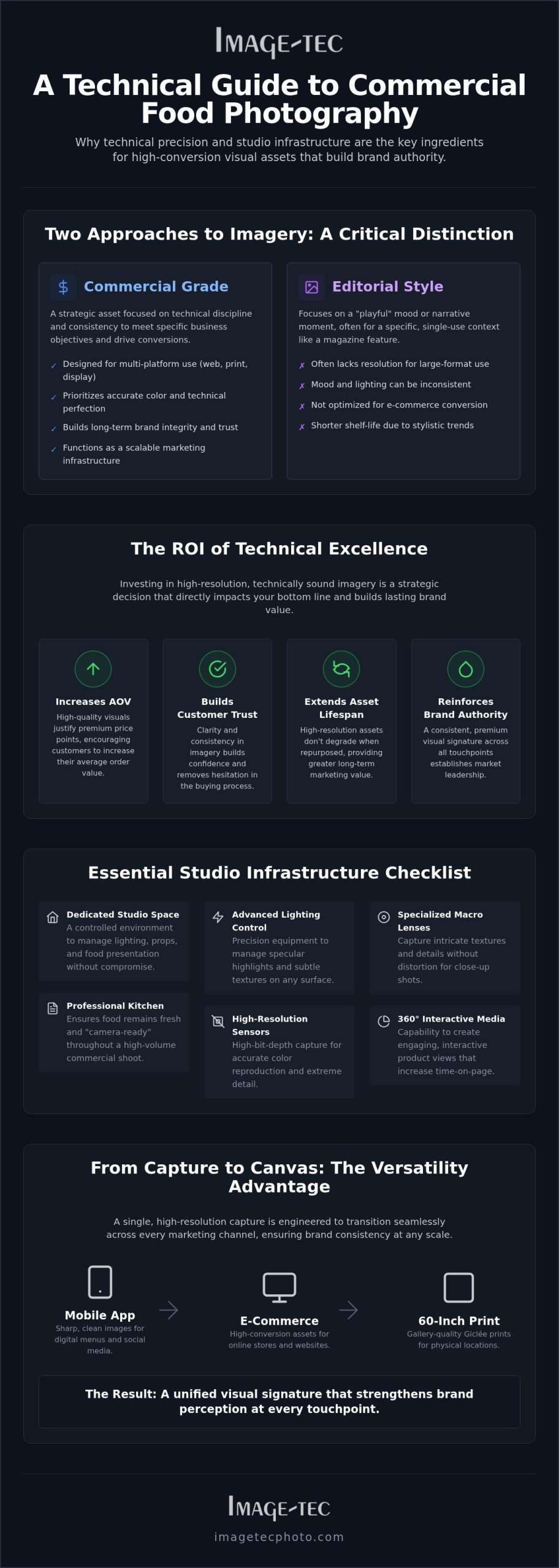
A visually appealing image of a dish is no longer enough to sustain a premium brand’s market position in a crowded digital landscape. When you’re searching for food photography Boston, it’s easy to get lost in aesthetic portfolios while overlooking the technical infrastructure required to scale those images across diverse media. You’ve likely experienced the frustration of a beautiful digital asset that falls apart when enlarged for a physical location or a freelancer who lacks the specialized equipment for a high-volume commercial shoot. We understand that consistency isn’t just a preference; it’s a requirement for brand integrity.
This guide will show you how to evaluate a studio’s technical capabilities and production scale to ensure your visual assets drive measurable conversion. You’ll discover what to look for in a long-term partner, from high-resolution capture methods to the logistics of full-service production. We’ll outline the specific criteria that separate a standard photo shoot from a technical production capable of delivering gallery-quality prints and high-conversion e-commerce assets. By focusing on professional craftsmanship and specialized equipment, you can secure a reliable partner for your brand’s evolution.
Key Takeaways
- Learn why commercial-grade imagery is a strategic investment that builds customer trust and directly improves menu conversion rates compared to standard editorial shots.
- Identify the essential technical infrastructure, such as advanced lighting control and specialized studio spaces, required for the high-end food photography Boston brands demand.
- Explore how integrating 360-degree interactive media into your digital presence can significantly increase time-on-page and customer engagement.
- Understand the logistical differences between food and prop stylists to ensure your production team is properly equipped for your specific visual goals.
- Discover the efficiency of a full-service production model that manages everything from the initial technical capture to large-format Giclée printing for physical displays.
The ROI of Commercial Food Photography for Boston Brands
In a city defined by both culinary tradition and modern innovation, the visual standards for food photography Boston brands deploy must transcend simple aesthetics. Many businesses mistake editorial styling for commercial photography. While editorial work often focuses on a “playful” mood or a specific narrative moment, commercial-grade imagery is a disciplined technical production. It’s designed to function across multiple platforms, from mobile apps to large-format displays. The history of food photography highlights how the medium evolved from basic documentation into a critical pillar of advertising and brand psychology. For premium brands, this technical-first approach isn’t just about looking better; it’s about building a reliable infrastructure for marketing.
Conversion Metrics: Why Quality Costs Less in the Long Run
Commercial food photography is a strategic brand asset that prioritizes technical consistency and production scale to meet specific business objectives. Investing in high-resolution, technical imagery reduces “visual friction” for the consumer. When a digital menu or e-commerce site presents sharp, accurately lit products, it removes the hesitation often caused by poor image quality. This clarity directly impacts the bottom line by increasing the average order value (AOV). Customers are more likely to commit to a premium price point when the visual evidence matches the brand’s promises. High-quality assets also have a longer shelf life, as they don’t degrade when repurposed for different marketing channels.
Brand Authority in the New England Market
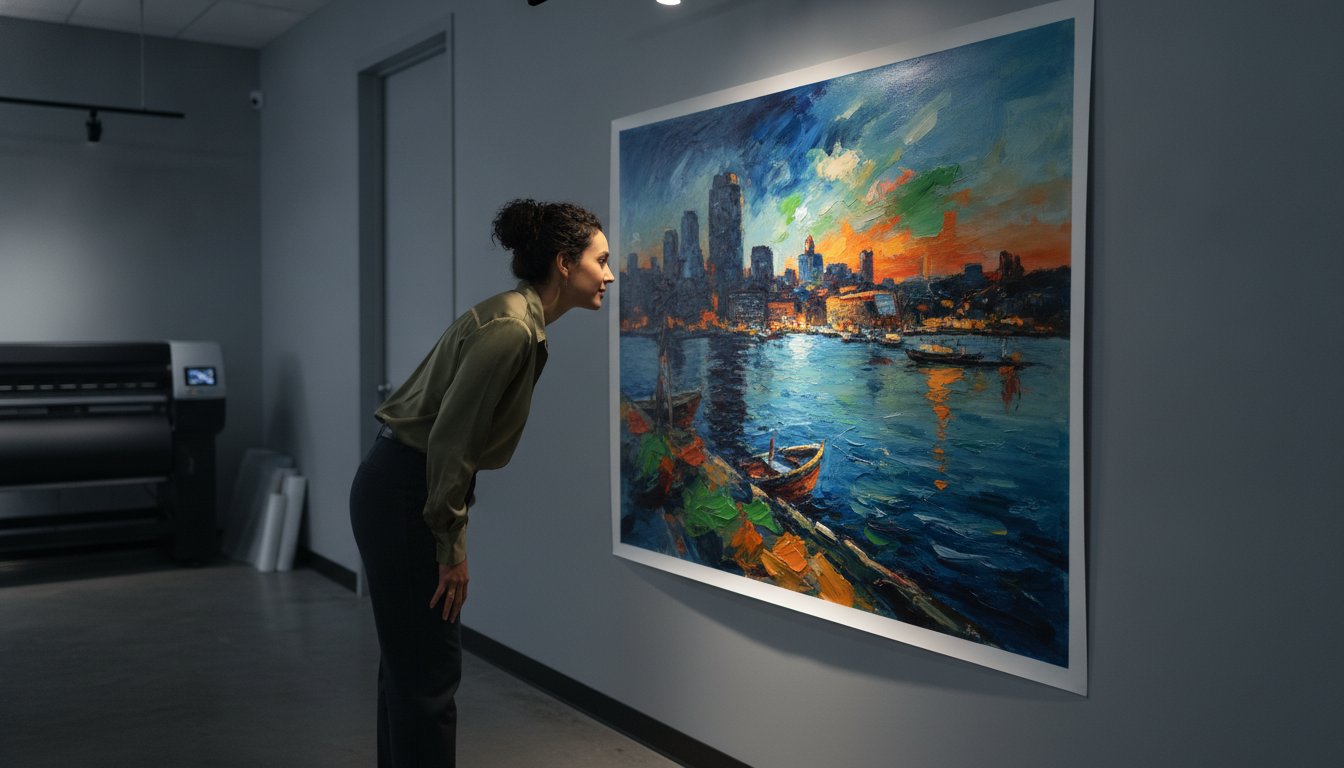
Consistency is the hallmark of a professional operation, especially for brands with multiple locations in Methuen, Boston, or Manchester, NH. A technical-first approach ensures that your brand’s visual identity remains stable regardless of the medium. For instance, a dish captured with extreme resolution can transition seamlessly from a social media post to a gallery-quality, 60-inch framed print for a physical location. This versatility allows you to establish a visual signature that is difficult for competitors to mimic. Large-format displays in a restaurant or corporate office build perceived value and reinforce the idea that your brand is a local pillar of quality. By controlling the entire process from capture to high-end output, you ensure that your brand looks premium at every touchpoint.
Technical Infrastructure: What Your Food Photography Studio Needs
While many freelancers operate out of residential spaces, a professional commercial studio offers a controlled environment that a home setup cannot replicate. The difference lies in the scale of the facility and the precision of the equipment. A dedicated studio provides the space for a professional kitchen and styling area, ensuring that food remains fresh and “camera-ready” throughout the duration of a shoot. When you’re commissioning food photography Boston brands can rely on, the ability to manage specular highlights on glassware or the delicate moisture on fresh produce requires a sophisticated technical infrastructure for your food photography. This level of control is essential for creating assets that look as appetizing on a 60-inch restaurant display as they do on a smartphone screen.
Advanced Imaging Equipment and Sensors
Precision in food photography starts with the sensor. High-resolution sensors and high-bit-depth capture are non-negotiable for accurate color reproduction, especially when dealing with the subtle gradients of natural ingredients. For projects requiring extreme detail, such as large-scale signage or high-end art prints, specialized tools like BetterLight scanning achieve resolution levels that traditional cameras simply cannot match. Specialized macro lenses allow for tight, detailed captures that highlight texture without distortion. This technical rigor ensures that the final image remains sharp and vibrant even when enlarged for physical displays. If you’re looking for this level of precision, you might consider how a professionally equipped studio can elevate your brand’s visual standards.
Studio vs. On-Location: Making the Right Choice
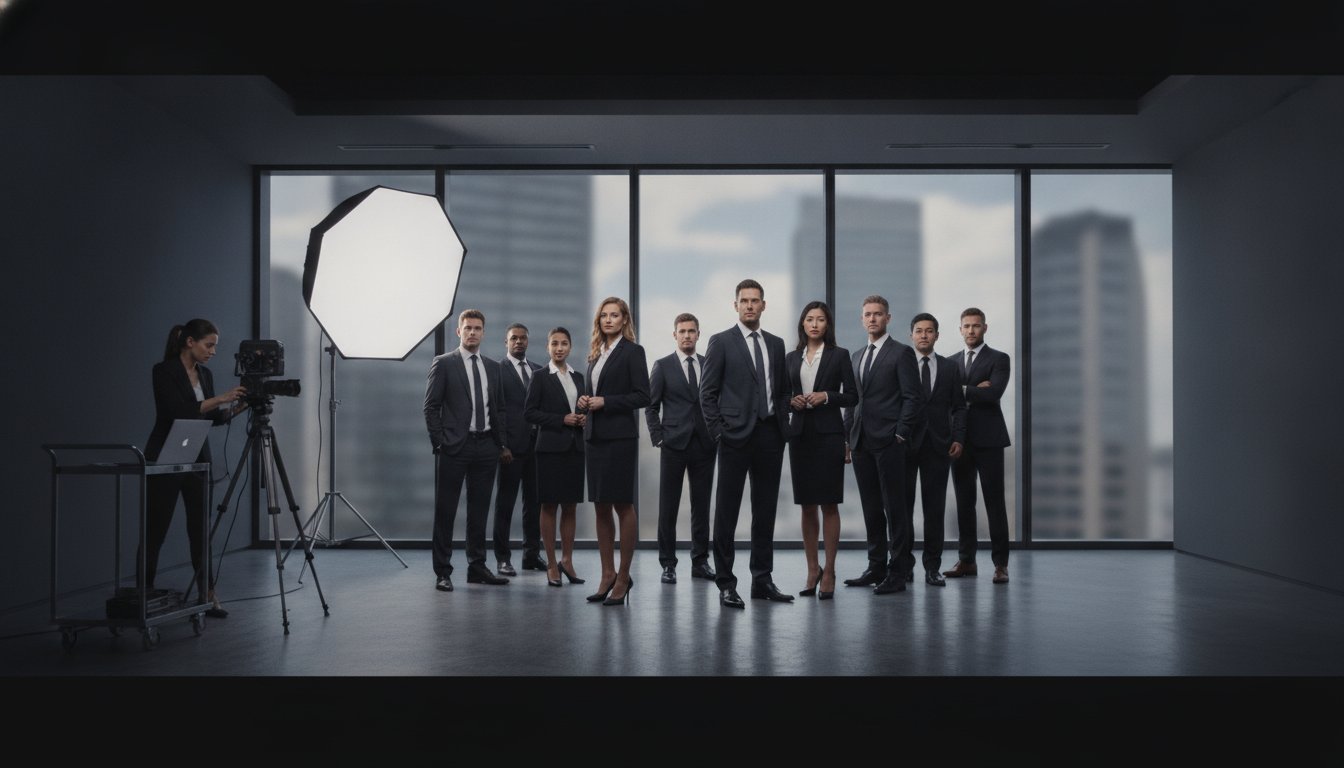
The decision between a studio shoot and an on-location session depends on your specific production needs. On-location shoots at your restaurant or facility offer convenience and the ability to capture your actual environment. However, bringing the production to a dedicated studio provides the ultimate level of lighting and environmental control. In a studio, we aren’t competing with shifting natural light or the logistical constraints of a working kitchen. Our Methuen-based facility offers these logistical advantages while remaining easily accessible for Boston-area clients. If you choose an on-location shoot, preparation is key. Ensuring your kitchen has a dedicated space for the photography team and the styling crew helps maintain efficiency. Whether in-studio or on-site, the goal remains the same: producing high-conversion assets that reflect the quality of your culinary craft.
Beyond Static Shots: 360-Degree Views and Interactive Media
Static imagery remains a foundation of digital marketing, but interactive media is redefining how premium brands engage consumers. In the competitive landscape of food photography Boston, 360-degree imaging provides a level of transparency that standard stills cannot match. By allowing a customer to “spin” a product, you provide a comprehensive view of texture, packaging, and presentation. This is particularly effective for specialty food products, bottled beverages, or intricate confectionery where the details on every side matter. These assets are no longer a luxury; they’re a technical requirement for brands looking to reduce consumer friction in a digital-first market.
Seamless 360-degree capture requires a synchronized system of a motorized turntable and high-speed camera triggers. The lighting must remain perfectly consistent across 24 to 72 individual frames to avoid “flicker” during the rotation. Modern e-commerce platforms now support these assets natively through HTML5 viewers, making integration straightforward for brands looking to modernize their digital storefronts. This infrastructure allows for a smooth user experience that keeps potential customers on your page longer, directly impacting your site’s engagement metrics.
The Psychology of Interactive Food Imagery
Interactive food imaging in 2026 is a technical bridge between digital browsing and physical sensory experience. It builds “sensory certainty” by answering the consumer’s subconscious questions about a product’s volume, texture, and finish. When shoppers can control the view, they feel a greater sense of ownership and trust. This interaction reduces the hesitation often associated with high-ticket artisanal items or premium gift sets. Increasing time-on-page through these interactive images is a proven method to boost engagement and improve the likelihood of a final purchase.
Comparing Standard, 360, and Video Assets
While traditional stills are essential for print and social media, 360-degree assets offer a unique middle ground between a photo and a video. Video is excellent for storytelling, but it’s a passive medium. Interactive media is active; it requires the user to engage with the product. For items with interesting silhouettes or complex labeling, the 360-degree treatment provides a high ROI by serving as both a functional tool and an engaging feature. If you’re deciding how to allocate your production budget, reviewing a Professional Commercial Photography Studio Near Boston: A Full-Service Guide can help you understand which assets align with your specific media requirements.
Planning Your Food Shoot: A Buying Guide for Boston Brands
Successful food photography Boston productions rely on a structured framework rather than creative spontaneity. The process begins with a clear definition of your visual goals and specific media requirements. Before the first frame is captured, you must determine if the assets are intended for high-traffic e-commerce platforms, social media, or large-format physical displays. Identifying these requirements early ensures that the technical capture, such as resolution and aspect ratio, aligns with your final distribution channels. This methodical approach prevents the need for costly reshoots and ensures your brand assets remain versatile.
Managing the logistics between our Methuen studio and the Boston corridor requires precise timing, especially when dealing with temperature-sensitive products. For on-location shoots, we coordinate with your culinary team to ensure lighting environments are fully calibrated before the first dish leaves the kitchen. Conversely, in-studio sessions offer a controlled pace where we can manipulate every environmental variable without the distractions of a working restaurant. This logistical efficiency is a hallmark of a seasoned professional partner.
The Role of the Food Stylist
A commercial food stylist provides a different service than an editorial stylist. While editorial work focuses on a specific mood or “playful” narrative, commercial styling ensures the product looks optimized for the lens while remaining recognizable to the consumer. We coordinate closely with your executive chef to maintain the integrity of the recipe while employing technical styling methods to preserve texture under studio lights. For a New England aesthetic, we often recommend props that feel grounded and authentic. Utilizing natural materials like slate, local ceramics, or reclaimed wood can reinforce a brand’s regional identity without distracting from the primary subject.
File Management and Post-Production
Post-production is the phase where we align the color profile of your imagery with established brand guidelines. This technical color grading ensures consistency across your entire marketing suite. We prepare high-resolution files that maintain their clarity whether they’re used on a mobile device or a 60-inch backlit display. This level of precision mirrors the standards we apply when Mastering Art Reproduction for New England Artists, where absolute color accuracy is the baseline. We also provide archival-grade digital storage, ensuring your brand assets are preserved and accessible for long-term use. If you’re ready to organize your next production, you can contact our Methuen studio to review your project specifications.
From Capture to Canvas: The Image-Tec Advantage
The transition from a digital capture to a physical installation is where many commercial projects lose their impact. When you hire a freelancer for food photography Boston, the relationship usually ends with a file transfer, leaving you to manage printing and framing with third-party vendors. A full-service studio provides a unified workflow that ensures quality control at every stage. By managing the entire lifecycle of an image in-house, we eliminate the risk of color shifts or resolution loss that often occurs during hand-offs between separate providers. This integrated approach transforms a standard photo shoot into a comprehensive production that defines the standard for food photography Boston premium brands expect.
Working with a single technical partner ensures that the creative vision established during the shoot isn’t compromised by the limitations of a standard print shop. Our studio’s 30 years of experience allows us to bridge the gap between technical photography and high-end art reproduction. This synergy is particularly valuable for brands that require consistent imagery across both digital menus and large-format physical decor. When the person who captured the image is also responsible for the final output, the result is a level of precision that a fragmented team can’t replicate.
Large-Format Giclée Printing for Food Brands
High-resolution capture is only the first half of the process. For restaurants and corporate offices, the ability to produce large-format Giclée prints up to 60 inches wide allows for the creation of immersive, high-impact decor. We ensure absolute color accuracy by calibrating our printing systems directly to the sensors used during the shoot. This technical alignment means the vibrant greens of fresh produce or the deep ambers of a craft beverage remain true to life on the final canvas. For a deeper look at how scale impacts your brand’s physical presence, refer to our Large Format Fine Art Printing: The Ultimate Guide to Gallery-Quality Scale.
Master Craftsmanship in Custom Framing
The final presentation of your brand’s visual assets requires more than just a standard frame. Our on-site custom framing facility in Methuen allows us to select materials that complement both the photographic subject and your interior design. This localized service provides a significant logistical advantage, enabling rapid project turnaround without the risks associated with shipping large, delicate pieces. We treat every commercial project with the same level of precision as a museum reproduction, ensuring your displays reflect a standard of excellence. You can explore the benefits of this integrated model in our Custom Art Framing and Giclée Printing in Methuen, MA: The Professional Guide. This comprehensive service model ensures that your investment in premium photography results in a finished product that elevates your professional space.
Elevating Your Visual Standards for the Long Term
Selecting a technical partner for your brand’s visual identity requires a shift from simple aesthetics to production-scale infrastructure. We’ve examined how a dedicated studio environment and interactive 360-degree media can reduce consumer friction and drive measurable conversion. By focusing on professional craftsmanship and specialized equipment, you ensure that your assets perform consistently from digital menus to physical installations.
Our Methuen studio has been a trusted guide for New England businesses since 1994. We provide the technical capabilities necessary for high-end results, including BetterLight scanning for extreme resolution and on-site Giclée printing up to 60 inches wide for gallery-quality displays. When you’re ready to invest in professional food photography Boston, we’re here to manage every logistical detail from the initial capture to the final framed output. Our team remains committed to delivering the precision and reliability your premium brand requires.
Book Your Commercial Food Photography Session at Image-Tec
We look forward to helping you translate your culinary excellence into high-conversion visual assets that stand the test of time.
Frequently Asked Questions
How much does a commercial food photography shoot in Boston cost?
Costs for a professional session vary based on the complexity of the production and the volume of assets required. In major markets like the Northeast, a commercial shoot typically ranges from $500 to $5,000 depending on licensing needs and studio requirements. Factors such as food styling, prop sourcing, and specialized technical equipment like BetterLight scanners influence the final investment. We provide customized quotes based on your specific project scope and technical output needs.
Do I need to hire a separate food stylist for my shoot?
Hiring a professional food stylist is highly recommended for commercial projects where visual precision is the priority. While a chef understands flavor and presentation, a stylist specializes in how ingredients behave under intense studio lighting for extended periods. They use specific tools to preserve textures and colors that the camera sensor captures. For many high-end productions, we coordinate with specialized styling teams to ensure every dish meets the technical standards required for premium branding.
Can you provide both digital assets and large-format prints for my restaurant?
We manage the entire production lifecycle from the initial digital capture to high-end physical output. Our studio provides high-resolution digital files optimized for e-commerce and social media, alongside gallery-quality Giclée prints. Because we operate an on-site printing and custom framing facility in Methuen, we ensure that the color accuracy established during the shoot is perfectly preserved on canvas or fine art paper up to 60 inches wide.
What is the difference between editorial and commercial food photography?
Editorial photography typically focuses on storytelling and mood for publications, often utilizing natural light and more “lived-in” styling. Commercial food photography is a technical production designed to sell a specific product or brand. It requires extreme precision in lighting control and high-resolution sensors to ensure the images remain sharp across various advertising platforms. Commercial assets are built for high conversion, emphasizing the product’s details and brand consistency over a candid narrative.
How long does a typical food photography session take in your Methuen studio?
Session duration depends on the number of dishes and the complexity of the styling required for each shot. A standard commercial production can range from a half-day session of four hours to multiple full days for extensive menu catalogs. Our Methuen studio environment is designed for efficiency, with dedicated prep areas that allow our team to move methodically through your shot list. We establish a clear timeline during the pre-production phase to ensure your project stays on schedule.
Do you offer on-location food photography for restaurants in Boston and Manchester?
We provide professional on-location services for clients throughout Boston, Manchester, NH, and the surrounding New England area. While our Methuen facility offers the most controlled lighting environment, we frequently transport our technical equipment to restaurant kitchens to capture dishes in their native environment. This flexibility allows us to work around your operational schedule while maintaining the high standards of technical excellence our commercial clients expect for their marketing materials.
What are the benefits of 360-degree food photography for my website?
Interactive 360-degree imaging increases consumer engagement by allowing users to explore a product from every angle. This technology is particularly effective for packaged food items or complex artisanal products where texture and volume are key selling points. By providing a “spin” view, you reduce consumer hesitation and build trust through visual transparency. These assets are optimized for modern e-commerce platforms, helping your food photography Boston campaign stand out from competitors using only static images.
How should I prepare my food items for a professional studio shoot?
Preparation begins with selecting the freshest ingredients and coordinating the timing of dish assembly with our photography team. For studio shoots, it’s often best to bring components separately so they can be styled on-site under the lights. We recommend preparing “hero” versions of your menu items that represent the ideal version of the dish. Proper preparation ensures that we capture the natural moisture and texture of the food before it’s affected by the studio environment.


Leave A Comment
You must be logged in to post a comment.