

What if the digital version of your masterpiece could capture every brushstroke and subtle pigment shift with the same intensity as the original canvas? For many creators seeking fine art reproduction Manchester NH, the reality is often a disappointing loss of detail or colors that don’t quite match the vision. You’ve likely felt the frustration of seeing a high-effort painting reduced to a flat, inaccurate digital file that fails to represent your professional skill. It’s a significant risk to hand over your original work to a service that doesn’t prioritize technical precision or archival longevity.
We agree that your reputation depends on the quality of every print you sell or exhibit. This guide will show you how to achieve museum-quality Giclée prints by utilizing industry-leading BetterLight scanning and archival-grade materials designed to last a lifetime. We’ll explore the critical differences between standard captures and high-resolution scanning, the importance of color-accurate workflows, and how to scale your work up to 60 inches without losing a single drop of clarity.
Key Takeaways
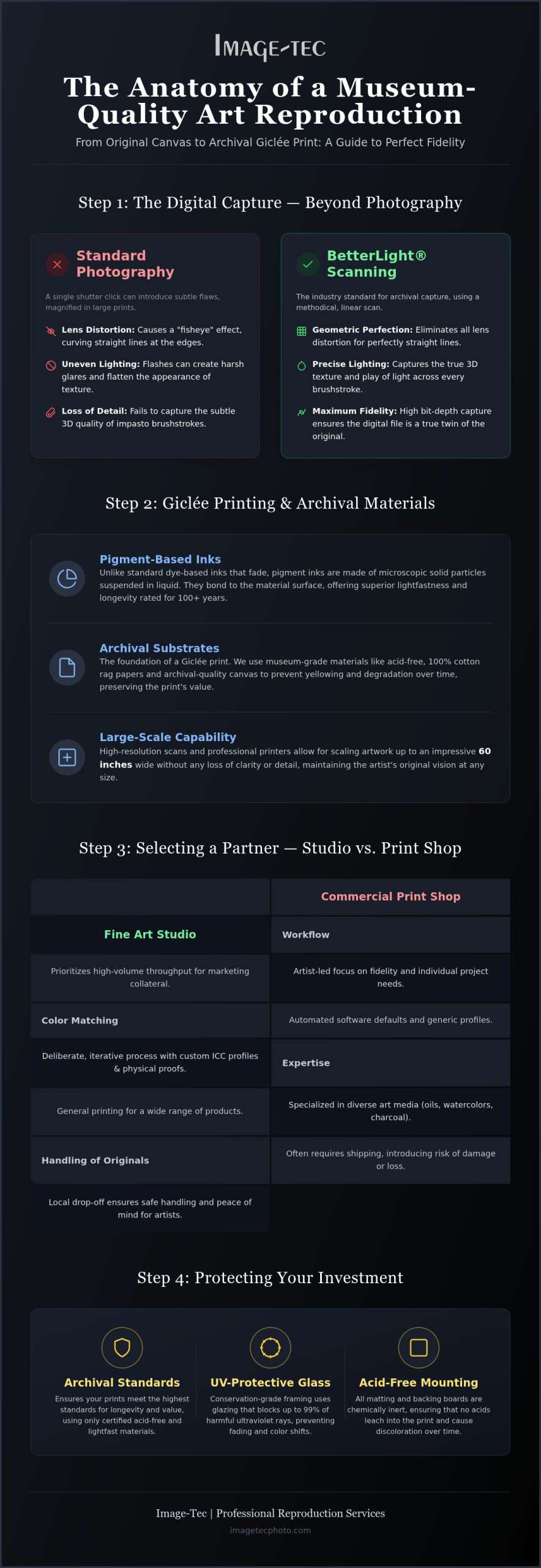
- Learn why BetterLight scanning technology is essential for capturing the intricate textures and color depth of original artwork without the distortion of standard photography.
- Understand the technical standards of Giclée printing, specifically the use of pigment-based inks and archival materials that ensure your reproductions last a lifetime.
- Discover the logistical and security advantages of working with a local partner for fine art reproduction Manchester NH to ensure the safe handling of your original pieces.
- Explore the role of conservation-grade custom framing, including UV-protective glass and acid-free mounting, in preserving the value and integrity of your prints.
- Identify the key differences between high-volume commercial print shops and specialized art reproduction studios to ensure your work meets museum-quality standards.
Selecting a Fine Art Reproduction Partner in the Manchester NH Area
Selecting a partner for fine art reproduction Manchester NH requires a shift in perspective. You aren’t just buying a service; you’re establishing a relationship with a technical expert who understands the weight of your original work. For many artists in the Queen City, the safety of their portfolio is the primary concern. Proximity allows for the personal transport of delicate canvases and fragile works on paper, eliminating the anxieties associated with third-party shipping or long-distance transit. A local studio becomes a secure extension of your own workspace, providing a level of oversight that online mail-in services simply cannot match.
The “Print Shop” vs. “Fine Art Studio” Divide
The distinction between a commercial print shop and a dedicated reproduction studio lies in the workflow. High-volume shops prioritize throughput. They often utilize generic inkjet printers and automated color profiles that struggle with the subtle tonal shifts in a watercolor or the deep shadows of an oil painting. These environments are designed for marketing collateral, not gallery-grade Giclée prints. A professional studio operates with an artist-led focus, where color matching is a deliberate, iterative process rather than a software default. A provider that offers historical image restoration demonstrates a deep understanding of archival chemistry and digital reconstruction, skills that directly benefit the fidelity of new reproductions.
Vetting Technical Expertise in New Hampshire
Technical proficiency isn’t universal. A provider should demonstrate a history of working with diverse media, including heavy-impasto oils, reflective charcoals, and delicate watercolors. Understanding the nuances of the New England art market, from the lighting in local galleries to the expectations of regional collectors, is a quiet advantage of a seasoned partner. Before committing to a full production run, always insist on seeing physical proofs. Digital screens are deceptive; the true test of a reproduction is how the pigment interacts with the archival substrate under gallery lighting. Image-Tec, located just south in Methuen, has served as a specialized hub for the Manchester art community since 1994. This longevity reflects a commitment to technical excellence that volume-based shops cannot replicate.
When interviewing a potential partner, consider asking these specific questions to gauge their standards:
- How is color matching handled? Look for a process that includes custom ICC profiles and manual adjustments rather than automated “auto-fixes.”
- What are your archival standards? Ensure they use pigment-based inks and acid-free, 100% cotton rag papers or archival canvas.
- Can you handle large-scale works? Verify their ability to produce prints up to 60 inches wide without losing resolution or clarity.
The Technical Difference: BetterLight Scanning for High-Resolution Capture
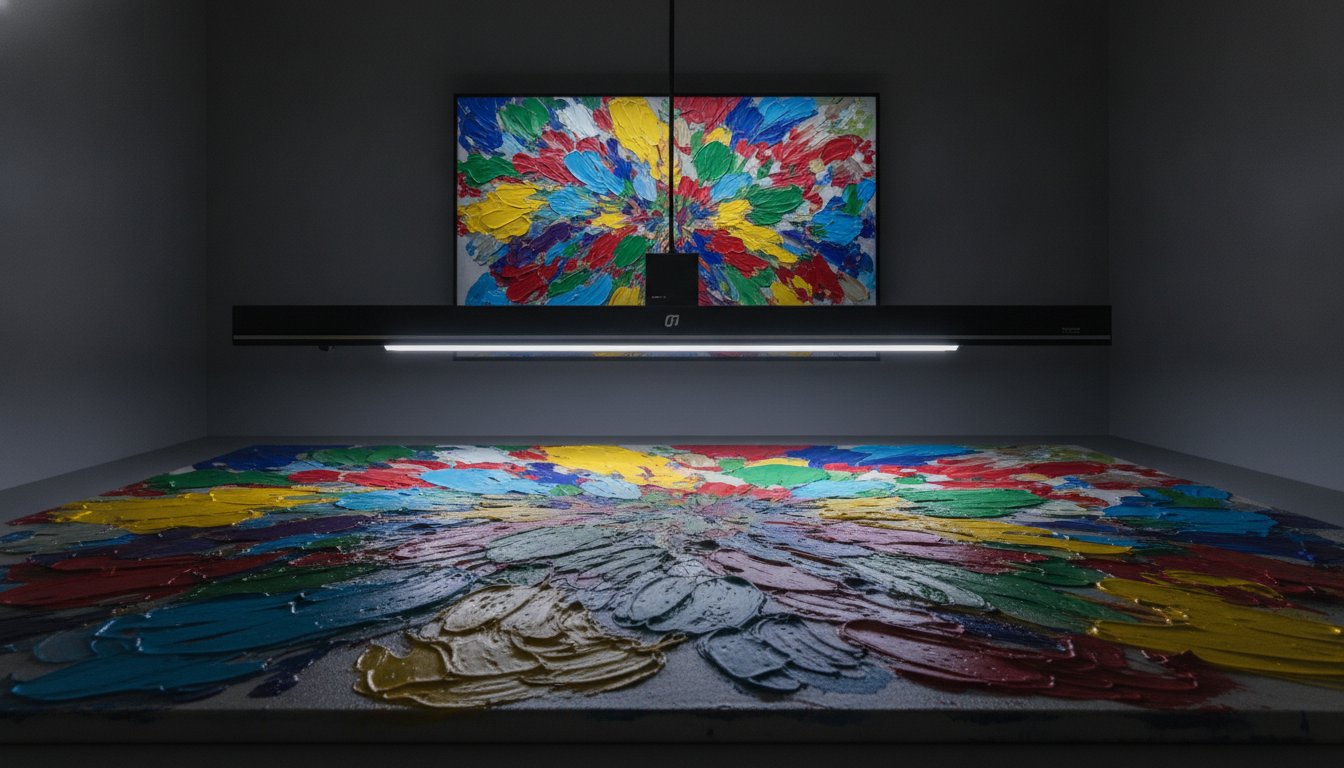
BetterLight scanning is the industry standard for archival digital capture. It functions as a large-format digital capture system that eliminates lens distortion, a common flaw in traditional photography. While a standard camera on a tripod relies on a single shutter click, BetterLight technology scans the artwork in a methodical, linear motion. This eliminates the “fisheye” effect often found at the edges of high-resolution photographs, ensuring that every inch of your fine art reproduction Manchester NH is geometrically perfect. Many artists don’t realize that a standard lens can subtly curve the edges of a canvas, a problem that is only magnified when the image is printed at a larger size.
Capturing Every Brushstroke and Texture
The system manages lighting with extreme precision to reveal the 3D quality of oil and acrylic paintings. Traditional photography often uses flashes that can flatten the appearance of heavy impasto or create unwanted glares. In contrast, the scanning process captures the play of light across the texture, preserving the artist’s physical touch. This level of detail requires high bit-depth and exceptional color fidelity to ensure the digital file is a true twin of the original. You can explore these technical requirements further in our guide on Mastering Art Reproduction for New England Artists. Adhering to these methods supports international standards for paper durability by ensuring the digital foundation is robust enough for long-term preservation and future restoration needs.
Why Resolution Matters for Large Scale Prints
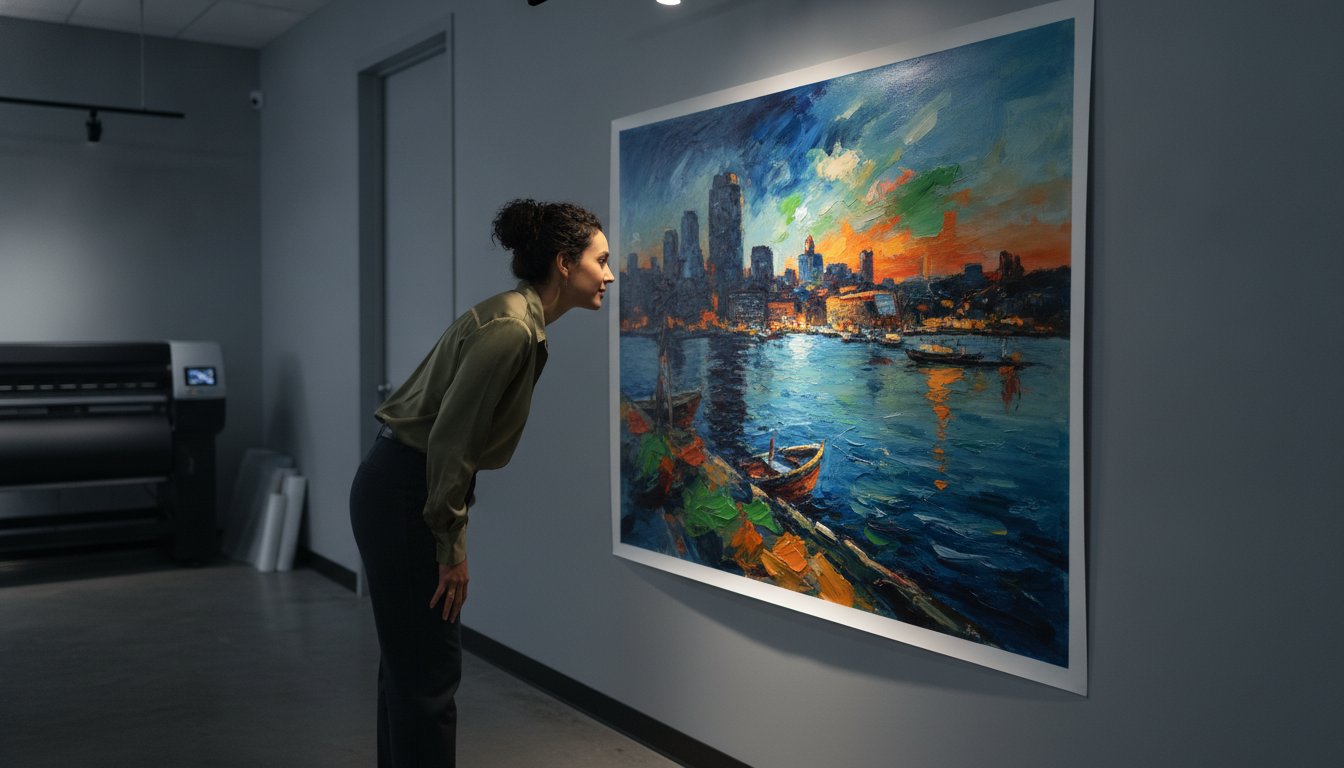
Scaling an original work requires a significant amount of native data. If you intend to take a small watercolor and transform it into a 60-inch wide canvas, the resolution must be high enough to prevent pixelation. BetterLight produces massive, clear files that allow for extreme enlargement without the introduction of digital artifacts or “noise.” When preparing files for large format fine art printing, starting with anything less than a professional scan will result in a soft, blurry final product. The difference lies in capturing real detail rather than relying on software to “guess” missing pixels. Our studio provides the BetterLight scanning expertise to ensure your work remains sharp, professional, and gallery-ready at any scale.
Material Selection: Comparing Giclée Canvas and Archival Papers
The transition from a high-resolution digital file to a physical print is where the technical precision of fine art reproduction Manchester NH becomes tangible. Choosing the right material involves more than just selecting a surface; it’s about matching the physical properties of the substrate to the emotional and visual intent of the original work. The Giclée standard is defined by the use of pigment-based inks, which offer superior depth and stability compared to the dye-based alternatives found in standard commercial printers. Pigment particles are physically larger and more resistant to environmental degradation, ensuring that the colors you see today remain consistent for decades. This archival foundation is what distinguishes a professional reproduction from a temporary commercial print.
Canvas Prints and Custom Textures
Canvas provides a structural presence that closely mimics the look and feel of an original painting on stretcher bars. This material is particularly effective for large-scale installations where the weight and texture of the fabric add a sense of permanence to the work. Professional Giclée canvas can be finished with matte, satin, or gloss coatings to replicate the specific sheen of the artist’s original varnish. Because Image-Tec specializes in wide-format prints up to 60 inches, artists have the freedom to reproduce their largest works without compromising the structural integrity of the canvas or the vibrancy of the ink. The durability of canvas also makes it an excellent choice for high-traffic environments where glass-protected frames might be impractical.
Archival Papers and Longevity
For works on paper, such as watercolors, detailed charcoal drawings, or fine art photography, the choice of paper is critical for both aesthetics and longevity. We utilize acid-free, 100% cotton rag papers that are naturally pH neutral. This specific chemistry prevents the yellowing or brittleness often seen in lower-quality wood-pulp papers. When evaluating paper options, artists should consider the following factors:
- Weight and Thickness: Measured in grams per square meter (gsm), heavier papers provide a premium, gallery-ready feel.
- Surface Texture: Smooth hot-press papers are ideal for fine details and photography, while cold-press papers offer a heavy tooth that complements watercolors.
- Brightness Levels: Choosing a paper with the correct “white point” ensures that the highlights of the reproduction match the original highlights.
High lightfastness ratings are essential for any piece intended for long-term display. These ratings ensure your art doesn’t fade when exposed to the indirect light of the Manchester sun. By selecting a 100% cotton rag substrate, you are investing in a medium that is designed to last a lifetime without losing its clarity or color balance.
Protecting Your Investment: Archival Standards and Custom Framing
The final stage of your fine art reproduction Manchester NH project is the most critical for long-term preservation. Custom framing serves as both a structural safeguard and a visual completion of the work. It isn’t merely a decorative border; it’s a controlled environment designed to shield the print from humidity, pollutants, and physical handling. True museum-quality standards require the integration of UV-protective glass and acid-free mounting materials. These components work together to prevent the fading and degradation that can occur in even well-lit gallery spaces. By handling the framing at the point of reproduction, you eliminate the logistical risks associated with transporting loose, vulnerable prints between separate vendors.
Archival Mounting and Matting
Lignin-free materials are the foundation of archival framing. Lignin is the organic polymer found in wood pulp that causes paper to turn yellow and become brittle as it ages. By utilizing 100% cotton rag matboards, you ensure that the reproduction remains as vibrant as the day it was printed. Reversible mounting techniques are equally essential for professional artists. These methods allow the artwork to be removed or adjusted in the future without causing any damage to the substrate. This practice is a hallmark of professional craftsmanship and significantly increases the resale value of limited edition prints by guaranteeing their long-term stability.
Integrating these standards into your workflow provides several key benefits:
- Prevention of Acid Burn: Acid-free barriers protect the print from the off-gassing of non-archival materials.
- Structural Support: Proper mounting prevents warping or “rippling” in large-scale works.
- Enhanced Clarity: High-grade UV glass reduces glare while blocking up to 99% of harmful light rays.
The Aesthetic Impact of Custom Frames
Manchester’s architectural landscape often blends historic mill-building aesthetics with modern, minimalist interiors. Selecting a frame profile requires a nuanced understanding of these environments. For creators working at a significant scale, we provide wide-format framing solutions that accommodate canvas prints up to 60 inches wide. Consulting with a master framer helps you choose a finish that complements the specific palette of your work while ensuring the frame is strong enough to support the weight of an oversized display. This collaborative process ensures the final presentation meets the high expectations of New England collectors and galleries. Finalize your project with our Custom Art Framing and Giclée Printing services to ensure every piece is gallery-ready.
The Image-Tec Advantage: Professional Reproduction Services
Choosing a partner for fine art reproduction Manchester NH is a decision that impacts the long-term legacy of your creative work. Since 1994, Image-Tec has operated as a specialized resource for the New England creative community, providing a level of technical oversight that high-volume commercial outlets cannot replicate. Our studio functions as a local pillar for artists who require more than just a print; they need a dependable partner who understands the nuances of archival chemistry and digital precision. This seasoned professionalism is what allows us to handle diverse challenges, from large-scale contemporary canvases to delicate, aging originals that require a master’s touch.
The security of your original artwork remains our primary concern throughout the reproduction process. When you bring your portfolio to our studio, your work stays within our professional care from the initial scan to the final custom frame. This localized approach eliminates the risks of third-party shipping and ensures that you have direct access to the experts handling your project. Our commitment to technical excellence is reflected in our comprehensive suite of services, ensuring that every artist in the Queen City has access to museum-quality output right in their own backyard.
A Legacy of Technical Excellence
Our founding in 1994 marked the beginning of a decades-long evolution alongside digital technology. We’ve transitioned from traditional darkroom techniques to the sophisticated BetterLight scanning and Giclée workflows that define modern archival standards. This deep foundational knowledge is why our Methuen studio remains the preferred choice for Manchester NH professionals. Our expertise extends beyond new creations; we provide a Professional Historical Image Restoration Service that utilizes the same high-resolution capture and pigment-based printing methods to preserve historical legacies. This breadth of experience ensures we can solve complex color-matching and texture-capture issues that often baffle less specialized shops.
Start Your Reproduction Project Today
Beginning a project with us is a methodical and reassuring process. We encourage artists to schedule a consultation at our studio to discuss the specific requirements of their edition. During this time, we review your original media and determine the best capture and substrate options to achieve your desired outcome. When preparing your artwork for transport from Manchester, we suggest the following steps:
- Secure Packaging: Use acid-free glassine or archival paper to protect the surface of the work.
- Climate Control: Transport your work in a climate-controlled vehicle to avoid sudden shifts in humidity.
- Documentation: Maintain a record of the original’s dimensions and any specific color notes you wish to emphasize.
As a privately owned independent studio, we provide a personalized environment where your vision is the priority. You’ll work directly with technicians who take pride in craftsmanship and precision, ensuring that the final print is a true reflection of your professional skill.
Elevate Your Portfolio with Museum-Quality Reproductions
Achieving a faithful fine art reproduction Manchester NH requires a technical synergy between high-resolution digital capture and archival-grade output. By prioritizing BetterLight high-resolution scanning over standard photography, you ensure that every textural nuance of your original work is preserved without lens distortion. This foundation, paired with pigment-based Giclée prints up to 60″ wide, allows you to scale your work for any gallery or collector while maintaining total color fidelity. Utilizing archival substrates ensures these pieces remain vibrant for generations, protecting your professional reputation and your clients’ investments.
Expert custom framing in-house completes the process, providing a secure, single-studio solution where your original art never leaves our care. This localized approach offers the peace of mind and personalized service that large commercial print shops simply cannot match. We invite you to Contact Image-Tec for a Professional Art Reproduction Consultation to discuss your next project. We look forward to helping you transform your original masterpieces into enduring, museum-quality editions that stand the test of time.
Frequently Asked Questions
What is the difference between a standard scan and BetterLight scanning?
BetterLight scanning utilizes a specialized scanning back on a large format camera to capture detail that standard flatbed scanners or digital cameras often miss. This technology eliminates the lens distortion and uneven lighting typical of tripod-mounted camera captures. By recording the image in a linear, methodical scan, we preserve the three dimensional texture of brushstrokes and the subtle tonal shifts in your original artwork with museum grade precision.
How large can you reproduce my artwork?
Our studio is equipped to produce large scale Giclée prints on both canvas and archival papers up to 60 inches wide. This capability allows Manchester artists to scale their smaller originals into impactful gallery pieces without sacrificing clarity or resolution. Because we utilize high bit depth BetterLight capture, the resulting files contain enough native data to support these significant enlargements while maintaining the sharp edges and rich colors of the original masterpiece.
How long does the fine art reproduction process take?
The timeline for a professional reproduction project generally spans one to two weeks, depending on the specific requirements of the work. This duration accounts for the high resolution capture, digital post production, and the iterative color matching process required to ensure fidelity. We prioritize accuracy over speed, providing physical proofs for artist approval before proceeding with the final production run to ensure the output meets the highest professional standards.
Do I need to leave my original artwork at the studio?
We require artists to leave their original works at our secure Methuen studio for the duration of the capture and color matching process. This proximity is a key advantage for fine art reproduction Manchester NH, as it ensures your artwork never leaves our professional care or faces the risks of third party shipping. Having the original on site allows our technicians to perform side by side comparisons under controlled lighting, ensuring the final print is a true twin.
Can you restore old, damaged photographs as part of the reproduction?
We provide comprehensive historical image restoration services designed to preserve and enhance aged or damaged photographs and artwork. Our process begins with a high resolution BetterLight scan to capture the existing detail safely. From there, our specialists perform digital repairs to remove tears, stains, or fading without ever altering the physical original. This service is ideal for preserving family legacies or preparing historical archives for gallery quality display and distribution.
Is Giclée printing better than standard inkjet printing?
Giclée printing is the industry standard for museum quality reproductions because it utilizes pigment based inks rather than the dye based inks found in standard inkjet printers. Pigment inks offer superior lightfastness and a wider color gamut, which prevents fading and ensures deep, rich tones. When combined with acid free, 100% cotton rag papers or archival canvas, these prints are designed to last a lifetime, meeting the strict requirements of galleries and serious collectors.
Do you offer custom framing for the prints you produce?
Our studio provides expert custom framing in house, ensuring that your prints are protected and presented according to archival standards. We utilize museum grade materials, including UV filtering glazing and acid free mounting boards, to safeguard the artwork from environmental damage. Handling both the printing and framing in a single location ensures a perfect fit and color harmony, streamlining the workflow for professional artists who need their work to be gallery ready upon delivery.
What file formats will I receive for my digitized artwork?
We typically deliver high resolution digital files in TIFF or JPEG formats, depending on your specific needs for archiving or future use. These files are color managed and optimized to retain the full range of detail captured during the scanning process. Providing these professional grade files ensures you have a permanent digital record of your work that can be used for secondary applications, such as website portfolios, grant applications, or additional small scale promotional materials.




Leave A Comment
You must be logged in to post a comment.