
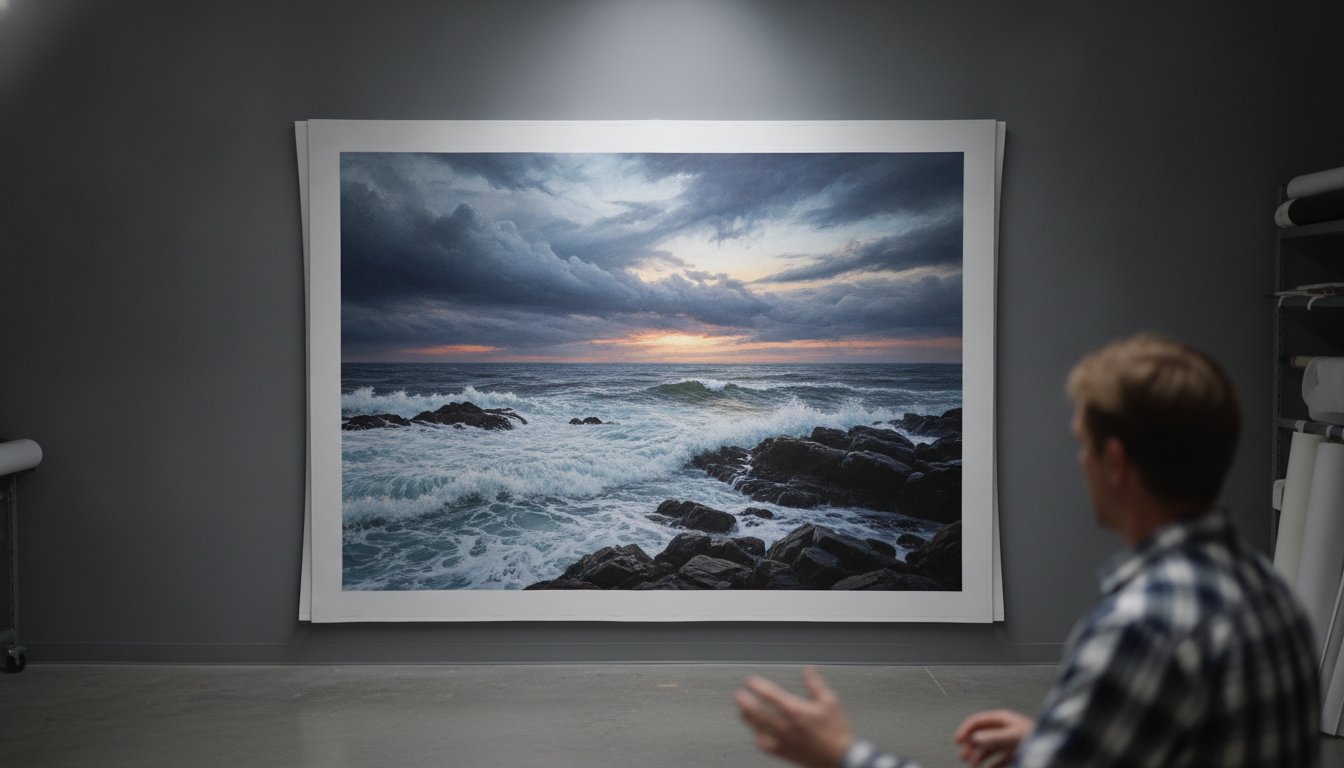
Why does a photograph that looks stunning on your screen often lose its soul once it hits the canvas? Many artists and photographers in the North Shore area have experienced the frustration of receiving a print where the colors are dull, the resolution is muddy, or the fabric begins to sag within just a few months. It’s disappointing when a captured moment or a piece of fine art doesn’t receive the technical respect it deserves. When searching for canvas printing services Newburyport, it’s easy to get lost in a sea of low-cost, mass-production options that prioritize volume over archival integrity.
This guide helps you look past the marketing fluff to identify true museum-quality Giclée prints that will preserve your work for over a century. You’ll learn how to select a partner who understands that professional printing is a technical craft, not a commodity. We’ll explore the critical standards of archival pigment inks, the importance of high-resolution scanning for faithful art reproduction, and why local, expert stretching is the only way to ensure your canvas remains taut and beautiful for decades to come.
Key Takeaways
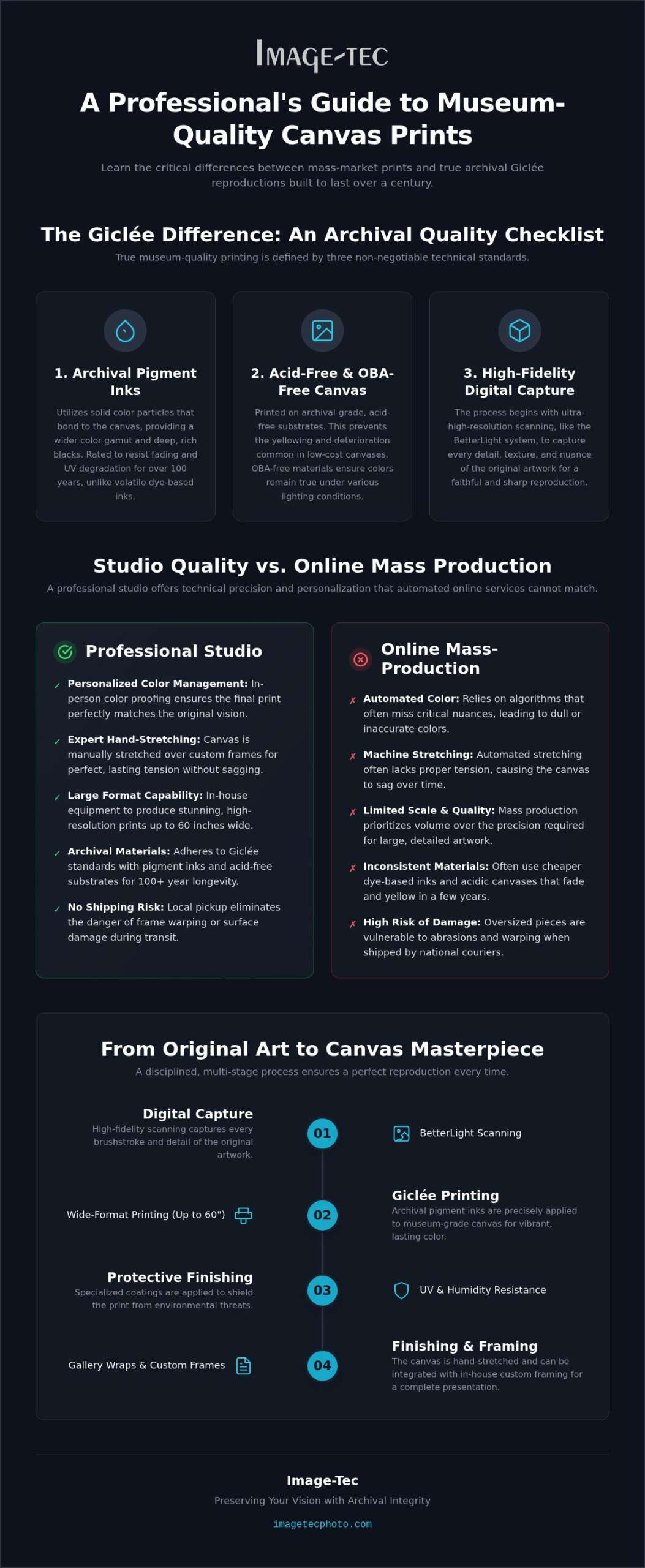
- Understand the technical requirements for true Giclée printing, including the use of archival pigment inks and acid-free substrates that ensure your work lasts over 100 years.
- Identify the specific criteria for selecting professional canvas printing services in Newburyport that offer hand-stretched frames and personalized color management over mass-produced online alternatives.
- Learn how to choose the right edge treatments and protective coatings, such as gallery wraps and matte or satin finishes, to complement your specific display environment.
- Discover the industry-standard BetterLight scanning process used to capture every nuance of original artwork for high-fidelity digital reproduction.
- Explore the logistical advantages of working with a local studio capable of producing large-scale prints up to 60 inches wide with integrated custom framing services.
Selecting Professional Canvas Printing Services in Newburyport: What to Look For
Professional canvas printing is a disciplined technical craft. It requires a precise synergy between high-resolution digital capture, precision ink delivery, and structural stability. When you search for canvas printing services Newburyport, it’s essential to distinguish between retail-level output and studio-grade reproductions. A professional print isn’t merely “ink on fabric.” It’s a calibrated representation of an original vision, built to withstand environmental stressors while maintaining visual fidelity. Understanding the technical requirements of archival production is the first step in ensuring your art survives the test of time.
The Newburyport Standard: Why Local Quality Matters
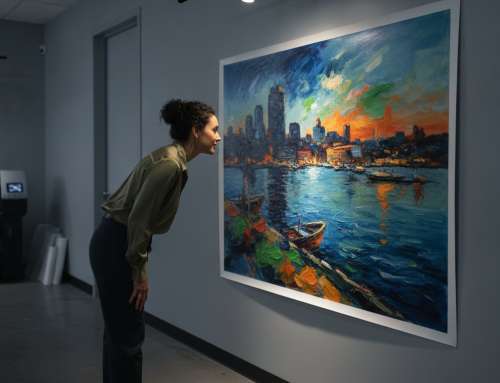
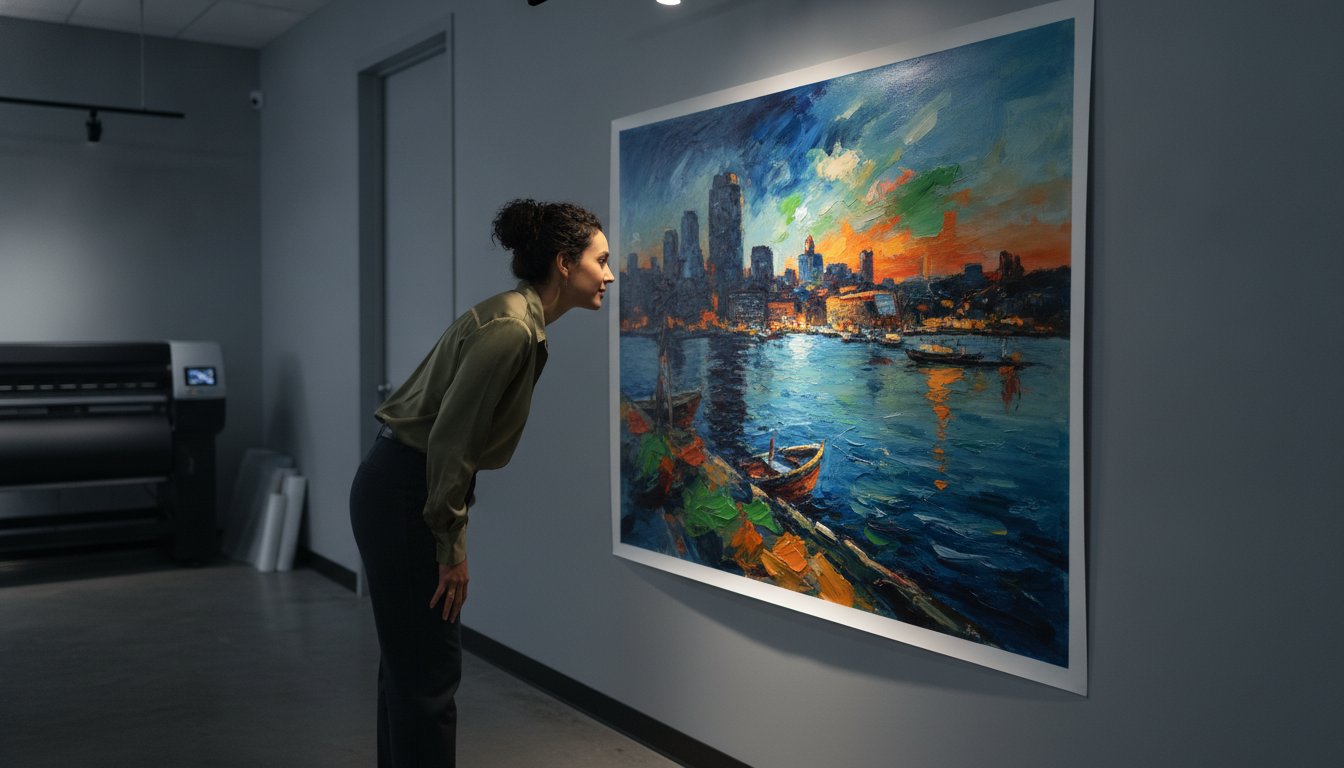
Artists and collectors in the North Shore community benefit significantly from local studio partnerships. While online platforms offer convenience, they lack the critical nuance of in-person color proofing. Seeing a physical proof under controlled studio lighting ensures the final 60-inch canvas matches your original artwork or digital file perfectly. This collaborative process allows for real-time adjustments to contrast and saturation that automated systems often miss. Working locally also eliminates the high risks associated with shipping oversized pieces. Large-format works are vulnerable to frame warping and surface abrasions when handled by national couriers. Local pickup ensures the masterpiece stays in a stable, climate-controlled environment from the printer to your wall.
Archival Longevity in Coastal Environments
Newburyport’s proximity to the Atlantic introduces specific environmental challenges for art preservation. High humidity and corrosive salt air can quickly degrade standard inkjet prints, leading to color shifts or substrate deterioration. Professional studios adhere to Giclée printing standards, utilizing archival, pigment-based inks that bond deeply with acid-free substrates. These materials are inherently more stable than the dye-based inks found in mass-market retail shops. To further protect your investment, museum-quality canvases receive specialized UV-resistant coatings. These layers act as a protective barrier against atmospheric contaminants and the harsh sunlight common in coastal homes, ensuring your art remains vibrant for over a century.
Before commissioning a project, use this initial checklist to evaluate a service provider:
- Digital Capture: Confirm they use specialized equipment like BetterLight scanning for high-fidelity art reproduction.
- Ink Technology: Verify the use of pigment-based archival inks rather than cheaper dyes.
- Substrate Quality: Ensure the canvas is OBA-free and acid-free to prevent yellowing over time.
- Scale and Infrastructure: Check if the studio can handle large-format projects up to 60 inches wide.
- Structural Finishing: Look for in-house custom framing to ensure the canvas is stretched correctly for long-term tension.
The Technical Blueprint: Giclée Standards and Wide Format Printing
A true Giclée print is defined by its adherence to specific archival criteria. While many “photo-to-canvas” services use the term loosely, a professional reproduction requires the combination of high-resolution output, archival pigment inks, and acid-free substrates. This process ensures that the nuances of a photograph or painting are captured with absolute fidelity. For those seeking canvas printing services Newburyport, understanding these technical blueprints is the only way to distinguish a temporary home decor item from a museum-quality investment.
Pigment-Based Inks vs. Dye-Based Alternatives
The primary differentiator in print longevity is the chemistry of the ink. Most consumer-grade printers utilize dye-based inks, which consist of colorants dissolved in liquid. These inks are highly susceptible to oxidation and UV degradation, often showing significant fading within a few years. In contrast, professional Giclée printing utilizes pigment-based inks. These inks contain solid particles of color that sit on the surface of the canvas fibers. This technology provides a significantly wider color gamut and deep, rich blacks that dye inks can’t replicate. More importantly, pigment inks are rated to last over 100 years without noticeable fading when paired with archival substrates.
Large Format Capabilities: Printing at Scale
Scaling an image to a massive size introduces complex technical hurdles. There are unique large format fine art printing challenges, such as maintaining pixel density and preventing interpolation artifacts. To achieve professional results at widths up to 60 inches, the source file must meet rigorous digital image preservation standards. This ensures that even at extreme scales, the print retains its sharpness and detail. A low-resolution file will quickly reveal its flaws when stretched across a large frame, resulting in pixelation that diminishes the impact of the work.
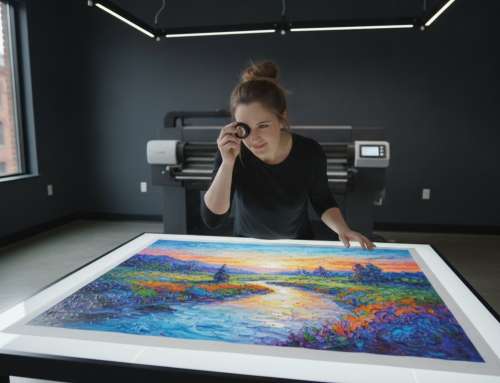
Our studio utilizes wide-format systems designed for high-end precision. These machines handle heavy-weight cotton-polyester canvases that remain stable under tension. When printing at these dimensions, the mechanical accuracy of the printer’s drive system is critical to prevent banding or color shifts across the span of the piece. If you’re planning a statement piece for a gallery or commercial space, consult with our technical team to ensure your digital files are optimized for large-scale output. This collaborative approach ensures that the final result meets the highest professional standards for clarity and depth.
Studio Quality vs. Online Mass Production: A Comparison Guide
The market is saturated with automated platforms promising rapid results at bargain prices. While these services might suffice for temporary decor, they often fail the technical requirements of fine art and professional photography. For those seeking canvas printing services Newburyport, the distinction lies in the quality of raw materials and the level of manual craftsmanship applied to every piece. A studio environment prioritizes the enduring nature of the work, whereas mass production focuses on throughput and cost reduction. This fundamental difference in philosophy affects everything from color stability to the physical durability of the frame.
Evaluating Material Weight and Texture
Mass-market prints frequently utilize lightweight polyester blends that lack the depth and “tooth” of traditional canvas. These materials feel thin and can appear plasticky under gallery lighting. We utilize heavy-weight cotton-polyester substrates that provide a premium tactile feel and superior ink absorption. A critical concern with inexpensive materials is the use of Optical Brightening Agents (OBAs). These chemicals are added to make the canvas appear unnaturally bright white, but they eventually break down through oxidation. This process causes the print to yellow and lose its brilliance within just a few years. We prioritize OBA-free, acid-free options to ensure the color remains accurate and the substrate stays stable for decades.
Professional Stretching and Structural Integrity
The longevity of a canvas print depends heavily on its internal support system. Online services often use thin, composite stretcher bars that warp easily when exposed to the humidity changes common in New England. A professional studio utilizes kiln-dried wood bars that resist twisting and bowing. Proper hand-stretching is a manual skill; it ensures the canvas is under uniform tension without “ghosting” or sagging over time. For our large-scale works up to 60 inches, we implement heavy-duty bracing and cross-bars to maintain structural integrity. This prevents the frame from bowing inward under the significant tension required to keep a large canvas taut.
Another common failure in mass production is edge cracking. When a canvas is machine-folded without proper humidity control or specialized flexible coatings, the ink layer can fracture at the corners. This reveals the white canvas underneath and ruins the professional aesthetic. We apply specialized, flexible finishes that protect the pigment layer, ensuring a smooth wrap that remains intact. Beyond the materials, the value of a master printer cannot be overstated. An algorithm can’t understand the emotional weight of a shadow or the subtle skin tones in a portrait. Having an expert eye oversee the production ensures your vision is translated with technical precision and artistic respect.
Customization Options: Canvas Wraps, Finishes, and Framing
Selecting the right presentation style is as critical as the printing process itself. It determines how a piece interacts with the surrounding architecture and lighting of a room. Professional canvas printing services Newburyport provide a range of finishing options that transform a raw print into a gallery-ready installation. These choices affect not only the visual impact but also the long-term protection of the pigment layer. A well-chosen finish ensures that your art remains the focal point without being obscured by glare or environmental wear.
Gallery Wraps vs. Museum Wraps
The edge treatment of a canvas defines its profile on the wall. A gallery wrap involves continuing the image around the sides of the stretcher bars. This creates a contemporary, three-dimensional effect that works well for landscapes and abstract photography. However, this method requires a “bleed” area; you must ensure critical elements of the composition aren’t lost to the sides. For portraits or tightly cropped art, a museum wrap is often the superior choice. This style utilizes a solid black or white border on the edges, keeping the entire original image visible on the front face. We typically offer 1.5-inch and 2-inch profiles. The deeper 2-inch bars provide a more substantial, sculptural presence, especially for large-scale works.
Protective coatings are the final step in the production cycle. We apply specialized matte, satin, or gloss finishes depending on the desired aesthetic and the display environment. A matte finish is ideal for rooms with high natural light, as it eliminates distracting reflections. Satin provides a subtle sheen that enhances color saturation, while gloss offers the highest level of contrast and depth. These coatings are more than just aesthetic; they provide a flexible, UV-resistant barrier that prevents the ink layer from cracking or fading.
Custom Framing for Canvas
Integrating custom art framing adds a layer of sophistication and structural stability to your print. Floating frames are a popular modern choice. These frames leave a small gap between the canvas edge and the frame, making the artwork appear as if it’s suspended in space. This style provides a clean, minimalist border that doesn’t overlap the face of the art. For more classical reproductions, traditional frames add weight and a sense of historical presence. Beyond aesthetics, a frame provides essential structural support for canvases approaching our 60-inch width limit. It helps maintain the squareness of the stretcher bars and protects the vulnerable corners from physical impact.
If you’re ready to finalize your project with a professional presentation that lasts for generations, contact our studio to discuss your framing options.
From Original Art to Canvas: The Image-Tec Reproduction Process
The successful transition from a physical painting or a vintage photograph to a large-format print is a disciplined journey. It requires a deep understanding of light, color space, and digital resolution. For those evaluating canvas printing services Newburyport, the most critical factor is often the quality of the initial digital capture. Without a high-fidelity scan, even the most advanced Giclée printer cannot produce a faithful reproduction. Our studio specializes in the technical nuances of art reproduction printing services, ensuring that the final canvas honors the soul of the original work.
BetterLight Scanning: Capturing Every Detail
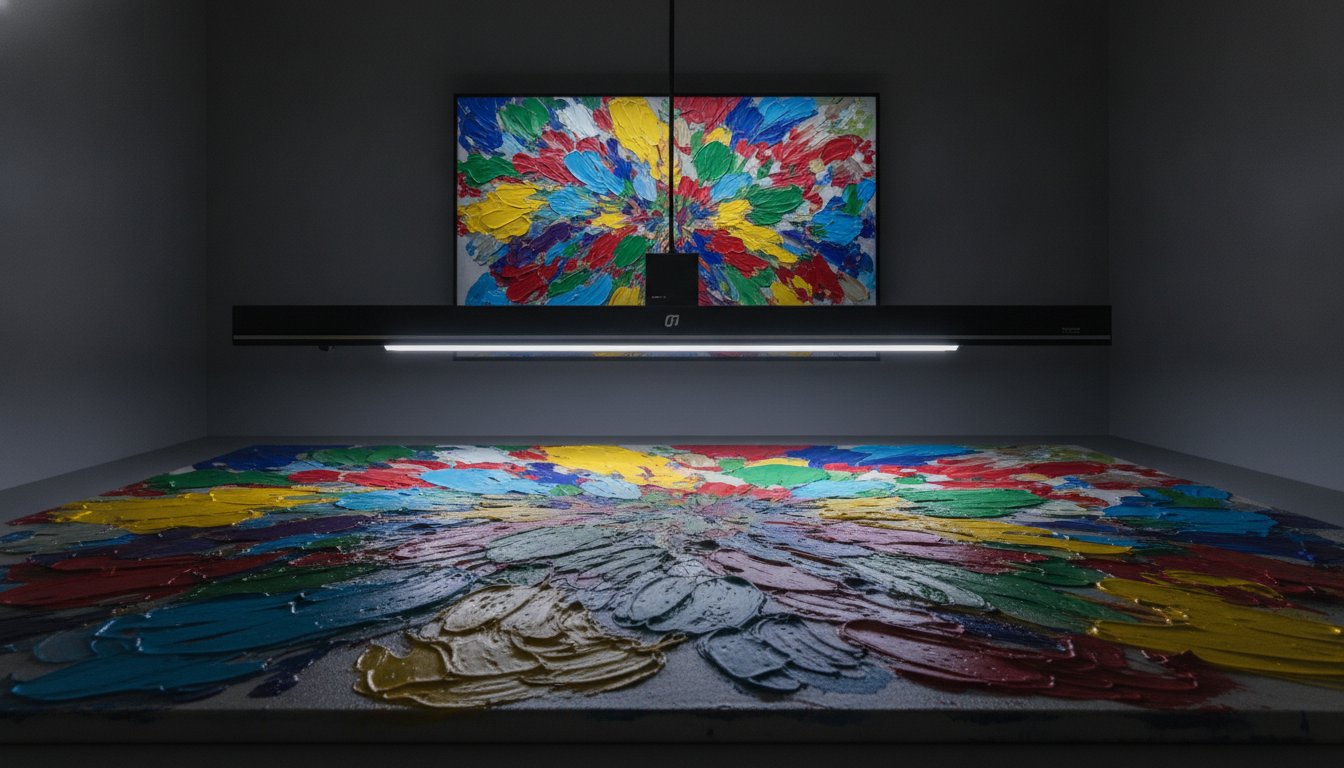
Standard flatbed scanners and traditional digital photography often fall short when capturing fine art. Flatbeds are limited by size and can’t handle the depth of thick impasto brushstrokes; meanwhile, handheld photography often suffers from lens distortion and uneven lighting. We utilize the BetterLight scanning system, which is the industry standard for museum-grade capture. This technology uses a precision scanning back that moves across the image plane, capturing data linearly with zero distortion. It records every nuance of texture, color, and depth, providing a file that is optimized for large-scale output without losing sharpness.
Historical Restoration and Digital Enhancements
Many clients in the North Shore area bring us family heirlooms that have suffered from decades of environmental wear. Our historical image restoration services are designed to breathe new life into these legacy pieces. We address common issues such as silver mirroring, physical cracks, and chemical color shifts. By digitally repairing these flaws, we can transform a small, damaged vintage print into an impressive, gallery-wrapped canvas that serves as a focal point in a home. This process is particularly effective for canvas printing services Newburyport clients who wish to preserve their family history in a format that is both durable and visually striking.
The final stage of our process involves rigorous color matching. We compare the digital proof against the original artwork under controlled lighting. This ensures that the pigment-based inks on the final canvas substrate perfectly replicate the artist’s intended palette. Whether you’re an artist looking to sell limited editions or a collector preserving a piece of New England history, our methodical approach ensures technical excellence at every step.
Elevating Your Art with Archival Excellence
Selecting the right production partner is the fundamental difference between a temporary decorative item and a lasting artistic investment. As we’ve explored, true Giclée printing requires a meticulous synergy of archival pigment inks and acid-free substrates to withstand the specific environmental challenges of the North Shore. For those seeking canvas printing services Newburyport, prioritizing technical infrastructure over retail convenience ensures your work retains its integrity for over a century. A professional studio provides the personalized oversight and color management that automated algorithms simply can’t replicate.
Our facility is equipped with the specialized tools necessary for museum-quality results. We utilize BetterLight scanning technology to capture the finest nuances of original art and produce prints up to 60 inches wide for high-impact gallery displays. Every project is finished in our in-house custom framing studio, which ensures both structural stability and aesthetic harmony. Whether you’re reproducing a historical heirloom or a modern photographic masterpiece, a commitment to professional standards preserves your legacy for generations to come. We look forward to helping you transform your digital files or original paintings into enduring works of art.
Request a Consultation for Professional Canvas Printing today to discuss the specific requirements for your next project.
Frequently Asked Questions
What is the difference between a standard canvas print and a Giclee print?
A Giclee print is distinguished by its use of archival-grade, pigment-based inks and acid-free cotton-polyester substrates. Standard canvas prints often utilize dye-based inks and cheaper materials that are prone to fading and yellowing over time. By adhering to museum standards, Giclee printing ensures color accuracy and structural longevity for over a century. This technical distinction is vital for those seeking canvas printing services Newburyport who want to preserve their art rather than just create a temporary decoration.
How large can you print on canvas at your studio?
Our studio has the technical infrastructure to produce large-format prints up to 60 inches wide. We utilize high-end wide-format printers designed for precision and consistent ink delivery across massive spans. These oversized canvases are ideal for statement pieces in commercial spaces or gallery installations. To maintain structural integrity at these dimensions, we use heavy-duty kiln-dried wood stretcher bars and custom bracing that prevents the frame from bowing or sagging under the necessary tension.
Can you create a canvas print from a physical painting?
Yes, we specialize in high-fidelity art reproduction from physical originals using our BetterLight scanning system. This industry-standard technology captures every brushstroke and texture without the distortion common in traditional photography. Once scanned, we calibrate the digital file to match the original palette exactly. This process allows artists to create museum-quality canvas prints that honor the soul of their original work, making it possible to produce limited editions or preserve family heirlooms with absolute digital precision.
How long do professional canvas prints last before fading?
Professional Giclee prints are rated to last for over 100 years without noticeable fading when displayed under typical indoor lighting conditions. This longevity is achieved through the chemical stability of archival pigment-based inks and OBA-free, acid-free substrates. We also apply specialized UV-resistant coatings to provide an extra layer of protection against atmospheric contaminants and light exposure. This ensures that your investment in canvas printing services Newburyport remains vibrant and sharp for future generations to enjoy in your home or gallery.
Do I need to frame my canvas print or is a wrap enough?
While a gallery wrap provides a clean, contemporary look that is ready to hang, custom framing adds an extra layer of sophistication and structural support. Floating frames are particularly popular for canvas, as they provide a finished border without overlapping the face of the art. For very large prints, a frame helps maintain the squareness of the stretcher bars over time. We offer in-house custom framing to help you select a style that complements both the artwork and your interior.
What file resolution do I need for a large format canvas print?
For large-format output, we recommend a file resolution of 300 DPI at the final print size to ensure maximum sharpness. However, for oversized pieces, a slightly lower resolution may be acceptable depending on the intended viewing distance. Our technical team evaluates every file before production to check for pixelation or interpolation artifacts. If you are starting with a physical original, our BetterLight scanning service provides the high-resolution digital foundation necessary for professional-grade results at any scale.
How do I clean and maintain my canvas art?
Maintenance of professional canvas art is straightforward but requires a gentle approach. You should dust the surface periodically using a soft, dry, lint-free cloth or a clean feather duster. Never use water, chemical cleaners, or solvents, as these can degrade the protective UV coating and the ink layer underneath. It’s also best to avoid hanging your art in areas with extreme humidity or direct, prolonged sunlight to ensure the materials remain stable and the colors stay vibrant for decades.
Is canvas printing suitable for high-resolution commercial photography?
Canvas printing is an excellent medium for commercial photography, providing a sophisticated texture that reduces glare in brightly lit environments. The depth of the substrate adds a tactile quality that traditional photographic paper cannot replicate. It’s particularly effective for large-scale architectural, automotive, or product displays where a matte finish is preferred. Our wide-format capabilities ensure that even the most detailed commercial images retain their clarity and professional impact when scaled for high-end corporate or retail spaces.



Leave A Comment
You must be logged in to post a comment.