
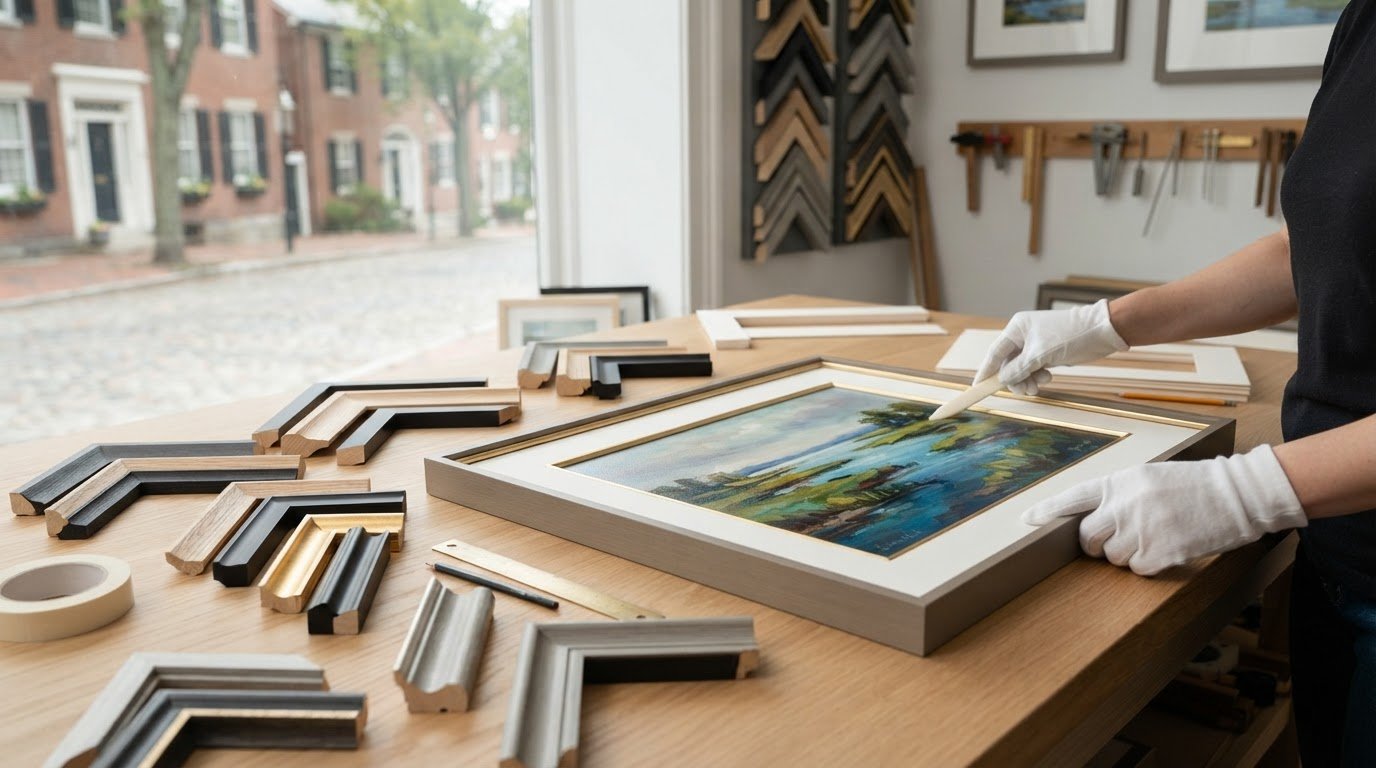
The frame should support the artwork, not compete with it. For custom art framing in Newburyport, choose a design that suits the piece’s medium, colors, scale, and intended display. A considered frame can bring the work into focus and help it feel at home in its setting.
Choosing a frame can feel like a small detail until you’re comparing profiles, finishes, and the narrow fillet that borders the artwork. This guide covers what to consider for fine art, how frame and fillet choices affect the finished look, and how to prepare framed work for a Newburyport Art exhibition. Use these points to decide what suits your piece and how to plan its presentation.
Key Takeaways
- Compare frame profiles and finishes with the artwork’s colors, medium, and intended display so the frame supports the piece rather than overpowering it.
- Consider how a fillet’s color and width will relate to the artwork and frame before settling on the finished composition.
- If mailing artwork to a Newburyport Art exhibition, use a box sturdy enough to withstand being mailed twice.
- Prepare framed two-dimensional work for exhibition display with screw eyes or D-rings and wire so it’s ready to hang.
Frame and fillet details
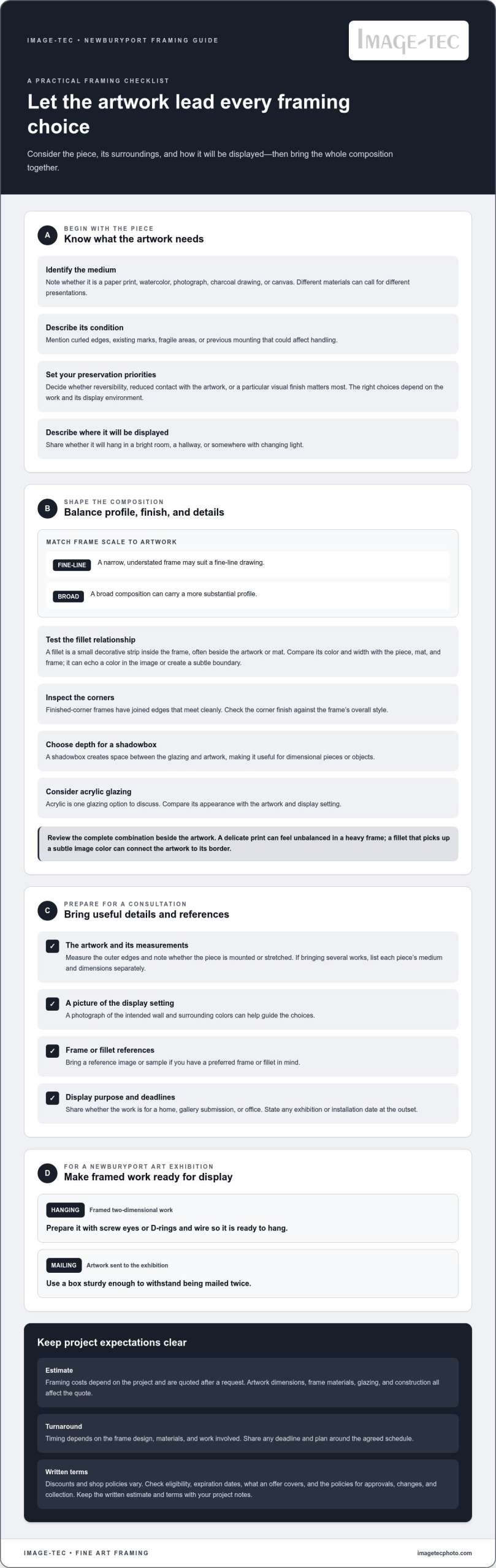
Begin with the artwork, then choose a frame profile that suits its scale and character. A fine-line drawing may pair well with a narrow, understated frame, while a broad composition can carry a more substantial profile. A fillet is a small decorative strip fitted inside the frame, often beside the artwork or mat. Its finish can echo a color in the image or create a subtle boundary around it.
For a framing consultation, bring the artwork and any exhibition or display requirements. A photograph of the intended wall and its surrounding colors can help guide the choices. If you have a preferred frame or fillet in mind, bring a reference image or sample.
For accepted framed artwork at a Newburyport Art exhibition, prepare two practical details. Framed two-dimensional work must be ready to hang with screw eyes or D-rings and wire. If you mail artwork to the exhibition, pack it in a box sturdy enough to withstand being mailed twice.
- Check the corners: Finished-corner frames have joined edges that meet cleanly, so inspect the corner finish against the frame’s overall style.
- Choose depth for a shadowbox: A shadowbox frame creates space between the glazing and the artwork, making it useful for dimensional pieces or objects.
- Decide on acrylic glazing: Acrylic is a glazing option to discuss for framed work; compare its appearance with the artwork and display setting.
- Test the fillet relationship: Compare a fillet’s color and width with the artwork, mat, and frame so the inner detail feels intentional.
Frame and fillet choices work together. A delicate print, for instance, can feel unbalanced in a heavy frame, while a fillet that picks up a subtle color in the image can connect the artwork to its border. Review the full combination beside the piece before choosing the final presentation.
Custom fine art framing
Fine art framing starts with the artwork’s materials, condition, and intended display. A charcoal drawing, for example, may need a different presentation from a stretched canvas or photographic print. Consider how the frame, mat, glazing, and backing work together instead of choosing each component in isolation. The aim is a finished presentation that respects the work’s surface and visual character.
When considering archival and conservation framing in Newburyport, separate preservation priorities from appearance preferences. A conservation-minded approach considers how the artwork is supported, which materials touch it, and whether the assembly can be changed later. The right choices depend on the medium, condition, and display environment.
Use these steps to prepare for a framing decision:
- Identify the medium: Note whether the work is a paper print, watercolor, photograph, or canvas, since each has different presentation needs.
- Describe its condition: Point out curled edges, existing marks, fragile areas, or previous mounting that may affect handling.
- Set a preservation priority: Decide whether reversibility, reduced contact with the artwork, or a particular visual finish matters most.
- Describe the display: Share whether the piece will hang in a bright room, a hallway, or a space with changing light.
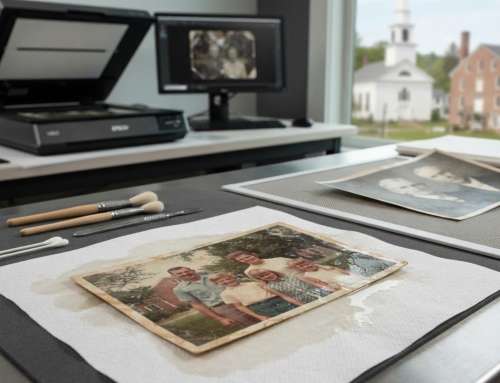
These considerations make a broad request for “archival” framing more specific. A family photograph with sentimental value, for example, may call for a different balance of preservation and presentation than a decorative print. Explain the piece’s history and intended use, then consider how the proposed materials and construction support those priorities. If the work has a known artist, edition, or title, bring that information to help identify it and explain its significance.
Custom framing can give a fine art print a considered border and display format. If the print needs reproduction before framing, plan the image dimensions and finished presentation together. This keeps the frame design connected to the artwork rather than making the border an afterthought.
Local custom framing in Newburyport
Plan a Newburyport framing consultation around the artwork and your practical needs. Bring the piece, its measurements, and a clear example of the display setting, such as a photograph of the wall. If you’re framing several works, list each piece’s medium and dimensions separately. These details give the consultation a useful starting point and help keep decisions organized.
Discounts and shop policies vary, so review the written terms instead of assuming an offer applies to every project. Check eligibility, expiration dates, what the offer covers, and the policies for approvals, changes, and collection. Framing costs depend on the project and are quoted after a request. Artwork dimensions, frame materials, glazing, and construction all affect the quote.
Turnaround depends on the frame design, materials, and work involved. A straightforward frame using available components differs from a design requiring special materials or a shadowbox build. If you’re working toward a Newburyport exhibition deadline, state the required completion date at the outset and plan around the agreed schedule.
Before planning a visit to a Newburyport business, review its current listing for the street address, posted hours, and phone or email details. Using current information helps avoid relying on an outdated saved address. Keep the shop’s contact details with your artwork notes.
- Record the artwork’s dimensions: Measure its outer edges and note whether it is mounted or stretched.
- Set the display purpose: A home wall, gallery submission, and office display may call for different presentation choices.
- Gather visual references: Bring a room photograph or frame example to explain your preferred finish.
- Write down deadlines: Share exhibition or installation dates before discussing the project schedule.
- Keep the estimate and terms: Save the written project details so you can compare them with your approved design.
A measured print, reference photograph, and clear deadline make a Newburyport framing consultation more productive. Without dimensions, for example, it can be harder to assess how a mat and frame will fit a small print. Prepare these details beforehand, and keep the agreed design and collection arrangements together.
Best-rated picture framers near Newburyport MA
A high rating can help narrow a search, but review details tell you more than a star score alone. For custom art framing in Newburyport, compare recent comments about communication, workmanship, and completed projects. A review describing a framed watercolor gives more useful context than a rating without details.
Use these checks to assess picture framers serving Newburyport:
- Read recent reviews: Look for specific descriptions of frame selection, finish quality, and how the finished piece was handled.
- Match examples to your artwork: A portfolio showing prints, paintings, or dimensional objects can help you judge relevant experience.
- Review the project details: Compare what each written estimate includes, such as the frame, mat, glazing, and backing.
- Look for clear communication: Reviews that describe design decisions or updates can show how the process felt to customers.
- Check practical information: Confirm the current address, hours, and collection arrangements before travelling to a shop.
Newburyport Art’s exhibition requirements are a practical measure of framing knowledge. Framed two-dimensional work must be ready to hang with screw eyes or D-rings and wire. If your work is for an exhibition, look for guidance on display preparation as well as frame appearance.
Compare similar projects. A review of a simple poster frame may tell you little about conservation-minded presentation or a shadowbox. Prioritize feedback that matches your project’s medium, size, and desired finish. Look for descriptions of the completed frame and how it suits the artwork, rather than relying only on general praise.
Ratings can guide your shortlist, but they don’t replace a clear project plan. Before choosing, write down the artwork type, presentation goal, and any exhibition deadline. Then use those details to compare framing approaches and decide which one fits the work. For a frame tailored to your artwork, explore custom framing options.
Image-Tec: Giclee Printing Canvas prints up to 60″ wide & custom Framing
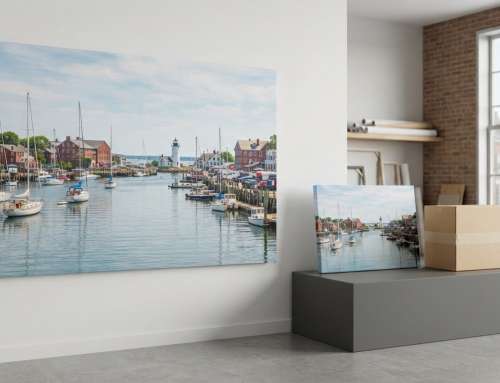
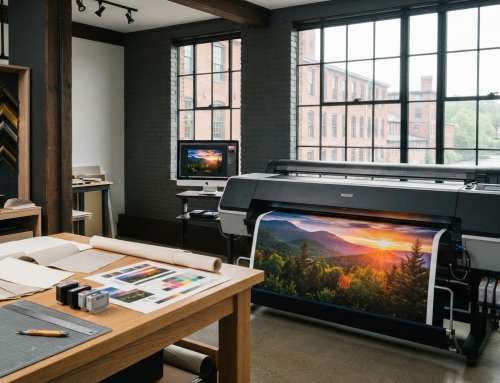
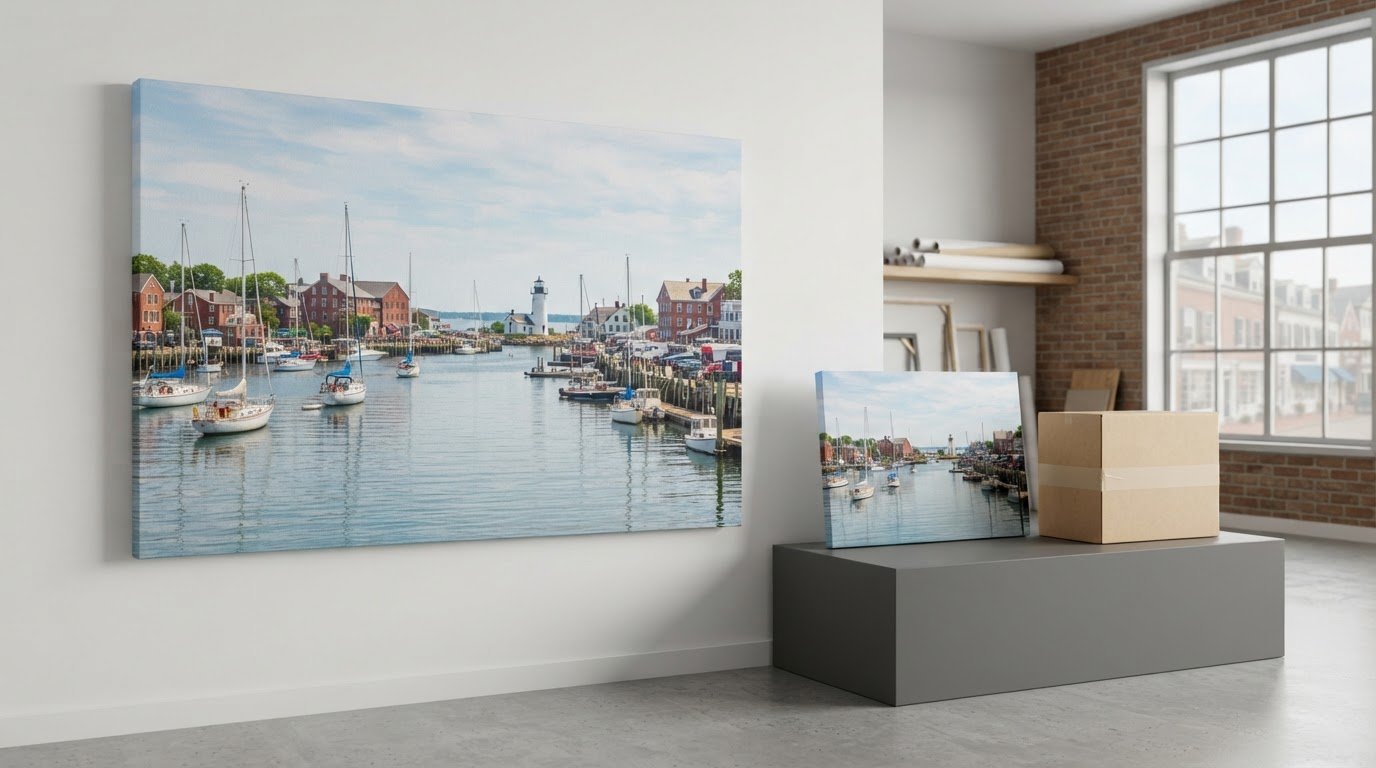
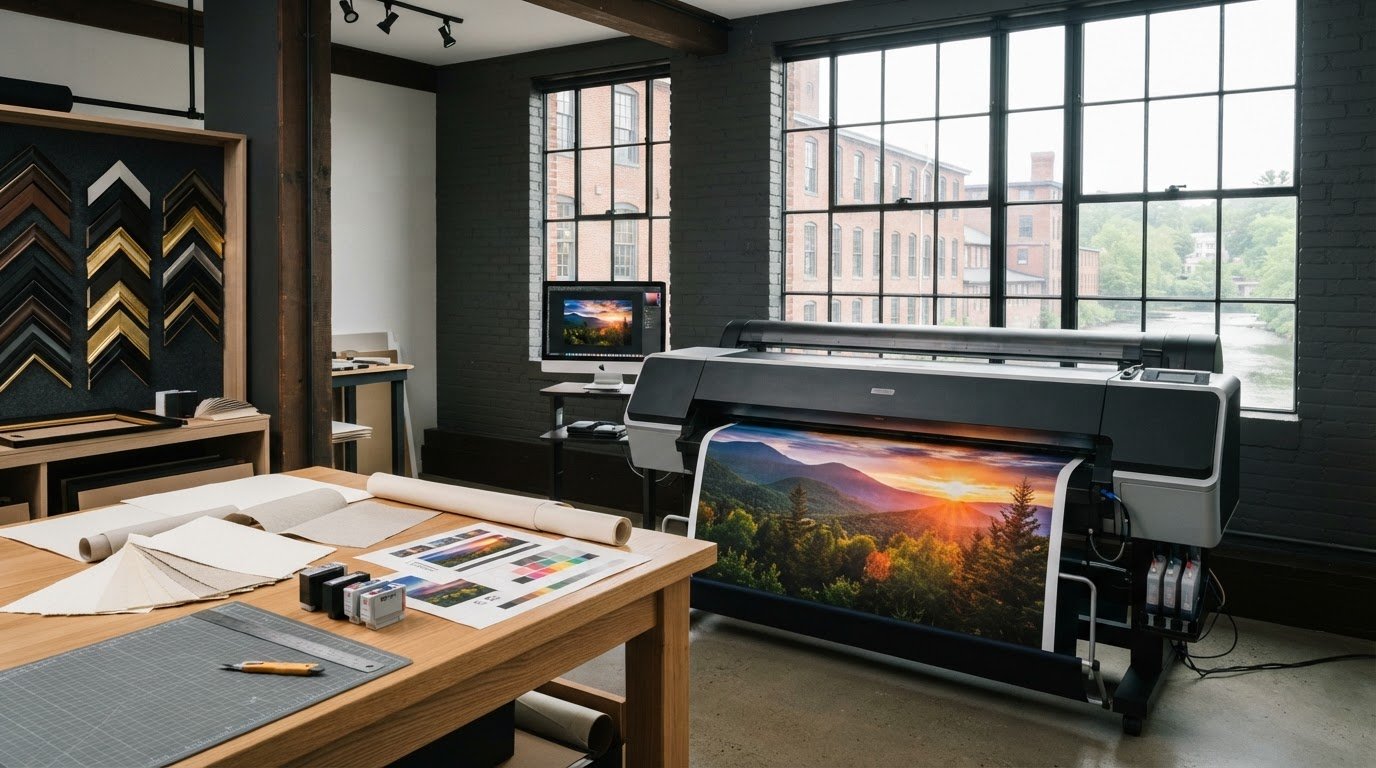
Image-Tec brings custom framing together with fine art printing for artwork that needs a coordinated presentation. Turn to the studio when you want a Giclée canvas print and framing handled as connected parts of the project, rather than separate decisions. Canvas prints are available up to 60 inches wide.
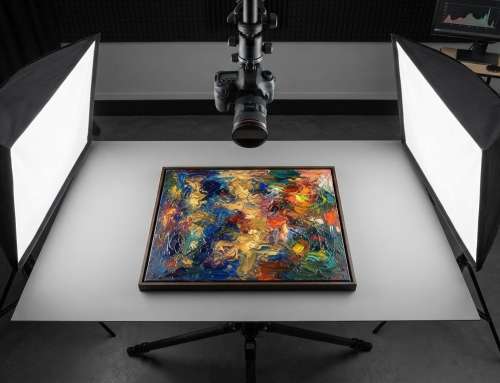
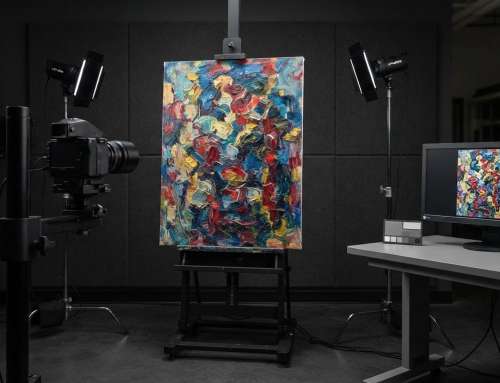
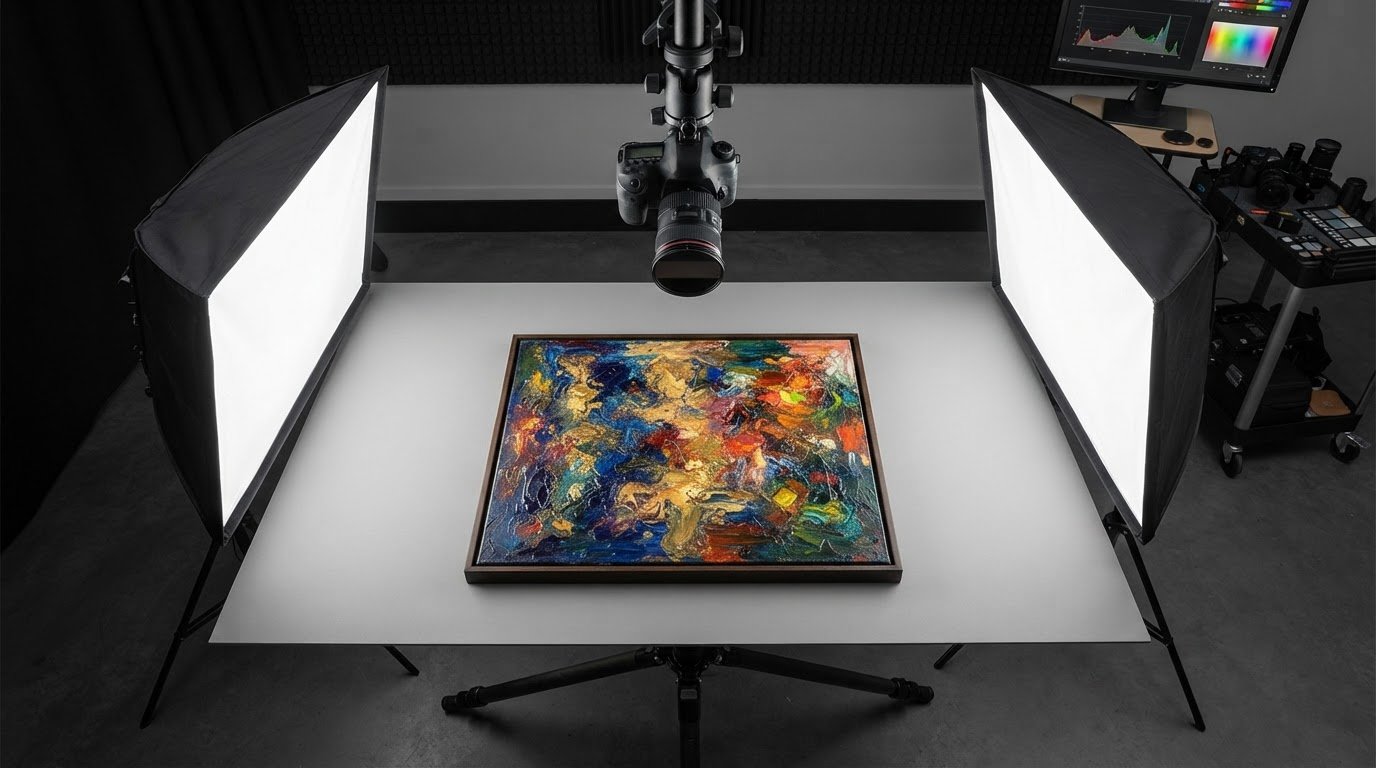
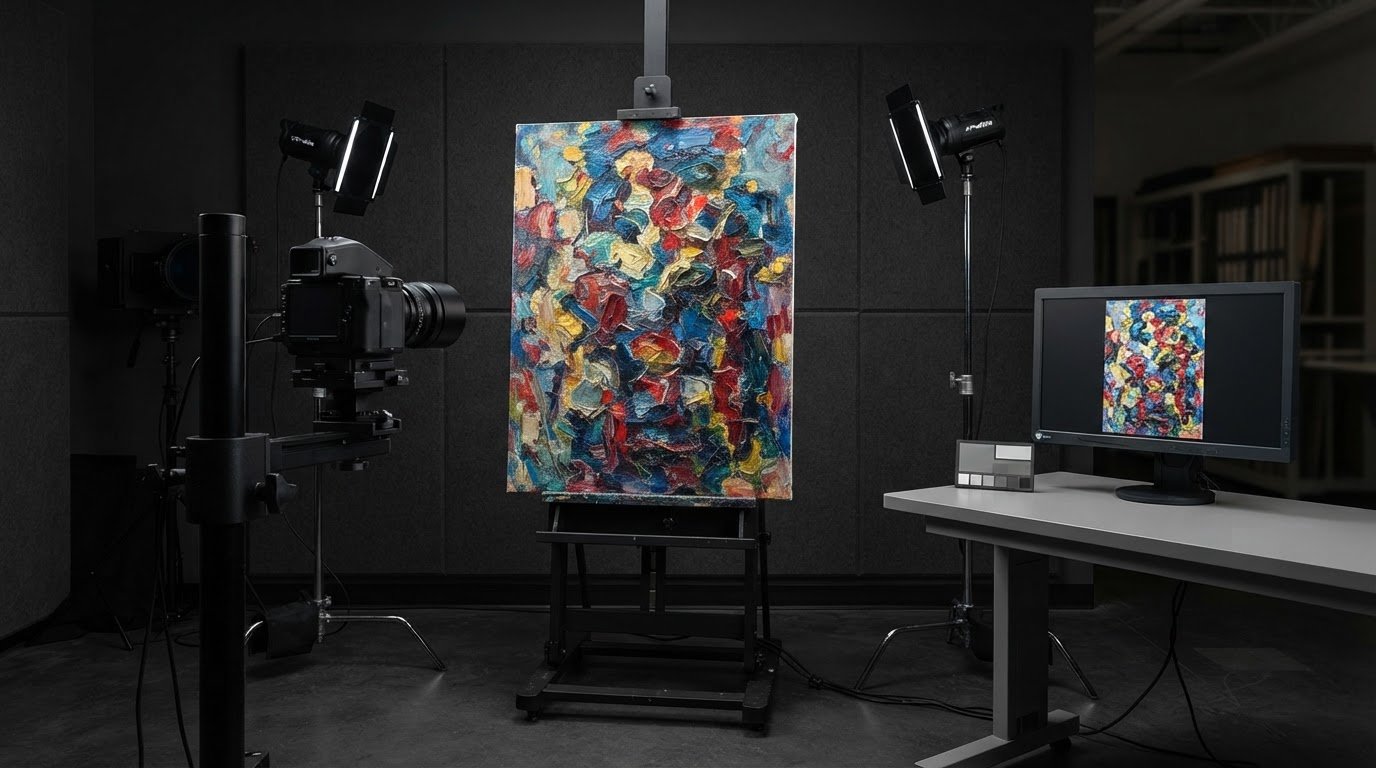
Custom framing can complete the presentation of existing artwork. BetterLight scanning is also available for precise digital capture when a work needs to be digitized before reproduction. First identify what you need: framing for an original, a canvas print, or a digital capture workflow. This helps define the next step while keeping the finished artwork in focus.
To discuss a fine art print or framing project, contact Image-Tec.
Give Your Artwork a Clear Next Step
Before choosing a frame, decide what you want the finished piece to do. You might want to preserve a meaningful original, coordinate a print with a room, or prepare artwork for display. That purpose can guide the remaining choices and keep the design focused on the piece. For custom art framing in Newburyport, start with the artwork, its intended setting, and the presentation you want.
If your project also involves producing or documenting artwork, Image-Tec offers Giclée printing, BetterLight scanning, commercial photography, and custom framing. Share what you’re preparing and the result you have in mind to start a practical conversation about your project.
Contact Image-Tec about framing and take the next step toward a presentation that feels right for your artwork.
Frequently Asked Questions
Where can I get my work framed?
Image-Tec provides custom framing for Newburyport customers from its Methuen, Massachusetts studio. It’s an option for an original artwork or a print that needs a finished presentation. Before arranging the project, clarify whether you’re bringing an existing piece or planning a print and frame together. That distinction helps define the work involved and the choices ahead.
Are there custom art framing shops in Newburyport, MA?
Image-Tec offers custom framing for people in Newburyport, with its studio based in Methuen, Massachusetts. If you’re comparing local options, distinguish a business’s service area from its physical studio address before planning a visit. For example, someone in Newburyport who prefers to discuss an artwork in person should account for the studio’s Methuen location when deciding how to proceed.
What custom framing services and frame styles are available in Newburyport?
Image-Tec offers custom framing tailored to the artwork and its intended display. Compare frames by profile, finish, and visual weight rather than relying on style names alone. A quiet finish, for example, can keep attention on a detailed illustration, while a more prominent profile can give a large image stronger definition.
How do I choose a frame and mat for artwork?
Decide what should draw the eye first: the image, its colors, or the overall presentation. Then compare frame and mat samples beside the artwork under lighting similar to the display setting. A mat can create visual space around a small image, while a close color match can connect the artwork to its frame. Keep signatures and important image details visible.


Leave A Comment
You must be logged in to post a comment.