
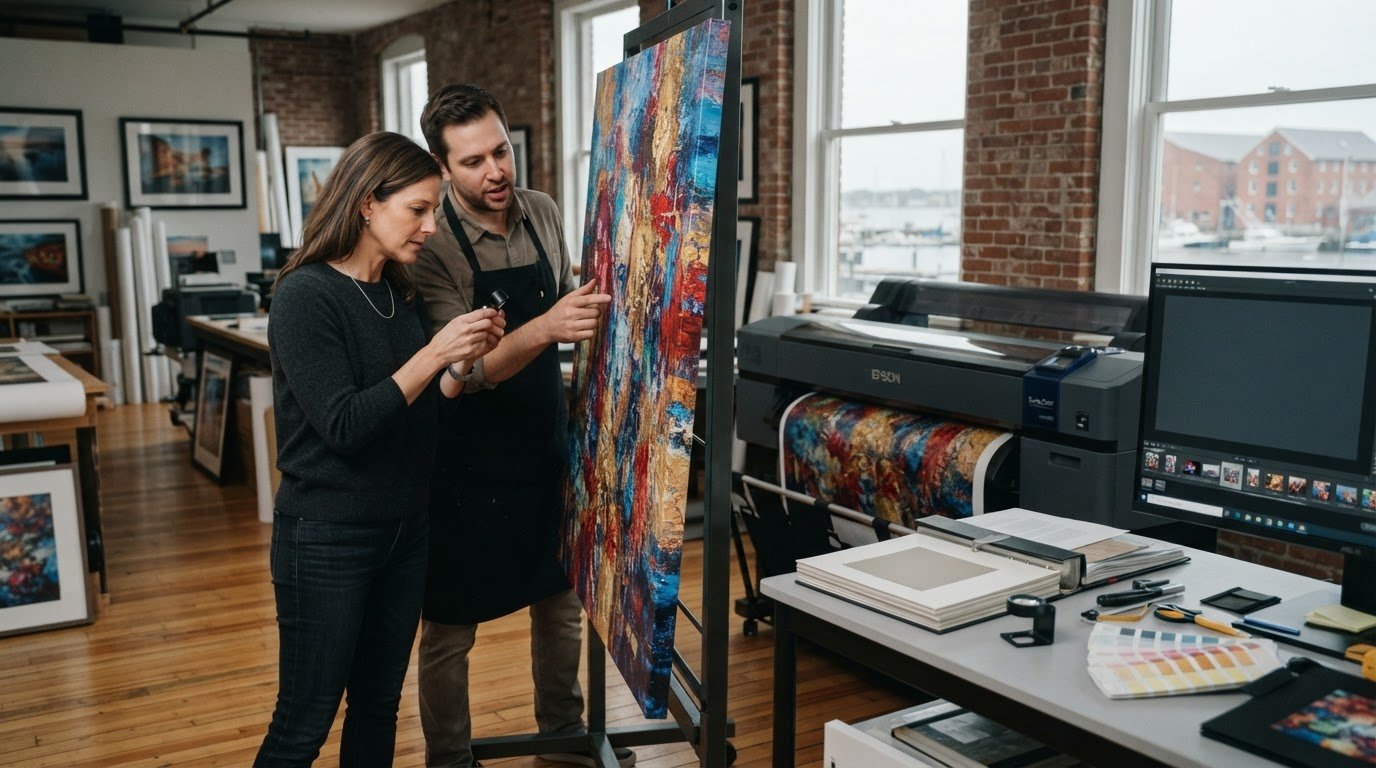
A successful large canvas print starts with choosing the right image, not simply the biggest size. If you’re exploring large format canvas prints Newburyport, consider whether your photo or artwork has enough detail for the planned dimensions and how fine art reproduction differs from a standard photo-canvas order.
The source image, digital capture, color management, canvas, and printing process all shape the finished result. This guide explains how to assess an image for enlargement, prepare artwork or image files, and choose a reproduction approach that suits your goals. You’ll also learn what to look for in a local fine art printing studio.
For Newburyport-area artists and collectors, IMAGE-TEC’s Methuen studio offers Giclée printing on canvas and fine art papers, with prints up to 60 inches wide. BetterLight™ scanning supports high-resolution reproduction from original artwork, and custom framing is available as an optional next step. IMAGE-TEC has served New England artists for 30 years. The sections ahead cover practical decisions that help a large print preserve the character and detail of its source.
Key Takeaways
- For large format canvas prints Newburyport projects, choose a final size based on image detail, viewing distance, and display location.
- Identify whether you’re starting with a digital file or physical artwork, since each requires a different reproduction approach.
- Compare canvas with fine-art and other archival papers based on the artwork, desired presentation, and framing plans.
- Before starting, note your source type, preferred print dimensions, display setting, and medium to make project planning more straightforward.
- A regional fine art studio can support large-format printing and reproduction, from digitizing original artwork to considering custom framing.
Large Format Canvas Prints in Newburyport: What to Know Before You Order
A large-format canvas print is an image reproduced at a scale intended for prominent display, rather than a small handheld or desk-sized format. There’s no universal measurement that makes a canvas “large.” A print that feels substantial above a compact desk may look modest on a broad living-room wall, so start with the space and the distance from which people will view it.
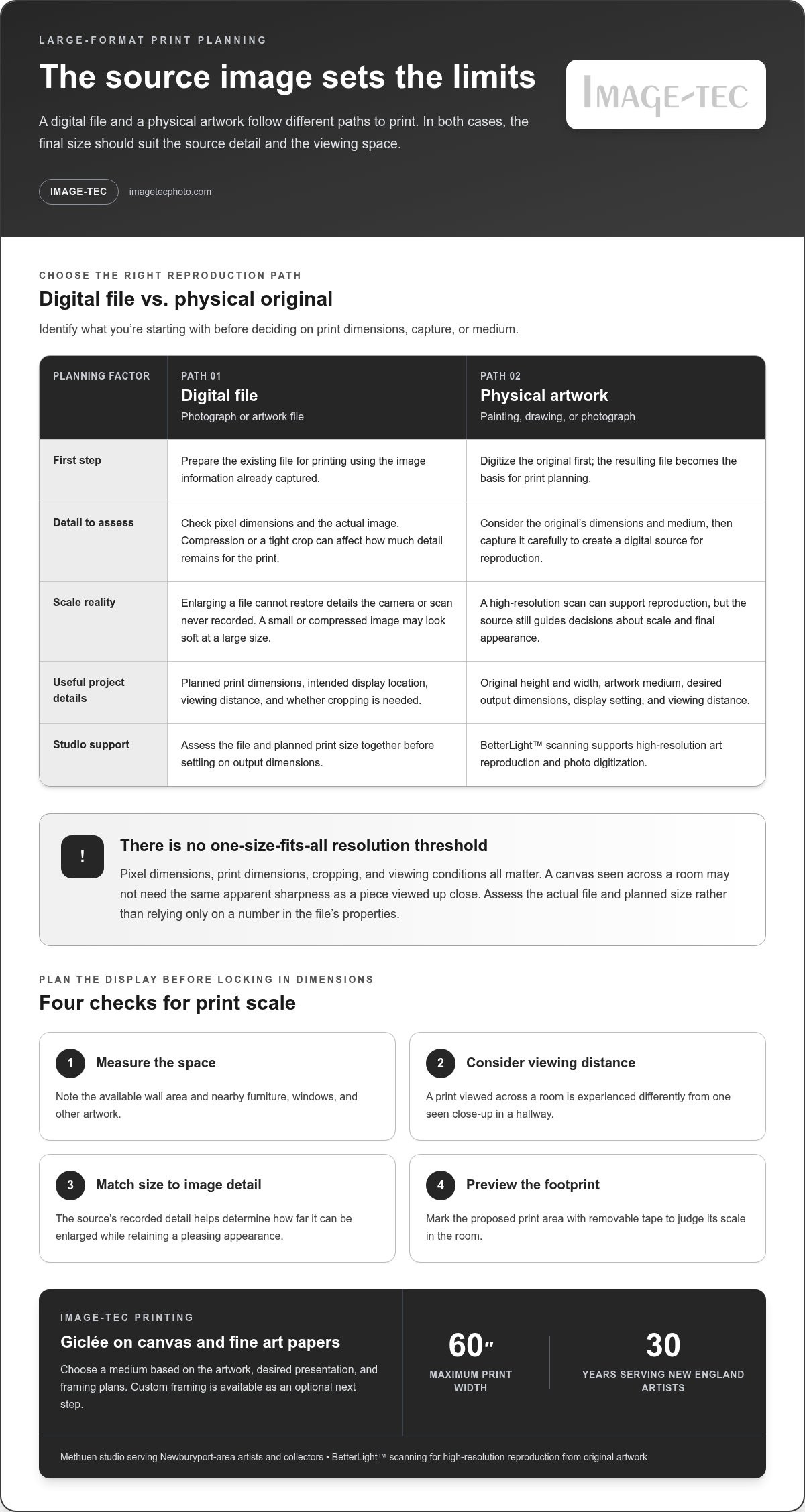
Measure the available wall area and consider nearby furniture, windows, and other artwork. A print viewed across a room is experienced differently from one seen up close in a hallway. These details help guide the dimensions, while the source image’s detail determines how far it can be enlarged while retaining a pleasing appearance. IMAGE-TEC produces large-format canvas prints up to 60 inches wide.
For Newburyport-area projects, the large format fine art printing guide offers further context on planning artwork for display at scale. The practical principle is to choose a size that suits both the room and the image, rather than choosing dimensions based on wall space alone.
When does a canvas print count as large format?
There is no single size at which every canvas becomes “large format.” Room dimensions and viewing distance are more useful guides. A print intended as the focal point above a sofa may need different proportions from one planned for a narrow wall or business interior. Marking the proposed print area with removable tape can help you judge its scale before settling on dimensions.
Is a photo canvas the same as a fine art reproduction?
A photo canvas enlarges an existing digital photograph for display. Fine art reproduction creates a print from an artist’s original work while aiming to represent its composition, color, and visual character. The source may be a digital file or a physical painting or drawing that needs to be captured before printing.
That capture matters. A larger output cannot add detail that the original photograph or scan never recorded. For physical artwork, BetterLight™ scanning can support high-resolution reproduction by creating a digital source from the original. The resulting file then becomes the basis for decisions about scale and print medium.
Giclée is a fine art digital printing option used for artwork and photographic images. The term is associated with pigment-based printing on archival substrates, but the label alone doesn’t determine how faithfully a print represents its source. Capture, file preparation, color management, and the chosen canvas all contribute. The Digital Printing Overview provides background on digital printing methods and applications, including the broader process of producing an image from a digital file.
First decide whether you’re enlarging a finished photograph or reproducing original artwork. That distinction determines the preparation needed before print size and canvas selection can be finalized.
How Source Quality and Artwork Capture Affect Large Canvas Prints
A file can be enlarged to almost any dimensions on a screen, but enlargement doesn’t recreate information the camera or scanner never captured. If a small, compressed image is stretched across a broad canvas, fine edges may appear soft and subtle textures may lose definition. That doesn’t automatically rule out a large print. It means you should assess the source, intended dimensions, and viewing conditions together before choosing the output size.
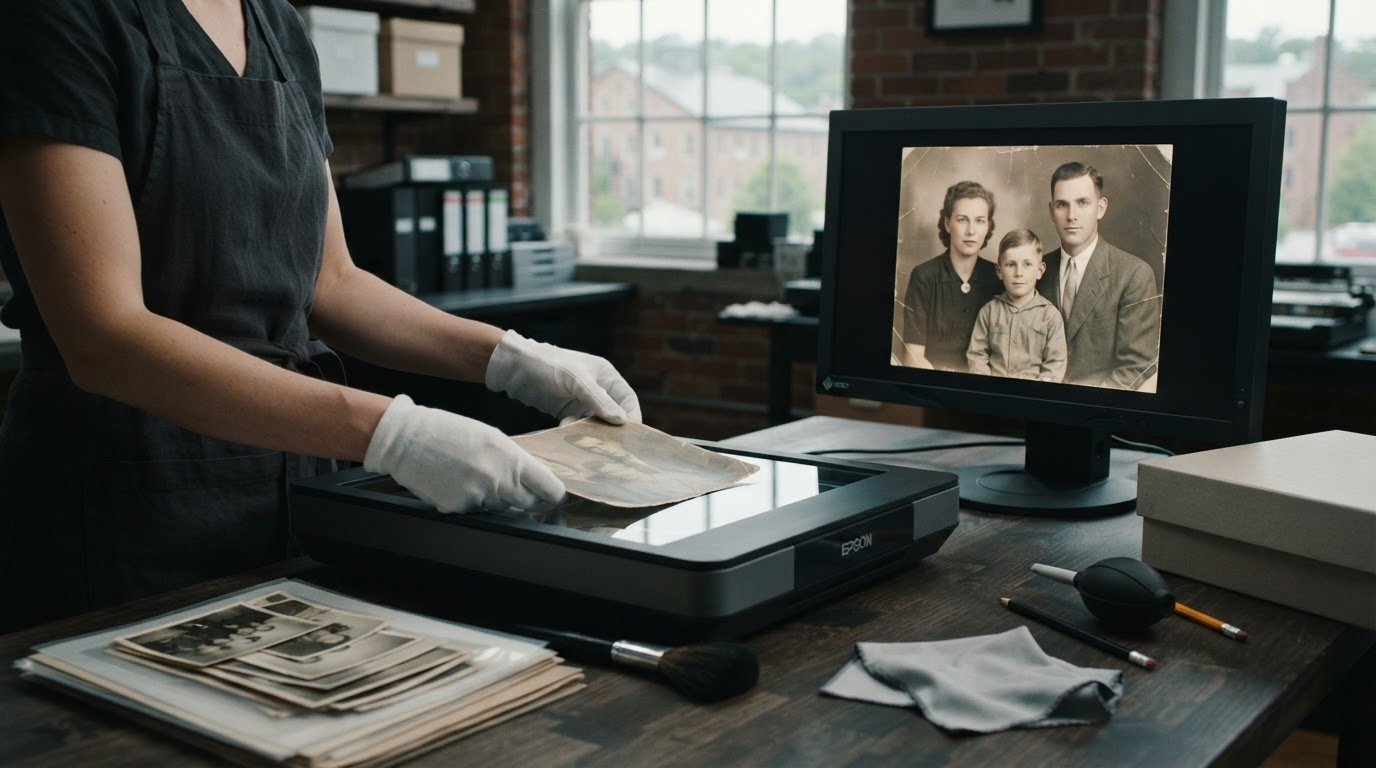
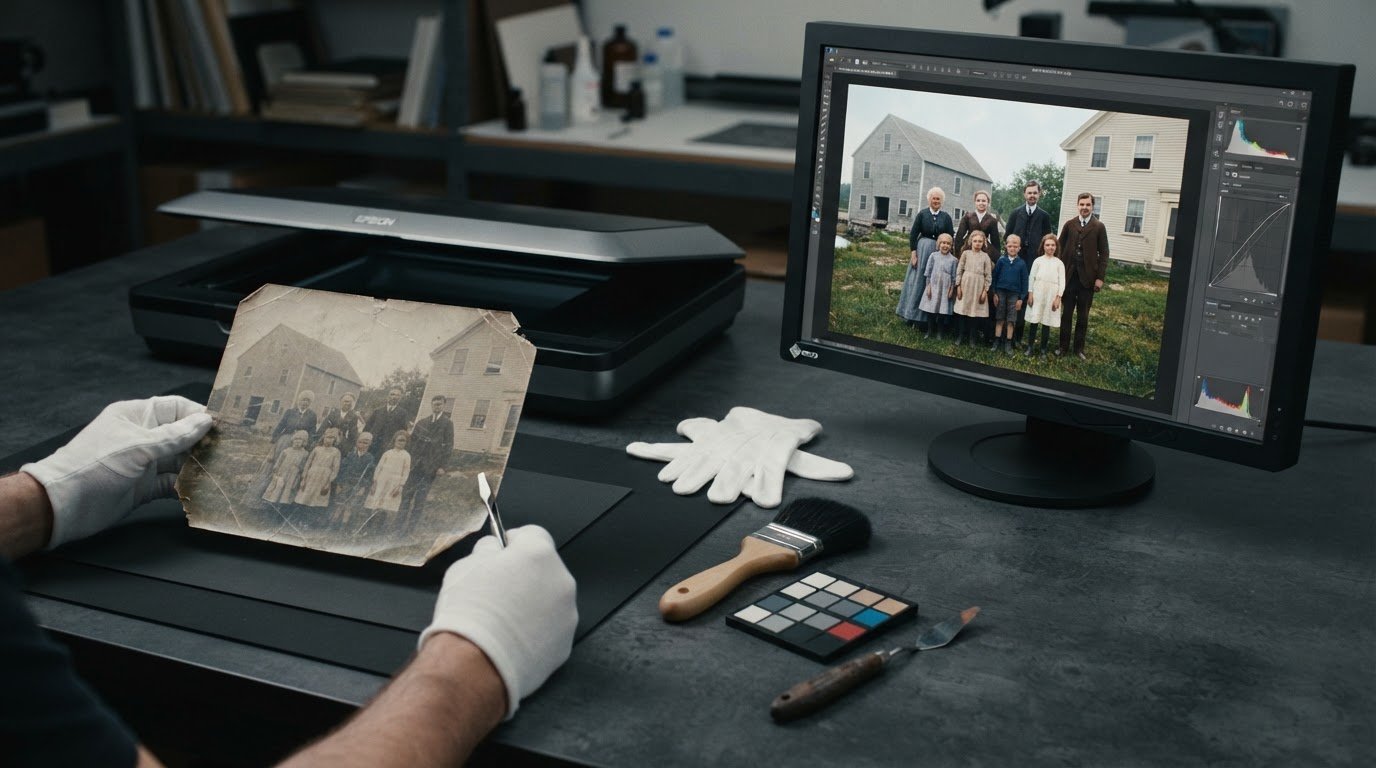
There are two distinct starting points for a reproduction project. A digital photograph or artwork file is prepared for printing using the information already in the file. A physical painting, drawing, or photograph must first be digitized. IMAGE-TEC’s BetterLight™ scanning supports high-resolution art reproduction and photo digitization, creating a digital source for print production.
What image resolution is suitable for a large canvas print?
Pixel dimensions describe how much image information a digital file contains, such as its width and height in pixels. Print dimensions describe the physical canvas size. A file with more pixels can generally be reproduced larger while retaining detail, but no single resolution threshold works for every image and viewing situation.
Consider viewing distance as well. A canvas intended to be seen across a room may not need the same apparent sharpness at close range as a piece viewed from a few feet away. Cropping matters too: removing part of an image leaves fewer pixels for the final print area. Assess the actual file and planned size instead of relying only on a resolution number shown in the image’s properties.
How can an original artwork be prepared for reproduction?
Physical artwork needs a careful digital capture before it can be printed. IMAGE-TEC’s BetterLight™ scanning supports this step for high-resolution art reproduction and photo digitization. The resulting digital file provides the basis for planning a canvas reproduction, while the original work remains the reference for its composition and detail.
Before beginning, gather a few project details:
- Artwork dimensions: Record the original’s height and width.
- Artwork medium: Identify whether it’s a painting, drawing, or photograph.
- Desired output size: Note the planned canvas dimensions, including the intended width.
- Intended use: Describe where and how the print will be displayed, including typical viewing distance.
These details connect the source to a realistic print plan. A finely detailed original intended for close viewing, for example, calls for a different assessment than a broad composition designed to be seen from farther away. Apply the same care to digital files: inspect the actual image rather than assuming that a large file size guarantees a suitable result. For large format canvas prints Newburyport artists and collectors are planning, IMAGE-TEC provides BetterLight scanning and fine art printing.
Canvas or Fine Art Paper: Which Large Format Print Fits Your Project?
The right surface depends on what you’re reproducing and how you want the finished image to look in its setting. Canvas and fine-art paper can both work for large photographic prints and artwork reproductions, but they create different presentations. Neither is automatically the better choice. Consider the character of the source, the room, and whether you picture the print displayed on canvas or as a paper-based work.
When is canvas a practical choice for a large print?
Canvas is a suitable option for large photographic images and fine art reproductions when you want the image presented on canvas. It can work well as a focal piece in a home or business, but the intended display should guide the decision. Consider the room’s scale, the image’s composition, and whether it will be viewed across the space or at closer range.
A broad landscape planned for a prominent wall, for example, may point toward canvas, while a reproduction intended to remain paper-based may point to another surface. Think through the whole presentation before selecting a medium, including how the image’s edges will appear and whether framing is part of the plan. Make the choice in relation to the artwork rather than treating any one surface as a universal standard.
When should you consider fine art or archival paper?
Fine-art paper and other archival papers are alternatives when you want the reproduction on paper rather than canvas. The source may be an original artwork or photograph; the key question is whether a paper-based presentation suits the piece and its setting. IMAGE-TEC offers Giclée printing on fine-art paper and other archival papers, as well as on canvas.
Consider the image’s subject, the planned print scale, and how you want it displayed. Framing is an optional next step that can help define the presentation. Think about framing early, since the finished work’s proportions and display plan may influence the print dimensions. The custom art framing and Giclée printing guide explores how those decisions can work together.
As you compare options for large format canvas prints Newburyport projects, use a few practical questions to narrow the choice:
- What is the source? A photograph and a reproduction of a painting may call for different presentation choices.
- Where will it be displayed? Consider the room, viewing distance, and surrounding décor.
- How should it be finished? Decide whether you prefer canvas or a paper-based print, and whether framing is part of the intended result.
These questions make “canvas or paper?” a decision grounded in the artwork and its destination. IMAGE-TEC’s Giclée printing options include canvas, fine-art paper, and other archival papers, so you can consider the medium as part of the reproduction plan.
How to Prepare a Large Canvas Print Project in the Newburyport Area
A clear project brief makes it easier to turn an image or original artwork into a considered print plan. Before starting large format canvas prints Newburyport clients can gather the source material, intended dimensions, display details, and preferred medium in one place. IMAGE-TEC serves Newburyport from its Methuen studio, with Giclée printing on canvas up to 60 inches wide.
What information belongs in a canvas-print project brief?
Describe what you’re starting with and how you want the finished piece to look in its setting. Include the digital file or reference images showing the artwork and intended display area, if available. A few measurements and presentation preferences can clarify the project before production decisions are made.
- Identify the source. Note whether it’s a digital file, photograph, or physical artwork. For an original, include its dimensions and medium, such as painting or drawing.
- Set the intended print size. Record the desired width and height, or the maximum available space. IMAGE-TEC’s large-format prints are available up to 60 inches wide.
- Describe the display. Include the room or setting, wall area, and how close viewers are likely to stand. A print intended to anchor a spacious room may need a different scale from one for a narrow hallway.
- Choose a presentation direction. State whether you prefer canvas or paper, and whether custom framing is a desired next step.
What should you review before approving a large print?
Before approving the layout, compare the proposed crop with the original composition at the requested print dimensions. Check the edges for subjects, lettering, or other important details that might be cut off. Then make sure the chosen medium and any framing plans suit the project brief and display location.
Pay particular attention to aspect ratio. If the source image and requested canvas have different proportions, fitting one to the other may require cropping or a layout adjustment. Decide which parts of the composition must remain visible, especially near the edges, before settling on the final layout. For artwork, review the intended framing or border treatment too, so the reproduction’s presentation feels deliberate.
Bring the project details together in a short written note and keep the source file or reference material close at hand. For a physical original, record its dimensions and medium so the capture and print plan can be considered as connected steps. This preparation helps artists and collectors communicate their goals clearly, whether the source is a personal photograph or their own artwork.
With the brief in hand, you can plan the next decisions with a regional fine art studio serving Newburyport. Plan your canvas print project with IMAGE-TEC, from source and size through medium and presentation.
Large Format Canvas Printing Near Newburyport: Working with IMAGE-TEC
For artists and collectors planning a large reproduction, a nearby fine art studio offers more than a place to send a file. IMAGE-TEC is based in Methuen, Massachusetts, and serves Newburyport and regional clients with Giclée printing and fine art reproduction. Projects can begin with a finished digital image or original artwork that needs to be digitized before printing. That distinction helps shape the production plan from the outset.
What can IMAGE-TEC provide for a large canvas project?
IMAGE-TEC produces Giclée prints on canvas, fine-art paper, and other archival papers. Canvas prints are available up to 60 inches wide, giving Newburyport-area artists room to plan a substantial presentation while keeping the source image and display setting in view. The studio’s printing serves artists and other clients looking to reproduce artwork or create a large-format image for display.
When the source is a physical painting, drawing, or photograph, BetterLight™ scanning supports high-resolution artwork reproduction and photo digitization. Scanning creates a digital source for the print, connecting the original work with the chosen output medium and dimensions. Fine-art and other archival papers provide an alternative when paper better suits the intended presentation. Custom framing is also available as an optional next step, rather than an assumed part of every print project.
Why work with a regional fine art reproduction studio?
IMAGE-TEC has served New England artists for 30 years. That regional experience is relevant when the source artwork, print scale, and presentation need to be considered together. Rather than treating a reproduction as a simple enlargement, artists can plan around the original work and intended result, whether they’re preparing a canvas print or considering an archival paper option.
The Methuen studio is near Route 495 and Interstate 93 and serves Newburyport, Boston, and Manchester, New Hampshire. For area artists, it provides a regional fine art reproduction resource for projects involving digital files, original artwork, or photo digitization. IMAGE-TEC brings scanning and printing together, with print widths up to 60 inches.
If you’re considering large format canvas prints Newburyport artists can use to present or reproduce their work, prepare the source image or artwork details, desired dimensions, and preferred medium. Those basics give the project a clear starting point, whether the image is ready to print or needs digitizing first. Discuss a fine art printing project with IMAGE-TEC.
Turn Your Print Plan into a Finished Piece
A large print works best when it serves a clear purpose in the space. Before moving ahead, decide what you want someone to notice first: the artwork’s overall composition, a particular detail, or how it relates to the room. That intention can guide the final choices and keep the project focused on more than filling a wall.
For large format canvas prints Newburyport projects, treat the plan as a creative decision as well as a technical one. Consider how the finished piece will contribute to its surroundings and what you want it to communicate. A defined goal gives the reproduction process a useful point of reference, whether you’re creating a personal display or preparing artwork to share.
When you’re ready to shape those ideas into a print project, explore your fine art printing options with IMAGE-TEC. Bring the image or artwork details, desired dimensions, and preferred presentation to start planning your project.
Frequently Asked Questions
How large can IMAGE-TEC print a canvas?
IMAGE-TEC can print canvas up to 60 inches wide. The height depends on the image’s proportions and the dimensions planned for the finished piece, so a square image and a panoramic photograph will use that width differently. For a wide composition, consider whether the full image should remain visible or whether a crop better suits your display. Share the source image and intended dimensions when planning the print.
Can you print a large canvas from an original painting?
Yes. IMAGE-TEC can use BetterLight™ scanning to digitize an original painting for fine art reproduction, then produce a Giclée canvas print from the digital capture. Before beginning, note the painting’s physical dimensions, medium, and any areas where surface detail or color is especially important. Those details help inform the capture and reproduction plan. The original artwork is the source; the resulting digital file is what’s printed.
Will enlarging a photo make it look pixelated?
It can, especially if the original file has limited detail or has been compressed. A close-up portrait may reveal softness around eyes or hair, while a landscape viewed from farther away may appear clear at the same print size. Inspect the actual file, not just its appearance as a small phone preview. If fine edges already look blocky or blurred on screen, enlarging won’t restore the missing information.
Is a Giclée canvas print the same as a regular photo canvas?
Not necessarily. “Photo canvas” describes a canvas presentation, while Giclée refers to a fine art digital printing process, generally associated with pigment inks and archival substrates. The label alone doesn’t establish how closely a print will match its source; capture, file preparation, color management, and printing all matter. IMAGE-TEC offers Giclée printing on canvas, as well as fine-art and other archival papers, for artwork and photographic images.
Can artwork be scanned and printed on canvas in the same project?
Yes. A project can involve scanning physical artwork and producing a canvas print from its digital capture. IMAGE-TEC’s BetterLight™ scanning supports art reproduction and photo digitization, and the studio also provides Giclée canvas printing. When planning, note the original’s dimensions and medium along with the intended print size. This gives both the digital capture and final reproduction a clear starting point.
How should I prepare a digital file for a large canvas print?
Start with the original image file rather than a screenshot or a copy downloaded from a social platform, which may have reduced detail. Keep an untouched backup and avoid enlarging or repeatedly resaving the only copy. Note the desired print dimensions and identify any crop that would remove important content. If the image includes small text or fine detail, mention that when planning so those areas can be considered for the intended scale.
Does IMAGE-TEC serve Newburyport from its Methuen studio?
Yes. IMAGE-TEC is based in Methuen and serves Newburyport, along with regional locations including Boston and Manchester, New Hampshire. For large format canvas prints Newburyport clients can plan a project with the studio using the image or artwork source, preferred dimensions, and intended presentation. IMAGE-TEC supports projects ranging from digitizing an original to printing a prepared image on canvas.






Leave A Comment
You must be logged in to post a comment.