
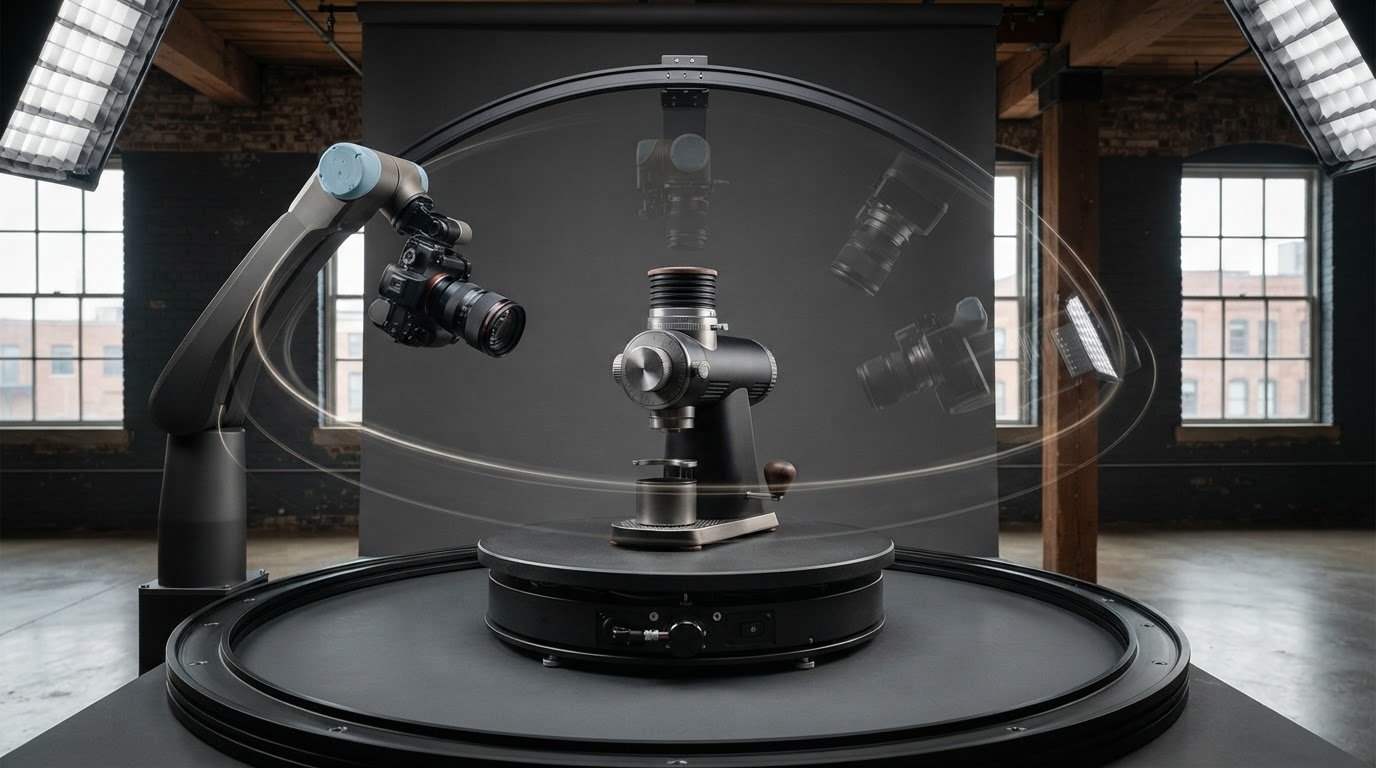
A 360-degree product shoot is an engineering challenge as much as a creative one. For Boston-area brands, 360 product photography Boston shoppers can interact with may reveal details that static images miss, helping customers make more informed decisions before they buy.
If customers struggle to judge a product from its images, a more complete view may help clarify what they can expect. Producing a smooth, consistent spin takes more than a camera: precise equipment, controlled lighting, and a repeatable workflow all matter, especially when you have many products or oversized items to photograph.
This article explains what to look for in a professional 360 photography studio near Boston, how interactive images can support product inspection, and what to consider when items are large or need careful handling. You’ll also learn how Image-Tec’s Methuen studio serves businesses in Boston, Manchester, New Hampshire, and Newburyport. Use this guide to plan polished, consistent imagery for e-commerce and other platforms.
Key Takeaways
- Learn how interactive product views can help shoppers assess details that static images may not show.
- See why synchronized capture and consistent lighting matter when planning a smooth, repeatable 360 spin.
- Explore ways to use 360 imagery across product pages, social media, and email while considering each channel’s requirements.
- Find out what to discuss with a 360 product photography Boston studio when your products are oversized or require careful handling.
- Understand how to plan 360 spins alongside commercial photography so your visual assets work consistently across platforms.
The Impact of 360 Product Photography on Boston E-commerce
A shopper can zoom in on a static product image, but a sequence of views lets them inspect an item from multiple angles. That added visibility can help bridge the gap between browsing online and handling a product in person. For Boston-area manufacturers and retailers, a well-produced spin can show construction details, proportions, finishes, and features that a single hero image may leave unclear.
Clear product pages set expectations by showing an item accurately and making important details easy to inspect. Interactive views can support that approach, but they don’t replace accurate descriptions or answer every question. To make a spin useful, show the features buyers are most likely to assess, and pair it with clear information about materials, dimensions, and included components. Avoid relying on imagery to communicate details that need a written explanation.
Boosting Conversion Rates with Immersive Media
A 360 spin gives shoppers control over what they see. That interaction may encourage closer inspection and keep visitors engaged with the product page, but longer dwell time alone doesn’t prove that a visitor is more likely to buy or that search rankings will improve. Treat a spin as one part of the product page experience, alongside clear descriptions, useful still images, and straightforward navigation.
By showing an item from multiple angles, 360 photography can help shoppers inspect its shape, finish, and visible features before deciding whether it meets their needs.
This interaction can also help customers picture how a product might suit its intended use. For Boston brands selling items where finish, form, or assembly matters, a spin can provide useful context. Choose angles that make the relevant details easy to see rather than adding views that don’t help answer a buyer’s questions.
Competitive Advantage in the New England Market
Static photography remains useful, but relying on it alone can make it harder to communicate a product’s full appearance. A carefully lit spin can show workmanship from several angles, letting New England brands demonstrate visible details rather than relying on broad claims. Manufacturers can use these views to show design features that matter to buyers, distributors, or procurement teams.
Marketplace image requirements vary and can change, so check Amazon’s or Walmart’s current seller guidance before planning assets. A 360 spin may complement marketplace imagery, but it shouldn’t be assumed to meet every platform’s rules or be accepted in every placement. For a 360 product photography Boston project, identify where the images will appear and confirm which formats each channel supports.
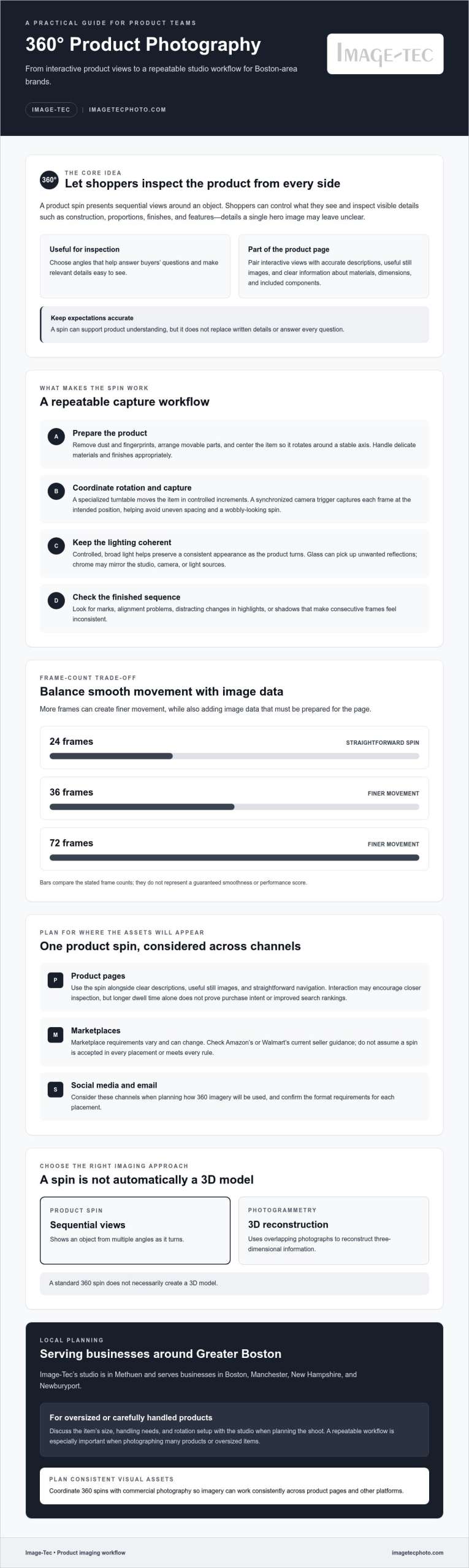
One technical distinction is useful: a product spin presents sequential views around an object, while photogrammetry uses overlapping photographs to reconstruct three-dimensional information. The technical workflow of photogrammetry helps explain this related imaging science, but a standard 360 spin doesn’t necessarily create a 3D model.
Precision in Motion: The Technical Workflow of Professional 360 Imaging
A polished 360 spin depends on repeatable capture, not simply rotating a product and taking a series of pictures. A specialized turntable moves the item in controlled increments, while a synchronized camera trigger captures each frame at the intended position. This coordination helps prevent uneven spacing or shifts that make a spin appear to wobble. For 360 product photography Boston businesses can use across product lines, repeatability also helps maintain a consistent visual standard from one item to the next.
The Capture Process: Step-by-Step
Preparation starts with the product itself. Remove dust and fingerprints, arrange movable parts, and center the item so it rotates around a stable axis. Steam may help smooth suitable fabric products, but delicate materials and finishes need handling appropriate to the item. Careful preparation matters because a mark or alignment issue can show up in several consecutive frames.
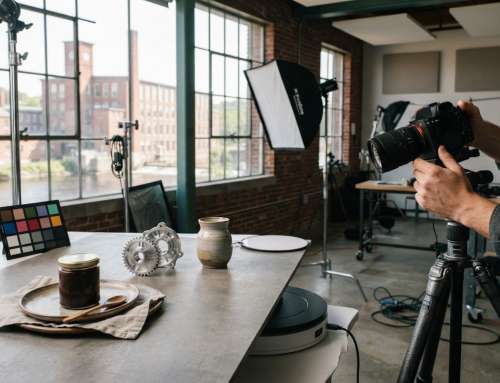
Lighting is a make-or-break variable. The product turns, but the lights and camera must preserve a coherent appearance at every angle. Broad, controlled light can help prevent distracting shifts in shadows and highlights. Reflective surfaces need particular attention: glass can pick up unwanted reflections, while chrome may mirror the studio, camera, or light sources. If highlights change dramatically as the product rotates, the finished spin can feel inconsistent even when the frames are evenly spaced.
Frame count is a balance between smooth motion and practical loading. A 24-frame set can suit a straightforward spin; 36 or 72 frames may create finer movement but add image data that must be prepared for the page. The best choice depends on the product’s shape, the details shoppers need to see, and mobile performance. In post-production, check frame order, color consistency, alignment, and the transition from the final frame back to the first so the loop feels seamless rather than abrupt.
Software and Integration Requirements
Choose the output format based on how visitors will use the asset. An HTML5 viewer can support interactive rotation and touch gestures, while GIF and MP4 are generally better suited to simple animation or playback than direct, frame-by-frame control. Before production, confirm that the chosen platform supports the intended format and that the asset works on mobile. Test swipe behavior, loading, and display at different screen sizes.
Cloud hosting can simplify delivery through a specialized viewer, while self-hosting may give a site team more direct control over files. Either way, file weight, responsive display, and the hosting setup affect the experience. Research into the impact of visual marketing on purchasing behavior provides context for treating imagery as part of the customer experience, not just decoration.
For a project involving a range of products or challenging surfaces, reviewing Image-Tec’s 360 photography capabilities can help clarify which capture approach may suit the work.
Maximizing ROI: Integrating 360 Spins into Your Digital Strategy
A 360 spin can do more than enrich a product page. In social posts and email campaigns, use a short preview or still frame to draw attention, then link shoppers to an interactive version on your site. For B2B wholesale, spins can help buyers examine product details remotely and support a digital showroom when an initial review doesn’t require shipping a sample.
Choose between a photographic spin and a 3D model based on the job. A 360 sequence shows the actual photographed product and can preserve realistic surface detail, which is useful for finishes, materials, and craftsmanship. A 3D model can support configurable features or other applications, but requires a model to be created. Consider the intended experience, production requirements, and when you need usable assets rather than assuming one format is always superior.
Take a measured approach to search visibility. An interactive feature may encourage visitors to explore a page, but longer dwell time alone shouldn’t be treated as proof of improved rankings. Useful content, accessibility, and page performance still matter. A Studio 52 article discussing Adobe’s “What Shoppers Want Study” offers additional context on shopper expectations for product imagery.
Platform Compatibility: Shopify, Magento, and Beyond
Before selecting a viewer plugin for Shopify, Magento, or another platform, confirm that it supports your asset format, mobile touch controls, and analytics setup. For batch uploads, use consistent file naming and test a small group of products first. Compress files appropriately and check loading on mobile before expanding the rollout. Marketplace rules can differ, so review current Amazon requirements before preparing assets. Don’t assume every placement accepts an interactive spin.
Analyzing Data: Measuring the Success of Your Spins
In Google Analytics 4, work with your analytics team to define events for spin interactions, such as starting a rotation or using a particular control. Compare those events with product-page engagement and add-to-cart activity. Then A/B test static imagery against a 360 experience on comparable products, changing one major element at a time and allowing enough traffic for a meaningful comparison.
Interaction data can reveal which angles and product details customers choose to inspect, helping your team understand what shoppers value. Review results by product category and device, since a spin that works well on desktop may need a different presentation on mobile.
For a considered approach to 360 product photography Boston brands can use across sales channels, match capture plans to the platforms and measurement goals from the outset. You can explore Image-Tec’s 360 photography as one option for planning commercial imagery.
Local Logistics: Navigating Your Product Shoot in the Greater Boston Area
For a commercial shoot, getting products to the right equipment and workspace is part of the production plan. Image-Tec’s Methuen studio serves businesses in Boston, Manchester, New Hampshire, and Newburyport. For large deliveries, a studio outside downtown Boston may help avoid access, parking, and unloading constraints that can complicate a city-center location. Confirm delivery access and handling arrangements before dispatch.
The Methuen Studio Advantage
Image-Tec offers specialized 360-degree imaging and commercial photography, including automotive photography. For oversized products, discuss the item’s dimensions, weight, loading needs, and rotation requirements in advance. Confirm any equipment limits for the specific project. For background on the studio’s broader capabilities, see the professional commercial photography studio near Boston.
A controlled studio environment can make sense when lighting consistency, repeatable framing, or multiple products are central to the brief. On-location photography may be worth exploring when equipment is fixed in place, difficult to transport, or part of a working environment that contributes important context. Ask whether the project can be completed on location, and compare access, power, space, lighting control, and setup needs before choosing. Don’t assume every studio offers on-site work.
Preparing Your Products for Transit
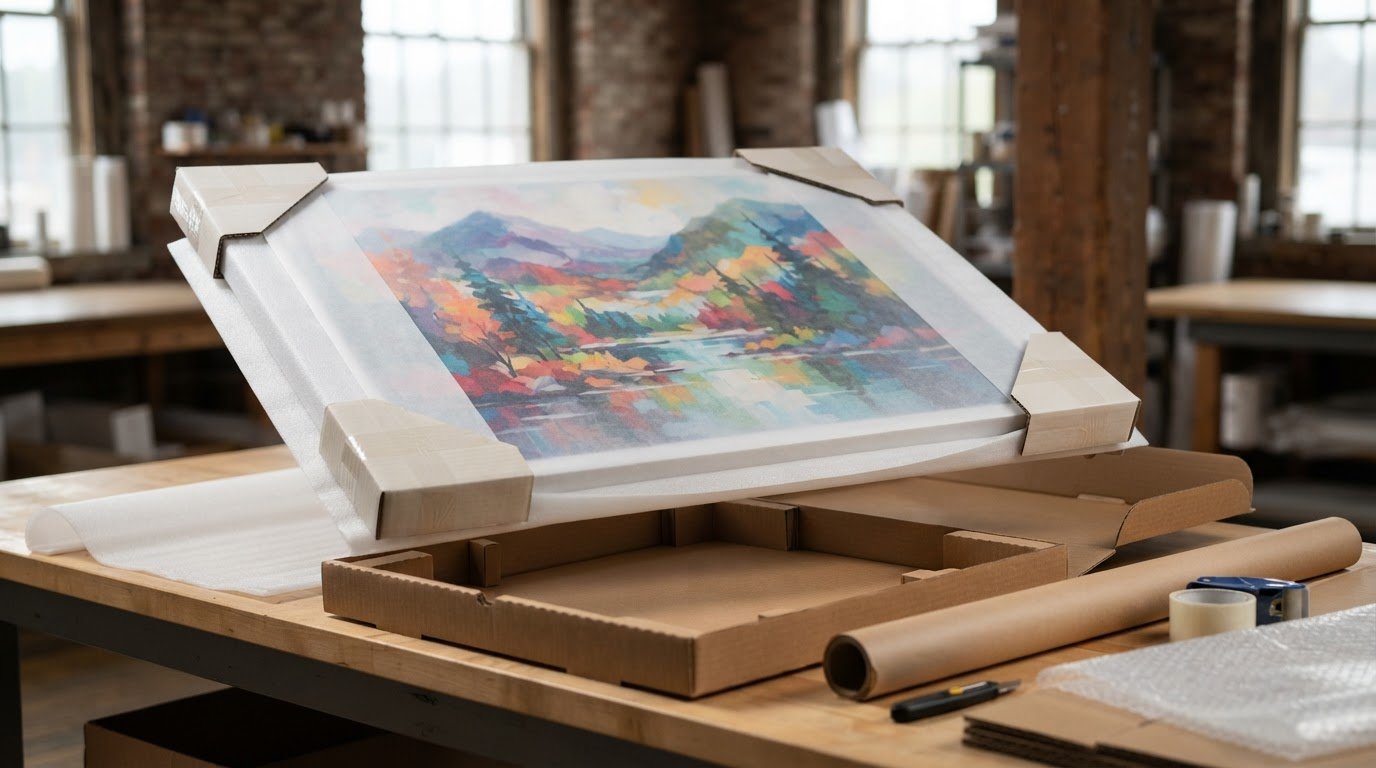
Fragile or high-value products need a clear handling plan from packing through return. Before shipping, agree on the delivery window, receiving contact, unpacking plan, and return arrangements. For a high-volume shoot, coordinate the schedule and staging plan so products arrive in manageable groups rather than creating an inventory bottleneck.
- Protect: Use suitable cushioning and secure loose components. Label delicate surfaces and parts that need special care.
- Identify: Assign each item a unique label that matches the shot list, product details, and any required views.
- Track: Record what ships, what arrives, and what is photographed or packed for return.
- Confirm: Discuss handling instructions and insurance coverage with the carrier and studio before transit. Don’t assume a particular policy or coverage limit applies.
For 360 product photography Boston companies can plan with fewer surprises, share product dimensions, quantities, handling concerns, and destination channels early. Contact Image-Tec to discuss 360 photography for your product shoot and determine the logistics the project requires.
Elevating Your Brand with Image-Tec’s Specialized 360 Photography
A strong product image system should feel consistent wherever customers encounter your brand. A 360 spin adds interactive viewing, while commercial photography can provide carefully composed still images for product pages, catalogs, and other marketing materials. Used together, the formats give buyers both a quick overview and room to inspect a product more closely.
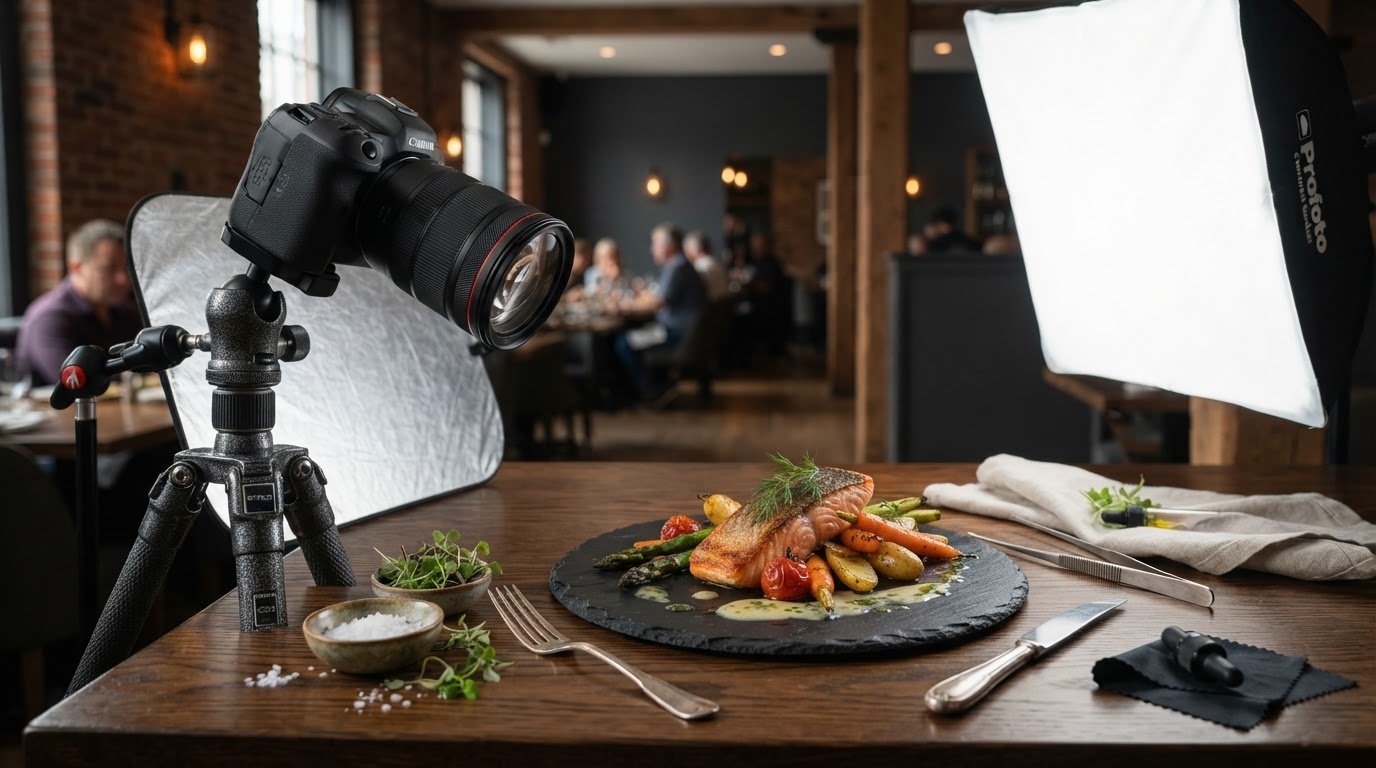
Image-Tec has worked in commercial imaging since around 1994, serving businesses in Boston and across the region from its Methuen studio. Its commercial photography and 360 imaging services support projects that call for careful planning and consistent capture. Jewelry, food, glass, and chrome each present different challenges: small details can be hard to show, while reflective or transparent surfaces respond strongly to their surroundings. The appropriate setup depends on the specific product and intended use, so discuss its materials, finish, and handling needs before production.
A Full-Service Commercial Imaging Partner
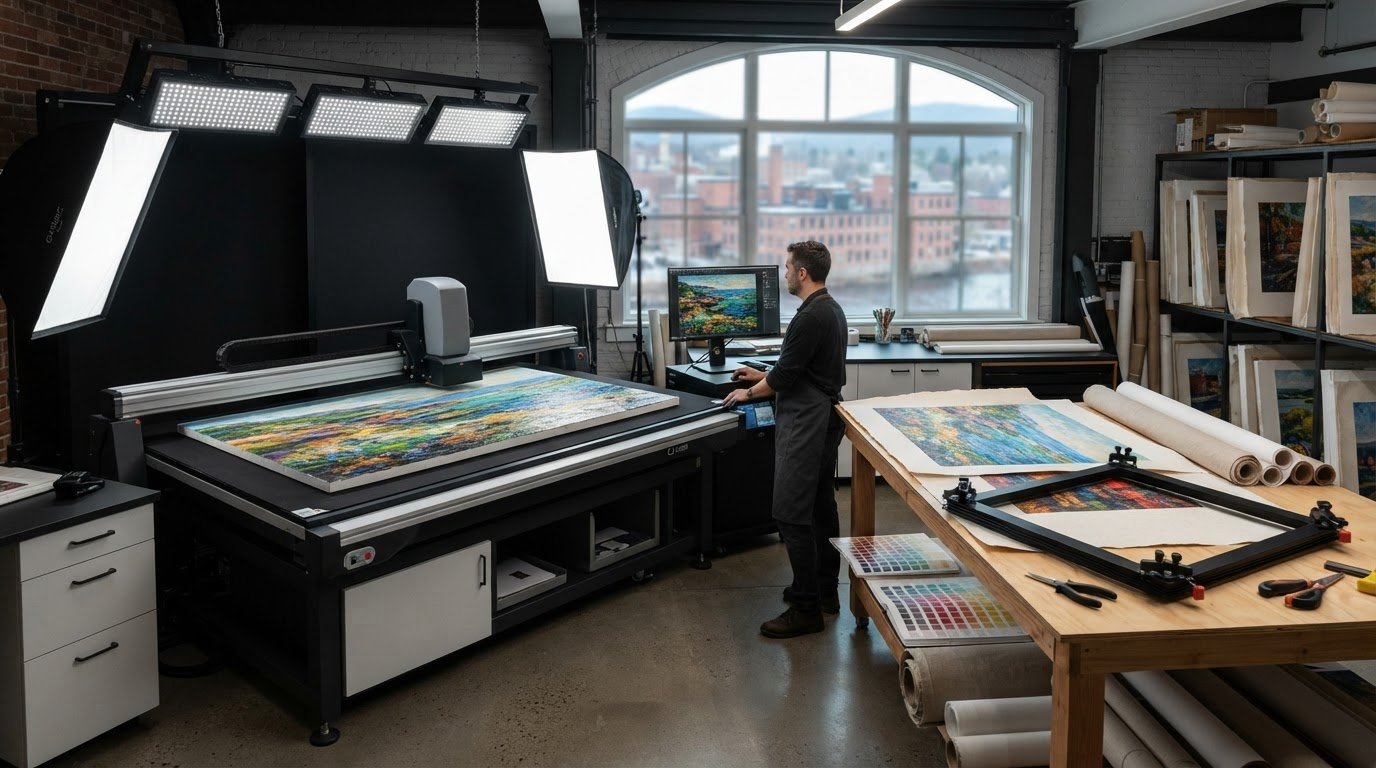
360 photography can support a broader commercial photography strategy rather than stand alone. A manufacturer might use spins for interactive product exploration and still images for advertising or sales materials. Image-Tec’s related capabilities include Giclée printing, custom framing, and BetterLight scanning, connecting commercial imaging with fine-art reproduction. The studio’s reproduction services also support careful image capture and presentation. For additional context, explore its guide to mastering art reproduction for New England artists.
For brands that need physical output alongside digital assets, Image-Tec can produce Giclée canvas prints up to 60 inches wide. The right combination depends on the project: a spin may help customers examine a product online, while a print can serve a separate display or presentation purpose. These are complementary capabilities, not interchangeable deliverables.
Getting Started with Your 360 Project
Start with the outcome you need. Share the product type, quantity, dimensions, surfaces, intended platforms, and whether you also need still commercial photographs. Discuss the desired frame count and how the images will be displayed, since those choices affect the capture plan and final viewer experience. For high-volume projects, provide an inventory list and flag products that need special handling.
For 360 product photography Boston businesses can plan around, a clear brief helps the studio assess the work and prepare a project-specific quote. Include any delivery or scheduling constraints, and ask what information is needed to confirm the scope. Contact Image-Tec to discuss your 360 product shoot and identify a practical next step.
Build a More Complete View of Your Products
Effective 360 imagery depends on more than the finished spin. Consistent capture, careful lighting, and a practical plan for where the assets will appear all shape the customer experience. Pairing interactive views with commercial still photography can give shoppers multiple ways to examine a product while keeping brand imagery cohesive across channels.
For businesses considering 360 product photography Boston, Image-Tec brings commercial imaging experience to projects from its Methuen, Massachusetts studio. The studio serves businesses in Boston, Manchester, New Hampshire, and Newburyport. Share the product, intended use, and handling requirements to discuss an approach suited to your needs.
Ready to explore what a professionally produced spin could add to your product presentation? Contact Image-Tec about professional 360 photography. A clear brief is a practical first step toward imagery that presents your products consistently and helps customers explore them in more detail.
Frequently Asked Questions
What is the difference between 360 product photography and a 3D model?
360 product photography presents a sequence of photographs captured as an item rotates, allowing viewers to inspect it from different angles. A 3D model is a digitally constructed representation that can support broader manipulation, such as viewing a product from different perspectives or showing configured parts. A photographic spin depicts the actual photographed item, while a model is built digitally. The right approach depends on the product and the experience your website needs.
How much does 360 product photography cost in the Boston area?
Pricing for 360 product photography in the Boston area depends on factors such as product size, surface complexity, quantity, frame count, and how the assets will be delivered. Image-Tec doesn’t publish a fixed price list for this service, so request a project-specific quote. Include product details, the number of items, intended use, and any special handling requirements. Those details help the studio assess the scope for businesses in Boston, Methuen, Manchester, and Newburyport.
How do I add a 360 product spin to my Shopify or Amazon store?
First, confirm which interactive image formats and viewers your Shopify setup or Amazon product placement currently supports. Then prepare the spin files or viewer according to that platform’s requirements, test loading and touch controls on mobile, and check that the product page still performs well. Requirements can vary by marketplace placement and change over time. Image-Tec provides 360 photography; ask the studio what file formats or viewer options are available for your project.
Can you handle 360 photography for large items like cars or furniture?
Image-Tec offers automotive photography and 360 imaging from its Methuen studio. Suitability for a large item depends on its dimensions, weight, shape, and handling needs, so share those details before arranging transport. Confirm equipment limits and loading requirements with the studio, since exact turntable weight limits should be verified for each project. Businesses in Boston, Manchester, and Newburyport can discuss whether an item is best photographed in the studio or on location.
How many frames do I need for a smooth 360-degree spin?
The right frame count depends on the product’s shape, how smoothly it should appear to rotate, and how quickly the files need to load. A 24-frame sequence can work for a straightforward spin; 36 or 72 frames provide more intermediate views but increase the amount of image data. Consider mobile performance as well as visual smoothness. Discuss the product and display platform with your photographer before choosing a frame count.
Do I need to host the 360 images myself or do you provide a viewer?
Hosting and viewer arrangements depend on the delivery method and your e-commerce platform. Some setups use a hosted interactive viewer, while others may require your team to manage files and integration. Ask Image-Tec what hosting or viewer options are available and which deliverables are included in your project quote. Before production, check platform compatibility, mobile controls, file size, ongoing hosting needs, and who will manage technical support.
How long does a typical 360 product shoot take at your Methuen studio?
There isn’t a single shoot duration for every project. Timing depends on product quantity, preparation, complexity, required frame count, lighting adjustments, and any special handling. A reflective item or a group of products may need a different workflow from one simple item. When requesting a quote, share the product list, dimensions, and desired deliverables. Image-Tec can assess the project scope for clients traveling to Methuen from Boston or nearby New England communities.
Can 360 photography be done on-location at my warehouse in Manchester NH?
Image-Tec provides photography in-studio and on-location, and serves Manchester, New Hampshire, as well as Methuen, Boston, and Newburyport. Whether a particular 360 setup is suitable for your warehouse depends on the product and the available space, lighting control, access, and equipment requirements. Share photographs or dimensions of the item and shooting area when you inquire. The studio can then discuss whether on-location capture or transport to Methuen is the better fit.



Leave A Comment
You must be logged in to post a comment.