
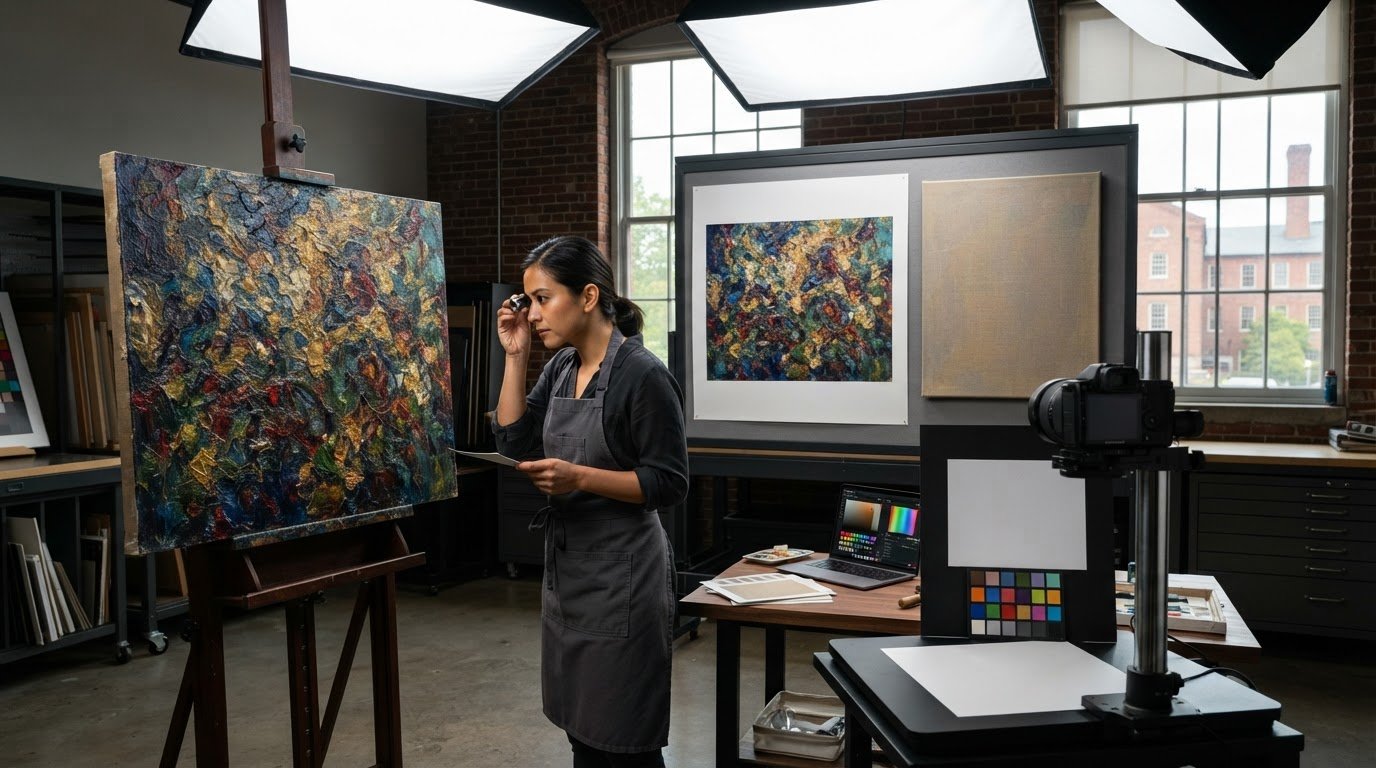
What if the printer isn’t the biggest factor in whether a reproduction feels true to the original? Getting high quality prints from original paintings depends on decisions made before printing: how the artwork is captured, how color is reviewed, and which material and finish are chosen.
If you’re unsure whether a painting should be photographed or scanned, or concerned that subtle colors and brushwork might not carry over, those are sensible questions to raise. This guide explains the steps behind a faithful reproduction and the practical details to discuss, including print size, paper or canvas, and finishing.
You’ll learn how capture quality, color decisions, print materials, and review fit together, and what to look for when choosing a local specialist. Image-Tec in Methuen offers BetterLight scanning and fine-art and canvas printing up to 60 inches wide, bringing artwork capture and printing together in one studio. Understanding the process can help you discuss your painting’s needs and make informed choices about the finished print.
Key Takeaways
- High quality prints from original paintings rely on accurate artwork capture and thoughtful color decisions, not simply choosing a larger print size.
- Reflections, uneven lighting, perspective, and surface texture can all affect the details captured from a painting.
- Compare paper and canvas by considering the artwork’s appearance, intended display, and handling needs.
- Before discussing a reproduction, note the painting’s dimensions, medium, condition, and your goals for the finished print.
- Image-Tec in Methuen offers BetterLight scanning and fine-art printing, giving artists and art owners a local option for discussing capture and printing together.
What Makes High-Quality Prints from Original Paintings Look Faithful?
A faithful reproduction preserves the qualities that make a particular painting recognizable: its color relationships, tonal range, fine details, and surface character. That takes more than enlarging a digital image or choosing a frame. The original artwork, where the print will be displayed, and the intended dimensions all affect what a successful reproduction needs to retain.
For example, a small painting with delicate lines may call for a print that keeps those marks clear at close range. A larger image intended to hang across a room is judged differently: the overall balance and transitions between light and dark may matter more than details visible only up close. Before production, consider where the print will be displayed and how viewers are likely to see it. Those choices help set practical expectations for size and detail.
Which details matter most when reproducing a painting?
Focus on the features that carry the artist’s intent. These might include subtle shifts between similar colors, smooth tonal transitions, fine drawn lines, distinct brushwork, or the texture of the painted surface. Their importance depends on the medium and style. A watercolor may rely on soft washes and delicate changes in tone, while a heavily worked oil painting may be recognized by its assertive marks and layered surface.
Before discussing a reproduction, identify the two or three qualities you most want preserved. Point them out to the studio so there’s a practical reference for capture and review, rather than relying on a broad request for a print that “looks the same.”
What can a print reproduce, and what remains unique to the original?
A print is a two-dimensional reproduction, not a physical replacement for the painting. It can represent color, shape, and visible detail, but the original’s raised paint, depth, and interaction with changing light may not transfer exactly. A glossy or textured print surface can also affect how the image appears. Material choice helps set expectations, but it cannot duplicate every physical quality of the artwork.
The term Giclée printing is commonly associated with high-quality inkjet reproductions. The process and materials still matter to the finished result. Compare your goals with what a reproduction can realistically preserve before settling on dimensions or presentation. High quality prints from original paintings depend on informed choices about the image and its intended use, not size alone.
How Artwork Capture and Color Management Shape Print Quality
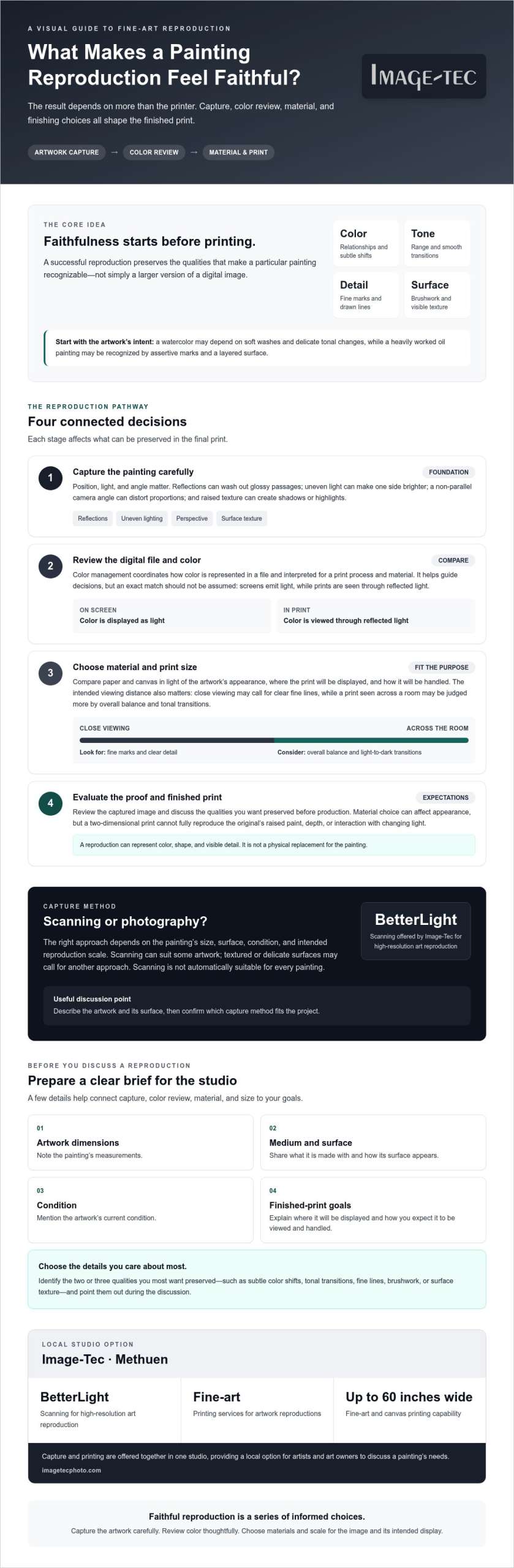
A reproduction moves through connected stages: the painting is captured, the digital file is reviewed, color decisions are made, and the image is prepared for printing. A problem early in that process, such as glare obscuring part of the painting, may not be correctable later without compromising detail. Accurate digital capture is the foundation of reproduction quality because every later color and print decision depends on what the file records.
Capture requires careful control of the artwork’s position, light, and angle. Reflections can wash out glossy passages, uneven lighting may make one side appear brighter, and a camera that isn’t parallel to the painting can distort its proportions. Raised texture can create small shadows or highlights. The FADGI technical guidelines offer a useful reference for the care involved in digitizing cultural materials and preserving visual information in a digital file.
Color management coordinates how color is represented in the file and interpreted for a particular print process and material. It can guide decisions, but an exact match shouldn’t be assumed: screens display light, while prints are viewed through reflected light, and materials can affect the result. That’s why high quality prints from original paintings begin with suitable capture and careful file review, not just a printer setting.
When is professional artwork scanning preferable to photography?
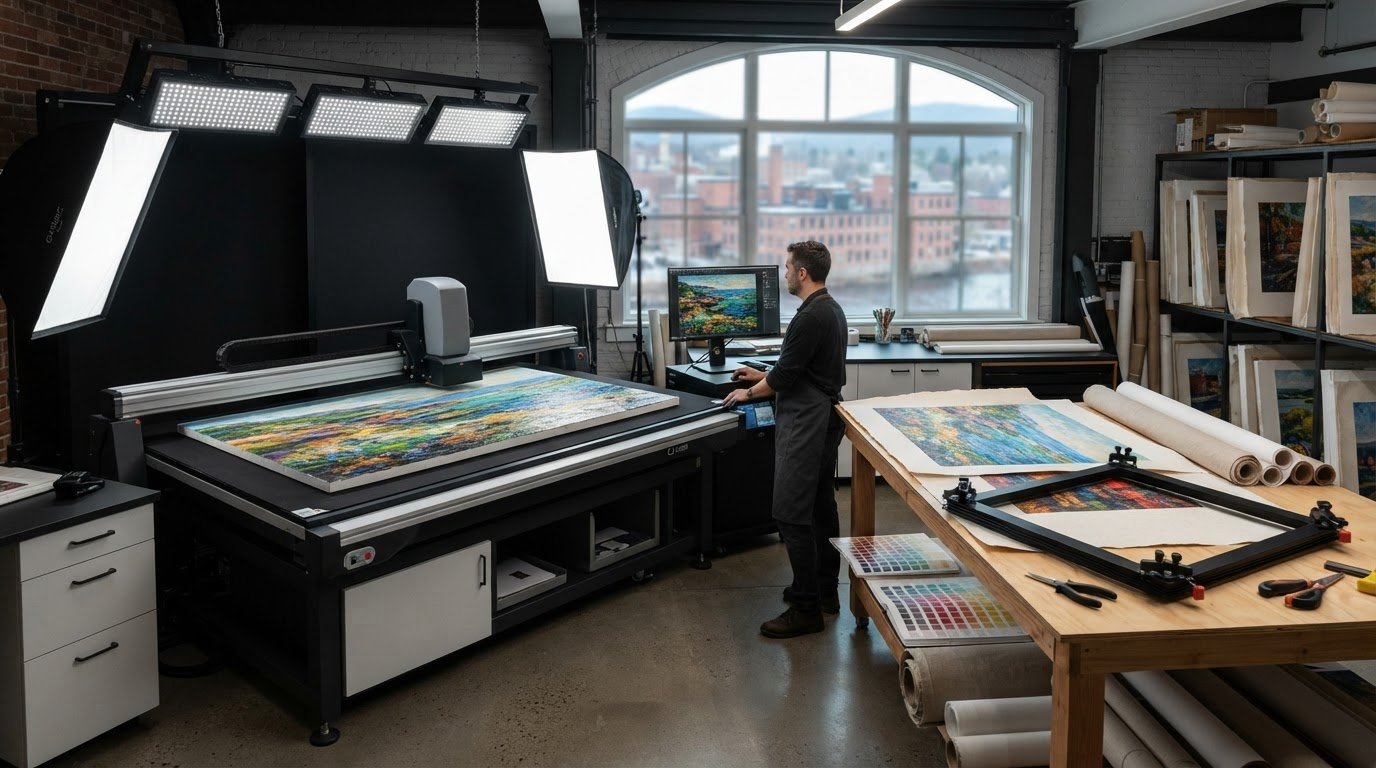
The right capture method depends on the painting’s size, surface, condition, and intended reproduction scale. Scanning can be appropriate for some artwork, while a textured or delicate surface may call for another approach. Image-Tec offers BetterLight scanning for high-resolution art reproduction, but scanning isn’t automatically suitable for every painting. Describe the work and its surface to the studio, then confirm which capture method fits the project.
How do color review and proofing help prevent surprises?
A file can look different across screens, and its printed appearance may change with the selected material. Before approving production, identify color-critical areas, such as a muted background or a subtle transition between shades, and ask how they’ll be reviewed. Also confirm whether a proof is available and what color-management steps are included. Check proofing options and other project details with the studio instead of assuming they’re part of the process.
If you’re planning a reproduction, you can learn about Image-Tec’s artwork scanning and printing and discuss which capture approach may suit your painting.
How to Compare Materials, Print Size, and Reproduction Options
Choose a print format by considering how the painting should look in its intended setting, not just which option sounds most premium. The right material depends on the artwork and its purpose. Paper and canvas can present the same image differently, and surface finish can influence reflections and perceived color. Ask the studio which materials and finishing options are available and how each may affect your image.
| Option | What to consider | Questions to ask |
|---|---|---|
| Paper | May suit a smooth, flat presentation, particularly if you plan to frame the print. The surface can affect how colors and fine details appear. | What paper surfaces are available, and how might they change the image’s appearance? |
| Canvas | Offers a different surface character from paper and may suit a presentation without a conventional frame. | Which canvas options are available, and how will the image be finished? |
| Finish | Surface sheen and texture can affect reflections and the way colors are perceived in different lighting. | Can I review the finish options before choosing? |
| Display and handling | Consider the room, viewing distance, how the work will be displayed, and how it will be handled or framed. | What display or framing considerations should I plan for? |
These are general comparison points, not guarantees about a particular product. Archival organizations publish references to digitization standards for archives, which can help explain the care involved in creating digital files for preservation. For a print order, confirm the studio’s actual material specifications and finishing options rather than assuming a particular surface or process.
Should an original painting be reproduced on paper or canvas?
Start with the look you want: smooth or visibly textured, framed or more gallery-style. Paper and canvas are not interchangeable, and neither is universally better. Let the artwork’s style and the intended setting guide the choice. Before recommending a material, ask the print studio to confirm its available substrates and finishing choices, and discuss how they may affect the reproduction.
How large can a reproduction be without losing important detail?
There isn’t one enlargement size that suits every painting. The original dimensions, capture quality, composition, and expected viewing distance all matter. A print intended to be viewed from across a room may be judged differently from one examined close up. Image-Tec offers canvas prints up to 60 inches wide. Have the studio review the source artwork and your intended dimensions before production to assess whether the detail will hold.
How to Prepare and Evaluate a Painting Reproduction
A clear brief helps the print studio understand what matters before capture and production begin. Record the painting’s basic details, explain how you plan to display the print, and identify the visual qualities that need particular attention. This gives you a shared reference for discussing size, material, color concerns, and optional framing.
What information should you provide before requesting a print?
Share the painting’s dimensions, medium, surface characteristics, and condition. Note where the finished reproduction will be displayed and the approximate size you’re considering. If a particular passage is especially important, such as a fine line, deep shadow, or subtle color transition, point it out rather than relying on a general request for accuracy.
- Artwork: Dimensions, medium, surface texture, and any condition concerns.
- Reproduction goals: Intended display location, target size, and preferred material.
- Visual priorities: Essential colors, fine details, tonal areas, or parts of the composition that need close review.
- Handling: Ask the studio how to prepare and bring the original, and whether any special handling is required.
Discuss framing before production if it’s part of your plan, since the finished presentation may affect the dimensions you need. Confirm the studio’s available materials and finishing options rather than assuming a particular choice is offered.
What should you check when reviewing the finished print?
When practical, review the reproduction alongside the original under consistent, neutral lighting. Check the overall color balance first, then compare tonal transitions, edge detail, and composition. Look closely at the areas you identified in your brief. A screen or different room lighting can make colors appear unlike the print, so assess the physical print directly.
- Do the main color relationships and light-to-dark areas feel consistent with the painting?
- Are important lines and edges clear at the intended viewing distance?
- Does the crop or composition match the agreed dimensions?
- Do you see unexpected marks, shifts, or other visible issues?
If something concerns you, contact the provider promptly and ask about its review or correction process. Don’t assume exact color matching or particular durability; confirm the print specifications and care guidance with the studio. Careful preparation and focused review help high quality prints from original paintings better meet your expectations.
Ready to discuss your artwork and reproduction goals? Contact Image-Tec about painting reproduction.
Where to Get High-Quality Prints from Original Paintings Near Boston
A successful reproduction depends on several choices working together: a suitable capture method records the artwork, material selection shapes its presentation, and a careful review helps you assess the result. For artists and art owners in Boston, a local studio can help clarify these decisions and explain which options fit the original painting and intended display. Image-Tec is based in Methuen and serves nearby communities including Boston, Manchester, New Hampshire, and Newburyport.
What can a local art reproduction studio handle?
Image-Tec is based in Methuen, Massachusetts, and offers BetterLight scanning for high-resolution art reproduction, along with fine-art Giclée printing. Canvas prints are available up to 60 inches wide, and custom framing is an optional finishing service. Having scanning and printing available through one studio gives you a place to discuss how the artwork’s dimensions, surface, and desired reproduction size may inform the project.
A conversation can also help clarify what to confirm before production: whether scanning is suitable for the original, which print materials are available, and whether a review or proofing step is offered. Ask about specific color-management or material details rather than assuming they’re included. For a broader view of the studio’s work, explore Image-Tec’s art reproduction services and confirm which options suit your piece.
How should you start a reproduction project with Image-Tec?
Bring a few practical details to the first discussion. Note the painting’s dimensions and medium, your preferred print size, where you plan to display it, and the colors or details you’re most concerned about preserving. If you’re considering framing, mention that too, since it can affect the finished presentation and dimensions.
These details give the studio a useful starting point for discussing capture, available materials, and project fit. Ask how to prepare and handle the original, what specifications apply to the print options you’re considering, and how to review the finished reproduction. The right process depends on the artwork, so confirm current options and requirements directly with the studio.
If you’re considering high-quality prints from original paintings, contact Image-Tec to discuss your artwork, desired size, and project requirements. A straightforward conversation can help you understand the available options before deciding how to proceed.
Bring Your Painting Reproduction Plans Into Focus
Faithful reproductions begin with a clear understanding of what matters in the original. Careful artwork capture supports detail, considered material and size choices shape the finished presentation, and reviewing the print helps you assess whether it meets your goals. Since a reproduction can’t duplicate every physical quality of a painting, sharing your priorities early helps set practical expectations.
For high quality prints from original paintings, Image-Tec’s Methuen studio offers BetterLight scanning for high-resolution art reproduction and canvas printing up to 60 inches wide. The studio serves surrounding communities, including Boston, Manchester, New Hampshire, and Newburyport, and also offers custom framing as an optional finishing service.
Before starting, gather the artwork’s dimensions, preferred print size, display plans, and any color or detail concerns. Then discuss your original painting and print requirements with Image-Tec to learn which available options may suit your project. With thoughtful preparation and a clear conversation, you can move forward with confidence and give the artwork a considered new presentation.
Frequently Asked Questions
What is the best way to make prints from an original painting?
Start by assessing the painting’s size, surface, medium, and reproduction goals. Professional capture creates the digital source, then choices about material and print dimensions shape the final presentation. Ask how the studio reviews color and detail before printing, and whether it can assess your original before recommending a workflow. The best method depends on the artwork, since one capture approach or print material won’t suit every painting.
Can a print look exactly like the original painting?
No print can fully duplicate the original painting. It can reproduce visible qualities such as composition, color relationships, and fine detail, but physical paint texture, raised brushwork, and the way the original surface reflects light may look different. Before ordering, identify the features you most want preserved and ask the studio what can realistically be captured and represented on the selected material. This helps set clear expectations for the finished reproduction.
How is an original painting captured for high-quality prints?
A studio may photograph or scan a painting, depending on its dimensions, surface, condition, and reproduction requirements. The resulting digital file is reviewed before it’s prepared for printing. Ask how the provider will manage lighting, reflections, color, and detail, and confirm that the proposed method suits your artwork. Image-Tec offers BetterLight scanning for high-resolution art reproduction; the studio can advise whether scanning is appropriate for your piece.
Is a scan or photograph better for reproducing a painting?
Neither scanning nor photography is the right choice for every painting. The artwork’s dimensions, texture, condition, and intended print size all influence the decision. Ask a provider to assess the original and explain why a capture method fits the project. It’s also useful to ask how glare and color review will be handled. Don’t choose based on equipment name alone; suitability for the individual painting matters more.
What should I look for in a fine-art print of a painting?
Check whether the reproduction preserves the painting’s important colors, tonal transitions, composition, and fine details. Consider the display location, viewing distance, print material, and finish before approving a size. Ask the provider about capture quality, color review, and available substrates. Verify specifications directly, especially claims about inks, paper, lightfastness, or archival performance, since these details can vary by studio and print option. High quality prints from original paintings start with clear priorities and informed review.
How large can prints from original paintings be?
The practical size depends on the original artwork’s dimensions, the quality of its digital capture, the detail you want to retain, and how close viewers will stand. A larger print isn’t automatically better if important details become less clear. Share the source artwork and your desired dimensions with the studio before ordering. Image-Tec offers canvas prints up to 60 inches wide, with suitability depending on the artwork and capture.
Where can I get a painting reproduced near Boston?
Image-Tec is an art reproduction and Giclée print studio in Methuen, Massachusetts, serving nearby communities including Boston, Manchester, New Hampshire, and Newburyport. Services include BetterLight scanning, fine-art and canvas printing, and custom framing. Before arranging a project, ask about the appropriate capture method, available materials, desired print size, and how the studio reviews the result. Confirm current options and project requirements directly with the studio.



Leave A Comment
You must be logged in to post a comment.